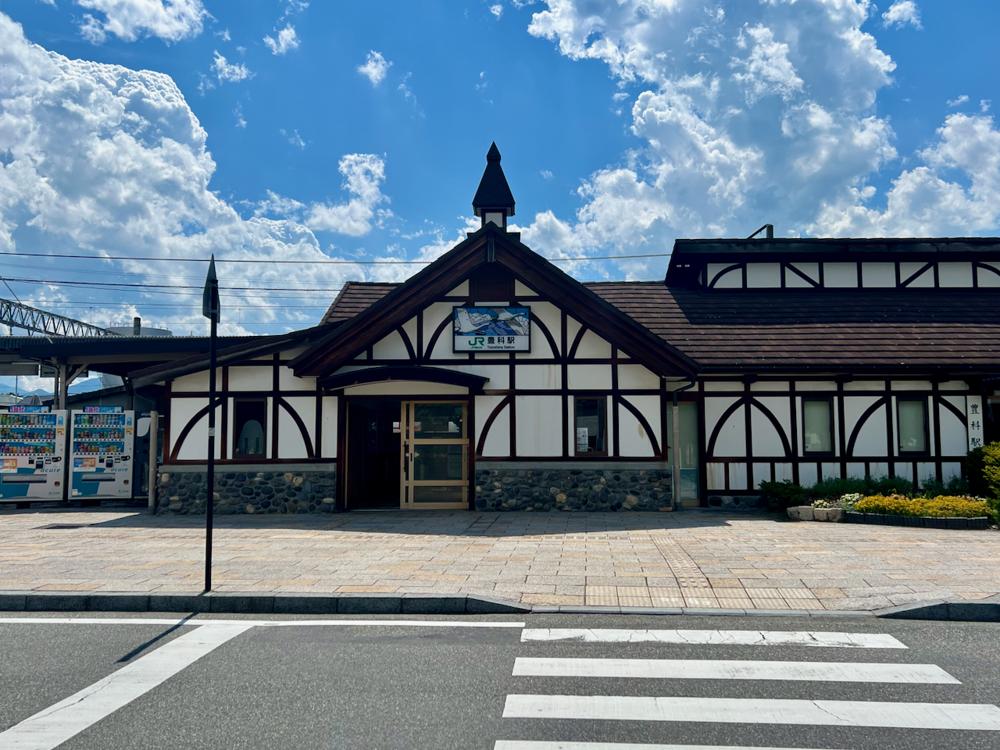
Jan’s Japan Hike, Day 22. Because my mountain route was too ambitious, I’m going to return to the small town of Toyoshina I passed through a few days ago. I’ll resume walking from there, this time heading straight north, mostly on roads. That’s a more direct route to the coast, so I’ll still be able to finish my hike on schedule in a week.
I take a bus from the Kamikochi area back to Matsumoto City. The bus passes through many old tunnels, and I find myself focusing on how precarious it’d be to walk through them. The bus reaches a station in Shin-Shimashima, where everyone transfers to a train heading into the city.
Although it was still pretty warm in the mountains, it’s positively broiling in Matsumoto. I get pizza for lunch, then take another train to Toyoshina where I can resume walking. It’s funny to be back in the nondescript little town.
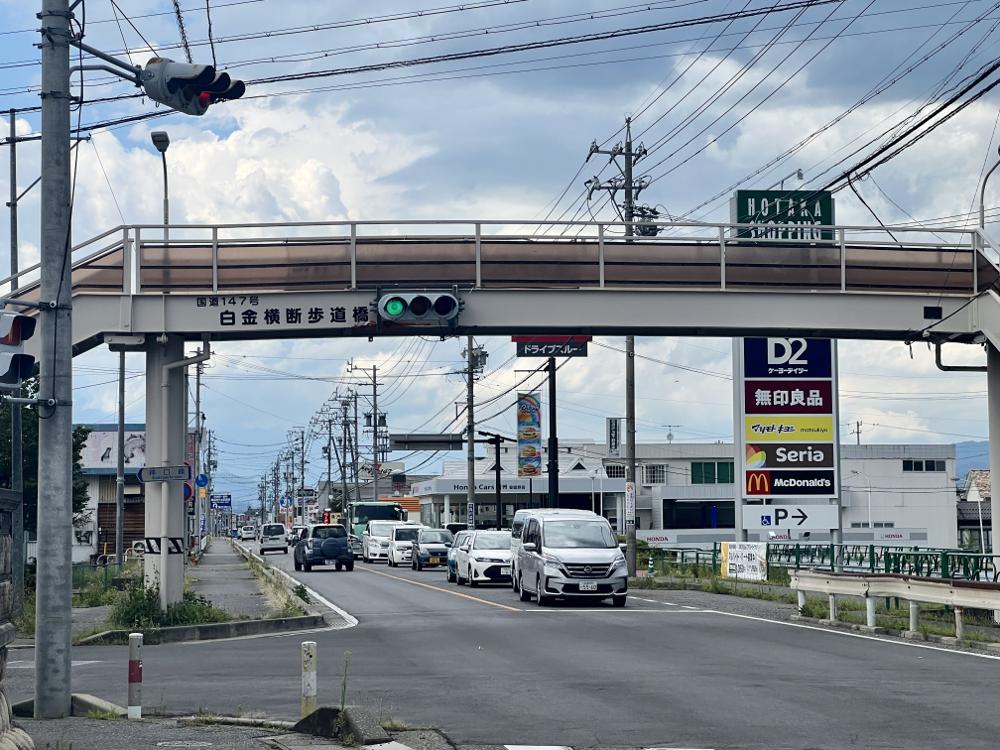
The afternoon’s walking route follows a busy road, the same sort of road you find on the outskirts of American towns with all the outlet stores and car dealerships. It’s not pleasant, but any other route would be significantly longer.
I’m crossing a bridge when I see an eagle trying to retrieve a dead fish from the side of a river. It’s mesmerizing to watch the eagle circle around in the wind, which has begun to pick up. As I’m watching, my eye catches a lightning flash far off in the mountains to the east. Rain is coming.
I hustle along in hopes of beating the rain, but eventually it catches me. The rain starts the way it always does in Miyazaki anime movies: a few drops, then a few more, and then a deluge.
The rain presents a new obstacle: I can’t use my phone. Modern phones are actually pretty waterproof, so the phone itself is fine. But it turns out that a wet phone can’t register touches. I’ve reached a point where I need to look at the next set of walking directions, but can’t even unlock my phone to see them. It’s hard to dry off the phone with anything, since everything I’m wearing is already soaked. It’s both frustrating and comical to be standing in the pouring rain, swiping and swiping in hopes of getting the phone to unlock. Eventually I’m able to unlock it, get directions, and keep walking. At some point the storm passes.
I reach the town of Shinano Matsukawa, my destination for the day. Unfortunately, there’s no hotel nearby, so today my plan is to take a train from this town to the closest town with a hotel, Shinano Omachi; I’ll come back here tomorrow and resume walking.
The train is running late, something that’s pretty unusual in Japan. The station has no staff, but a train employee somewhere else makes announcements over and over to apologize for the trouble. When the train finally comes and I get to Shinano Omachi Station, I need to pay my train fare before I can exit. All I have are ¥10,000 notes (about $70 today) from an ATM. I try to pay with one of those bills, which is damp from the rain — the station cashier says the bill is too wet for the machine to read it. This precipitates a two- or three-person search for a dry ¥10,000 yen note in the office that can be used to produce change. Eventually everything works out and I can leave.
I’m staying in a no-nonsense business hotel, which happily is just across the station plaza. After using the bathhouse and a nap, I head to dinner at a nearby Taiwanese restaurant. It’s run by a couple: a Japanese man and a Taiwanese woman. They squabble too much at each other but are nice to the customers. The man is watching the weather report, and complains that they haven’t been getting any rain lately. I mention that I was caught in a storm just south of here this afternoon, and the man’s surprised. Apparently recent rainstorms keep passing this town by, and it’s causing problems for the local farmers.
Jan’s Japan Hike, Day 23. I start the day by taking the train back to Shinano Matsukawa so I can continue my line of footprints from the Pacific Ocean. I’ll be passing back through this town of Shinano Omachi, so before leaving I drop off my small backpack at the hotel’s front desk. This means I can walk for the morning without that weight.
Starting the walk at Shinano Matsukawa, I head for the nearby Takase River, figuring that the road along the river will be nicer than the busy road I walked all yesterday afternoon. It is nice to have the river in view — but sadly the road along the river is also busy, and doesn’t have the benefit of a sidewalk. I give up and back to the same main road as yesterday so I can at least walk safely.
Today I keep passing farming cooperatives and light industrial buildings. In the middle of the morning, I come to a 7-11. I’ve learned that Japanese convenience stores sometimes have sad little “cafe” areas, which are generally just a couple of chairs by a little counter in the corner. I never see anyone sitting there — but they do serve as a place I can sit down and drink something cold in air-conditioned comfort.
I get back to Shinano Omachi and have lunch. I retrieve my backpack from the hotel. Before I leave, I ask the hotel clerk if there are any places to swim at Lake Kisaki, where I’m heading today. “Hmm, no place to swim,” she says, “but there’s a place you can suppu.” “What’s ‘suppu’, I ask?” “Um, it’s kind of like kayaking.” After leaving the hotel, I realize that Japanese had adopted a new verb from English: “suppu” means “paddleboard”, from the English “SUP” (Stand-Up Paddleboard).
Since my B&B for tonight doesn’t allow check-in before 4:00 and I’m only an hour and a half away, I have some time to kill. I hang out in a cafe, then try visiting the local musuem to the Shio no Michi (literally, Salt Road), an important trading route between the northern coast and this area in pre-industrial times. I’ll be generally following the path of the Shio no Michi for the rest of the trip, so I stop by the museum. Sadly, it’s closed.
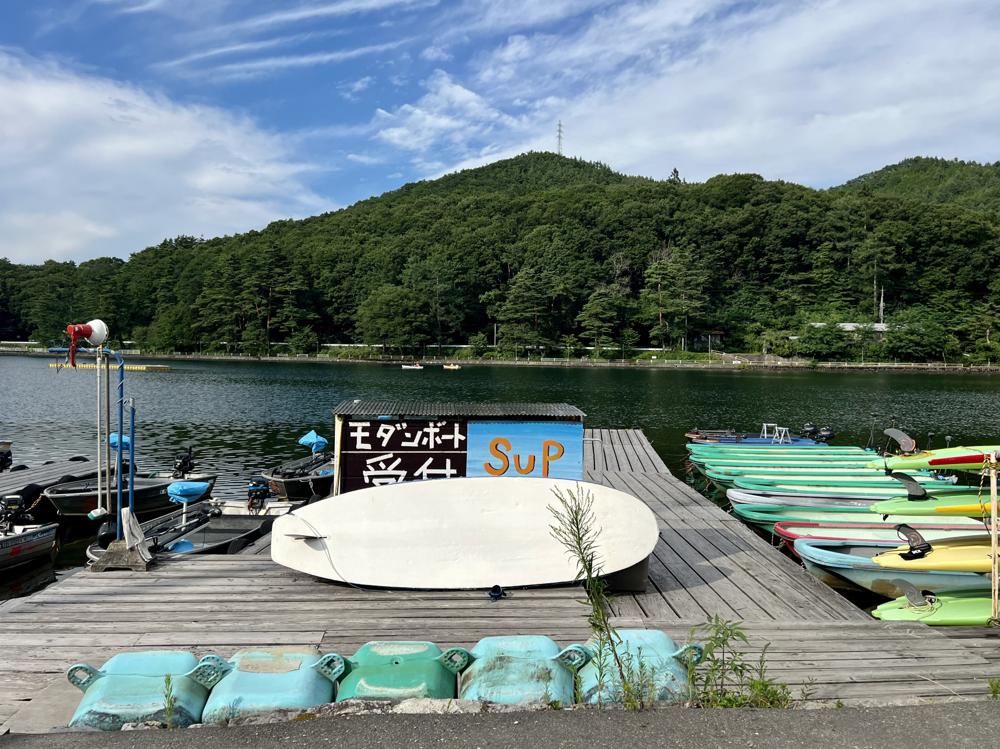
It’s cloudy this afternoon, so the weather is only very warm instead of the usual sweltering. When I get to Lake Kisaki, I still have more time to kill, so I find a “suppu” rental shop where I can rent a paddleboard. It’s a nice change of pace to paddle around the south end of the lake for an hour.
Tonight’s B&B has a faux Bavarian exterior and is extremely basic inside, but the old woman who runs it is very nice. They only serve breakfast, so I have to walk a fair distance to get to the closest restaurant that appeals to me. It’s a decent restaurant in a cute house surrounded by rice paddies. Before I leave, the woman who’s running the front of the house hands me a little bag of snacks for my hike and wishes me well.
By the time I’m walking back to the B&B, it’s getting dark. I’m relieved the front door is still open.
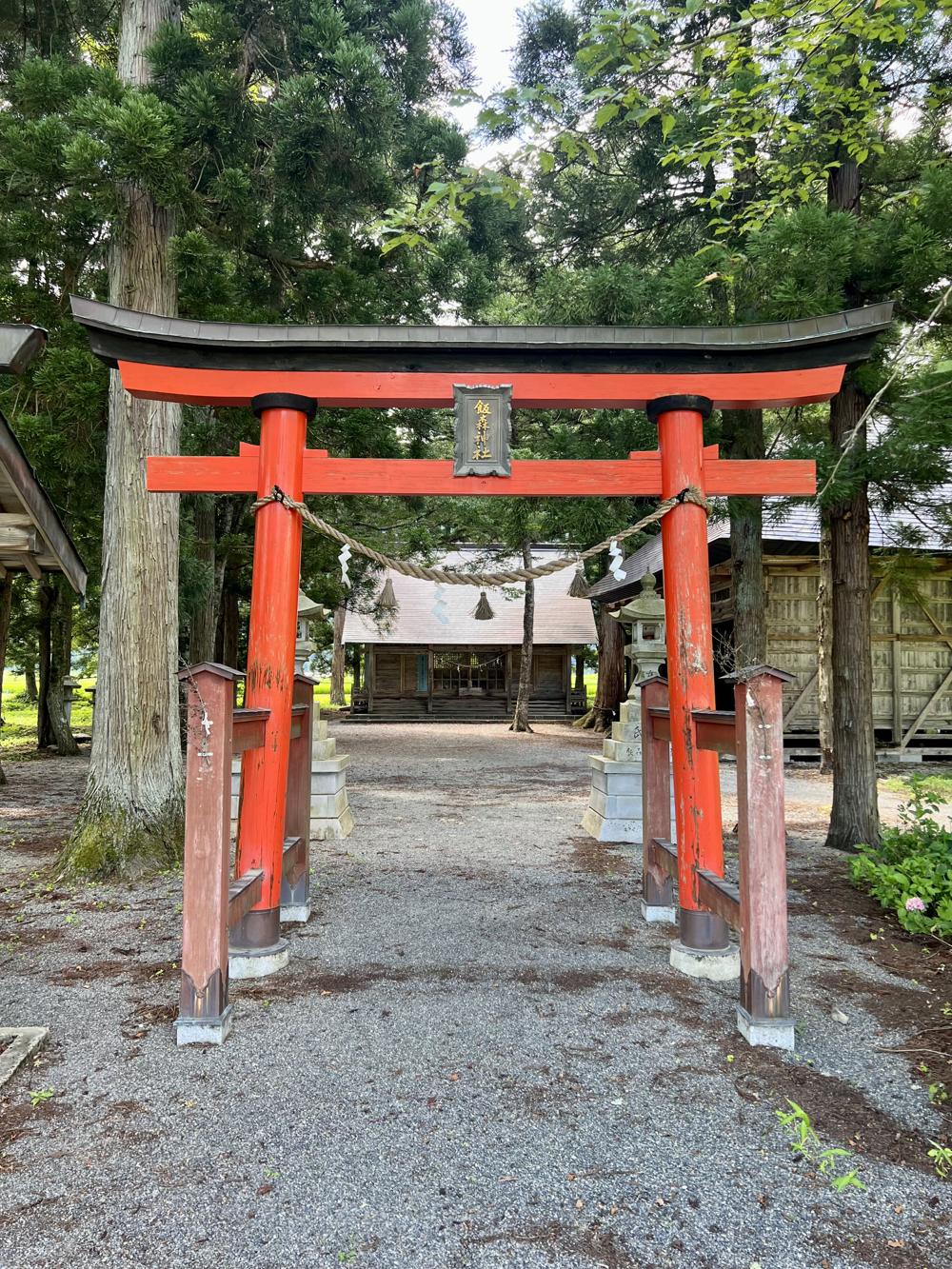
Jan’s Japan Hike, Day 24. The rather large B&B had seemed like I was the only one in it last night, but in the morning I see at least two other men who spent the night.
The owner brings out a massive breakfast, easily four times what I’d normally eat; I can barely finish a third of it. She and I talk for a bit before I head out. I mention that I’d enjoyed sleeping with the window open last night, and she brightens up. “Oh, yes,” she says, “That’s so much better than sleeping with the air conditioning on. It’s often hot in the days now, so everyone who stays here keeps the A/C on all night, but the night’s are actually nice and cool.” She also confirms that my plan to walk up the west side of Lake Kisaki is correct; it’s the prettier side of the lake and has more shade.
The walk along Lake Kisaki is nice, but at the north end of the like I have to walk along a busy highway for a short while. I can get off the highway when I reach the south end of Lake Aoki, another pretty mountain lake. Again I go up the west side. This is not only the official route of the Shio no Michi walking trail — the map also shows a cafe called Bob’s Coffee halfway up the lake. Bob’s is open, and an iced latte is refreshing.
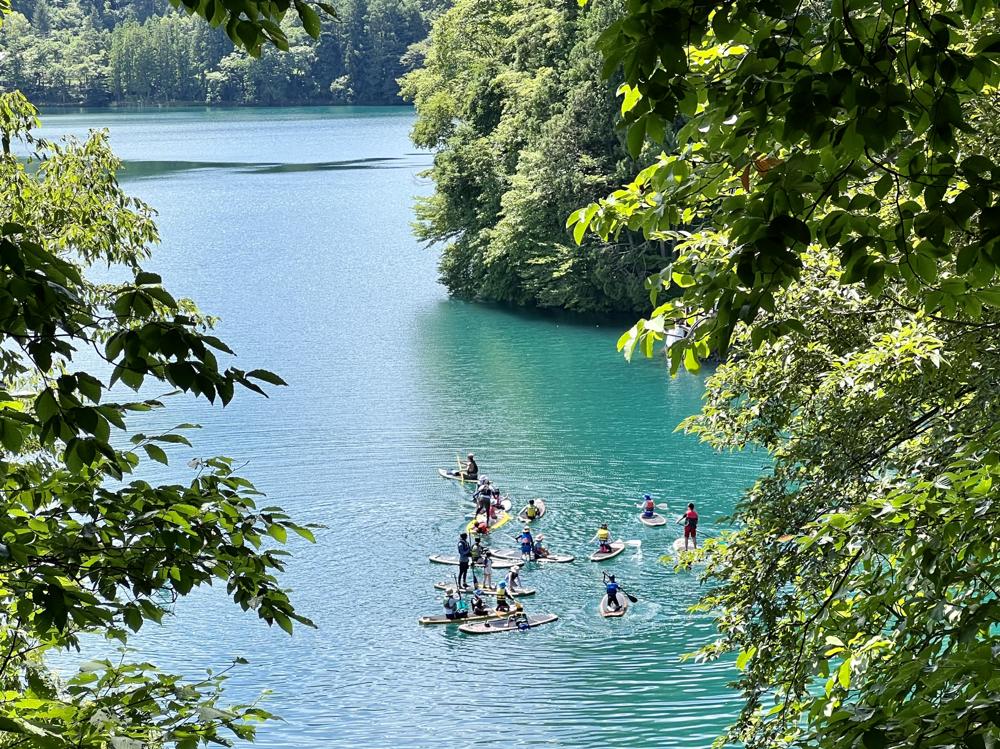
A short while later I come to a man photographing a large group of kids riding paddleboards on the lake. I chat with the man, and he explains that the kids are part of a week-long summer camp. It looks like they’re having fun.
The road after that becomes less-used and eventually turns to a gravel road through a thick forest. This stretch of the Shio no Michi is called Sanosaka Pass, and it’s easily the most beautiful bit of walking I’ve had since leaving the Northern Alps.
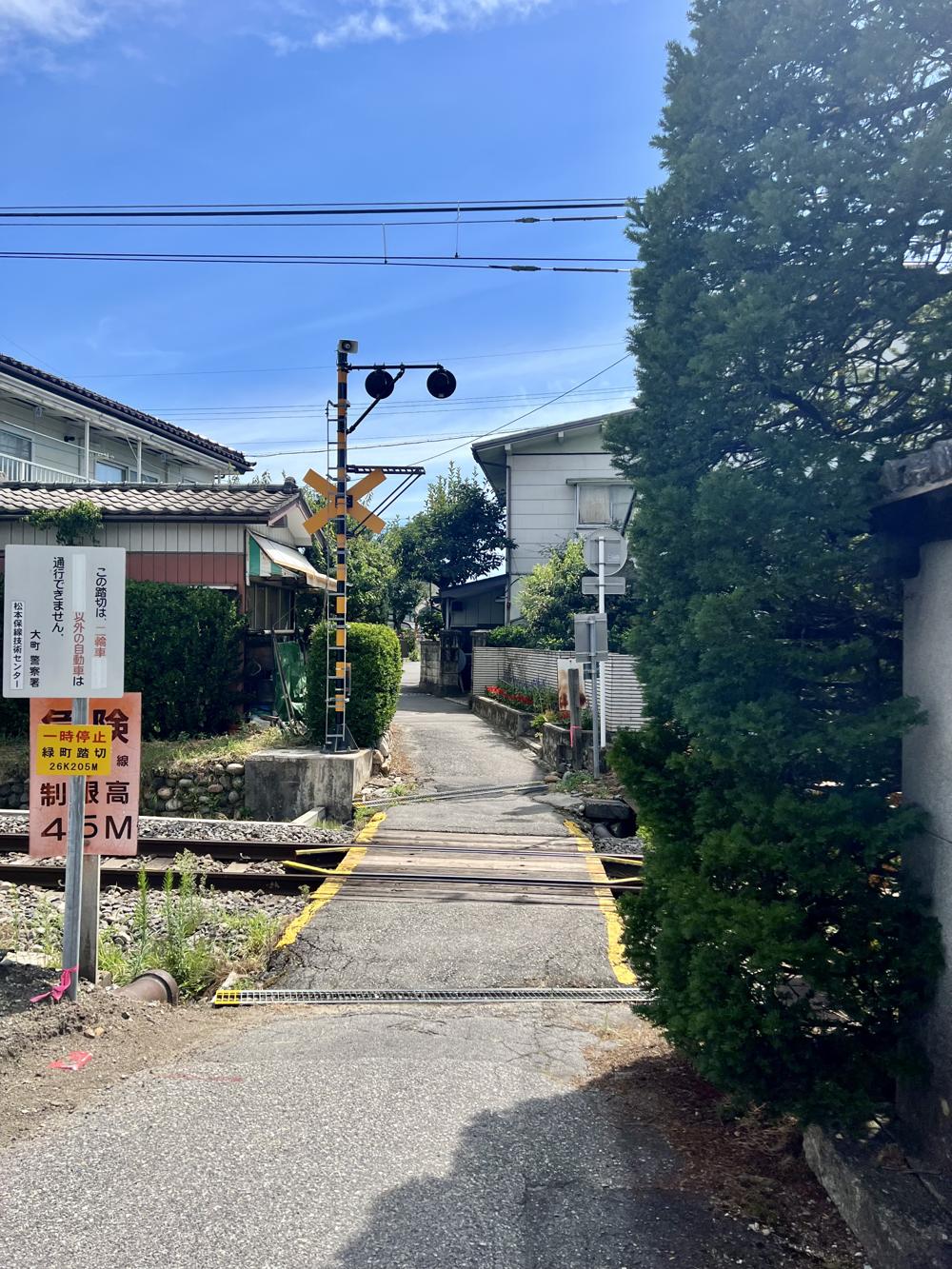
The gravel road leads to the base of some ski lifts. There’s a railroad crossing too, marked with a sign that warns, “Don’t cross the train tracks wearing skis!” There can’t be many places in the world with such a sign.
I spend the rest of the morning and early afternoon walking along a river through rice fields. These fields constitute an ecosystem that often includes white cranes and gray herons. As I walk, occasionally a bird will lift up out of the rice plants and slowly flap off away from the trail.
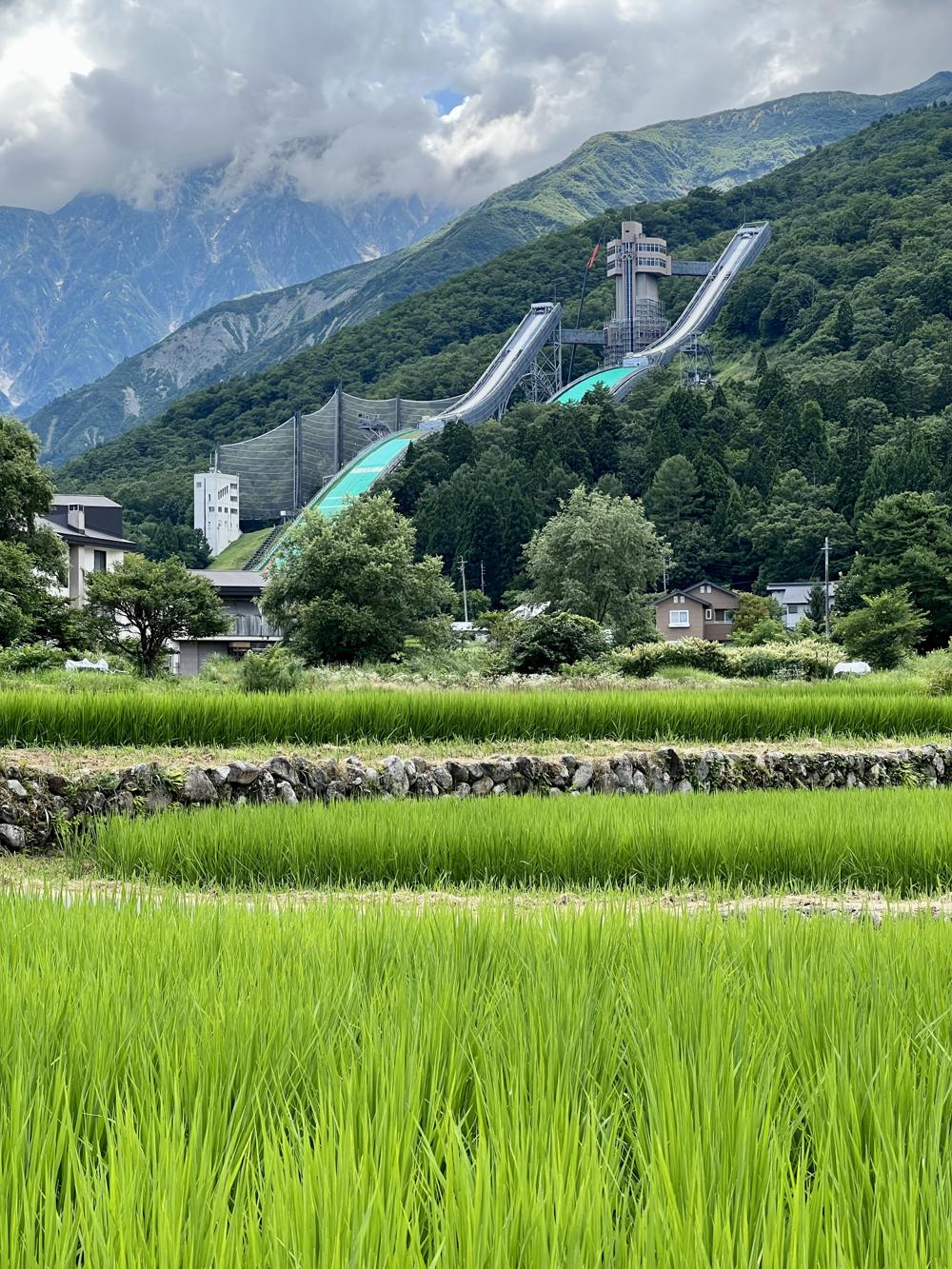
I come to the outskirts of Hakuba, one of the towns that hosted the 1998 Winter Olympics. The town’s surrounded by ski slopes, and I can see the ski jump towers that were built for the Olympics. I have lunch at a small roadside restaurant, then walk in the afternoon heat to a cafe to wait until I can check into my hotel.
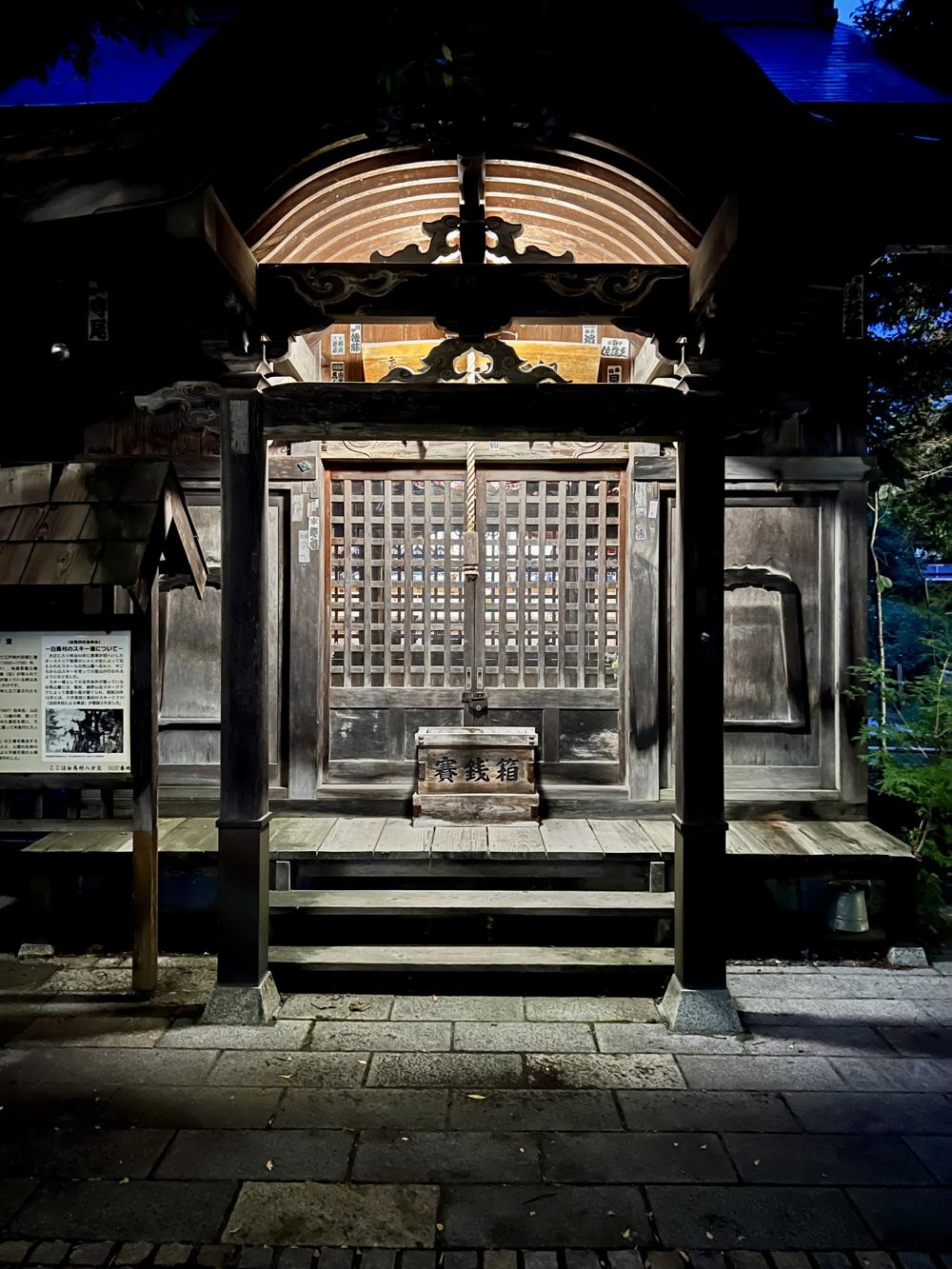
Hakuba is a cute ski town. I see more foreigners here than any other place on the trip so far.
Jan’s Japan Hike, Day 25. I’d hoped to stay in Hakuba for another day, but my hotel doesn’t have a room for a second night. I decide to take what hikers call a “nero”: nearly zero, i.e., a very short day. In this case, I’m going to walk 5 miles (8 km) to a pension at another ski area called Tsugaike.
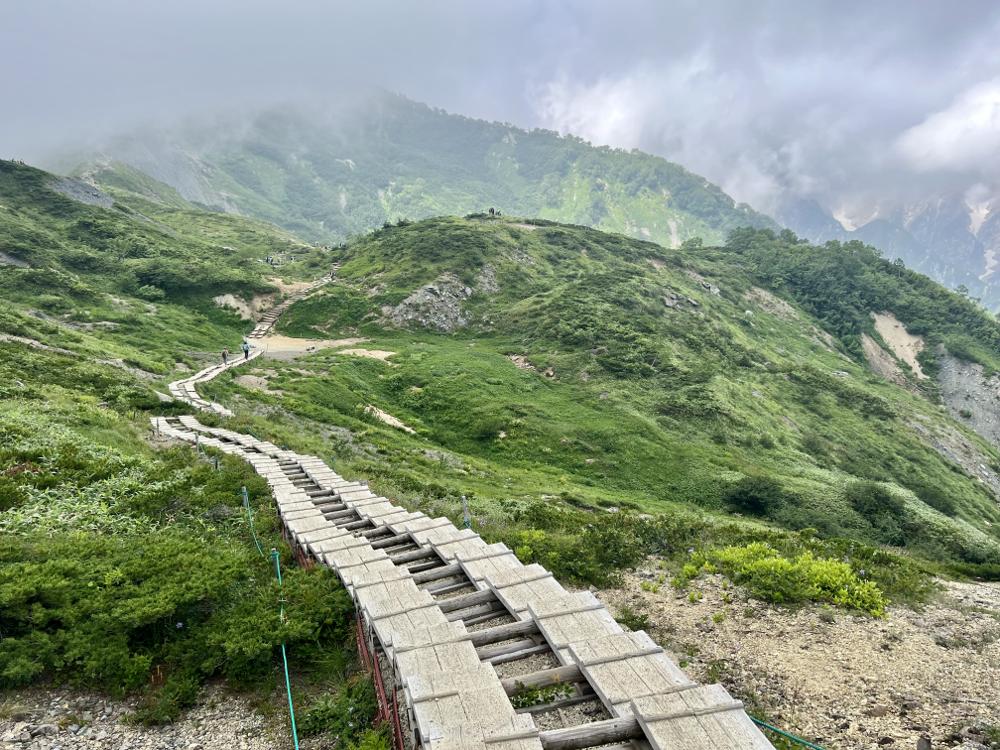
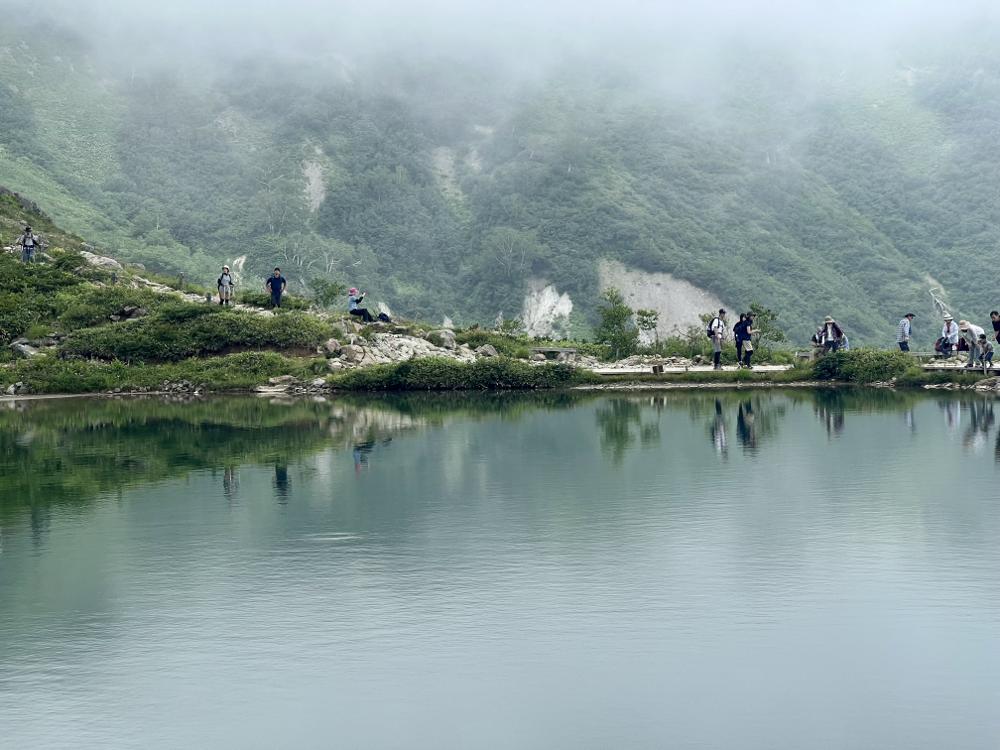
Since I have most of the day free, I ride a gondola and a couple of ski lifts high up on a neighboring mountain. The lift operator has lowered the ski lifts so they’re only a little bit above the level of the mountain meadows they cross — my feet brush against the tops of the meadow plants. I then hike up to a popular scenic spot called Happo Pond. The pond is indeed pretty, although the low clouds steal much of the view.
I hike back down to the top of the highest lift and get a bite to eat. I share a table with a couple; the wife tells me she’s spent some time in California, but hasn’t been to Seattle yet.
Back at the base, I stop for shaved ice to cool off. The stand sits in front of a bike and ski shop owned by a Japanese woman and an Australian man. The woman chats with me in Japanese about my hike, then the man and I talk for a bit in English about his life in Hakuba. They seem quite happy living here.
By now it’s 2:00 pm, so I pick up my backpack from the hotel and walk the few miles to Tsugaike. This doesn’t take that long, but I’m soaked by the time I reach the area. At first I’m concerned that the walking directions seem to be leading me to a place that looks run down, but the pension I’m staying at is actually behind the run-down one. The pension is on the old side, but seems well cared-for by a couple that apparently have been running it for almost 50 years. The place doesn’t have air conditioning, so it’s warm inside.
The couple serves a dinner of a series of little courses, mostly French. Most of them are really, really good — this may be the best meal I’ve had on this trip. I tell this to the wife, and she seems quite embarrassed by the compliment.
After dinner I ask the husband about the course of the Shio no Michi from this point north — is it easy to follow? He says yes, and also gives me a better map of the route than the one I found online.
It’s pretty hot even after the sun’s gone down, so it takes a while to fall asleep.
Jan’s Japan Hike, Day 26. The owners of the pension serve a nice breakfast, and the wife asks me a little bit about where I learned Japanese. They say it’s going to be hot again today (it’s been hot every day!) and tell me to take care.
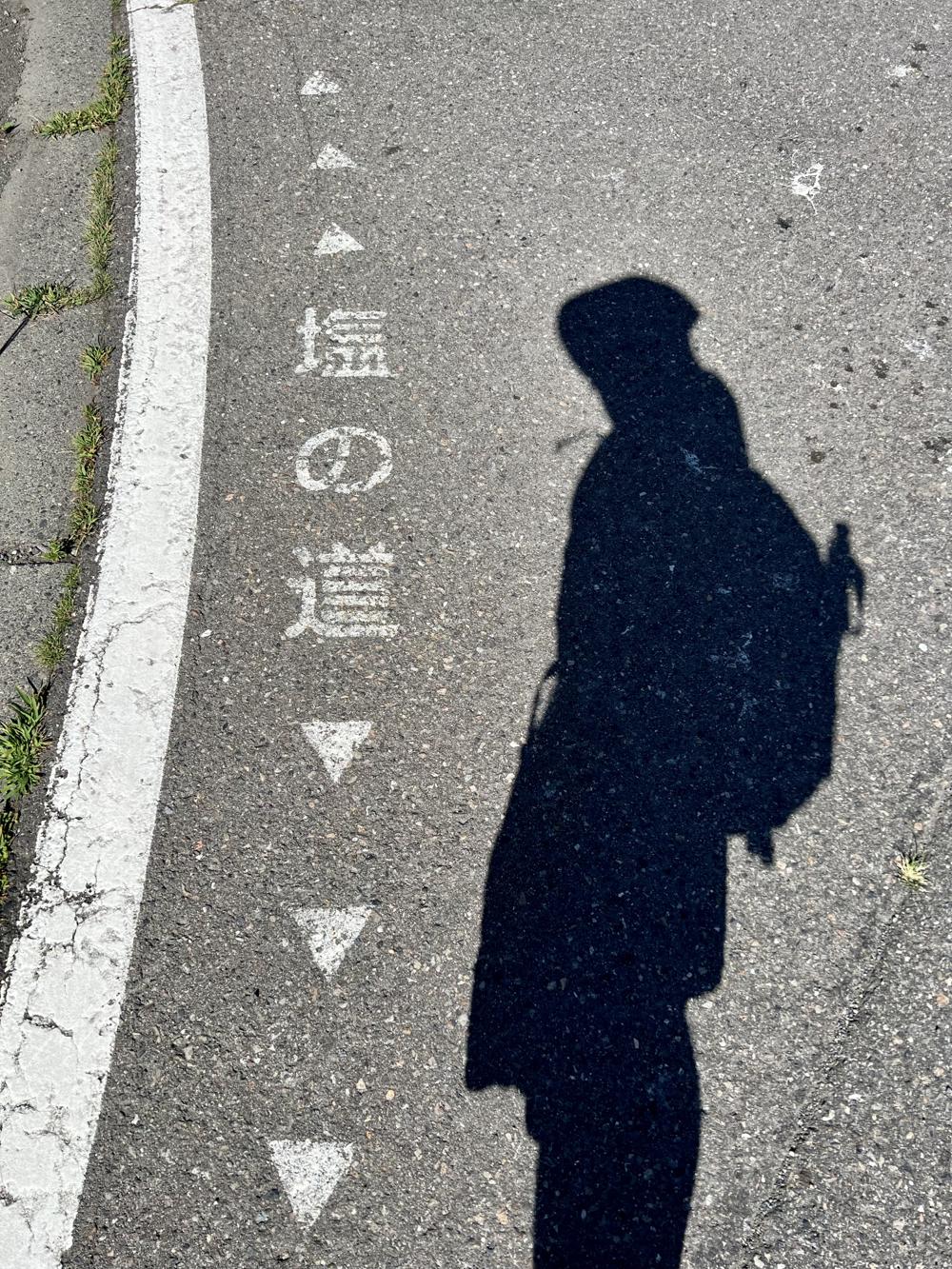
Today’s the first day I’m trying to hike the actual route of the Shio no Michi trail as closely as I can. For the past few days, I’ve occasionally walked little pieces of it, but for the most part just took the most efficient walking route, even if that meant walking on busy roads. From this area of Tsugaike to the end in Itoigawa the trail is apparently quite nice in sections, so I’ll try to follow it the best I can.
It’s a little strange to walk without using my phone’s GPS for guidance, and rely entirely on trail signage. (I can’t find a downloadable route of the Shio no Michi trail online.) Happily, the trail has abundant sign posts and road markings. As long as I don’t miss a trail marker, I should be okay.
It’s only 8:30 am, but it’s already pretty hot. I’m happy when the trail enters a forest so I’m at least in the shade.
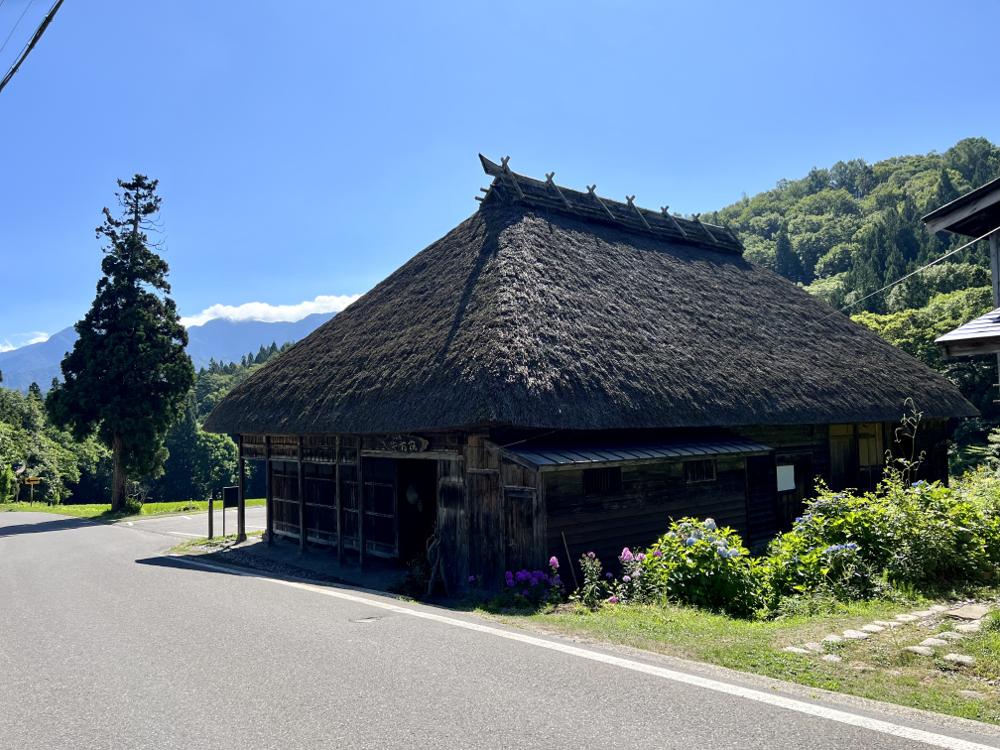
I follow the Shio no Michi through the morning, going into and out of little settlements. In the town of Otari I stop at one of the museums on the trail, this one dedicated to local history. I’m also surprised to see a number of new restroom stops that seem to have been created specifically for people walking the trail.
After walking through a small town called Kudarise, I come to the end of the main street and get the sense I’ve missed a trail marker. I double-check my location, and it looks like I’ve indeed missed a turn. I walk back for a bit, and eventually find a discreet trail marking on the street that I’d passed by without noticing it.
From there, the trail climbs steeply to a pass. I’ve just crossed over the pass when there’s an explosion of noise right in front of me. It’s a ptarmigan — something like a mountain chicken. They tend to sit on the ground, and their brown camouflage makes them very hard to see until you’re right on top of them. Just as I’m getting over the fright of the ptarmigan, a second one bursts out of the grass and scares me again.
When I come to the next set of houses, I check the map and realize I’ve entered a tiny town named Nakatsuchi. I’d actually intended to stop at the previous town in hopes of finding a “day bathing allowed” hot spring and a place to eat. Now I’ve gone too far. I walk to the small clump of buildings that serves as Nakatsuchi’s town center, but pretty much everything’s closed. There’s a man standing there, and he confirms that the closest hot spring is in the town I passed by a while ago.
I don’t want to go back there, so I pin my hopes on a small cafe called Cafe 13 Gatsu (“Month 13”) that’s about 30 minutes further. There’s nowhere else to eat in this area, so I’m hoping Google has it right when it says that the cafe is open.
To reach the cafe, I have to go through several tunnels, but there’s not a lot of traffic on this road, and the tunnels have a sidewalk (or a wide shoulder) so I don’t feel unsafe. To convey a sense of how steep the mountains in this area are: I emerge from one tunnel and come to a four-way intersection. Every one of the four directions leads to a tunnel.
I eventually see a sign for the cafe, which is promising. I finally see the cafe building high above the road. They have a little flag flapping out front with a red kanji for “ice” on a blue and white background. Restaurants fly this little flag to advertise that they serve shaved ice desserts. That’s very promising.
The cafe turns out to be charming. The main course for lunch today is a Sumatran curry which is both visually appealing and tasty. I follow this with an apricot shaved ice that hits the spot.
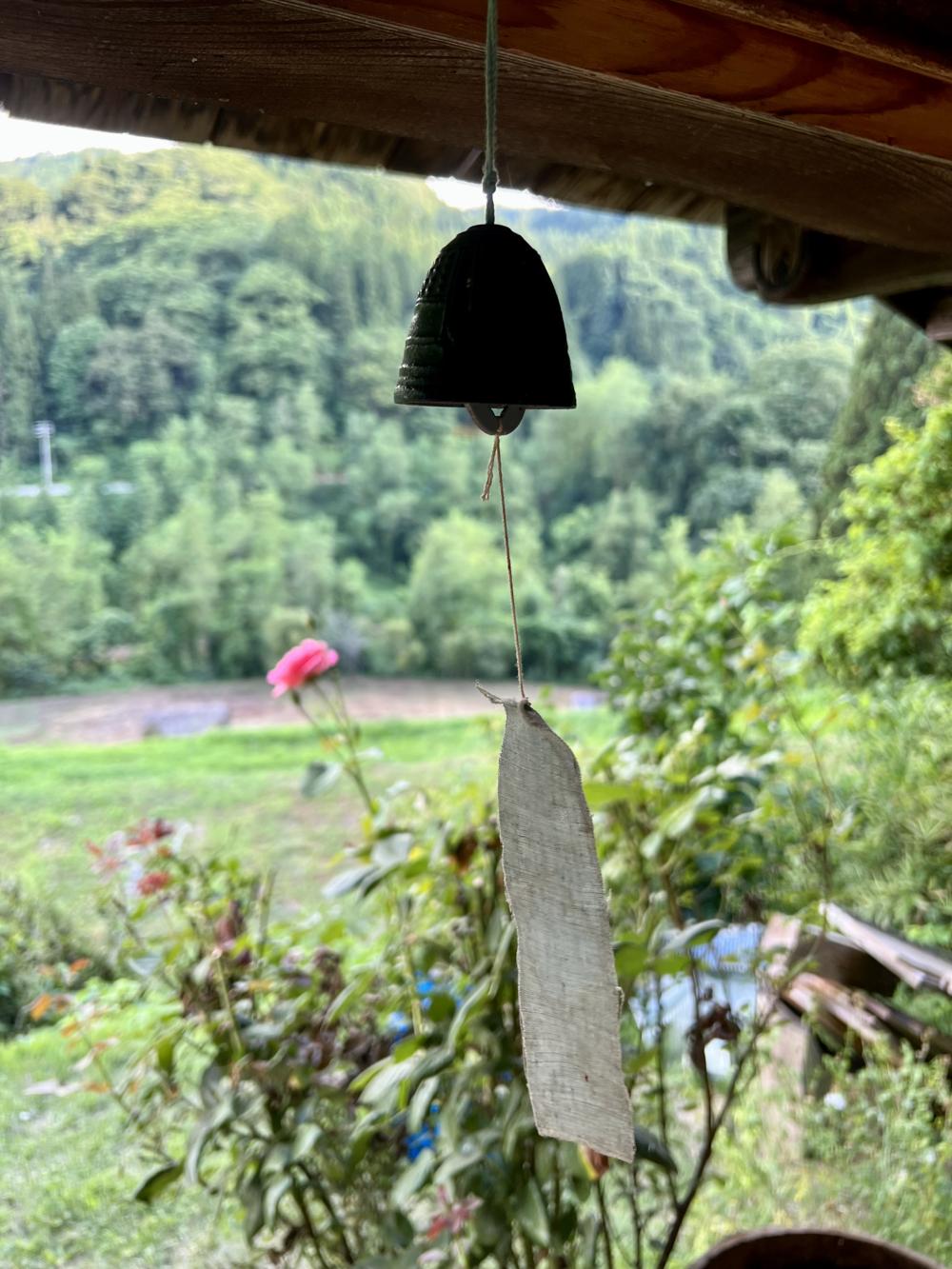
My lodgings tonight are at a kominka (a large traditional Japanese country house) that’s now run as a guesthouse. This one has a bit of a commune vibe — guests are expected to help out with various tasks like preparing meals, setting a communal table, and cleaning up. Tonight there are nine other guests, two men and seven women, most of them in their 20s. There are two people in their 30s running the place: Yamaguchi-san (who goes by “Gussan” here) and Hitomi-san (“Hitchan”). Everyone’s very friendly.
The only big downsides of the traditional building are that: 1) it doesn’t have air conditioning, so it’s hot inside, and 2) it doesn’t have its own bath (at least not one for guests). Around 5:30, Gussan organizes a group trip to a nearby hot spring. Oddly, the hot spring is attached to a highway rest area, but it’s not bad. I’m happy I can finally rinse off.
Back at the guesthouse, Hitchan’s been making some preparations for a barbecue dinner. Everyone pitches in where they can. It’s dark by the time dinner is ready, and then it starts to rain. A tarp’s been set up over the eating area, but one side of it is loose, so I scramble out on a second-floor roof to help secure it.
Dinner’s a fun affair. Gussan has everyone give a short self-introduction. Unusually for Japan, all of the guests ask to be called by their first name or a nickname, which normally wouldn’t happen until everyone knew each other much better. There’s a variety of grilled meats and vegetables to eat, and it’s all pretty good.
I sit next to a woman named Natsuko who’s wearing a t-shirt that says “Mirth” on it. I ask her if she knows what the word means, and there follows a discussion about the meaning of “mirth”. Everyone’s focusing on her and her shirt, and she’s embarrassed by the attention.
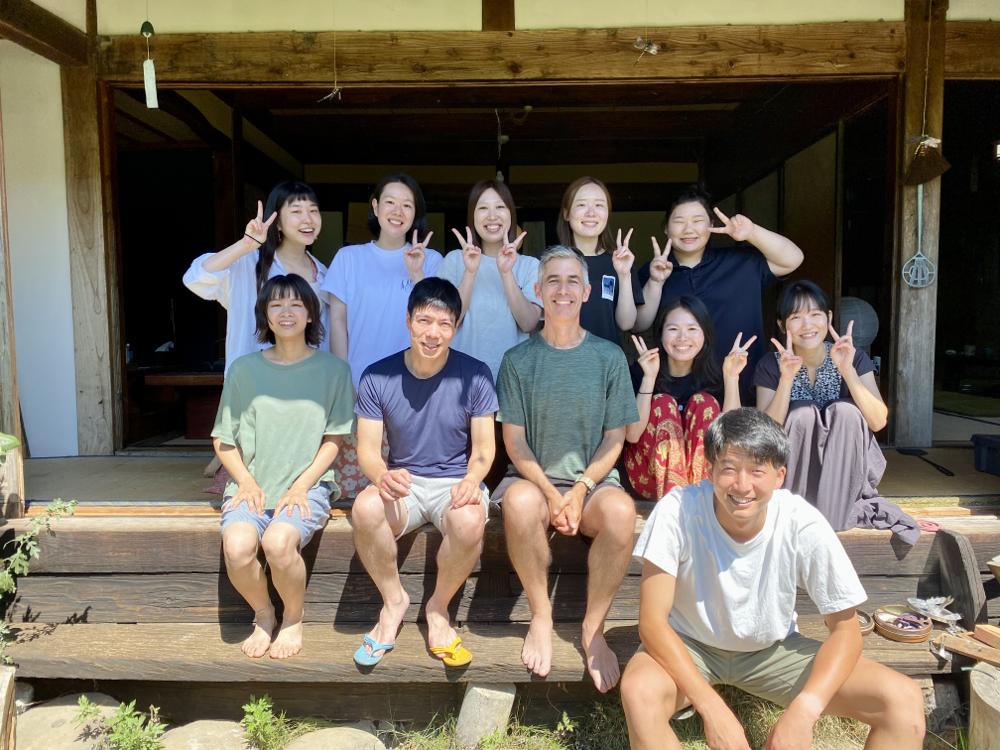
Jan’s Japan Hike, Day 27. The kominka guesthouse starts its day with a group breakfast. Most of the guests are staying there for another night, but I need to keep walking. When I’m getting ready to leave, everyone comes outside to see me off.
Today I’ll be hiking two more sections of the Shio no Michi trail. I’m a little worried about the first section, because I not only don’t have a GPS route to follow, but the section is remote. I have a paper map, but sometimes it’s a little hard to reconcile what it says with where I am. Just finding the right place to enter the forest from the road is a little hard, and I end up asking a man if I’m going the right way. He says I am, although he expresses concern that I’m not prepared enough for the trail. “It’s very hard!” he says.
The trail is thankfully easy to follow for most of the morning, although there is one junction near the top of the section with no signage at all. I take an educated guess as to which way I should go, and thankfully that guess pans out.
I eventually work my way all the way back down to the river at the valley floor, and reach the same highway rest area with a bathhouse where I’d come last night with the guesthouse group. This is the only business of any kind for miles, so I go inside again, use the bathhouse, and get some lunch and some ice cream. It’s nice to cool down inside, and hard to go back out into the broiling heat. It’s been like this — over 90°F / 32°C — essentially every day of this hike.
The afternoon section has two passes to climb, the second of which is higher. Everything’s fine until I reach a road at the top of the second pass. At that point, the trail, which has so far been fairly well-signed, seems to have given up on signage altogether. Luckily, I’m close enough to my hotel for the night that I can switch back to walking on the road.
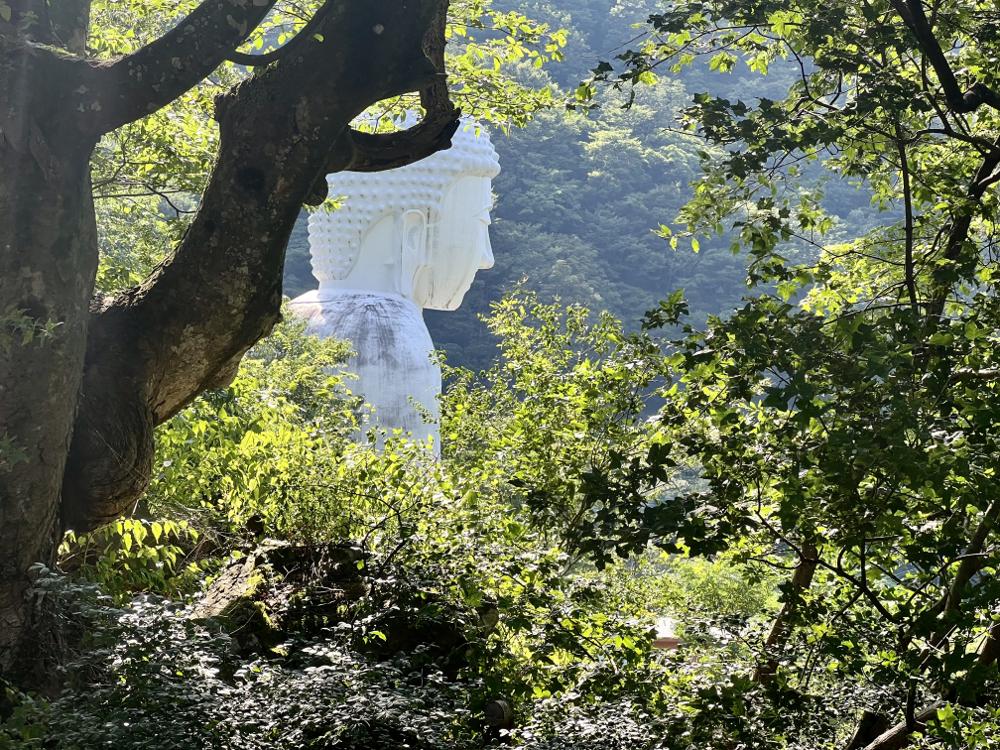
There’s one funny moment when I come around a bend, and through the trees I see an enormous head. This proves to be the head of a giant Buddha statue set against the mountainside. A short while after passing the big Buddha, I reach my hotel. It was probably quite grand at some point in the past, but these days it’s a bit shabby. The room itself is nice, but the hallway carpets haven’t been changed in decades.
I’m slightly apprehensive about eating the hotel’s dinner; this kind of traditional hotel is very likely to serve some dishes — particularly seafood — that I won’t like. Most of the courses turn out to be fine, although I have to pass on the tiny little squids served in ink.
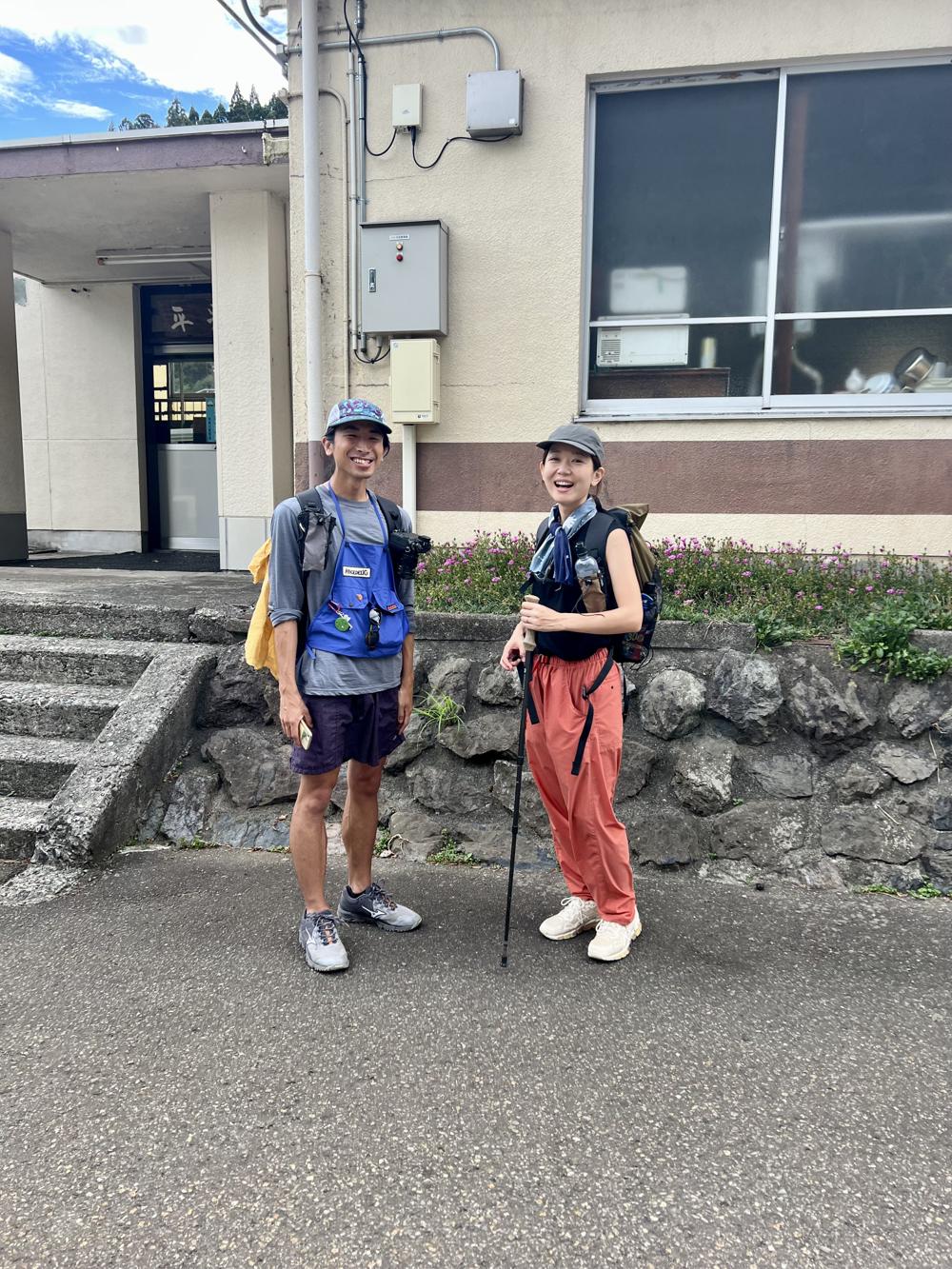
Jan’s Japan Hike, Day 28. I’ve been looking forward to today, not only because this is the final day of this long hike, but also because two friends, Miho and Atsushi, are going to meet me early in the morning and hike the final day with me.
We meet at the tiny little Hiraiwa Station near the hotel, and make a short walk towards the Shio no Michi trail. There’s an odd point where each of us is suddenly surrounded by a loud, buzzing swarm of flies (or something) that stay with us for a couple of minutes.
We pass a signpost for the trail and begin to walk on it, but almost immediately the normally well-maintained trail turns into an overgrown thicket. It’s hard to press through the vines and such, some of which have thorns, and the ground underneath is quite uneven and hard to see.
After struggling through this for 5 or 10 minutes, the trail — such as it is — turns sharply up a steep hill. There’s still a lot of overgrowth, but now the ground is covered with loose, unstable rocks. Atsushi is leading, and is having trouble making his way up the hill because he keeps sliding down. Occasionally a rock will begin to roll down the hill and come careening down towards Miho and me.
We’ve only been “hiking” for 15 minutes or so, but we’ve made very little actual progress, and it’s unclear how much further this unmaintained section continues. What’s worrisome is that we’d already expected this section of trail to take a number of hours, and the reality is worse than we’d expected.
This isn’t fun, feels unsafe, and we have no idea when it’ll end. As much as I’d wanted to leave an unbroken trail of footprints across Japan on this trip, it doesn’t make sense to continue. We eventually decide to turn back, and fight our way back down the loose slope and through the thicket to the trailhead.
We walk back to the tiny train station, and get there just as a train is leaving. Sadly, the next train won’t come for a couple of hours. There’s a road going the direction we want — but that road goes through a tunnel that’s 3.5 miles / 5.7 km long! Atsushi calls for a taxi. It’ll take a while to get here, but will still be faster than waiting for the train.
When the taxi comes, we pile in. As he drives us into the tunnel, we laugh at how implausible it would be to try to walk through it. In some places, it’s a dark tunnel; in others, it’s a snowshed: a roof up against the mountainside, with daylight coming in between pillars. Everywhere it’s quite narrow, with many turns that would prevent a car (or truck) from seeing a pedestrian. The chatty driver says that, before the tunnel/snowshed was completed, the road would be buried in deep snow all winter, locking in the people who lived in the tiny towns along it.
We have the driver drop us off at Nechi Station, the first place where we can reasonably resume walking. We pick up the Shio no Michi trail again, and are relieved to see that this section is well maintained. We walk over an easy, forested mountain pass, then down into the outskirts of Itoigawa, a small city on the coast of the Sea of Japan.
At one point we pass a road worker who’s wearing what looks like a thick jacket. As we get closer, we see that the jacket has electric fans built into it. I’ve never seen such a thing before, but with climate change it makes sense. The man’s shape is a little puffy — Miho says he looks like Baymax from “Big Hero 6”.
By now it’s late morning, and we’re all very hot, so we’re looking forward to reaching the seaside. I’d like to end this hike the way I began it: on a beach. The only beach access in the area is a park on the west side of town, and we have to walk a little further to reach that.
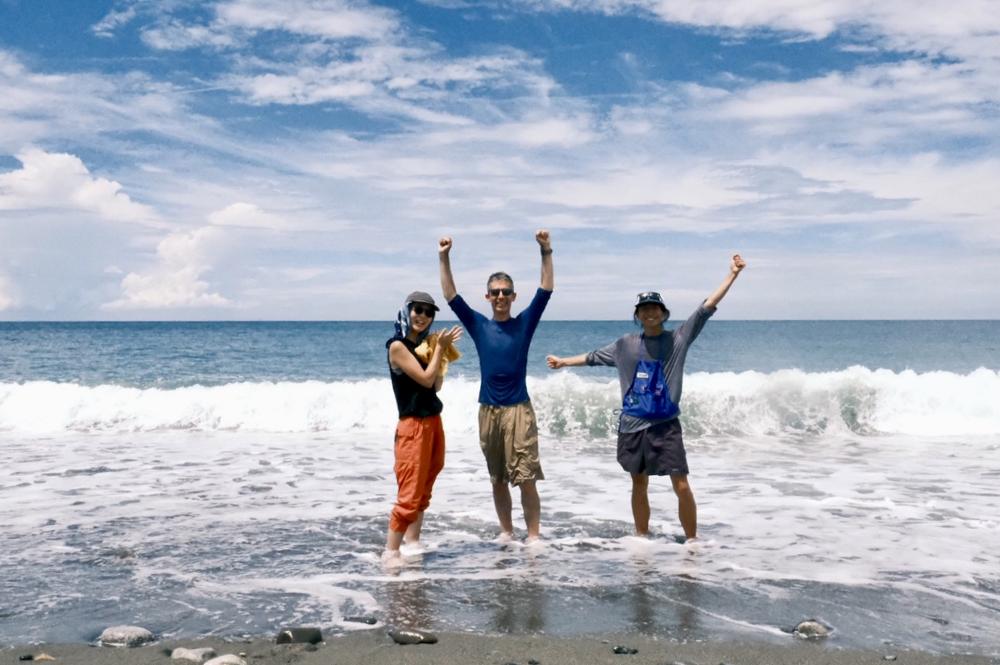
When we reach the park, I set down my pack and take off my shoes, then walk into the ocean. It’s surprisingly warm, but still cooler than the air, and it’s nice to dunk beneath the waves for a moment.
We retreat to the shade of some trees where there’s a picnic table, and have a lunch of things Miho and Atsushi bought from a convenience store. When we’re done, we look for a bus that can take us back to the city center, but there’s no bus this far out from the city. Atsushi has to call for a taxi again, and they say it’ll be a wait of an hour or so. Atsushi sets up a hammock he brought along — a hammock he made himself at the outdoor gear company he’s working at. He lets me take a nap in it while we wait for the cab.
The cab drops us off at Miho and Atsushi’s car. Atsushi drives us to Toyama City. We make a stop at a hot spring to wash off, then go a nearby rental house owned by a friend of theirs. The friend has offered us free use of the house for tonight.
We go out for dinner at a French restaurant, and shortly after getting back all crash for the night.
Family Japan Trip, Day 1. Angela and Bree fly from Seattle to Haneda Airport and make their way to Shinjuku. (Liya will come this weekend, Evan is still working in Mexico City so can’t join in this trip.)
Meanwhile, Jan rides with Atsushi and Miho from Toyama Prefecture to the Tokyo area. One part of the highway near Tokyo has a terrible backup, so before they reach that area, they leave the highway and get to a train station where Jan can get a train to Shinjuku.
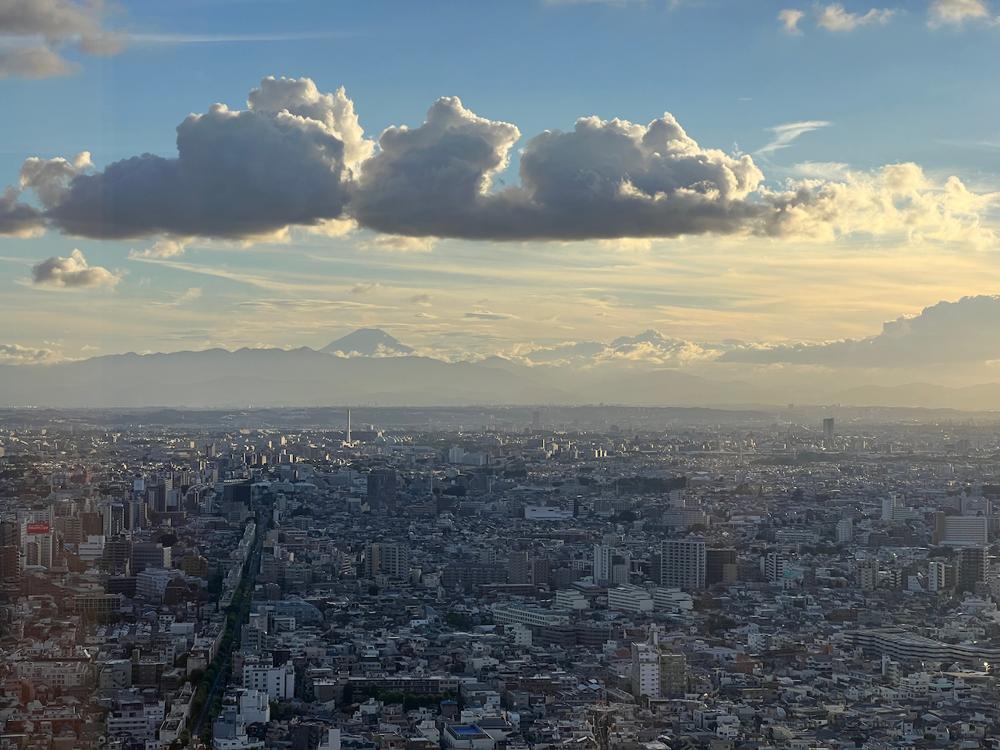
Jan meets Angela and Bree at the Tochonomae Station, and together we make the short walk to the Park Hyatt. It’s hot and humid of course, so we’re all melting by the time we check in.
We’ve got a nice room high above busy Shinjuku. We’re all interested in cooling enough, so take a dip in the pool, then we all nap for a bit.
There’s a well-reviewed Uighur restaurant nearby, and we’ve never tried that before so we head there for dinner. The food is fine, although the menu is heavy on lamb. We don’t eat lamb, so order a bunch of other things — one of which ends up having lamb in it anyway.
Family Japan Trip, Day 2. We have breakfast at the hotel restaurant. At one point, one of the chefs comes through the dining area with freshly baked madeleines which we happily accept. While he’s there, we ask the chef how they cook their perfectly round poached eggs — the secret is boiling them in the shell first at 64C until the white is cooked enough the hold the egg together, then cracking the egg open and boiling it a bit more.
We spend most of the morning in the hotel. Angela arranges a massage at the spa for Bree.
We go out to lunch on the early side, getting tempura at the Tsunahachi branch in the Keio department store in Shinjuku Station. Afterwards we take the train to Shibuya and go shopping at Seibu Loft. We don’t buy very much on this trip, although both Bree buys a cute Miffy cellphone case.
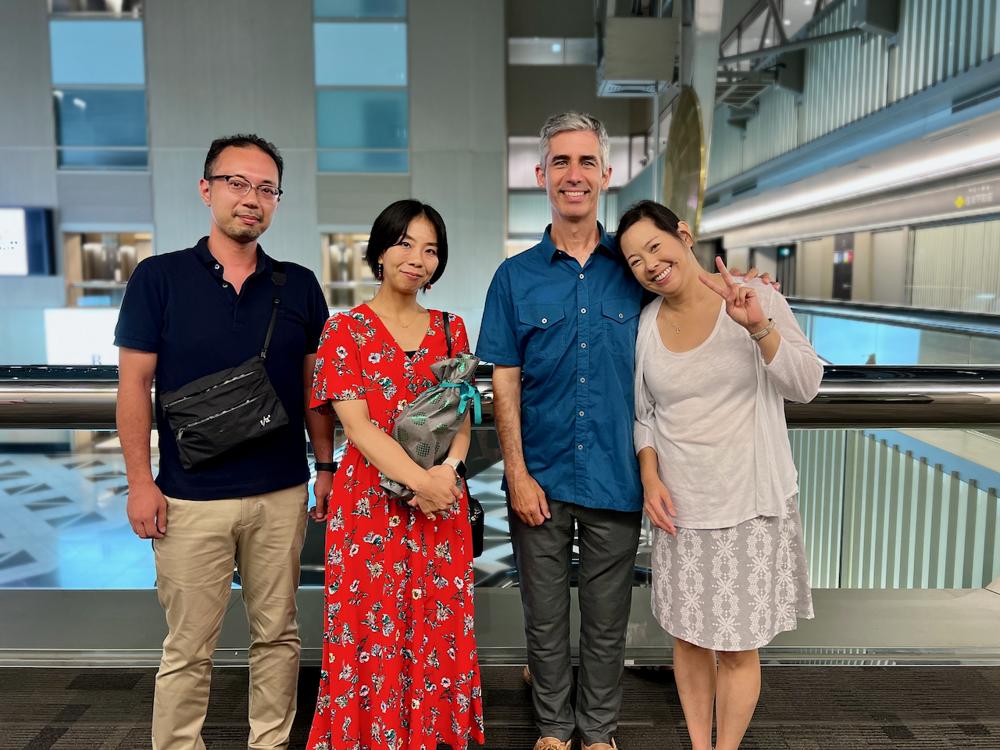
Mari and Sosuke Kimura meet us for dinner at a sukiyaki restaurant in the NS Building. It’s been a long time since we were inside that building, so we stop and look at the giant pendulum clock in the huge atrium. We enjoy some nice conversation over the sukiyaki course menu.
Family Japan Trip, Day 3. We want to try something other than the hotel restaurant for breakfast, but there are limited options at 8:00 am. We head to a nearby cafe called Jones Cafe that’s open — and it turns out to be the restaurant for a different hotel. It’s good, though.
Our first stop this morning is the Kigumi Museum, which is focused on the art of wood joinery. Japanese craftsmen have traditionally built buildings and furniture without nails, and have an amazing variety of complex techniques for joining pieces of wood together. Sadly, the museum turns out to be closed for a summer break. At least it’s a little fun for Jan to be in the Waseda University district he frequented during his year as a student in Tokyo.
The next stop is the huge Animate store in Ikebukuro, the world’s largest store dedicated to anime-themed merchandise. Bree’s looking forward to it, but the store’s something of a disappointment. It does indeed have merch for a staggering array of anime, but the goods themselves are lackluster: uninspired stickers, coasters, and other things with the likeness of anime characters. Very little of it is actually interesting. The funnest part is when Bree buys a little capsule from a gachapon machine for the “Skate the Infinity” anime.
We have soba for lunch at a traditional Japanese restaurant, then head to the Daikanyama neighborhood where Jan and Angela lived 23 years ago. The neighborhood has changed enough that initially Angela can’t see anything she recognizes. We stop for a drink at a cafe that’s an expansion of the Chez Lui cafe Jan and Angela often visited, then pop into the Okura store that sells indigo-dyed clothing. The last stop is the huge Daikanyama T-Site “campus” for the Tsutaya Bookstore chain, a beautiful sprawling complex of half a dozen cafes and bookstore departments.
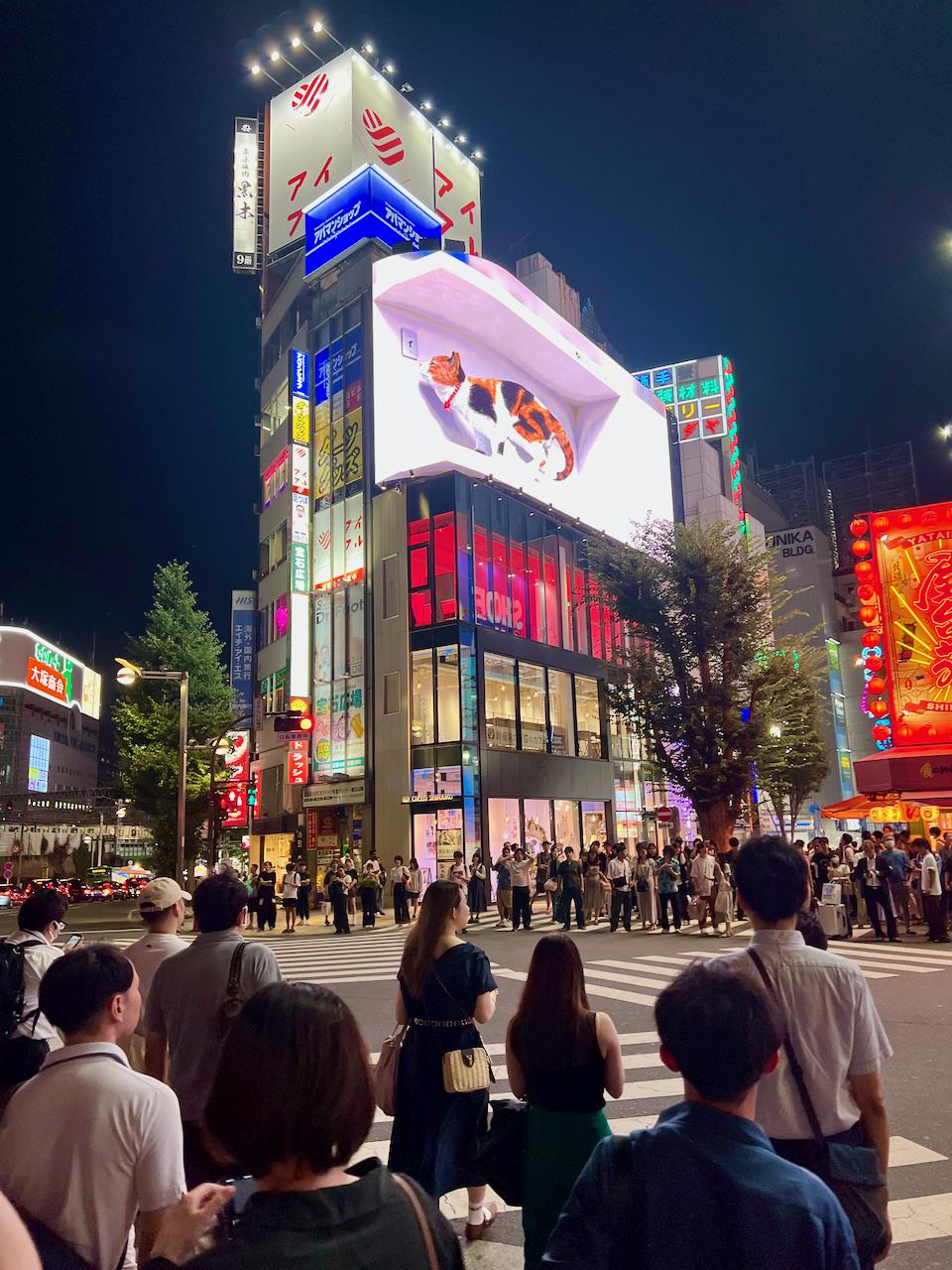
Dinner is at Sumibi Yakitori by Shinjuku Station. They have some complex website that lets you order food from your table, but we can’t get it to work, so they end up lending us one of their iPads. All the grilled dishes are really good. Before leaving the area, we stop to watch a huge digital display on the side of the building — from the right angle, the display creates a fairly compelling 3D illusion of a giant cat playing around. We also walk through the Omoide Yokocho alley area with all its tiny, old-fashioned beer-and-yakitori joints.
Family Japan Trip, Day 4. In the morning we go to Nippori, a Tokyo district known for fabric stores, so that Bree can shop for fabrics and other craft items. At Nippori Station, we meet up with a long-time friend of the family, Yamamura-san. Sadly, Yoshie’s husband passed away recently; we would have liked very much to see him again.
Yoshie has come with her two granddaughters, both roughly college age. The six of us start by setting out for the main branch of a fabric chain called Tomato. We strike out — today happens to be a relatively new national holiday called Mountain Day, and all branches of the Tomato fabric store are closed in observance. Many smaller stores are still open, though, so we begin poking into them. Bree’s very happy shopping for fabric and little things like buttons; the rest of us mostly trail along in her wake.
We have lunch at a cafeteria-ish restaurant, then one of the granddaughters needs to go. Bree shops for a bit more, and finally even she’s tired. We had back to Nippori Station and say goodbye to Yoshie, and the remaining granddaughter rides with us on the Yamanote Line as far as Ikebukuro while we continue back to Shinjuku.
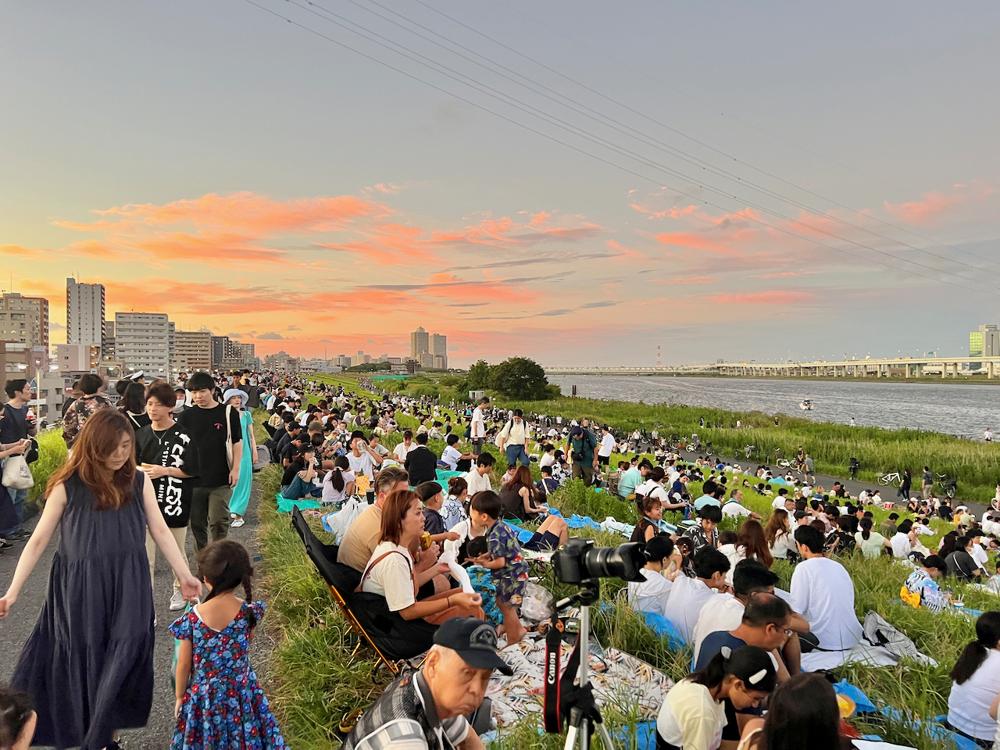
In the late afternoon we cross the city to Koto Ward, which we’ve never had reason to visit before. Tonight we’re going because the ward is holding a big fireworks festival. We have a little trouble getting to the area — the bus schedule is different today because of the fireworks. We manage to use Uber to call a regular taxi that takes us to a 7-11 where we meet up with our friend Miho. We quickly pop into the 7-11 to buy things for dinner, then follow Miho to the banks of the nearby river where the fireworks will be launched. Miho and her husband Atsushi arrived in the area in the middle of the afternoon to claim a spot on the grassy slope overlooking the river, and they’ve camped out in the broiling sun for several hours to keep that spot as the slope became packed with people.
In contrast to Seattle, where fireworks need to start at 10:00 for the sky to be dark enough, the fireworks here start promptly at 7:00 pm. The display is both very long — almost an hour — and shows off an impressive variety. Many of the fireworks go off in distinctive, recognizable shapes: a smiley face, a heart, the profile of Mt. Fuji, the face of a cartoon cat called Doraemon, even a hugh stylized mushroom like one from Super Mario.
When the show’s over, we all make a long walk back to a train station. Miho and Atsushi ride with us to Hatsudai Station, and we walk from there back to our hotel.

Family Japan Trip, Day 5. In the morning we check out of our hotel and go to Harajuku so Bree can shop at the boutiques and thrift stores on Takeshita Street. We stuff our bags into coin lockers, then begin wading through the dense crowds of shoppers that fill the busy pedestrian street. Bree finds a cute top and skirt, as well as a pair of boots with high platform soles. We stop to eat at a Mexican restaurant, then wind our way back to Harajuku Station.
Today we’re heading to a town called Gora in the resort area of Hakone. We take the shinkansen to Odawara, then a bus up a long winding road up into the low mountains of Hakone. We’ve been to a nice ryokan inn in Gora twice before, but this time we thought we’d try a new place called Gora Hanaougi.
The inn is quite nice, and we have a suite with one Western-style bedroom and one Japanese-style bedroom. It looks out across a valley to a green hillside. At the top of the opposite hill, trees have been cut down to leave a large grassy space in the shape of the Japanese character 大 (for “big”). It’s a famous landmark; at the conclusion of the Obon festival later this week (after we’re gone), the 大 character will be set on fire.
The ryokan serves a traditional multi-course dinner. On previous trips to Japan, Bree had either had a special children’s menu, or had avoided the more challenging food items, but on this trip she’s committed to trying everything. Jan’s told the inn that she doesn’t eat raw seafood, but aside from that, she eats the same menu as the Jan and Angela. She finds that she can tolerate most things, and even likes some of the things she hadn’t expected, like sea urchin.
A hurricane called Typhoon Lan (or Typhoon 7 in Japan) is coming. We’re hoping the typhoon doesn’t interfere with Liya’s arrival tomorrow afternoon.
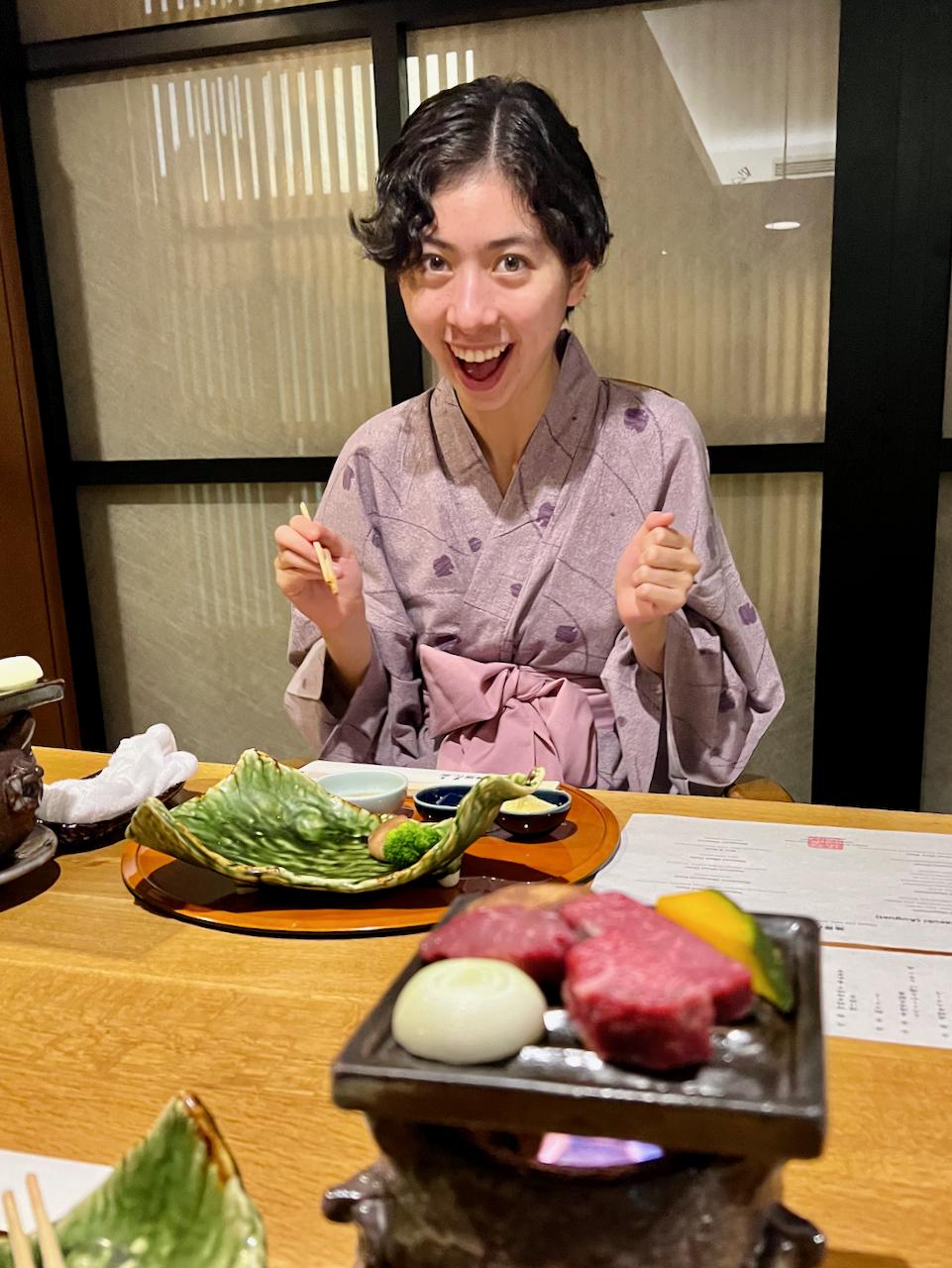
Family Japan Trip, Day 6. The hotel serves a big breakfast, although there are more challenging items than we’re ready to face early in the morning. Bree gamely tries a bit of natto — fermented soy beans — and nearly gags. Jan and Angela have encountered natto before and leave it alone.
It’s begun raining, the beginning of the effects of Typhoon 7 as it approaches to Japan. It’ll rain all day, but so far it’s not too bad, so we take a taxi to the nearby Pola Museum of Art. The main exhibition is on Nihonga, or Japanese painting after contact with Europe. This includes some older, traditional works, as well as many modern pieces. We’re all struck by one large work on the floor: a huge mirrored disk with an elaborate pattern that turns out to be executed in salt. Another work is a box filled with several inches of clear resin that were painted in layers to produce a 3D image of translucent goldfish.
We have lunch in the museum cafe, and are happy to have a break from the elaborate food at the ryokan. We go for a walk on the nature trail around the museum through a pretty, lush forest.
All the taxis in the area are busy when we want to go back, so we take the bus instead. There’s a point where we need to transfer to another bus, and the second bus is quite late, but we eventually make it back to the ryokan.
Meanwhile, Liya’s arrived at Haneda Airport and is making her way to us. The shinkansen bullet trains are still running today, so she makes her way to Shinagawa Station and boards one for Odawara Station. We’d originally planned to meet her there, but because her shinkansen is so fast and the local buses to Odawara are running slow, she’ll actually cover the considerably longer distance before we can. We give her instructions for taking the bus, and meet her at the bus stop near the hotel.
Liya has enough time to visit the women’s bathhouse with Angela and Bree while Jan goes to the men’s, and then it’s time for dinner. Tonight’s menu is slightly less challenging. One highlight is a morsel served in miso sauce on a magnolia leaf. Liya does a good job fighting jetlag to stay awake through the long meal, but she’s very sleepy by the time dessert arrives. Back in the room, she happily crawls into a fluffy futon and falls asleep.
Family Japan Trip, Day 7. Today we’re moving to the town of Atami. The town of Gora is served by a charming mountain train line — the mountainside is so steep that there are three switchbacks where the train actually reverses direction.
At Hakone-Yumoto Station, we transfer to a regular train to Odawara, where Bree has requested that we search for pasta. We sit down at a promising Italian restaurant, but the menu only lists Neopolitan pizzas. Liya notices some other patrons are eating pasta, so Jan asks, and the restaurant does have some pasta specials that aren’t on the menu. Bree is happy to satisfy her pasta craving.
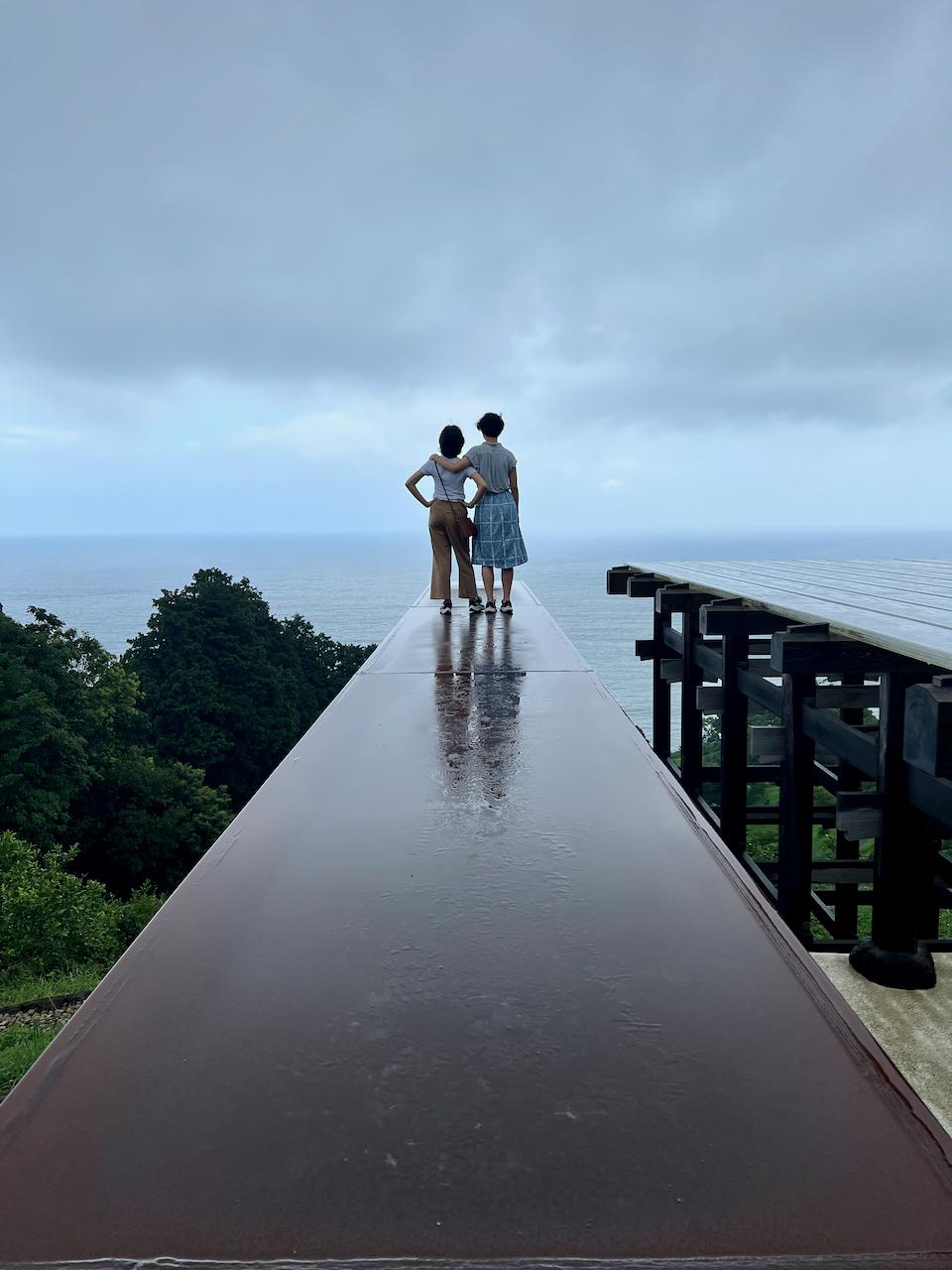
We take a train to Nebukawa Station, then a shuttle to a kind of sculpture park called Enoura Observatory. It’s been raining on and off all day as Typhoon 7 makes landfall, but just as the shuttle pulls into the Observatory parking lot, an incredible downpour roars down. The shuttle drivers says, “Well, maybe we should wait here for a few minutes.” Everyone stares out at the sheets of rain. A few minutes later, the driver says, “I need to go pick up the next set of visitors.”
Everyone gets out raingear or umbrellas and walks quickly through the rain, across the parking lot and up a short walk to the reception area. Most of the sculptures and things to see here are outside, so it’s uncertain how fun this is going to be. However, by the time we get our bags stashed in coin lockers, the rain suddenly lets up.
The Observatory has a couple of interesting structures, including two long tunnel-like rooms. One’s lined with photographs of seascapes, the other is mostly dark, but it’s possible to walk outside onto the top of a section that sticks out of the hillside. From those we make our way down the hill past various sculptures, an old farm building, and a bamboo grove, before making our way back up past a small shrine.
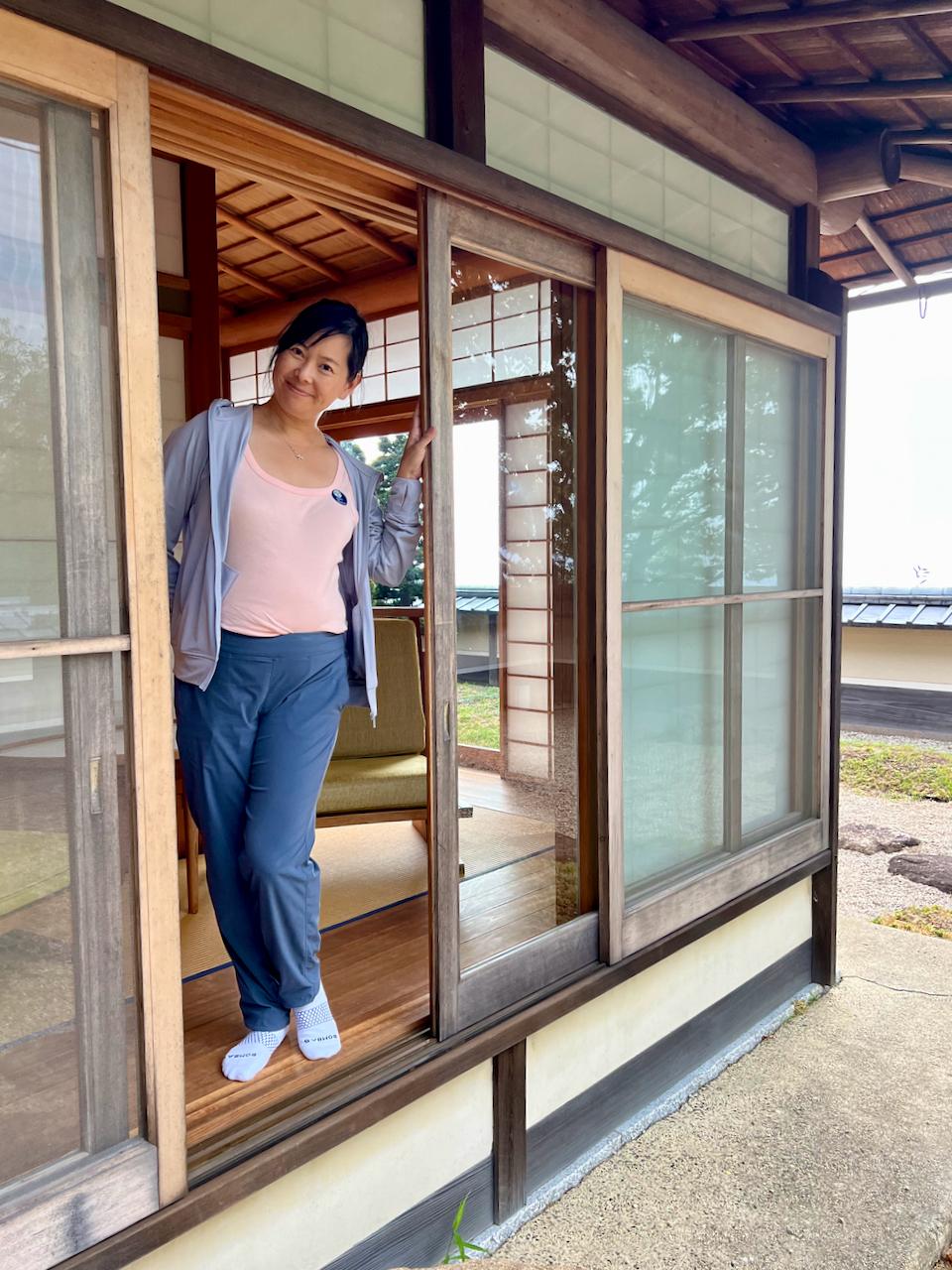
Back at Nebukawa Station, we catch a train to Atami, where a car meets us and drives us a short way to the Hiramatsu Atami hotel. Our room turns out to be a sprawling suite of tatami-mat rooms. In one direction, the suite has a veranda out to a little Japanese garden; in another, a deck with a hot spring bath looking out over the bay.
The hotel restaurant is known for its excellent French course menus. Jan’s happy he remembered to indicate that we don’t eat lamb, as tonight’s menu features it; instead, they’ve substituted beef. The main server asks if we all want a wine pairing with the dinner. Bree gets a pairing of iced teas, but Liya joins us in getting a wine pairing. (She’s still a little under the legal drinking age of 20 here, but the hotel doesn’t seem to care.) The restaurant lives up to its reputation, and all the food is delicious. One notable course is a set of little morsels served on a thin rock slate. One of the morsels is a bit of proscuitto and cheese on what looks like a round slate disk — Jan’s happy he catches the server’s explanation that the disk is actually an edible cracker. That little morsel is particularly tasty.
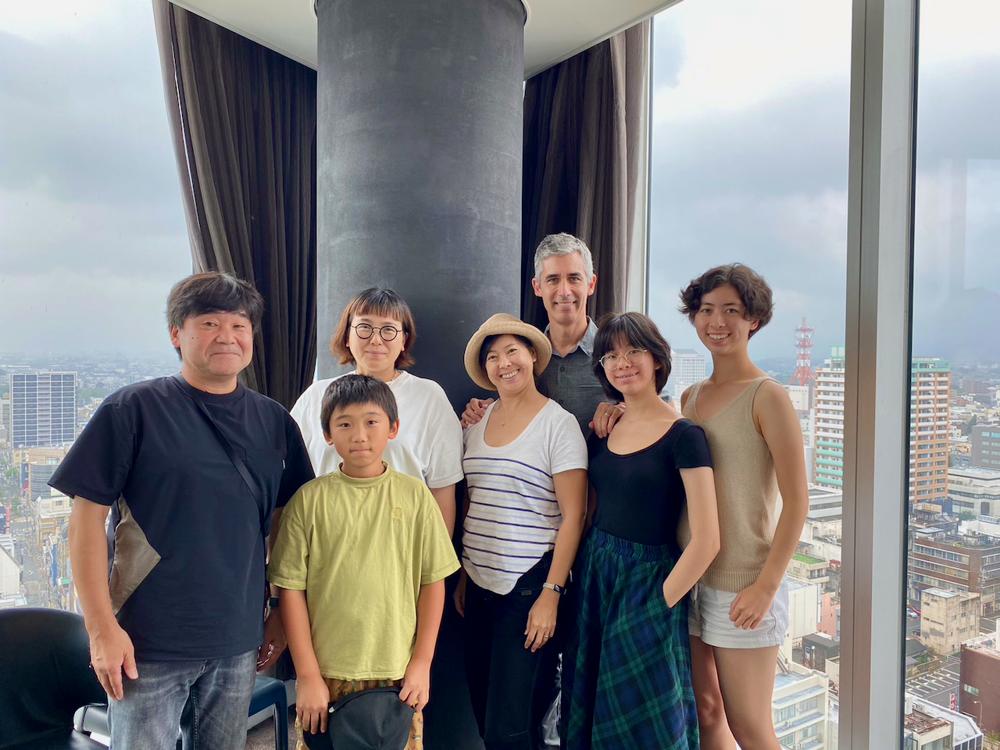
Family Japan Trip, Day 8. Today the typhoon makes landfall, so we’re not quite sure whether we’ll be able to take the shinkansen as planned to Nagoya. We enjoy a nice Western-style breakfast in our suite, then pack up and head to Atami Station. So far, the trains are running, and we’re able to travel to Toyohashi.
In Toyohashi, we’re met by the Shinohara family. We first met Toshikazu and Ayako when Jan’s startup Cozi was working with a Japanese investor. They have a son, Ryu, who was 5 years old the last time we saw him in Seattle; now he’s 10. They’d planned to take us to a Japanese restaurant for lunch, but they explain that almost all the restaurants are closed today because of the typhoon. They’ve found one restaurant open near the station, and have made reservations there for lunch.
We have a nice lunch, although much of the conversation ends up having to be in Japanese. Our table is in a corner window looking out over the city of Toyohashi, which today appears deserted. After lunch, the Shinoharas walk us back to the station. Many trains have been cancelled, but luckily there’s still a train running to Nagoya. Toshikazu takes a picture of the mostly empty station; it’s usually packed.
We arrive in Nagoya in the late afternoon and check into the nondescript Nagoya Tokyu Hotel. At dinnertime, we ask the concierge’s help in finding a restaurant that’s open for dinner. He has a list of restaurants are open, but the first one he tries doesn’t have room for a party of 4. The second one is a restaurant known for its peppery chicken wings, and happily does have room for us. It’s just around the corner. The chicken wing restaurant is good, although Bree finds most of the food to be too spicy.
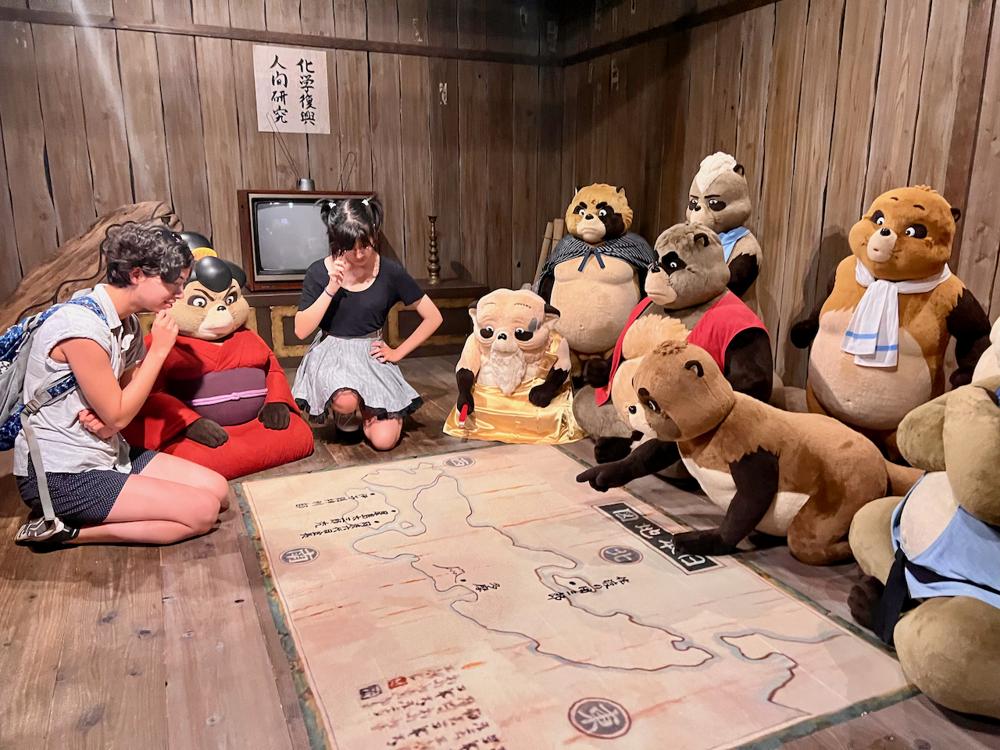
Family Japan Trip, Day 9. The typhoon has finally passed Japan, and the weather turns clear and hot again. We go out for a late breakfast at Hoshino Coffee in an underground shopping mall so we can try their soufflé pancakes. They’re fine, although perhaps not the soufflé pancake of our dreams.
Today’s expedition — in fact, the whole reason we’ve come to Nagoya for two days — is to visit the new Ghibli Park on the outskirts of the city. It’s something like a subdued theme park for Studio Ghibli movies; there’s plenty to see, but the park takes pains to emphasize that there are no rides.
The park opened only last year, and at the moment only three of the five areas are open to the public. The only tickets we could get came with access to two areas. The first of these is called the Hill of Youth, which turns out to be dedicated to two obscure Ghibli movies: The Cat Returns and Whispers of the Heart. The former is represented with a cute miniature house, the second with a full-scale reproduction of a shop and house. It’s been years since we’ve seen either of those movies, so the attention to detail is entirely lost on us. As we go through the house from Whispers of the Heart, Bree says, “I feel like I’m just walking through someone’s house.”
The second park area, the Grand Warehouse, makes up for that. It’s a huge building that we spend several hours exploring. We tour a museum exhibit focused on director Hayao Miyazaki’s many scenes involving food and eating, and watch an animated Ghibli short movie in the theater. The movie playing this month is Kemushi no Boro (“Boro the Caterpillar”), a typically cute but strange Miyazaki work. The most notable feature of the movie are the sound effects voiced by a Japanese comedian.
We get lunch at the building’s restaurant, and are grateful that our outdoor seats are at least in the shade. After lunch we visit a number of little shops, then wait in a very long line for the building’s main exhibit: a series of rooms with full-scale dioramas showing famous scenes from Ghibli movies. Each diorama omits one of the scene’s main characters, allowing a visitor to step into the scene and have their picture taken. The longest line is for a diorama for a scene from Spirited Away in which the protagonist sits a train with a mysterious figure called “No-Face”.
Back in Nagoya, we rest in the hotel for a bit, then go out for ramen.
Family Japan Trip, Day 10. Bree opts to sleep in and eat breakfast in the hotel while Jan, Angela, and Liya walk to a cafe for breakfast.
We check out of the hotel and get in a cab. “Where to?” asks the driver. Jan says, “Tokyo Station.” “What?!?” says the driver. Tokyo Station is many, many miles from here. “Um,” says Jan, “I mean, Nagoya Station! We’re going to Tokyo from there.”
Nagoya Station is a zoo. Although the typhoon has passed, heavy rains overnight caused additional disruptions to the train schedules, and most of the trains are delayed for one or two hours. There’s a sea of people outside the ticket wicket, each watching the signboards for an indication of when their train might leave. A scrum of TV cameramen are on hand to capture the scene. Miraculously, our train is one of the few that’s on time, and we leave on schedule.
We leave the train at Mishima Station to reunite with an old friend, Beth, whom Jan’s known since his year at Waseda University. Beth married a Japanese man and lives in the town of Susono next to Mishima; Jan actually passed through Susono on his Japan hike last month, but at that time Beth was visiting family in Washington State.
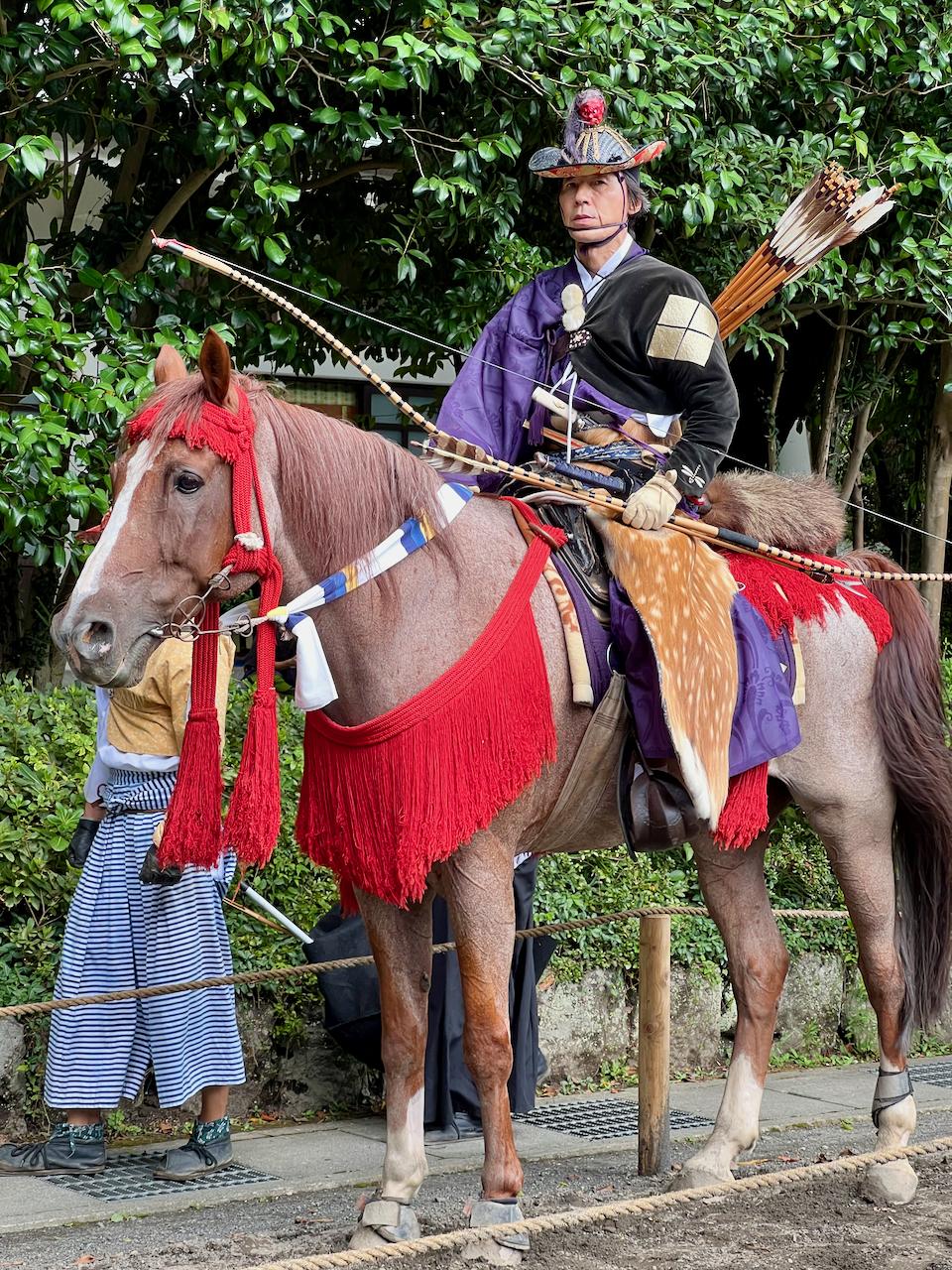
Beth walks with us through the streets of the city to Mishima Shrine, which is finishing up a multi-day festival today. The big event of the day is a display of Japanese archery from horseback, which takes place along a long, narrow track. We join the back of the crowd along the track as we wait in the sun for the event to start.
Shortly before the event begins, an older Japanese man stops to talk to Jan. “Where are you from?” he asks. Jan has a short conversation with the man in Japanese. The man appears to come to a decision, and says, “Come with me.” We’re puzzled, but follow along in the man’s wake. He tells Jan that one of his roles at these archery events is to help promote the events to foreign tourists.
The man leads us to the middle of the horse track, where there’s a small raised structure in which shrine officials are sitting. He pushes through the standing crowd to reach a roped-off area next to the structure. Here we find some VIPs sitting on a small number of folding chairs. The man holds open the rope and gestures for us to take the remaining seats. We’re baffled, but happily take the proferred seats. Someone tells us that we can’t sit there, but the man talks with them, and apparently has sufficient pull that we’re allowed to stay.
A short while later, there’s a procession of priests through the shrine and down the track. They stop at each of the three targets to the side of the track to perform a blessing. After this, the archers come through with their horses. The outfits are impressive but also look uncomfortably hot on a day like this. Among the multiple layers of clothing, they’re wearing some sort of deerskin chaps.
Finally the archery display begins. Each rider takes a turn galloping down the narrow track. Although the horse is racing along, the rider holds his upper body completely upright, and strives to keep the level of his head completely fixed in place. Just before reaching each target, the rider quickly draws a weighted arrow, turns, and fires it at the target. Given the complexity of what they’re doing, it’s incredible that they manage to hit the target at all, but they do this perhaps the majority of the time, and some of the riders manage to hit all three targets on a single pass.
The only downside of our entirely unexpected VIP seating is that we feel committed to watching the whole event, which stretches to something like two hours in the hot sun. None of us had thought to bring our sun hats or Angela’s sun umbrella, so we all get quite hot. The nice man brings us some cold barley tea to drink.
Finally, the archery is over. We thank the man, and then walk back through the shrine past lines of festival food stalls. We haven’t really had lunch, so eat our way through a variety of things until we’re full. Beth walks us back to the station, and we board a train to finish the trip to Tokyo.
We’ll be staying in Tokyo for three nights, and for this second stay we’re trying a different hotel, the Hoshinoya in the Otemachi area near Tokyo Station and Ginza. The Hoshinoya does a credible job blending aspects of a traditional Japanese ryokan with a city hotel. One such aspect is leaving shoes at the hotel entrance and walking around the hotel in bare feet or socks.
For dinner, we find an Italian restaurant near the hotel that can fit us in a row of counter seats. The food’s very good, although it’s loud enough that we can’t all hear each other.
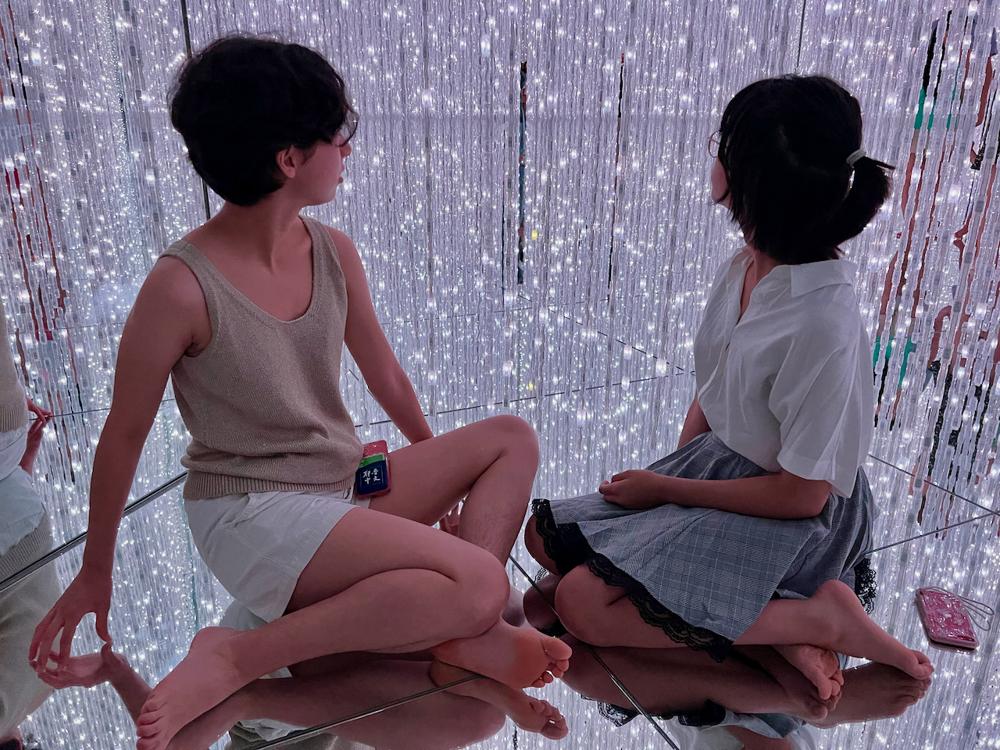
Family Japan Trip, Day 11. In the morning we make our way to an art space produced by a group called teamLab. They create large interactive exhibits, often involving digitally generated and projected flowers, birds, and fish. Today we’re visiting one of their permanent exhibits, teamLab Planets.
The exhibit is beautiful and fun to walk through. Some highlights include: walking barefoot up a dimly-lit ramp that has water running down it; a sloped room whose floor is essentially a giant beanbag; a mirrored room hung with thousands of LED strands; a room full of giant inflated spheres; and a room filled with thousands of orchids hung along wires that move up and down.
We’re back at Tokyo Station near lunchtime, but all the restaurants have long wait times. A promising French restaurant says the wait will be “30 minutes or more”, so we settle in for a wait that turns out to be an hour. The food is fine, but not really worth the wait.
Underneath Tokyo Station there’s a long shopping mall called Tokyo Character Street where the shops focus on character-themed merchandise. Liya and Bree are happy to slowly make their way through the mall. They make purchases from the Rilakkuma store and another focusing on a cute character we’ve never heard of before: Koupen-chan, a round penguin.
By now we’re exhausted, so make our way back to the hotel. We visit the bathhouse on the top floor and nap for a bit.
We take a cab to the Ginza area for dinner at Moonflower Sagaya. The restaurant is host to a collaboration with the same teamLab group whose exhibit we visited in the morning. The collaboration takes the form of a seasonal course menu served in a dining room with digitally projected nature scenes on the walls and a large dining table. We share the table with a family of three from Los Angeles.
Each of the seven place settings has a white plate lit up by a spotlight. Bree’s the first discover that there are cameras in the ceiling tracking the position of the plates — when she moves her plate, the spotlight on it moves to stay focused on the plate. The cameras also distinguish each course based on the plate its served on; when a new course is set down, a different visual effect is projected on or around it. For a fish course, a river of white particles and projected fish flows across the tabletop and around the individual plates. A seasonal course for summertime comes with projected sunflowers on the walls.
Family Japan Trip, Day 12. We’re interested in trying another soufflé pancake restaurant, but the one we pick is too popular: we arrive just as its opening, but there’s already a 70 minute wait. We opt instead for Cafe Noa next door, which serves good french toast.
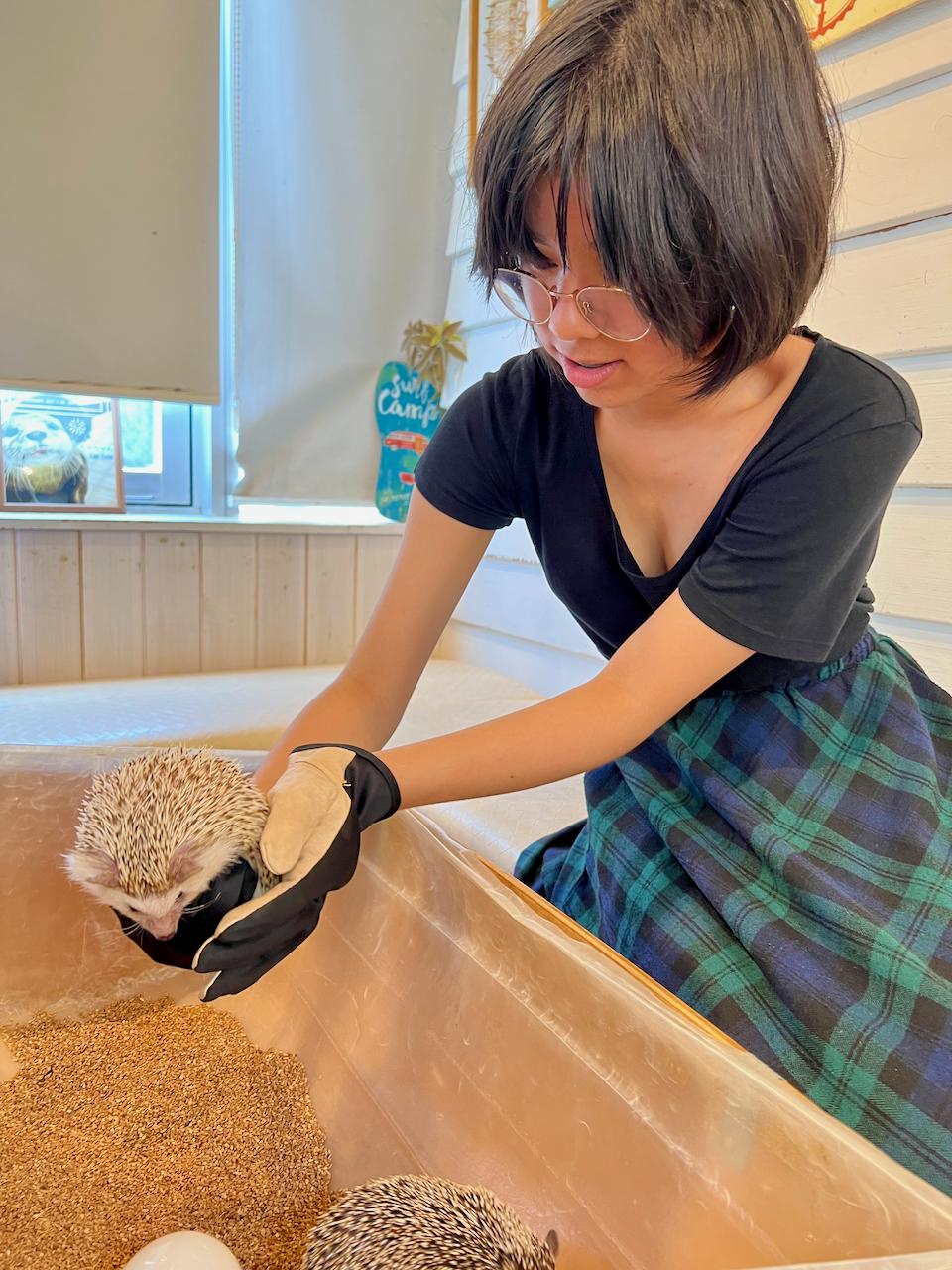
In the early afternoon, we go to Omotesando to visit a “cafe” of sorts called Harry Harajuku Terrace. It’s essentially a petting zoo for adults that offers the chance to pet or hold hedgehogs, otters, rabbits, and chinchillas. The animals are all adorable and it’s interesting to interact with them, but we feel bad for the hedgehogs (they’re nocturnal and would rather be sleeping) and the river otters (they’re wild animals need a lot more space).
We have a reservation for afternoon tea at a Japanese confectioners called Higashiya Ginza. This includes several green teas, a plate of savory bites like inari (tofu-wrapped rice), and a plate of sweet ones (the best is a chestnut stuffed with black sesame). Bree’s too exhausted to really enjoy it.
In the early evening, Angela takes Liya and Bree to the large Sekaido stationery store in Shinjuku so that Bree can keep shopping for school supplies. She wants to buy a particular type of notebook binders for school, but couldn’t find what she wanted at Itoya, and our friend Ayako had recommended Sekaido as having better, more practical goods.
Meanwhile, Jan goes to a pharmacy to find cough syrup for a very mild cough he’s been developing. A covid test confirms it’s not covid (whew), but he still wants something to help him sleep. He asks the cashier where to find cough suppressant, and she leads him to an overwhelming wall of options. Based on what Jan says, she recommends two things, which he buys: a box of pills that probably have some clinically-verifiable value, and a bottle of some syrup that turns out to be a mixture of various extracts.
Jan meets up with everyone at Sekaido. By now it’s 8:00 pm and we’re all hungry. For our last meal in Japan, Liya’s interested in having Japanese curry, but the curry restaurant we go to turns out to be an Indian restaurant called Jasmine. We’re too hungry to look elsewhere; at least the curry is pretty good.
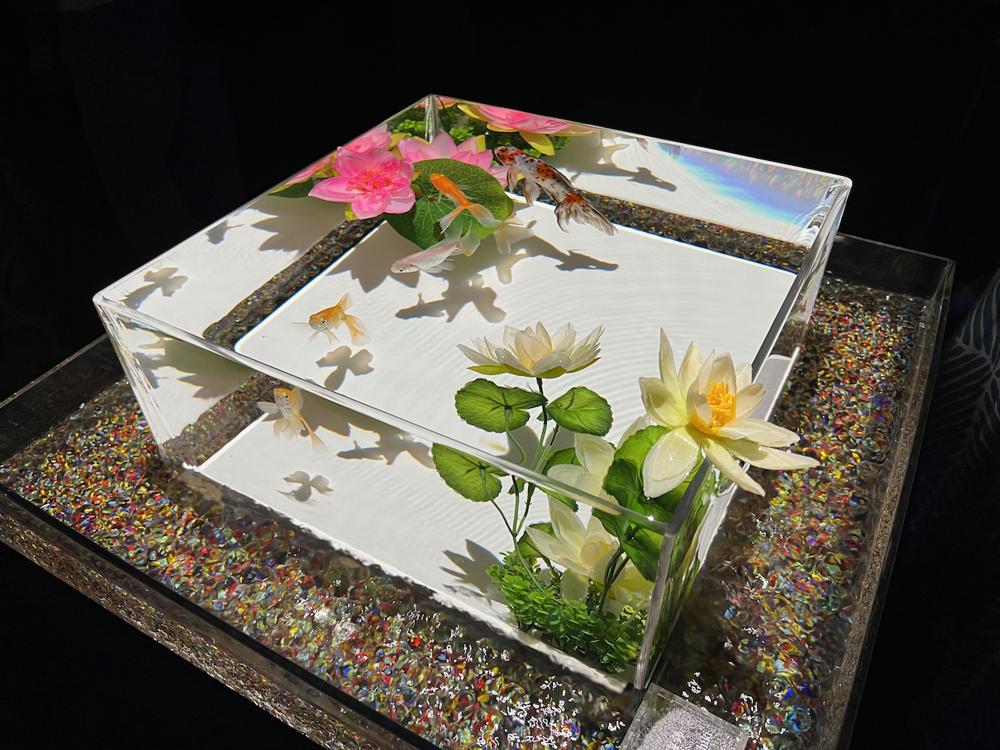
Family Japan Trip, Day 13. Our flight back to Seattle isn’t until 4:00 pm, so we squeeze in one last tourist activity: an exhibit called Art Aquarium Museum in a Mitsukoshi department store in Ginza. The exhibit features fantastical aquaria containing exotic goldfish. The highlight are dramatically-lit low glass boxes overflowing with water, each containing colorful flowers and fish.
We have lunch afterwards at a cafe in the same Mitsukoshi department store, then head back to the hotel to pack up. Since we’re only going to nearby Haneda Airport and have a fair amount of luggage, we call for a taxi. The hotel staff thinks we’ll need two taxis for all the luggage. When the first arrives, it’s clear we can fit everything in one taxi, but by then we’re committed to taking two.
Although we arrived in Japan at different times, we’re happy we can all return on the same flight — we were even able to get our seats all together. The flight back is long but fine.
When we clear customs and immigration at SeaTac and head outside, the Seattle weather is noticeably cooler. The light is weird, though; smoke from forest fires has turned the sky orange. A car Angela arranged for takes us back to our house. Our cats Mojo and Moxie greet us at the door and are happy to get outside for the first time in a week. We’re happy to all go inside and collapse.
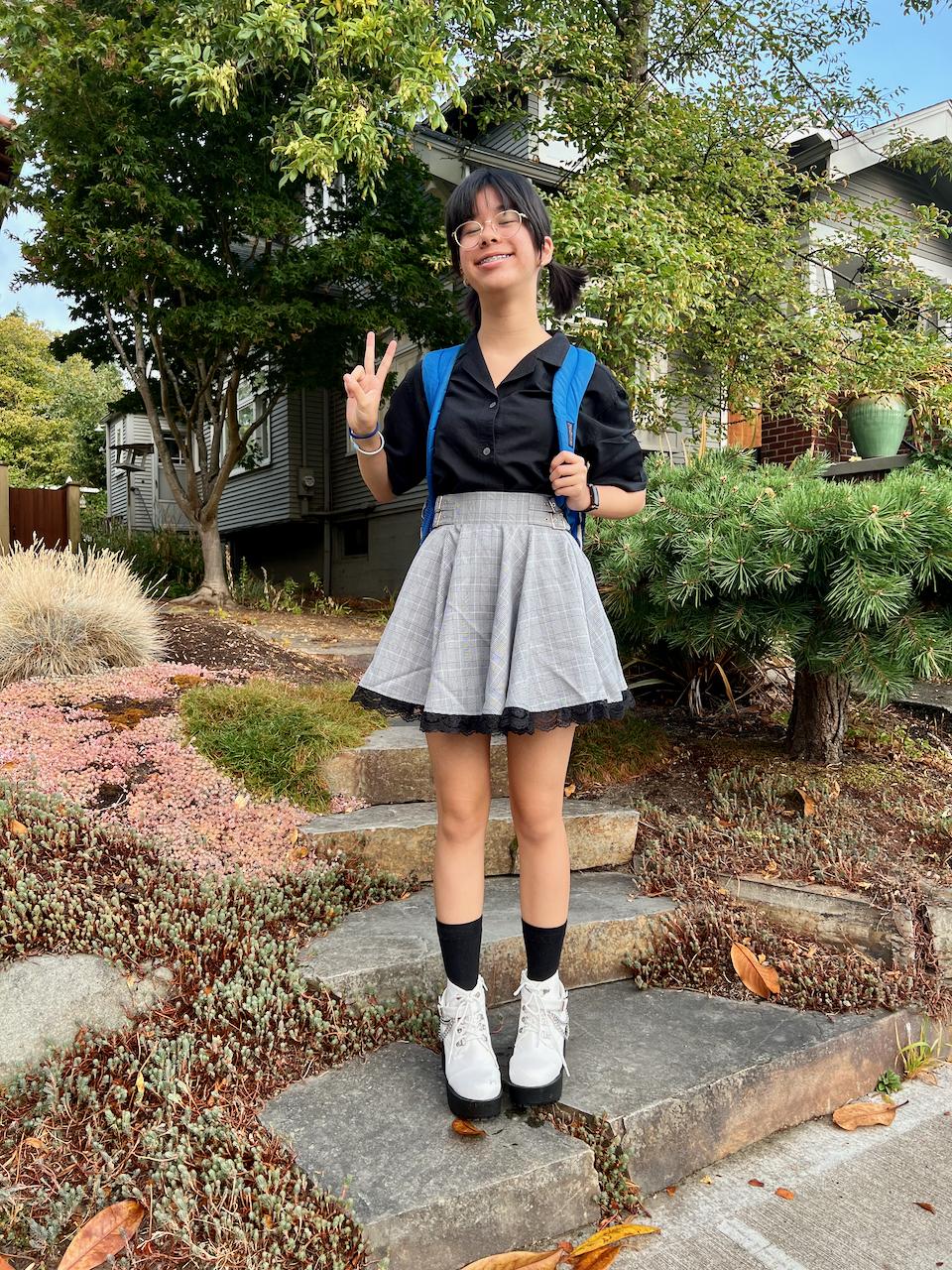
Bree heads back to school for the start of 10th grade.
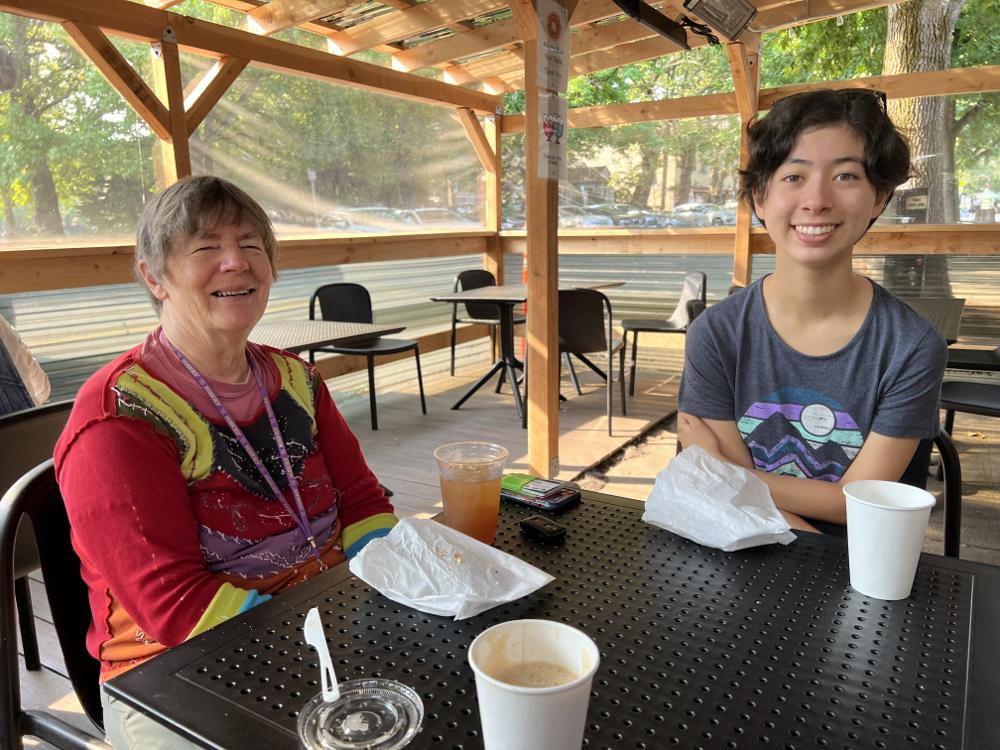
Lyn and Liya join Jan for a breakfast at Madison Kitchen.
Liya celebrates her 20th birthday at home with Jan, Angela, Bree, Cheng-nan, E-moon, and Lyn. For dinner, Jan grills skewers of chicken and beef on the backyard barbecue. Per Liya’s request, Angela lays out a sampler of 7 small cakes and other desserts from local bakeries.
Liya returns to Yale for the start of her junior year. She’s sharing a room with her friend Jordan; the room is part of a suite of 6 students, all friends.