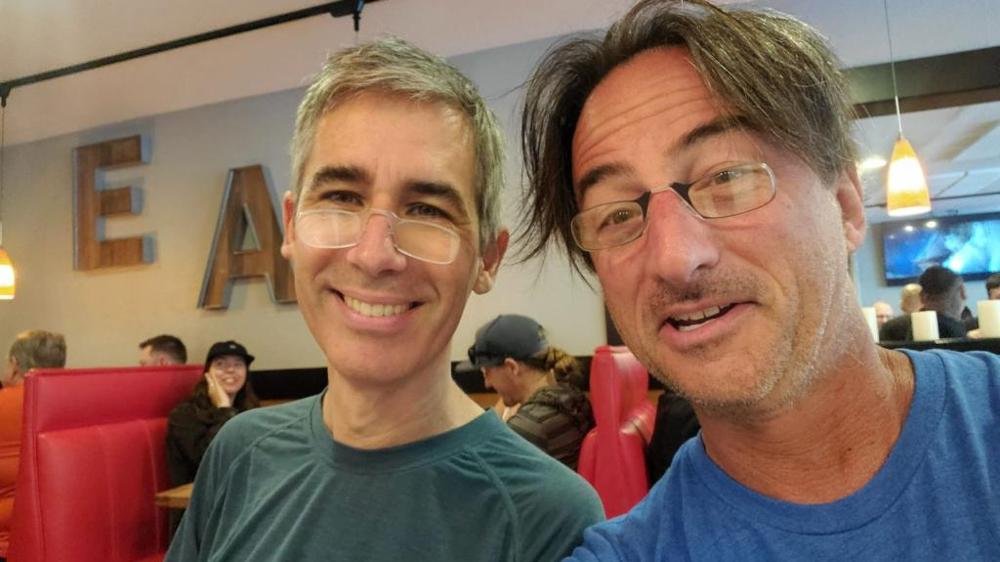
When Jan meets up with Joe for breakfast, they both pull out their portable pince-nez reading glasses to read the menu. Jan discovered these glasses years ago when he was trying to find ultralight and durable glasses he could use on the Pacific Crest Trail. He now carries a pair in his wallet, exactly for occasions like reading menus. Joe likewise found that he also needed portable reading glasses, so he bought some too. Now they can both ridiculous together.
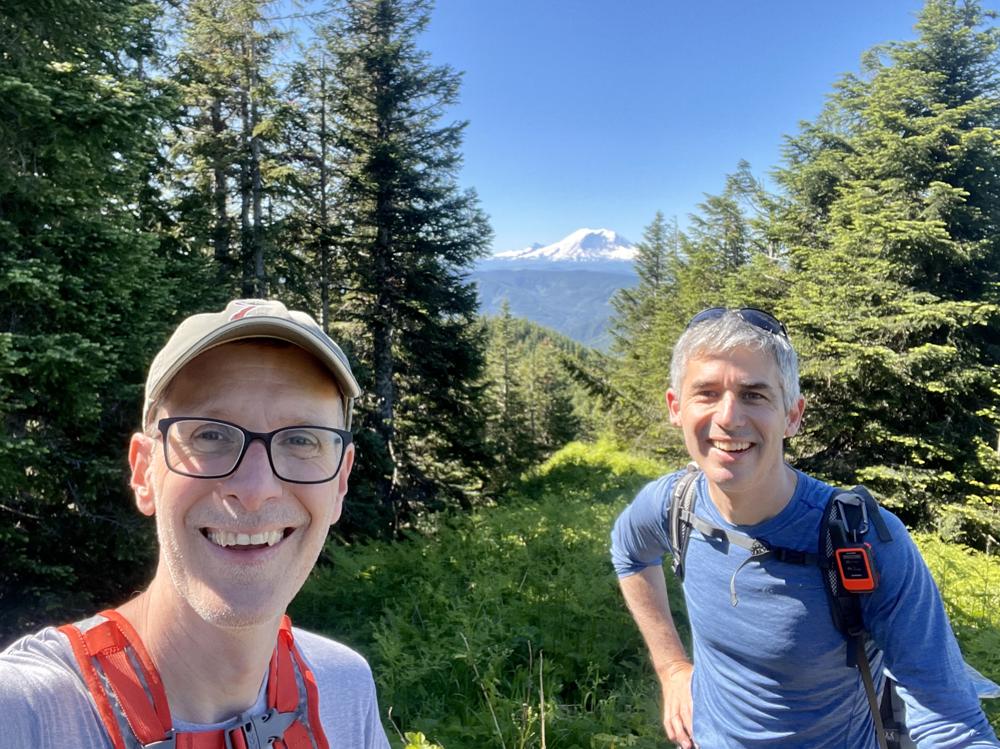
Jan does his last training hike with his friend Chris to the summit of Mount Washington at the edge of the Cascades. They get an early start, and make very good time to the top of the mountain.
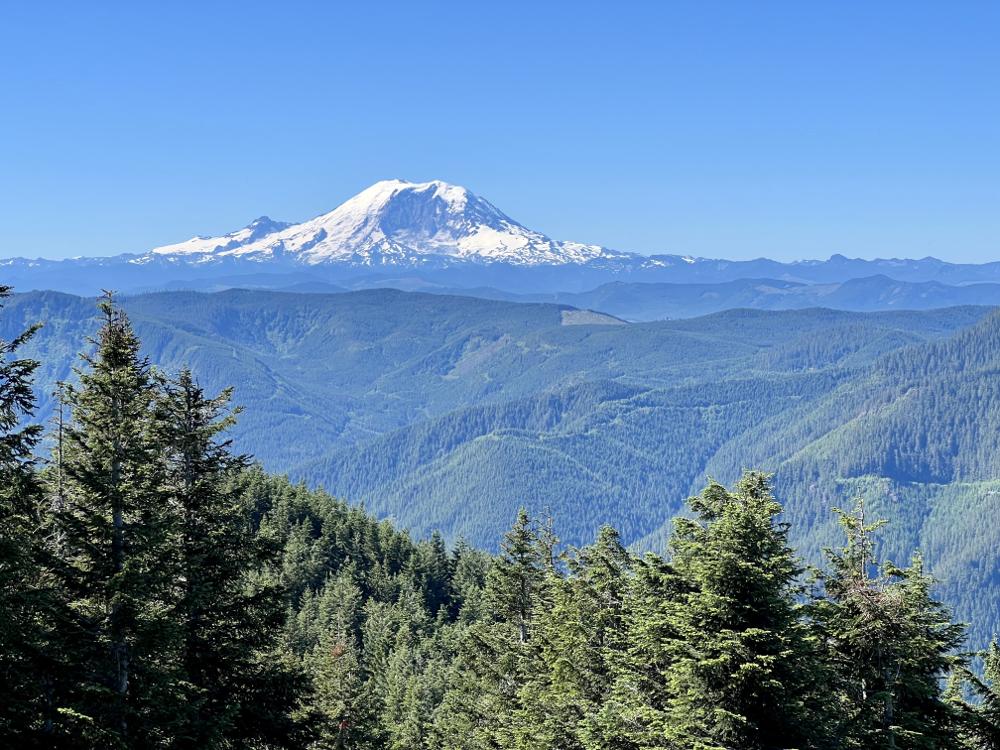
Neither of them have climbed this particular mountain before, and so they’re both delighted to discover that the summit has fantastic views — some of the best along the I-90 corridor.
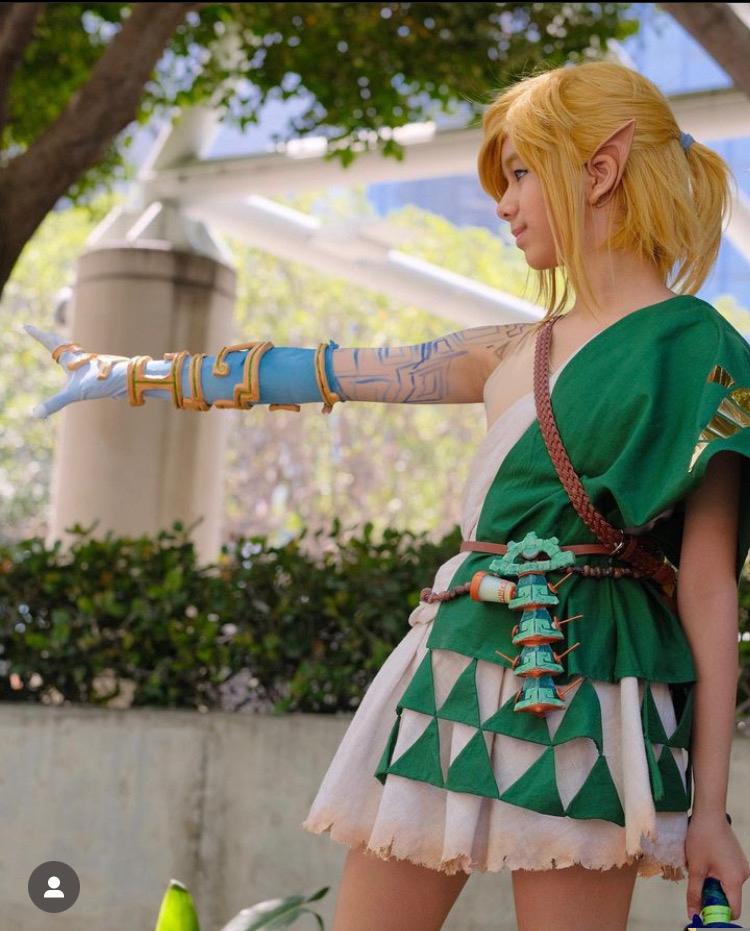
Bree as Link from “The Legend of Zelda: Tears of the Kingdom”

Bree’s friend, Marina, as captured by a cosplay photographer. Marina is wearing eight giant wings with an 8’ wingspan that force her to walk crabwise through the dense crowds at Anime Expo.

This spring, a Dutch graphic designer named Edgar Walthert included Jan’s Emojese emoji language site in a poster about emoji languages for a graphic design exhibition. Jan receives copies of Edgar’s poster, along with some of his other work.

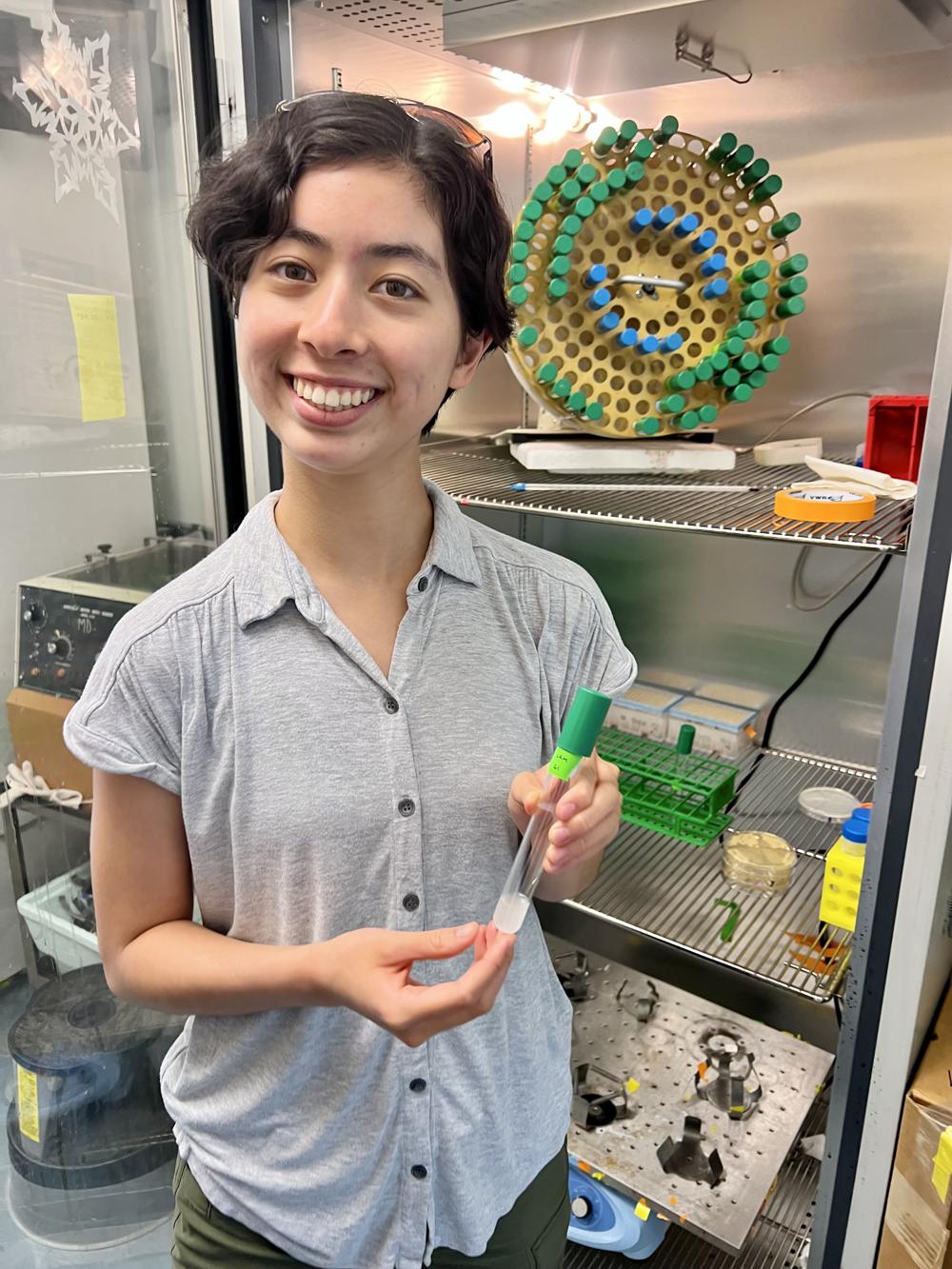
Liya gives us a tour of the lab where she’s working this summer. We first meet up with her and her mentor, Leah, and go to lunch at the nearby Agua Verde cafe. Leah is nice, and seems like a great mentor. Overall, Liya seems to have lucked out in getting a good lab, good PI (Primary Investigator, the person running the lab), good coworkers, and good project.
After lunch, Liya and Leah give us a little lab tour. Liya shows us the station where she’s working with yeast samples, along with lab equipment like the ultra-cold freezer (-72 Celsius) and the centrifuge that gently whirls around little test tubes.
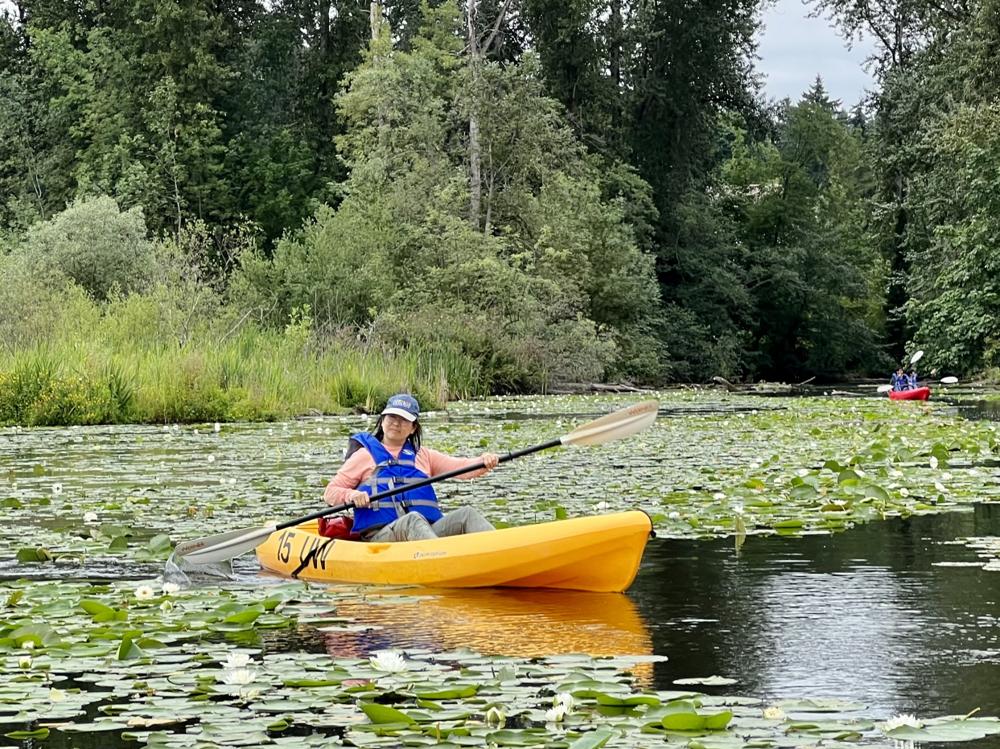
Jan, Angela, and Liya go for a morning canoe and kayak paddle through the Union Bay wetlands and Marsh and Foster Islands. It’s been a very long time since we’ve done this; we’d forgotten how peaceful and pleasant the area is.
Jan and Angela attend a surprise birthday party for their long-time friend, Joe Belfiore. His wife Kristina is also throwing the party to celebrate Joe’s retirement from Microsoft. Joe joined the company only a month or so after Jan did back in 1990, but has stayed at the company all these years.
Joe is suitably surprised and delighted by the large crowd of assembled friends.
Sabriya turns 16 years old!
Because Jan is leaving for the airport this morning, we all get up early to gather around the breakfast table and wish Bree a Happy Birthday before Jan departs.
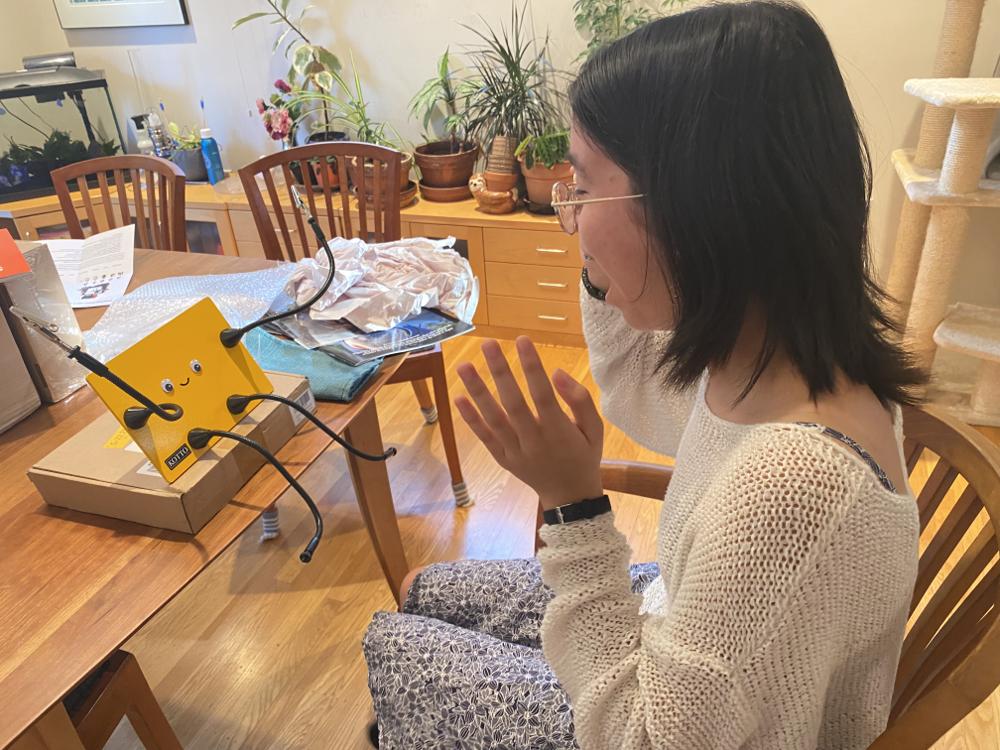
At dinnertime, Bree opens a few more gifts. She’s delighted by Liya’s gift: a set of “helping hands” for soldering. This is a baseplate with some alligator clips on bendable stalks that can be freely positioned to hold things together while soldering or performing other work. Liya’s given it googly eyes and a smiling mouth.
Jan’s Japan Hike, departure. After over a half a year of planning, today’s the day I leave for a four week hiking trip in Japan. Angela and Bree will join me after the hike for two weeks of family tourism, and luckily Liya can join for the final week as well.
After breakfast, Liya gives me a ride to the airport. The 10-hour flight to Haneda Airport is long but unremarkable. It’s extremely hot and muggy in Japan at the moment, but it’s nevertheless wonderful to finally be able to visit again for the first time since the pandemic. (Japan remained closed to tourists until late last year.)
Jan’s Japan Hike, arrival. I take a train to Shinagawa Station and then a shinkansen bullet train to the small city of Mishima. It’s the late afternoon, so I try to take a short nap before dinner. I can’t fall asleep, so head to a nearby yakitori restaurant (grilled things on sticks) that opens for dinner at 5:00 pm. The food is great, and I try a few things I’ve never had before. One is a grilled piece of Camembert cheese that’s served under a glass filled with smoke; it’s quite good.
After dinner I take a short walk through Shirataki Park, which is small but contains several beautiful streams running down to a canal. Back at the hotel, I avail myself of their “view bathhouse” on the top floor. On clear days there should be a good view of Mt. Fuji, but it’s cloudy today. The bath is still nice.
A downside to being right in the middle of town is some street noise from far below. There’s an intersection with a pedestrian cross signal that makes a piercingly loud “Beep boop” sound over and over again.
Jan’s Japan Hike, Day 1. I’m up far too early with jetlag, but make the most of it by getting ready to set out right after breakfast at a Tully’s Coffee on the ground floor of the hotel. Japan is the only place where the Tully’s coffee chain from Seattle still operates. It’s nothing special but it feels a bit nostalgic to eat there — we used to have a Tully’s just down the block from our house.
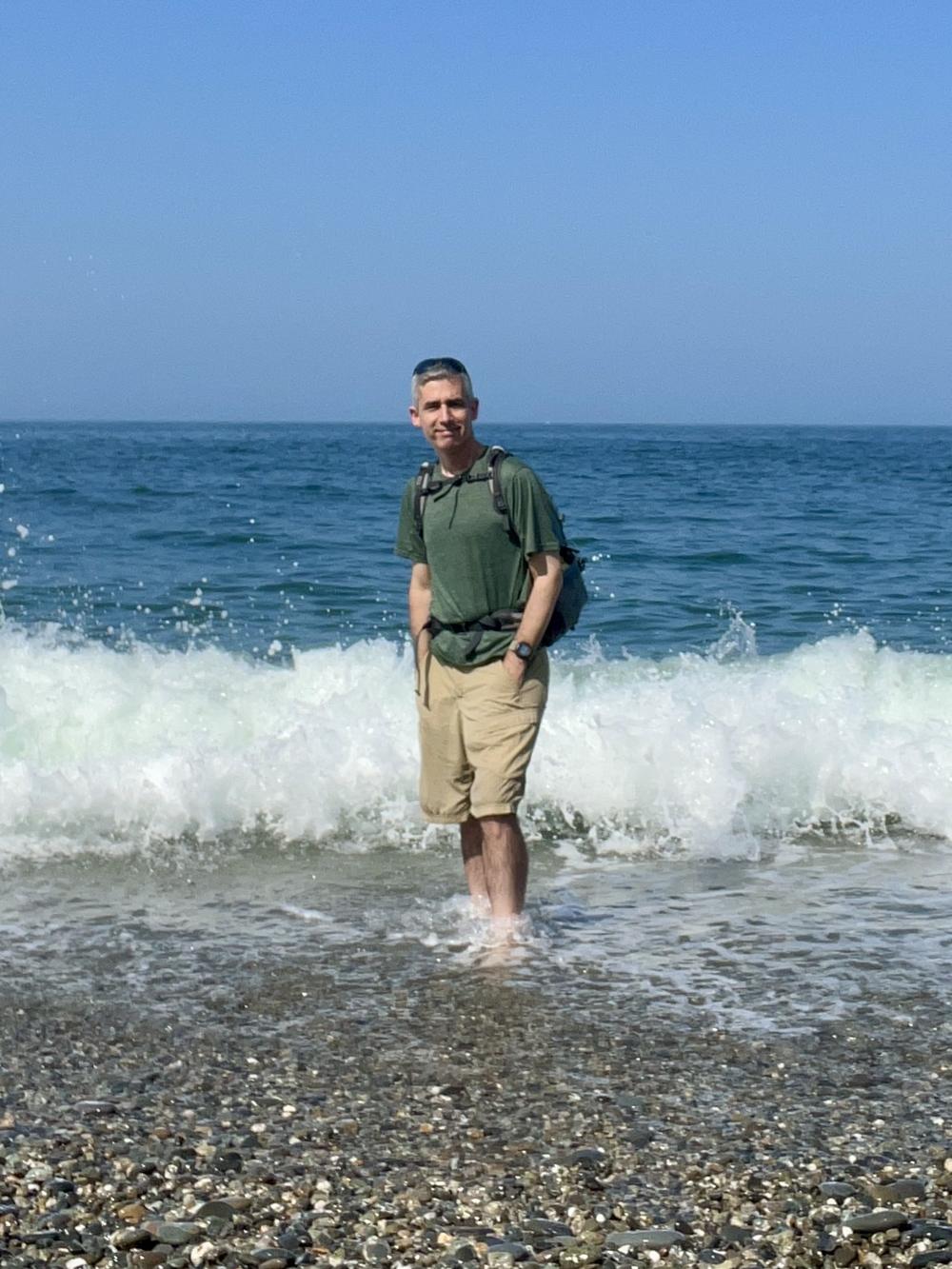
I take a train to the seaside town of Numazu, then a cab to Senbonhama Park on the Pacific Ocean. I step into the water so I can definitively begin my hike across the island of Honshū at the very edge of the land, then begin walking inland. It’s nice to start the walk with a pleasantly shaded park — it’s already warm out, and it’s going to get extremely hot and muggy today.
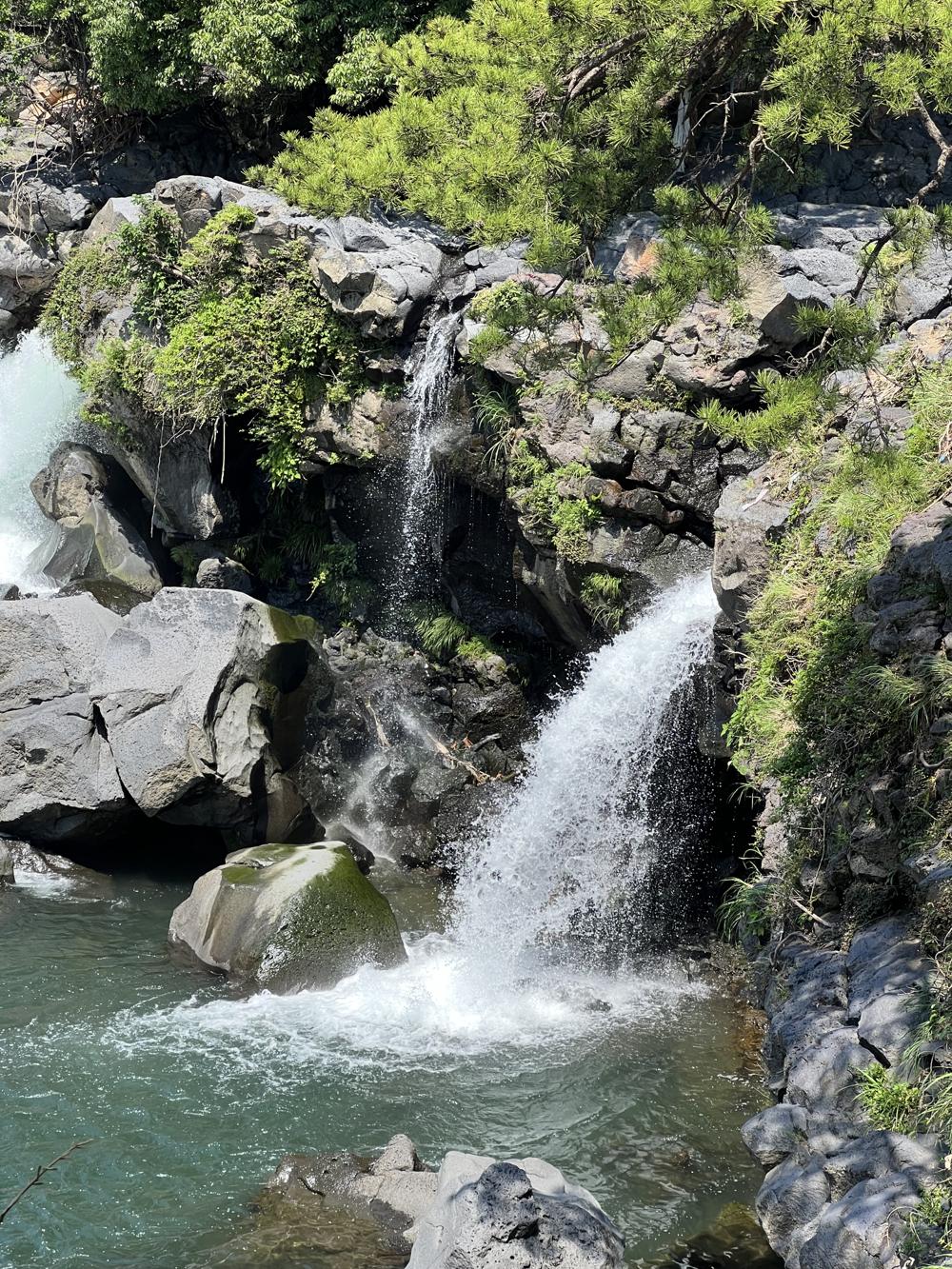
My route today is entirely urban, but it roughly follows the course up the Kano River and then the Kise River, so some of the time there’s a nice view. By mid-morning it’s quite hot, so I stop at a Family Mart convenience store for a drink and snacks. I walk a short distance to Ayutsubo Falls and rest in the shade while snacking.
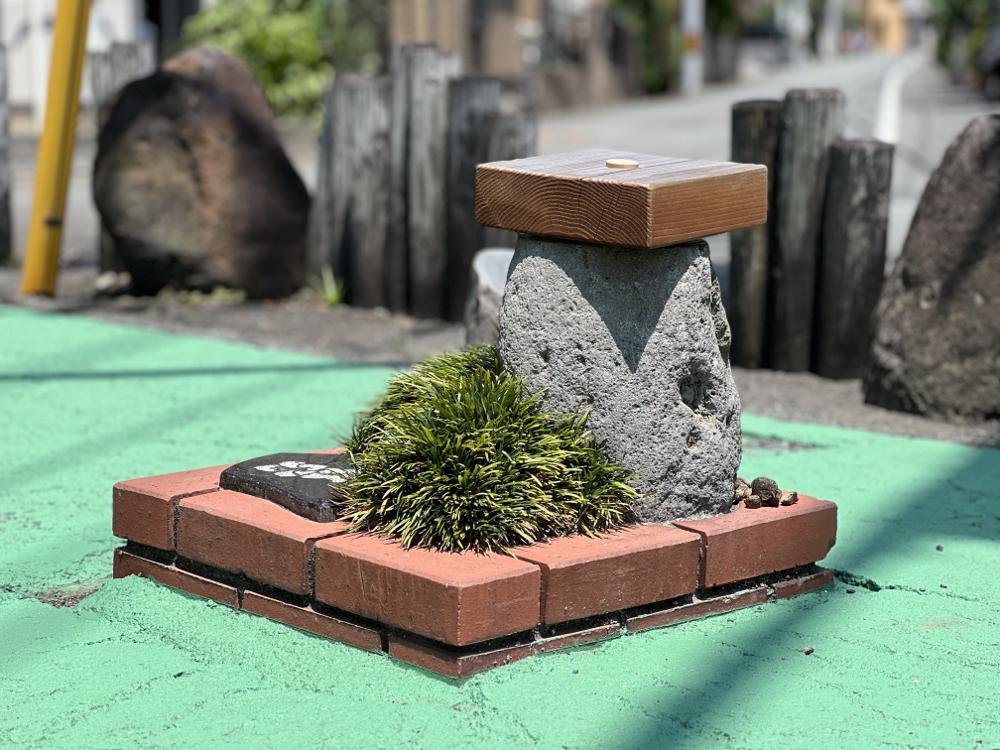
From there I walk a small distance to a spot on the map labeled, “World’s Smallest Park”. This turns out to be a tiny 0.25 × 0.25 meter square with a bit of greenery and a tiny bench stool to sit on. There’s a rock nearby that certifies its smallest park status. I sit on the bench before continuing on.
I enter the city of Susono, where my route happens to take me right by the home of our friend Beth, whom I met in 1988 at Waseda University. Sadly, Beth’s not at home — ironically, right now she’s visiting family in Washington State.
By lunchtime I’m eager to find an air-conditioned place to eat lunch. The first couple of promising places don’t work out, but I finally find a Korean barbecue restaurant. The food’s fairly good, and I’m glad I’m out of the sun.
I don’t have far to go to reach my hotel for the night, but stop anyway at a Doutor Coffee so I can cool off again before going on.
I’m happy when I finally reach the Rembrandt Gotemba Hotel on the side of a big highway. It’s only 2:45, and it turns out that check-in isn’t until 4:00. Like many Japanese establishments, this hotel is keen to maintain the rules, so I have to wait until 4:00 before I can get into my room. It’s nice to use the hotel’s bathhouse then rest a bit.
There are very few dining options around the hotel, so I make do with dinner at a cafeteria at a Lawson convenience store / cafeteria / gas plaza. The cafeteria food isn’t great, but better than a cold meal from the convenience store. Since I’m there, I stock up on snacks; from what I can see on my map, there won’t be any stores like this for the next few days.
Jan’s Japan Hike, Day 2. I get breakfast from the Lawson next door, and take the opportunity to grab a 1 liter sports drink — it’s going to be hot again today, and I’m concerned that just drinking lots of water could lead to hyponatremia (low sodium).
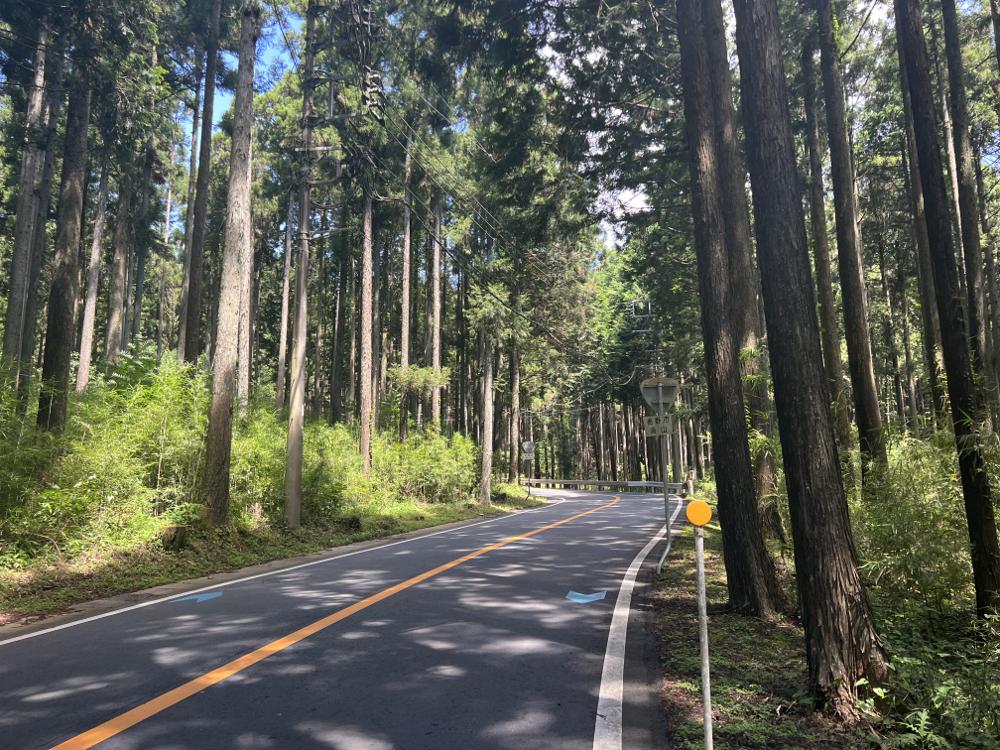
Today’s walk is rural, but unfortunately it’s almost entirely along rural highways. These sometimes don’t have a substantial shoulder to walk on, and there are very few people walking alongside them, so drivers aren’t particularly looking for pedestrians.
At one point, I pass a concentration of buildings that’s some sort of school or research institute. A fair number of people are arriving for the day; I’m going against the flow. To cross a road through the buildings, I have to use a pedestrian bridge. On the other side, I find that the stairs descend directly into a large parking lot surrounded by a barbed wire fence. It takes a while to find an exit on the other side.
All morning I hear loud booms that sound like explosions from not too far away. I later learn that these are coming from a nearby training ground for the Japan Self-Defense Forces. That would also explain the olive drab jeeps and trucks that occasionally pass by.
The rural highway keeps climbing as it makes its way in the direction of Mount Fuji. I enter a cedar forest, where I’m suddenly surrounded by a haunting Ki-Ki-Ki-Ki-Ki noise that constantly rises and fades. This sound follows me for the rest of the day. I ask someone about it, and the sounds are made by a type of cicada.
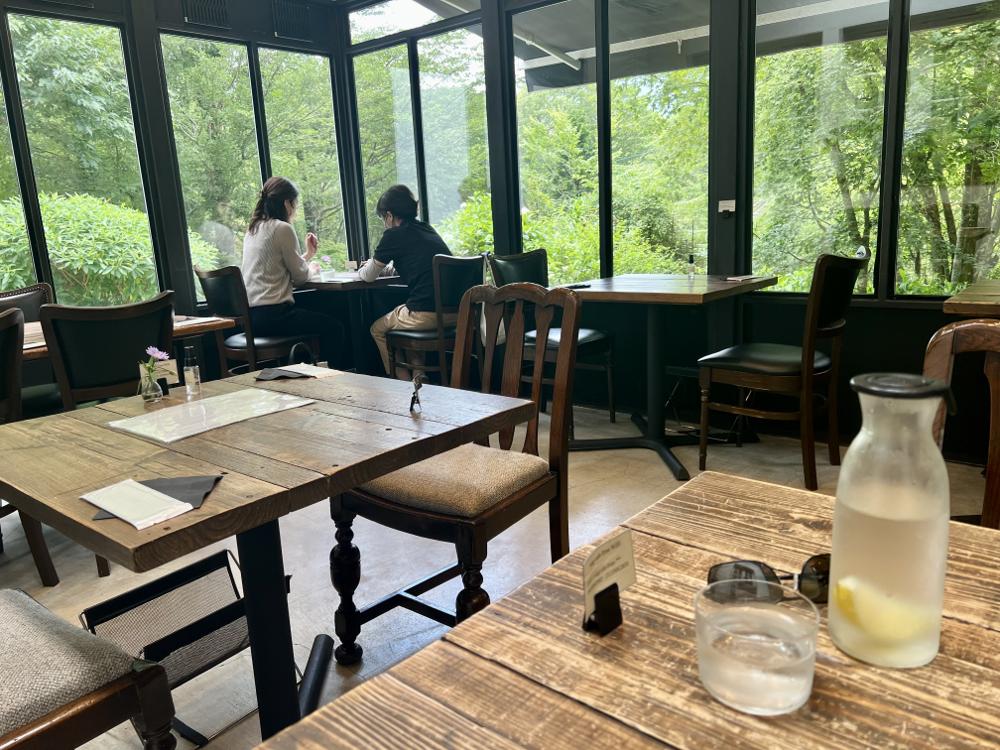
Last night I’d searched a map of this area for someplace I could stop for lunch. I was stunned to see a cute little restaurant called Nog Cafe in the middle of this forested area, so I called ahead to make a reservation. I have to detour to reach it, and it’s nice to be off the main road. The cafe is charming, and it’s a relief to sit down in the air-conditioned space that looks out over trees. The lunch special of sauteed lemon chicken is delicious on its own, but comes with a set of pretty and tasty side dishes.
After lunch I head back towards the main road, puzzled why the walking directions in Google Maps want me to take a big detour. I eventually come to a big sign announcing that the road going forward is an expressway where pedestrians are forbidden. I have to backtrack a fair distance and then take the big detour.
The detour itself is also concerning. I enter an area with another sign saying, “Dead End”, and explaining that beyond the sign is a golf course and some country homes, with no exit on the other side. I check the map and, sure enough, Google’s directions take me very close to the camping resort where I’m staying tonight — but the directions show a dotted line from the road to the destination as if to say, “Figure it out yourself”.
From the satellite view, it looks like there may be a back entrance to the resort. Since I have essentially no other option, I walk ahead, hoping that I don’t have to trespass through someone’s backyard to get to the resort. Luckily, I find the hoped-for back entrance to the resort and head in.
The reception desk is closed for the moment, so I get a drink and wait on a porch. Eventually a man comes by to check me in. I ask about the expressway that’s closed to pedestrians, as it might be the only way to get to a trailhead on Mt. Fuji tomorrow. He explains that pedestrians aren’t really allowed, but people do walk on that road without getting bothered. But if I’m heading to the trailhead, he says, he’s pretty sure there’s another trailhead that’s closer and avoids a long walk on the expressway. He digs around through various maps and brochures until he finds one that shows me where I should go tomorrow.
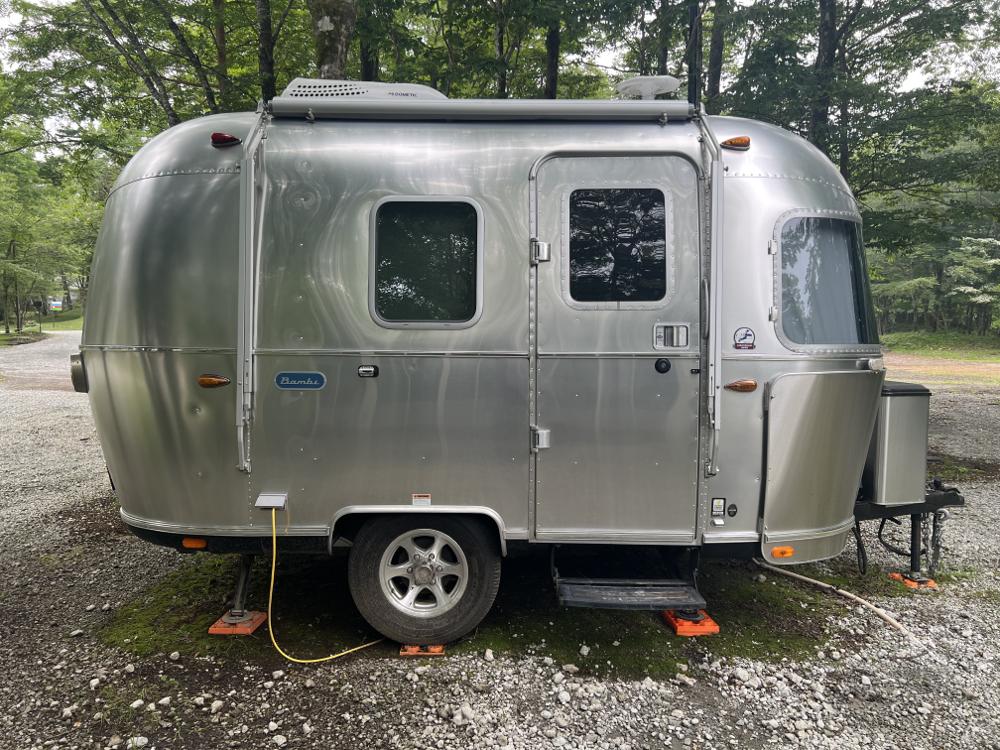
This place is a “glamping” resort, mostly with geodesic domes with comfortable interiors. They also have a handful of Airstream “Bambi” RVs, and it’s one of these that I’ve rented for the night. I’d been keen to try one in the States but hadn’t had the chance, so figured I’d try it here.
There’s a little enclosed gazebo next to the camper with a grill, and the lodging comes with all the fixings and utensils to cook a barbecue dinner. It’s far too much food for me, but I do my best. Surprisingly, my favorite part of the meal is a Japanese sweet potato. I don’t particularly care for them, but after cooking it for a long time on the grill and adding some seasoning, it’s fantastic.
Tomorrow I’ll start climbing Mt. Fuji in earnest.
Jan’s Japan Hike, Day 3. It takes a bit of time to leave in the morning — the resort has provided me with ingredients for a big breakfast, and it takes a while to cook it and eat as much of it as I can. I’m on the road by 8:00 am. Just as I set out, it begins to rain.
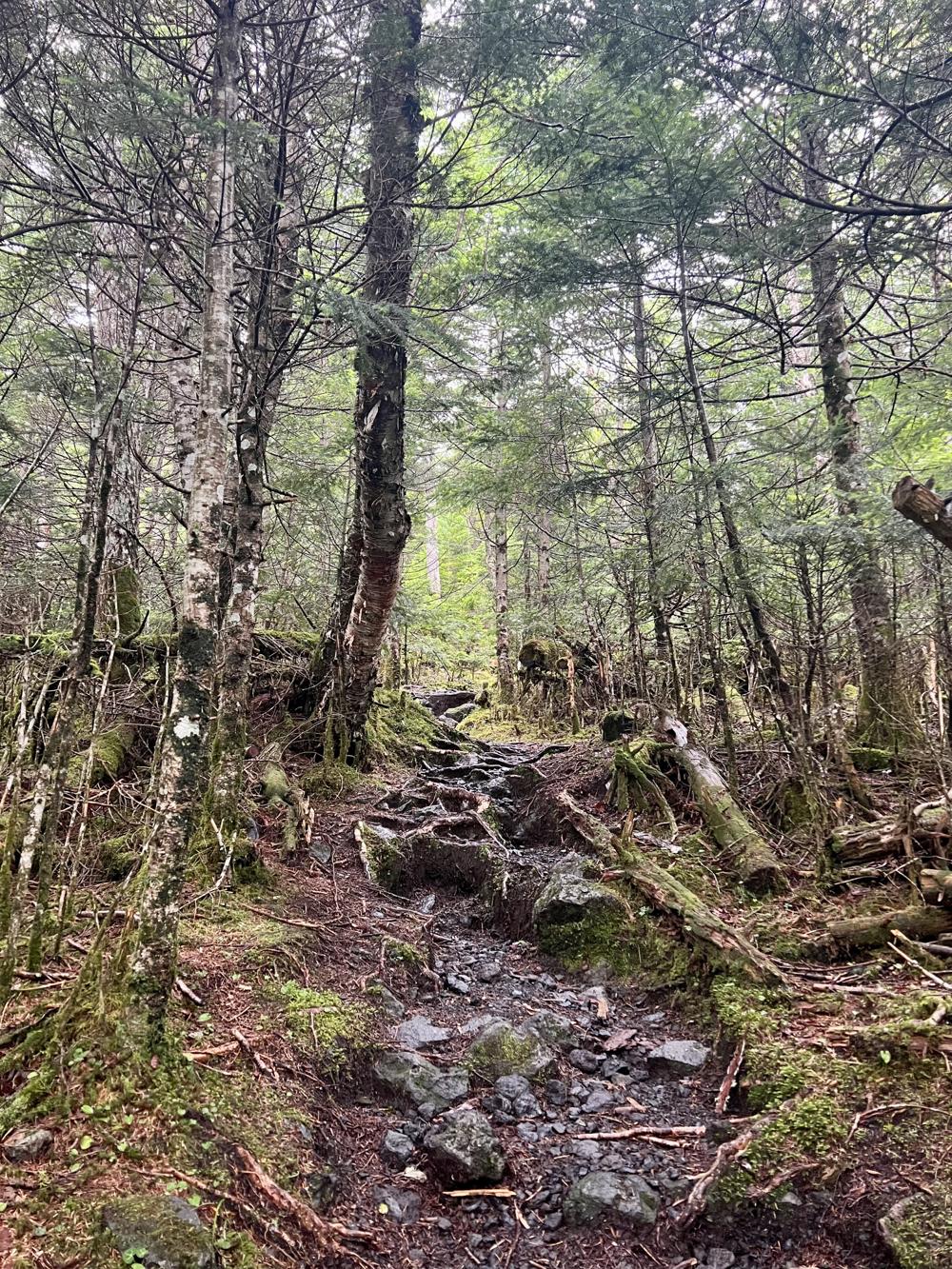
The only way to reach the Suyamaguchi Trailhead is to scurry along the expressway that’s forbidden to pedestrians. As expected, this trailhead is so low down on Mt. Fuji that no one starts their hike here. Thankfully, the trail is still part of the Mt. Fuji national park, so it’s well maintained. There are pink ribbons tied to trees every so often to mark the trail, and each time I see one I’m happy to know I’m still on the right track.
Portions of the trail are steep and gnarly with roots, like the Old Trail up Mailbox Peak near Seattle. At one point, the trail passes near another camping resort called Fuji Grinpa. Through the trees I can hear a PA system announcing something. At one point, I’m surprised to see an enormous rusting Ferris wheel looming overhead. The forest trail then passes within striking distance of a golf course — in places there are lots of golf balls on the trail.
It rains all morning. I reach an outpost of civilization at Mizugatsuka Park, where there’s a large parking lot and a rest area. I go inside and warm up over coffee. I see a couple of families of Europeans taking a break. One of them, a father from Nantes in France, comes over to say hello and talk for a bit.
Continuing up, the next bit of forest trail has a couple of hikers on it, but they seem to be day-hiking from the rest area; after a short while, the trail is empty again. At some points I can turn around and see through breaks in the clouds to the coastline. I’m getting pretty high up.
As I climb, the character of the forest changes: the trees keep getting shorter and shorter, until they’re finally only as tall as me. The ground changes to loose volcanic grit, and the trees are replaced with small tufts of green. The rain stops, but it’s now quite windy; I have to keep changing my outfit to suit the conditions.
There are four hiking routes to the top of Mt. Fuji. I’m heading towards a junction with the Fujinomiya Route. Like many Japanese trails to a mountain summit, the trail has markers called “stations” numbered from 1 to 10 (the top). On Mt. Fuji, many of these numbered stations have huts to accommodate hikers and serve food as well. On the Fujinomiya Route, everyone (else) starts at the bus drop-off at the 5th Station.
I eventually reach the Fujinomiya Route at the 6th Station. Having hiked for hours seeing essentially no one, I now meet a river of hikers trudging up the mountain.
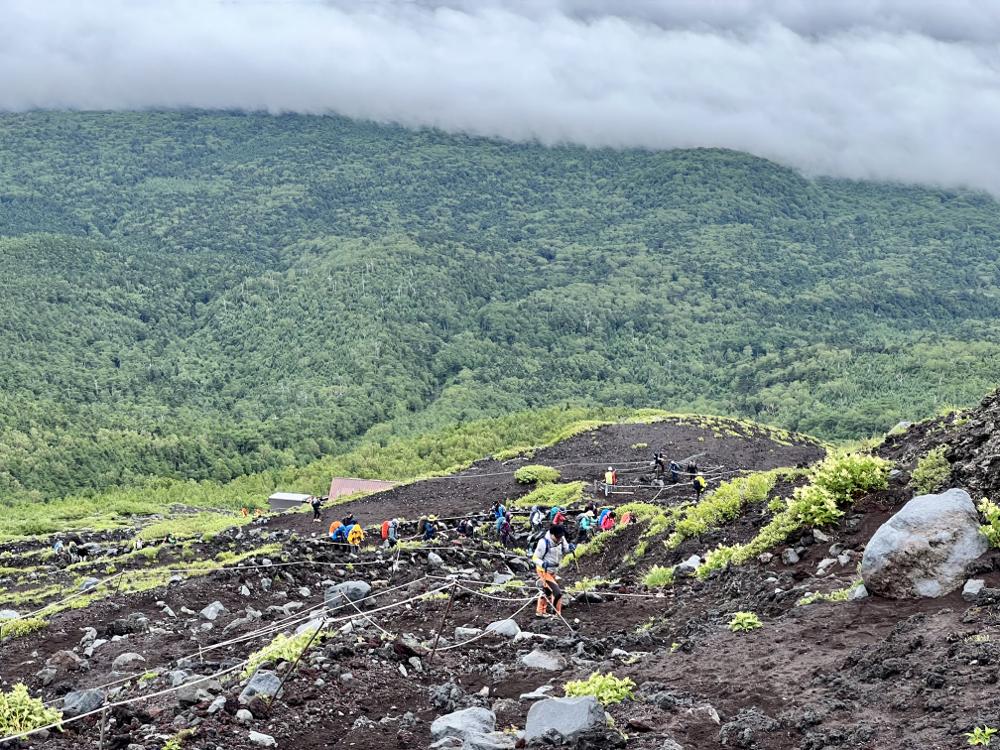
I make the final slog up to the 7th Station and a hut called Goraiko Sanso, where I have a reservation for the night. In contrast to the usual high level of service in Japan, the people who check me in seem quite abrupt, presumably jaded tending to the endless stream of hikers. The vibe in the hut itself is much more subdued than I’d expected. There are a few groups of people sitting around tables on the floor of the main front room, but there’s not much talk.
The hut accommodations are akin to a capsule hotel: sleeping areas have two levels of beds with dividers between them, giving everyone a long box-shaped area to themselves. Each unit has a light switch and an outlet for charging things. I’m happy to unpack my stuff, visit the weird high-tech composting toilet rest room, then take a nap.
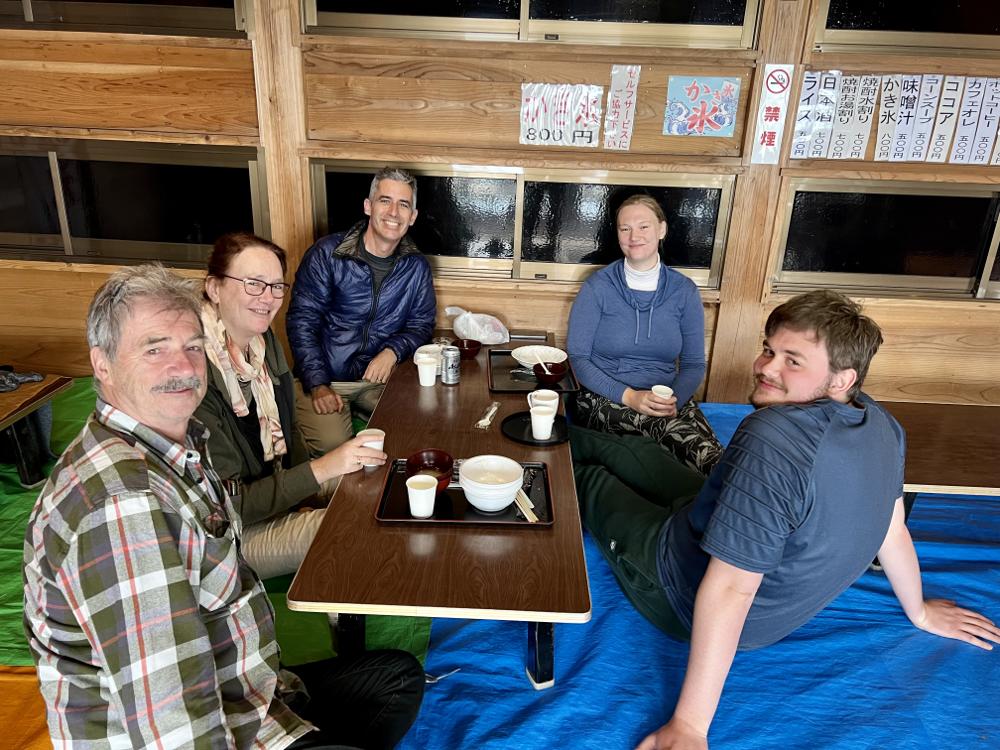
After waking up, I walk back into the main room. A Dutch man introduces himself; he recognizes me from the rest area at Mizugatsuka Park. His name is Gauke, and he’s traveling with his wife Christine and grown children Rosa and Gauda. Gauke and I talk for a while until his other family members rouse themselves from naps. We decide to share a drink, but the staff are clearing out the main room to prepare for dinner, so we have to bundle up and take our drinks outside. It’s not too cold out, but it’s still pretty windy.
Tonight I’m looking forward to a hot meal. The staple dinner at Japanese mountain huts is curry rice, but I can’t say the hut’s curry rice is very good. It is hot and filling, but that’s about the best that can be said of it. When the Dutch family has a chance to order their own meals, they sit down and join me at the low table on the floor. None of us can get really comfortable at the table, and my legs are already pretty sore as it is. Gauke seems to be having similar trouble bending himself into a position where he can eat. I quip, “Gauke, you look like a pretzel!”, and his family members all laugh.
Before bed I check the weather forecast. I’d been wondering whether I should try to wake up in the middle of the night and join the crowd of people hoping to see sunrise from the top. But the forecast calls for rain overnight, then clouds in the morning. Hiking a steep trail in the dark and in the rain and at high altitude sounds like a recipe for misery, particularly if morning clouds will prevent anyone from actually seeing the sunrise. Instead of 2:00 am, I set my alarm for 6:00 am.
Okay, the food is terrible, but are the hut’s futons comfortable? No.
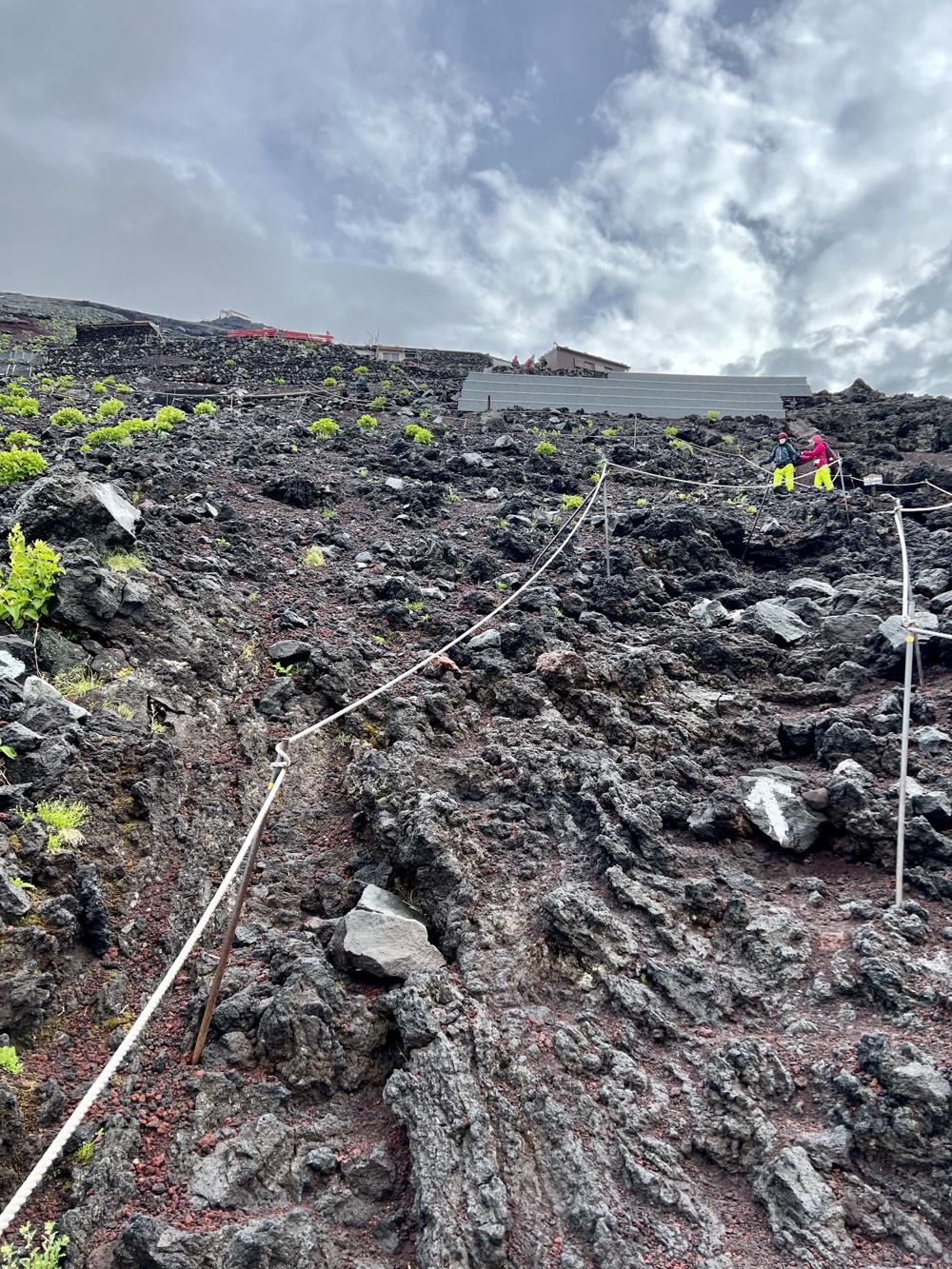
Jan’s Japan Hike, Day 4. I’m glad I brought earplugs, because even with them in, I was still woken up many times. Every hour of the evening and night brought a new group rousting themselves out of bed to make noisy preparations for departure.
The hut’s breakfast is a pre-bundled set of packaged food, all of which is terrible. For the record, this hut had better reviews than many others.
I set out at 7:00 am for the top. It’s a long, slow slog to the huts at each of the stations. I’m happy when I get close to what I think will be the 8th Station, only to find that it’s actually an intermediate station called the Old 7th Station. So I still have further to go. Likewise, after the 9th Station, there’s an extra hut called the 9.5th Station.
Mt. Fuji’s slopes have a famous curve that gets steeper as it approaches the top. This curve looks beautiful in a woodblock print, but makes for an ever-harder climb.
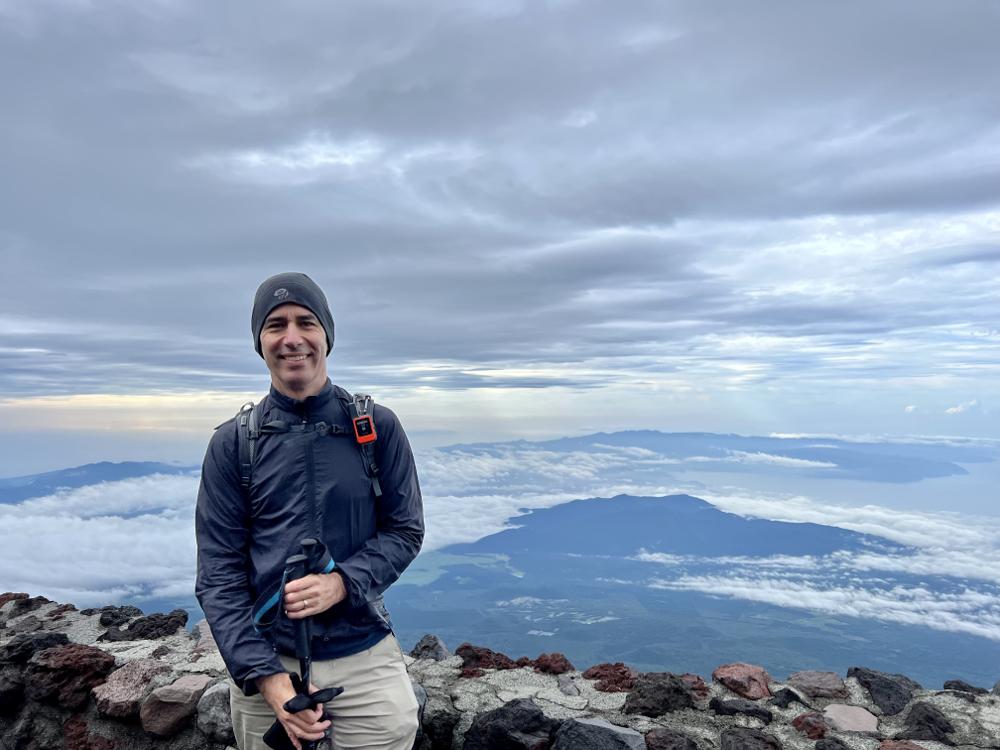
I’m very happy to finally see the torii gates that mark the shrine at the summit. I finally reach the top, and pop inside the shrine to warm up for a minute and change outfit layers. The plaza in front of the shrine alternates between being socked-in by clouds and suddenly affording expansive views far to the north and south.
I hike around Mt. Fuji’s summit caldera, going counter-clockwise from the south-facing Fujinomiya Route to the north-facing Yoshida Route. At the top of the Yoshida Route, there’s a tiny little village of stone buildings with restaurants. I buy a piping hot can of milk tea.
Last night it hit me that my hiking plan for today had overlooked a critical fact. Normally I focus my hike planning on distance and elevation gain. Today has 3000 feet (914 m) of elevation gain, which is fine. But what I’d overlooked is that today I also have to descend a punishing 9000 feet (2743 m) from the top of Mt. Fuji all the way to the shore of Lake Motosuko. My knees are going to hurt like hell, and tomorrow it will be difficult to walk. But there’s nothing for it, so I start down.
After descending for 10 minutes or so, I realize that this Yoshida Route actually has separate trails to keep ascending and descending hikers apart — and I’ve chosen the wrong trail. I can see the descending trail from where I am, but there’s no way to get to it. I have to apologetically make my way around hundreds of hikers who are climbing up, including a very long line of young Japanese soldiers presumably doing the climb as training. I even see a couple of trail runners.
I’m happy when I finally reach a point where I can cut over to the descending trail, which makes an endless series of switchbacks on very loose volcanic grit. This goes on for a few hours. One thing I’ve noticed on Mt. Fuji is how few people seem to be having a good time. There are occasional groups of twenty-somethings who are laughing as they take a break at a station, but everyone else seems to be pretty miserable.
Hikers talks about “Type 1 Fun”: something that is actually fun while you’re doing it. Type 2 Fun is something that is only “fun” in retrospect — when you have forgotten the miserable parts — or fun in the retelling of the misery. Climbing Mt. Fuji is definitely Type 2 Fun.
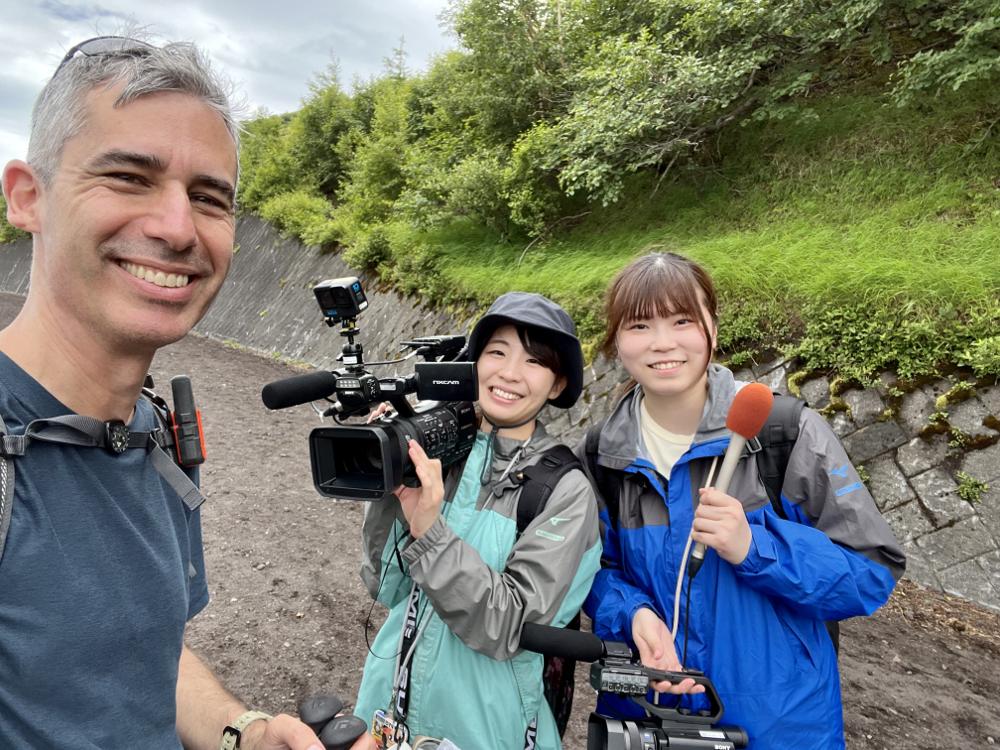
Shortly before reaching the 5th Station, I come across a pair of young TV reporters for the channel TBS who are interviewing hikers. They ask if they can interview me, and I say yes. Like most people I’ve spoken with, they’re surprised by the long hike I’m doing, so we talk for quite a while. After we’re done, I move on before I think to ask them how to find out whether and how they’ll use the interview.
The 5th Station is the main trailhead for the Yoshida Route, but it’s not like any trailhead I’ve ever seen before. It’s more like Disneyland: a sea of people in a plaza surrounded by restaurants, gift shops, and gear rental companies. By now it’s 1:00 pm, and I still have many miles to go today, so I eat a quick lunch and keep going. While the ascending Yoshida trailhead is packed with people taking selfies, the nearby descending Shijoguchi trailhead is of no interest to anyone. I start down the deserted trail and will not meet any other hikers for the rest of the day.
Having already dropped 6000 feet (1800 m) by this point, my knees are complaining. Happily the trail itself, while completely unused, is extremely well-maintained and easy to follow, so I can at least make good speed. My goal for tonight is a lakeside campground with rental cabins, and I’m worried about whether I’ll be there in time to check in, so I hustle as fast as I can. I’m a little surprised to find that there’s cellphone coverage in the middle of this remote forest, so I can call the campground and they reassure me that someone will be in the office when I arrive.
While the Shojiguchi Trail is excellent, it’s heading to Lake Shoji, and I’m going to neighboring Lake Motosu. I eventually reach a junction where I have to take a different trail. It becomes apparent that this other trail barely exists: it’s an old, overgrown forest road that isn’t maintained and doesn’t look like it’s seen use for years. The trail is just barely clear enough to follow, and I have to keep checking my phone to confirm that I’m still on the trail.
I’ve almost reached Lake Motosu when I come to a final obstacle: a barbed-wire gate and fence across the forest road. I have no idea why it’s there; the area on the other side looks like private property. There was a fork in the road a minute ago — maybe that’s the right exit? I back up and take the other road. That road leads to a barbed-wire fence too. I’m very close to a main road — I can hear road noise — but it’s unclear how to reach it without trespassing.
I finally bushwhack through a bit of forest to come to gap between private property, and am relieved to reach the main road. Now I just have a few more miles of road walking around the lake to reach the other side where the campground is.
I’d picked this place, Koan Camping Ground, because it was one of the only lodging options in this area — but also because the campground was featured in the first episode of an anime series about camping that Bree and I liked called, Laid-Back Camp. When I reach the campground, it’s clear the anime creators were meticulous in depicting the camp office, the campground, and the lakeside view. The view itself is very famous: the Japanese 1000 yen note includes a view of Mt. Fuji as seen from this spot on Lake Motosu.
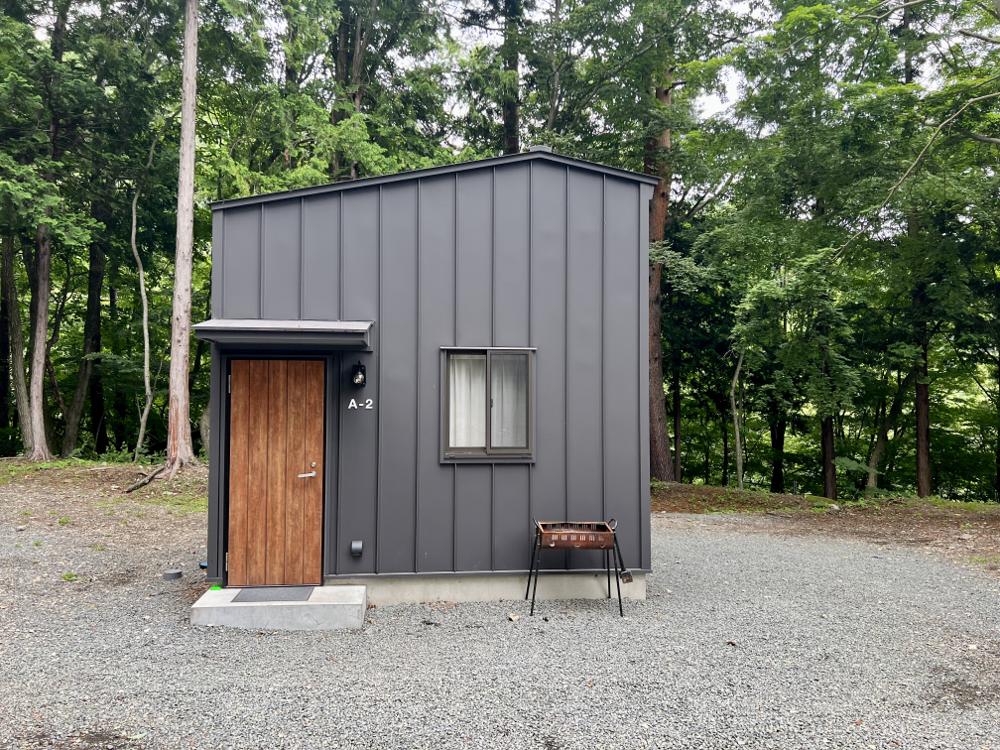
There’s a bit of fuss to get checked in, and then I get the keys to a tiny cabin for the night. I stop at the tiny shop next door to pick up instant Curry Noodles for tonight’s dinner. Those noodles were eaten by the two protagonists in the first episode of Laid-Back Camp, and in any event are the most elaborate meal I can make with the cabin’s provided burner and tea kettle.
My cabin’s close to the lake. I walk along the wide beach towards the building with coin-op showers. The beach is packed with the cars and tents of weekend campers. It’s my impression that camping is still a somewhat unusual pasttime in Japan — I think most of our Japanese friends have never been camping — but the people who do camp really go all out with camping gear. Many couples and families have set up tarps next to their tents, under which they have created elaborate set-ups that are half kitchen, half living room.
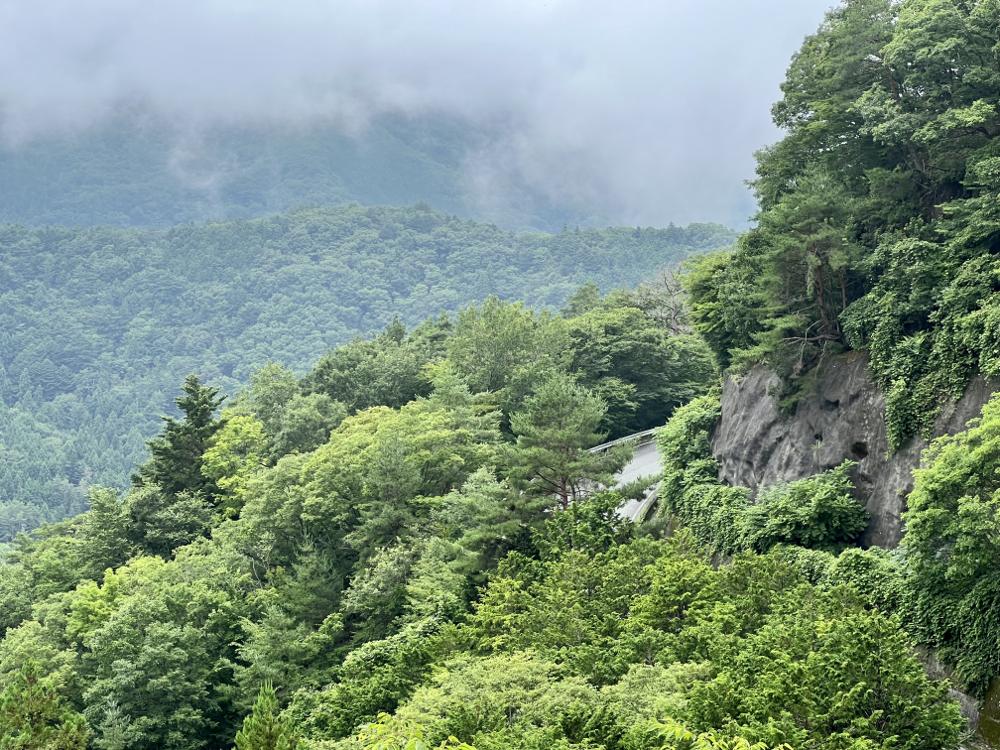
Jan’s Japan Hike, Day 5. It’s more instant noodles for breakfast! I walk past all the campers on the beach, and get a bit of a Mt. Fuji view before heading out.
The day starts with a walk through a very long tunnel. Happily, all the many tunnels I have to walk through today have nice sidewalks on both sides, so they feel completely safe. That said, after the tunnel’s over, I return to walking on the narrow shoulder of a narrow highway. This particular road is fantastically twisted, switching back and forth along a steep, lush mountainside. Drivers are generally courteous in trying to give me room, but there are many blind hairpin turns. Coming out of the turns, the drivers often make a surprised swerve toward the middle of the road when they see me.
At one point I’m puzzled by what I see coming up ahead in Google Maps: the walking route it proposes loops around on itself. I really can’t imagine why it would show a loop. When I get to that point, it’s yet another tunnel — but this one spirals down inside a mountain to reach a lower elevation.
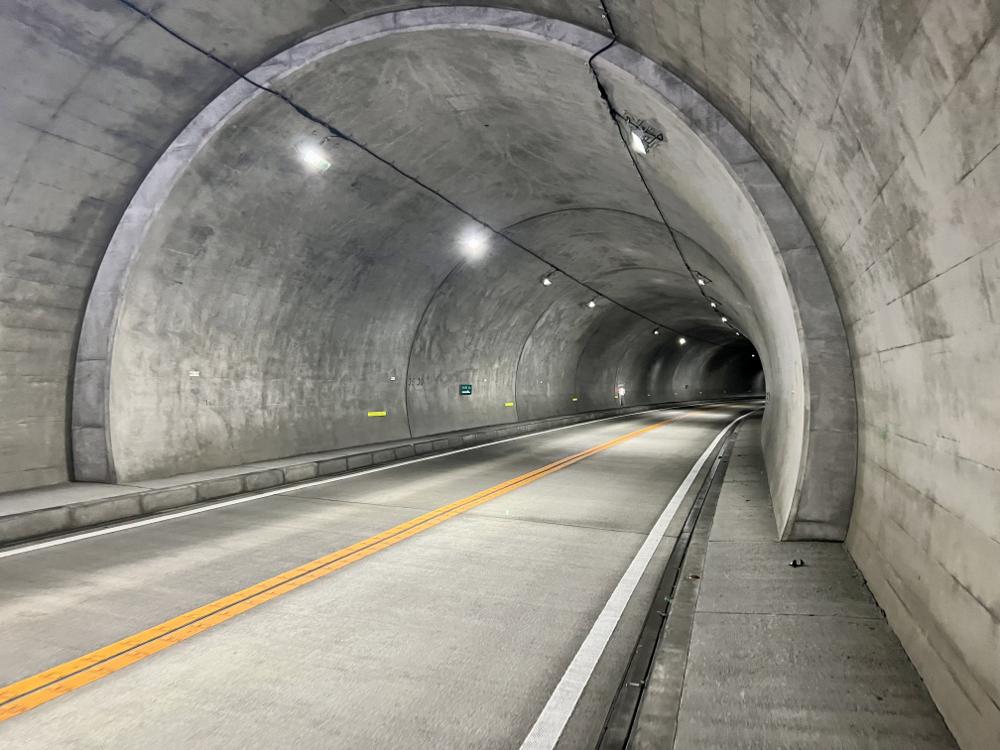
I can’t imagine the cost of building a spiral tunnel like that. It’s somewhat eerie to be walking for twenty minutes or out of sight of both the entrance and the exit, with no real sense of progress.
All day long I walk down out of the mountains. At one point, Google has me cut away from the main road through a quiet hamlet. The route seems to be heading for a high ridge, and I dread having to climb up and over it. I pass the last house, and notice leaves and branches littering the mossy road. No one comes this way. Then the road turns a bend — and there’s another tunnel straight through the mountain ridge. This is an ancient, long, single-lane, drippy tunnel. It feels abandoned. Amazingly, there are still flourescent lights lit at intervals through the tunnel. I walk through and, a short while later, reach another hamlet.
It takes the rest of the morning to reach the small town of Ichikawamisato. There are only a few restaurant options for lunch, so I head for one called “Mohen” that has good reviews. It doesn’t look open — but it does have a small sign that says “Open”, so I give the door a try. The door opens onto what looks like it was once a restaurant lounge, with big chairs, a bar, and a TV. But there’s random personal stuff everywhere, like a hoarder’s house. Maybe this used to be a restaurant, and is now out of business? There’s an old man sitting in one of the chairs. He’s watching the TV, and hasn’t noticed me yet. I slowly close the door and back away.
The next restaurant is definitively closed, and there aren’t many choices left. Happily, a restaurant called Kawachi is open, looks fine, and actually has some other patrons. The old woman behind the bar points me to a counter seat. I get soba noodles with a side of tempura, and it’s all pretty good.
A cook (her son?) hands her a small dish, which she hands to me. This is a small dish of shiso leaf-wrapped fish that’s been fried in tempura batter, and it’s on the house. I tell her it’s very good, and she replies that she’s happy to hear it - the shiso comes from her neighbor’s garden. She asks whether I’m traveling, and we end up talking about my hike.
I pay and thank her for the meal, then head out to the parking lot to get directions to my destination for the day. Now that I’m back at a lower elevation, it’s really hot again. Suddenly, the woman comes running out after me holding a plastic bottle of cold green tea, giving it to me and wishing me the best at walking in the heat.
There’s a long walk along a fairly busy highway to reach the edge of a small city called Minami Alps. Google’s walking directions are very occasionally frustrating (it tries to route me through a private office park) but sometimes serendipitous (it routes me along a long embankment by the beautiful Kamanashi River).
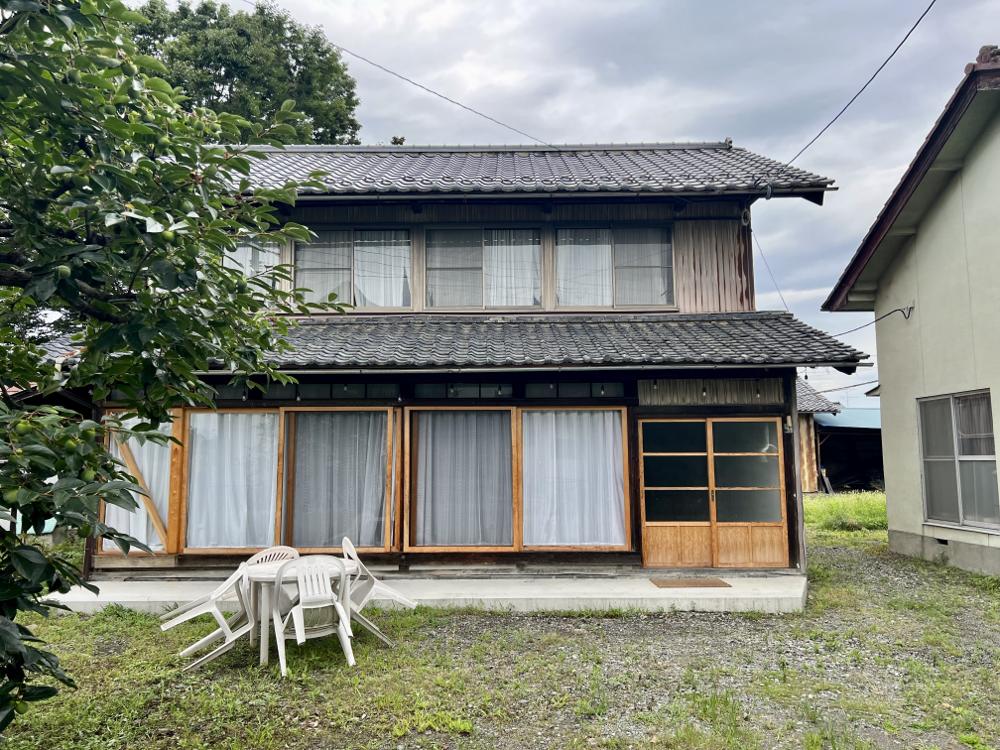
There weren’t great hotel options in this city, and it was cheaper to rent a house through AirBnB. It’s in a neighborhood that’s half houses, half tiny little farm plots of rice or fruit. When I reach the house, I have a little trouble figuring out which side of the house is the front so I can find the key box.
As I’m looking for the key, a young couple drives up in a small car. The husband gets out, and says something about a house rental — so I guess this is the owner? But he says something that makes it sound like he thinks I am the owner. Eventually we work out that we both happen to be renting houses that are right next to each other.
I chat with the couple a bit. They say that two other couples are coming soon, and will be spending the night in the house next to mine. All three couples have small infants. They’ll be barbecuing outside, so I say I’ll come say hello later.
Finally finding the key box, I let myself into the house. It’s a traditional house that’s been extensively remodeled. It’s kept one old-style feature: a set of stairs to the second floor that are so steep it feels like climbing a ladder. One side of the stairs is open to the main room, and there’s no handrail on the wall side either. To top it off, climbing the steep stairs excerises exactly whichever of my leg muscles are the sorest. For the rest of the day, I have to plan out my trips between the floors to minimize the number of times I must slowly and carefully crawl up or down the stairs.
The young woman from next door had recommended trying the local peaches, and suggested buying some at a supermarket. I decide to see if I can get something from a supermarket to make for dinner, and happily there’s one that’s just a few minutes walk away — I really don’t want to walk any more today. On the way, I happen to catch a glimpse of Mt. Fuji poking out over a nearby ridge. It seems very far away, and it feels impossible that I was standing on top of it just yesterday morning.
As hoped, the supermarket does have peaches in stock, along with some things I can heat in the house’s microwave for dinner. I prepare the dinner at home, which large turns out okay. I do have one failure: I’d bought what looked like a package of cucumber pickles, but it turns out to contain seasoning so that one can make their own pickles at home.
The packge of peaches I bought contains too many for me to eat, so I take some to the families having their barbecue next door. The woman I spoke with earlier is happy to take them, and she and her husband introduce me to the other couples. They offer me a drink, and I sit with them as they variously take turns disappearing into the house to get their infants ready for bed, or coming back out to eat a bit.
I speak for the longest time with a woman named Hana and a man named Masu. Hana’s daughter, Kiho, gnaws all the corn kernels off a bit of cob for a long time. Hana swaps the cob out for another, and Kiho enthusiastically gnaws on that one for a long time too. Kiho’s enough of a handful that it’s hard for Hana to get anything to eat, so I offer to hold Kiho for a bit. Hana is happy to accept the help, but she says that Kiho will probably cry. I use a trick Angela and I learned from a Christmas photo Santa years ago: I keep Kiho facing her mom as I take her and settle her on my lap. Hana and some of the other people laugh when they see that Kiho stays quiet.
Finally the party wraps up and we all head to bed.
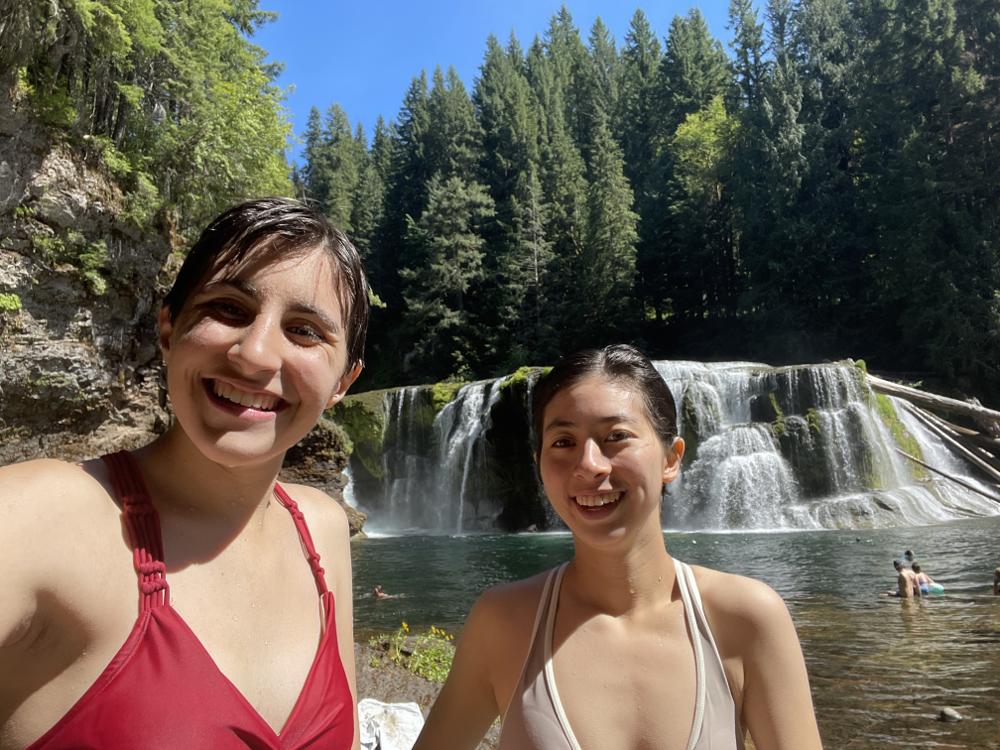
Liya and her friend Casey spend two days hiking along the Lewis River near Mt. St. Helens. They go swimming by the Lower Falls, and also make a side trip to Ape Cave. The cave is cold — but the river is colder!
Jan’s Japan Hike, Day 6. I feel much better after a really long rest, but my legs are still sore. Today is my first day off from hiking, and it’s a deep relief to not have to walk anywhere today. It’s also scorching hot again, so I’m doubly grateful to be have this air-conditioned house to spend the day in.
In the middle of the morning, I walk to a nearby cafe called Cafe Amis for coffee. It’s tiny, with just four counter seats, tended by an older man. He seems to take his coffee seriously —- there’s a small coffee roasting machine in the corner of the cafe that he uses to roast the beans himself. He goes through a practiced routine with a small but immaculately-kept espresso machine. The resulting latte is, unsurprisingly, really good.
We get to chatting, and he’s interested in hearing about my hike. When I mention my climb over Mt. Fuji, he talks about the two times he climbed Fuji himself. Once it was too stormy to reach the summit, but he was successful the second time. We both agree that it’s not a particularly fun mountain to climb.
I spend most of the day inside sheltering from the oppressive 92°F (33°C) heat, writing in my journal, and catching up on email. At lunchtime, I make a short walk outside to the closest restaurant, which turns out to make pretty good gyoza dumplings. And at dinnertime I find an Indian restaurant I can reach by bus, then have them call me a taxi to get back.
Jan’s Japan Hike, Day 7. Today’s going to be another long day, and very hot as well, so I’m up early again. Before leaving Minami Alps City, I stock up at a Family Mart, and grab some ibuprofen at a pharmacy, and then head to the Minami Alps mountains west of town.
As forecast, the weather is extremely hot: about 90°F (32°C) and very humid. I keep drinking sports drinks to stay hydrated, but even with that it’s hard to keep up a good walking pace.
By the time I reach my intended destination for lunch, I’m giving serious thought to whether the afternoon’s hiking is going to be too much in the heat. I want to avoid heat stroke and so may have to skip the next section of road by taking a bus to the trailhead. I resolve to wait until after lunch to make a decision.
The restaurant doesn’t open for a few more minutes, and there’s a public toilet across the street, so I go in and douse my head and arms with cold water — that feels great, and definitely helps.
The restaurant opens on schedule. They only have a few options for lunch: cold soba noodles with “beef something” or with “chicken something”. I go for the chicken. The “something” word turns out to be “offal”. I do not enjoy it.
Still, I feel better after spending time in the cold restaurant. I still have several miles of twisty mountain road to climb, but I can see that there’s some kind of visitor center a mile and a half ahead. I figure that, if I can make it there, I can cool down there again, and so break up the hot roadwalk.
This plan works out even better than I’d hoped. I’m hot when I get to the visitor center in the Ashiyasu Hot Spring area — but notice that across the street there’s a basic hotel with a hot spring bath. There’s a sign outside that says “Day Bathing”, which means I can pay a small fee to use the bathhouse. A shower and a soak in the outdoor bath are amazing. I’ll get hot and sweaty again, but now I’m pretty sure I can finish the road-walking and reach the trailhead.
The remaining road is actually surprisingly pleasant: it’s just one lane, so the occasional cars are driving slowly. And one benefit of the road hugging the steep mountainside is that one side of the road is often in the shade.
The trailhead itself has a little lodge with an air-conditioned restaurant selling food, so I get a soft-serve ice cream and cool down once again.
Now I can finally get out my hiking poles and begin the actual hiking part of the day. It’s nice to be on a regular forest trail again. That said, the trail is steep. The trail up Mt. Si near Seattle is considered pretty steep, but this trail is roughly twice as steep.
I meet a few day hikers on their way back to the trailhead, along with two rock climbers. I later learn that the rock climbers had actually been scaling a waterfall in order to scope it out for ice climbing in winter.
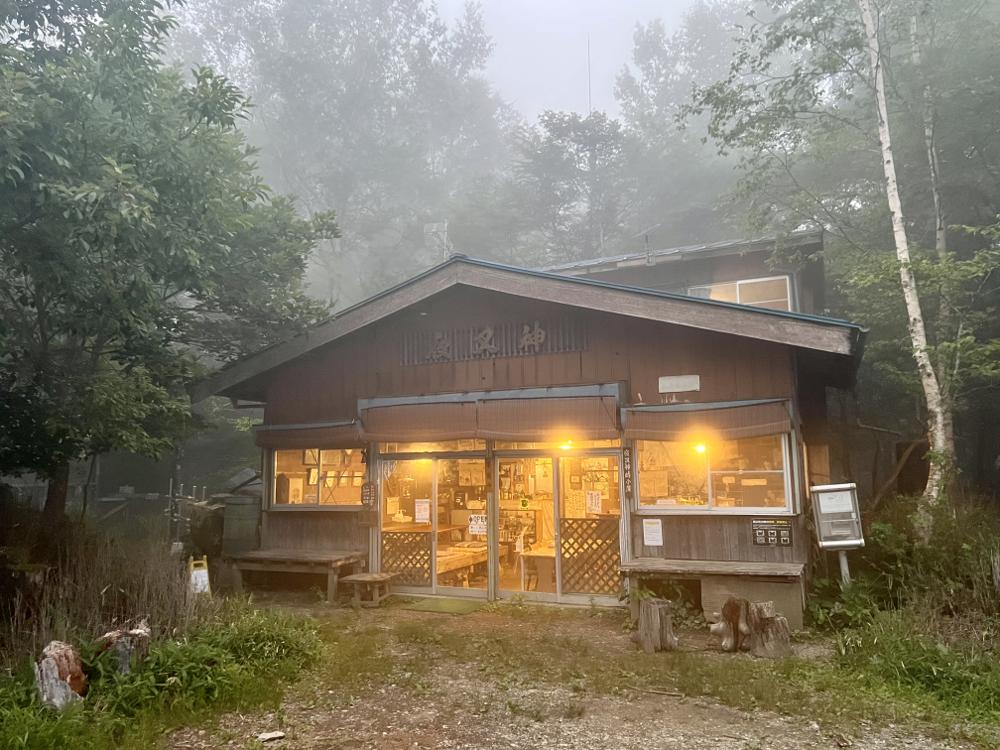
I finally reach Yashajin Pass, and a few minutes later come to Yashajin Pass Lodge, a hut where I’m going to spend the night. The very nice hut host checks me in — and then explains that, while the past weekend had seen a packed house, tonight I’m going to be the only lodger.
That’s too bad, because I’d hoped to meet and chat with people over dinner. As it turns out, the host is happy to sit with me after serving dinner. He’s cooked a feast, far beyond the curry rice I was expecting. He’s even sliced up a huge local peach for dessert.
As we chat, I learn that his father was the previous hut host for many years before his knees got weak. The son (maybe in his late 20s?) has taken over management of the hut for the past five years. I’m surprised to hear that he has to personally carry all the food for the hut up the steep trail himself. They can bring in a helicopter for big things, but otherwise he brings up everything on his back.
“Well”, I tell him, “this peach is delicious. But I can’t believe you had to carry this heavy thing all the way up here!” He laughs, and we agree that it would be better if Yamanashi Prefecture were famous for some kind of food that’s lighter.
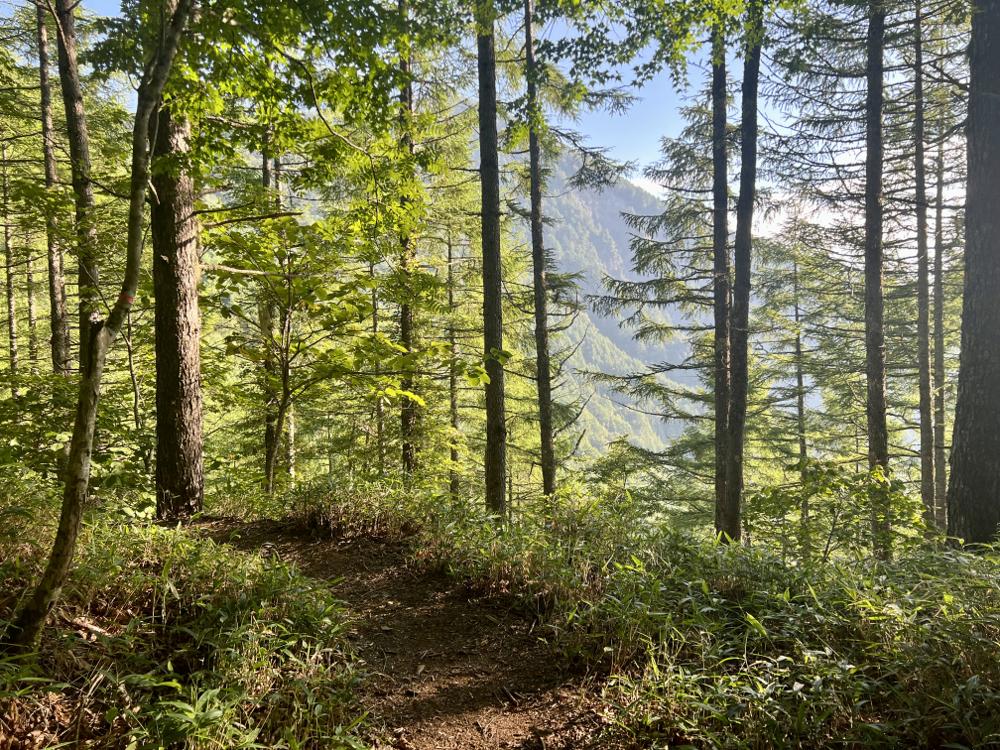
Jan’s Japan Hike, Day 8. Breakfast is served early in these mountain huts, so I’m up at 5:00 and breakfast is at 5:15. The hut manager has cooked a fairly elaborate breakfast, so it actually takes me a while to eat everything. The skies are clear, so there are great views across the valley to the opposite range of peaks.
I’m out the door by 6:20, and the trail is instantly steep and hard. It stays that way for hours. On the plus side, the trail is shaded. By 8:00 am or so, fog rolls in, further cooling things down. The trail is quite popular, so even though it’s a weekday, I see hikers every 20 minutes or so.
The trail follows a ridge going north. There are several major peaks, and a number of smaller ones, all of which are marked with little monuments. At one of these monuments, I meet up with a man who’s talking with two women. The man is very chatty, and just keeps talking.
I meet up with the chatty guy again at another monument, where he’s chatting with another man. The two are watching a pair of deer, the first I’ve seen on this hike. Chatty man leaves the monument at the same time I do, so we end up hiking together for a while. As we go, he happily talks at length about the weather factors that frequently lead to afternoon rain, or about why Japan’s covid response was too slow.
I leave chatty man behind at one point, but then he passes me when I stop for a break. When I get to the top of Mount Yakushidake, he’s gotten as far as he’s going today. He’s stopped to celebrate with a beer, which he’s poured into a tall glass beer stein that he’s brought for the occasion. I ask about the glass, and he says it doesn’t feel festive enough to drink beer from a can.
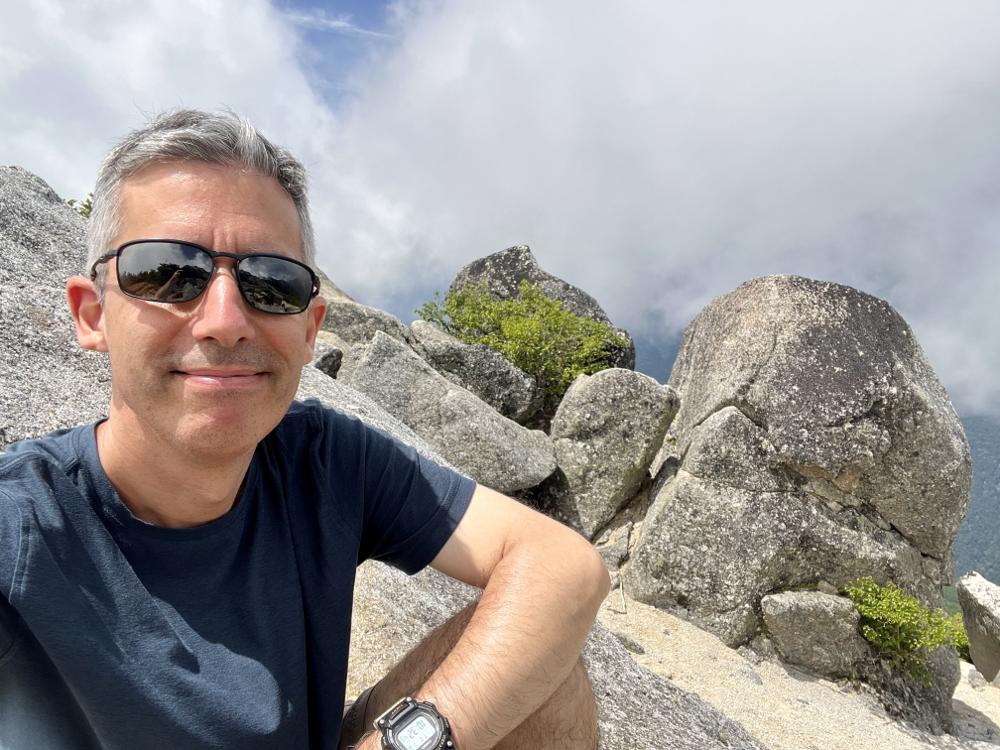
I continue along the ridge to Mount Kannondake. On the way down from the peak, I meet another guy who’s very happy to talk with me.
My destination tonight is Phoenix Hut. I’d been told by several people that it takes 8–9 hours to cover the distance to the hut, and it’s necessary to check in by 4:00 pm if you want dinner. The difficulty of the trail is such that it does take much longer than I would have expected to cover the distance, but I’m still happy to get to the hut in 6.5 hours.
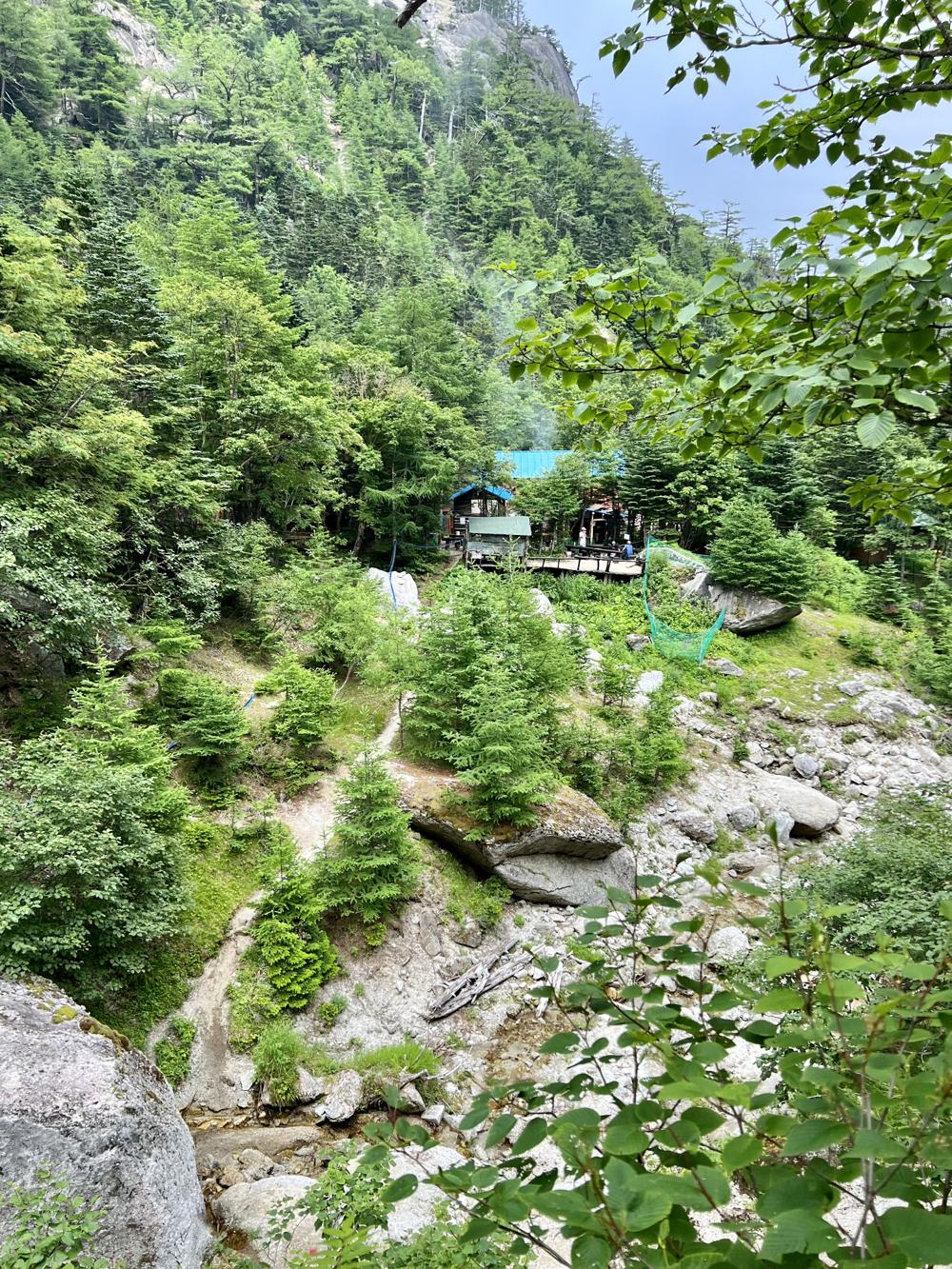
The hut’s apparently pretty popular, although it’s quite rustic. It is by a river, so one thing it has in abundance is water. There’s an old man there said to have lived at the hut for most of his life, but it seems that these days it’s most actively cared for by a young couple.
I take a nap, and as I rest I can hear more and more hikers coming in and being assigned places to sleep in the main house. I also can hear two boys laughing and antagonizing each other in English. After my nap I meet their parents: a man named Jan (like me!) and his wife Michiko. The boys, Kai and Wyn, are maybe 12 and 10. The family arrived at the hut yesterday and went for a day hike today; I passed them on Mount Kannondake.
Kai goes to sleep and never reappears, but I hang out with the rest of the family on a terrace over the river until dinner. They’re from a town in British Columbia not far from Kelowna.
We watch the antics of a good-natured older Japanese man who announces, “I had too much to drink!”, as he staggers around. It’s a little unnerving to watch him try to negotiate the steep stairs inside the hut.
Dinner’s on the early side at 5:30: curry rice served in a small eating hall. Everyone must be tired, because it’s fairly quiet and people are mostly focused on just eating. After dinner, most people go to straight to bed; some of them are going to try to summit Mount Jizodake before sunrise.
I stay up comparatively late, until the hut’s electricity is cut off at 8:00 pm. The hut’s futons are uncomfortably thin, but I follow the other Jan’s advice and fold the bottom futon in half to make a narrow but somewhat less uncomfortable bed.
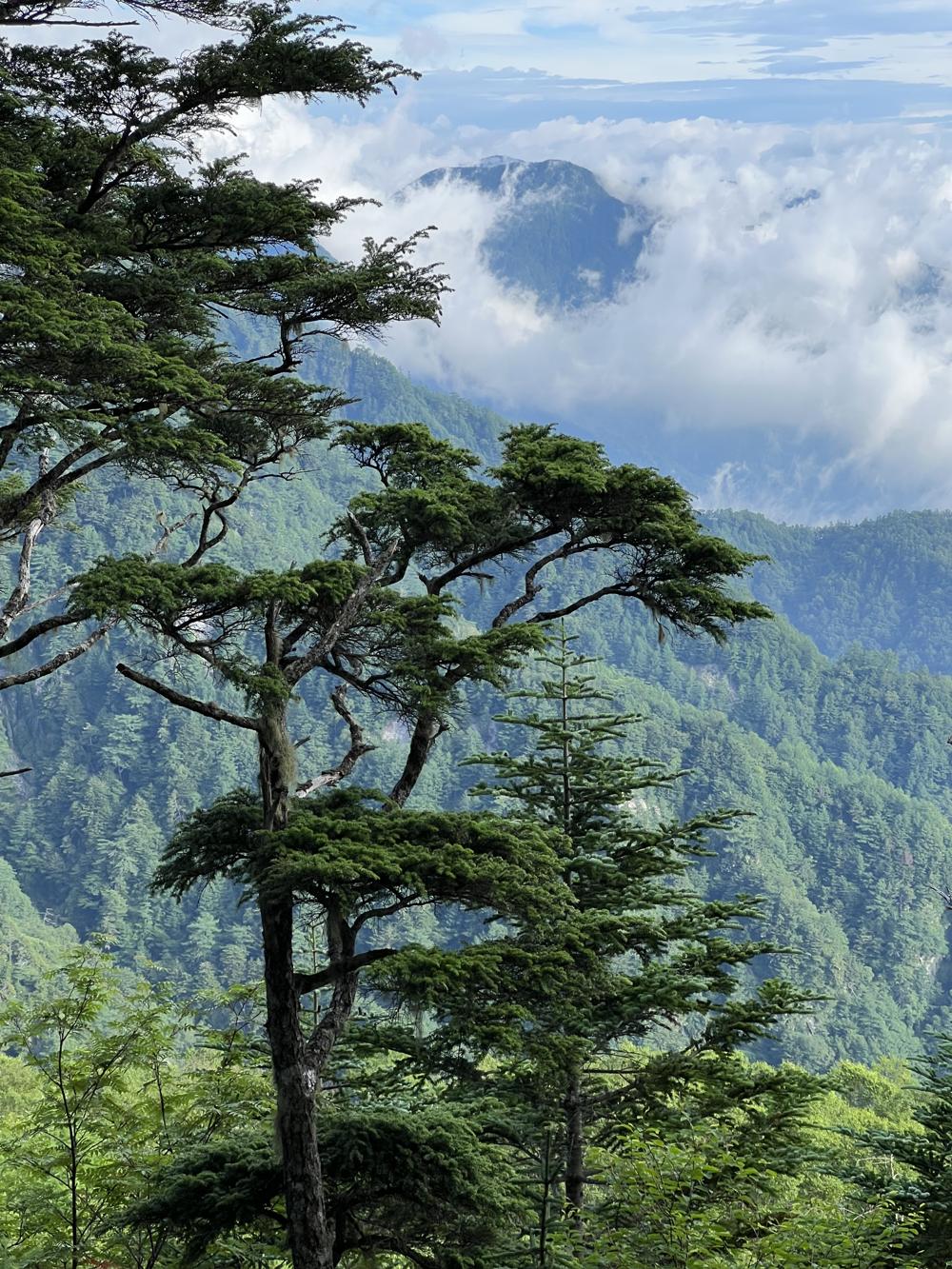
Jan’s Japan Hike, Day 9. The hut serves breakfast at 5:30 am, and once again it’s a quiet affair. I say my goodbyes to Jan and Michiko, then head down the trail for the trailhead and my next town. After passing one man, it becomes apparent that I’m the first person down this particular trail this morning — I spend several hours hitting countless spider webs until I meet the first hiker coming up from the bottom.
It’s hard to describe just how steep these trails are. The mountains themselves are extremely steep; from a distance some look like green walls. American trails almost always incorporate switchbacks to make climbing and descending easier (particularly for horses and other pack animals), but the trails I’m hiking here tend to go straight up and down. There are many roots and rocks, so the result is a kind of rough staircase where each step has to be considered to avoid turning an ankle.
There are occasional short sections of American trails like this, but the trails in the Japan Alps are like this most of the time. This morning’s trail from the hut to the trailhead is incredibly difficult just going down. There are a few brief sections where the trail is comfortable, and then the hard stairs resume. It’s like that for all three hours it takes me to reach the trailhead.
There’s supposed to be an inn at the trailhead, and I was hoping to stop in for some refreshment, but it’s pretty run-down. I purchase a can of orange soda from the proprietress, who chats for a bit and wishes me well on my walking.
I set out on the old single-lane road, and am a little dismayed to see that it doesn’t head down to town right away — it climbs up to a mountain pass before finally descending. I eventually enter the outskirts of the town of Hokuto, but sadly there aren’t many options for lunch.
I do manage to find one place that’s open, a cafe called Sanpomichi, and it’s charming. One of today’s specials is a cold “udon salad”, which is a perfect meal on a hot day.
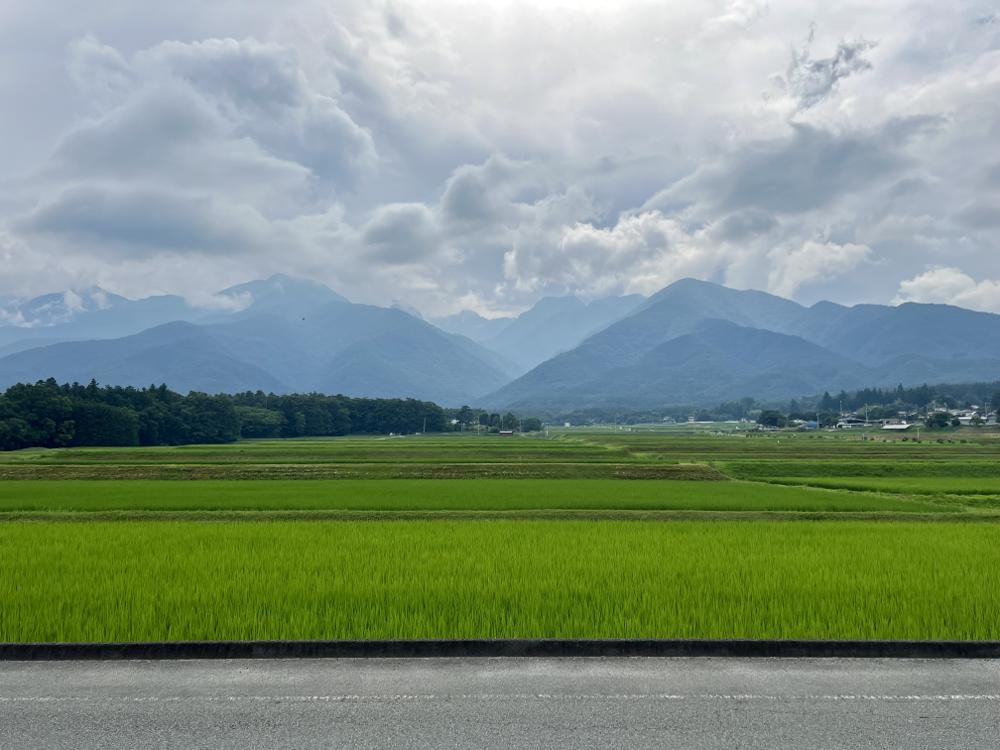
I continue walking after lunch through the town, which seems to be mostly small farms. My room tonight is at a pension called Hanahakushu. When I get there, I ring the bell and no one answers. I call the number and say that I’m outside, and it turns out the pension is actually somewhere behind the house I’m in front of. I wait by the pension’s sign until the husband of the couple that owns the pension comes out and retrieves me.
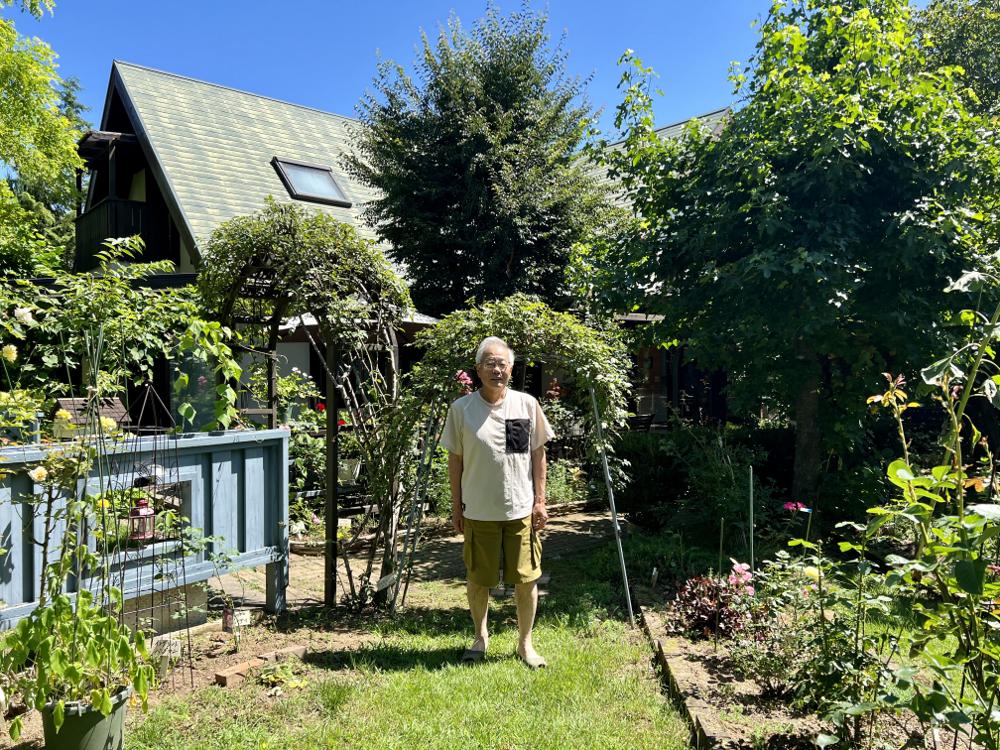
The husband seems nice but a little fussy about things; his wife is much friendlier. After a bath and a nap, I read in the screen-in patio that looks out over their lush garden. At dinnertime, the wife sets out a huge spread: fried chicken and meatloaf and cold noodles and eggplant and little omelettes and there’s more. I tell her I’ll do my best. It’s all pretty good, but I can’t eat more than half of it.
Towards the end of the meal, the wife comes back and chats for a bit. She’s a fairly active person: she’s hiked several of the places I’m going, and she’s also an avid skier. She says they close the pension in the winter, partly because there aren’t as many visitors, but also so that she can have more time for skiing.
Jan’s Japan Hike, Day 10. It’s much cooler in the early morning, so I sit out in the pension’s beautiful garden and read before breakfast. When I’m ready to check out, the husband asks where I’m going today, and I give him the name of the hotel where I’m heading: Yatsugatake Hotel Fuuka. This is just across a wide valley; today’s rural walking will be among the shortest of the trip. “That’s not too far”, the man confirms, “but you’ll be going uphill all day.”
At least it’s not oppressively hot yet, and for the first mile or so I can walk on a sidewalk. These rural roads usually don’t have a sidewalk, and I end up walking on the right side of the road so I can at least see the oncoming traffic. (People drive on the left side in the Japan.) I’m always happy when there’s a sidewalk because I can relax a bit more.
In the middle of the morning, I see another loop in the walking directions. Last time it was a spiral tunnel inside a mountain; this time it’s a soaring ramp that loops high over itself.
By lunchtime I’ve reached the small town of Kobuchisawa. I’d hoped the town would have more lunch options near the train station, but there aren’t many. I aim for a basic Japanese restaurant — but as I’m getting close I notice a French flag hanging on a small storefront. It’s a French bistro called Bugaboo, which had looked great online but Google had said it would be closed for lunch.
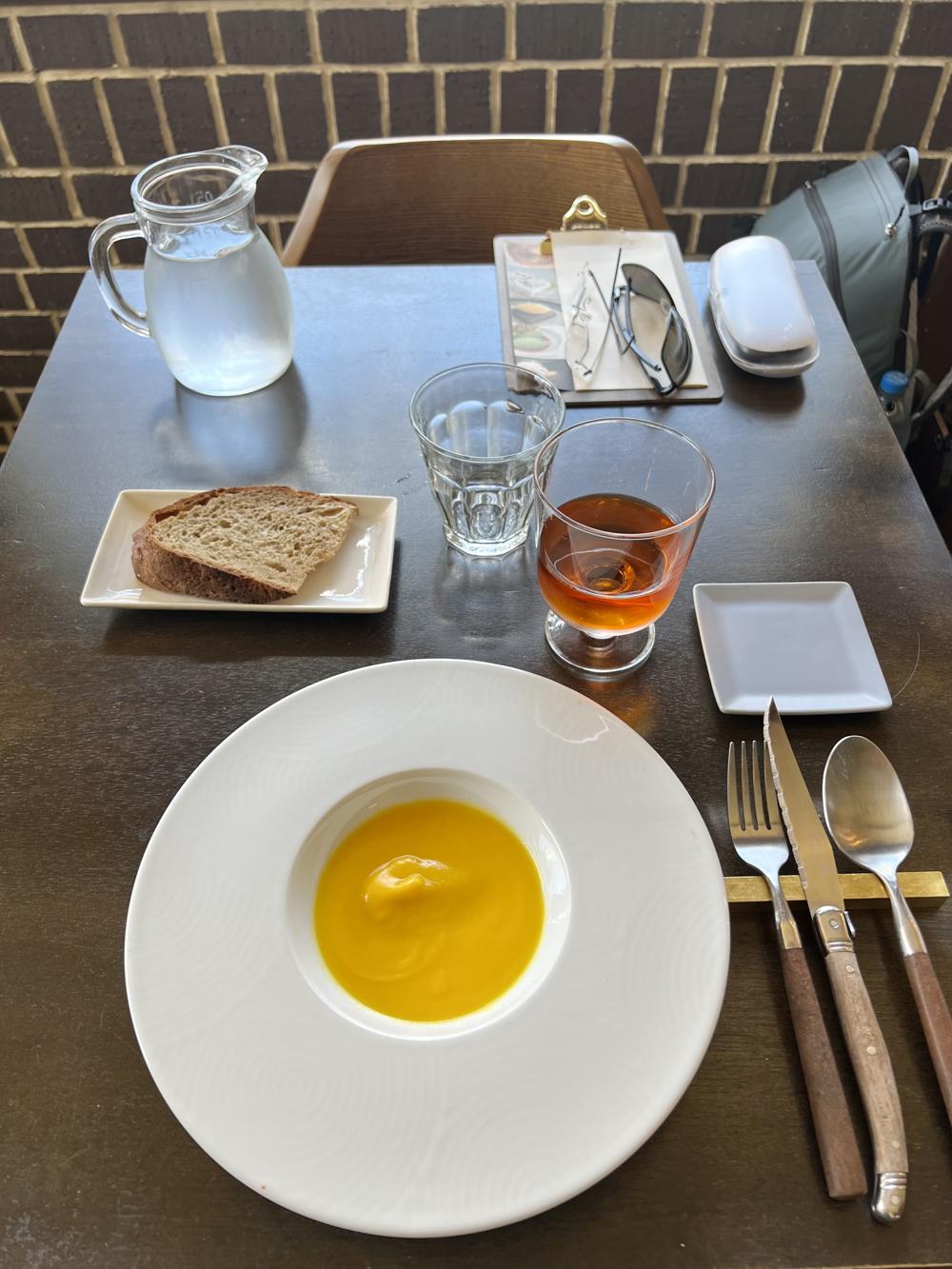
To my delight, Google’s wrong, and the restaurant is open. Lunch is fantastic: a carrot soup to start, then a duck confit with cassoulet. I’m the first customer today, but shortly after I start to eat, a group of five Japanese women come in. One of them is deaf, and she and a speaking friend of hers sign to each other in Japanese Sign Language, which is different than American Sign Language.
By now it is really hot, so the short couple of miles from the restaurant to the hotel are slow. This area seems somewhat upscale: country pensions and hotels catering to well-dressed patrons. My hotel turns out to be just okay — it looked better online — but I’m happy that I’ve got a day off tomorrow.
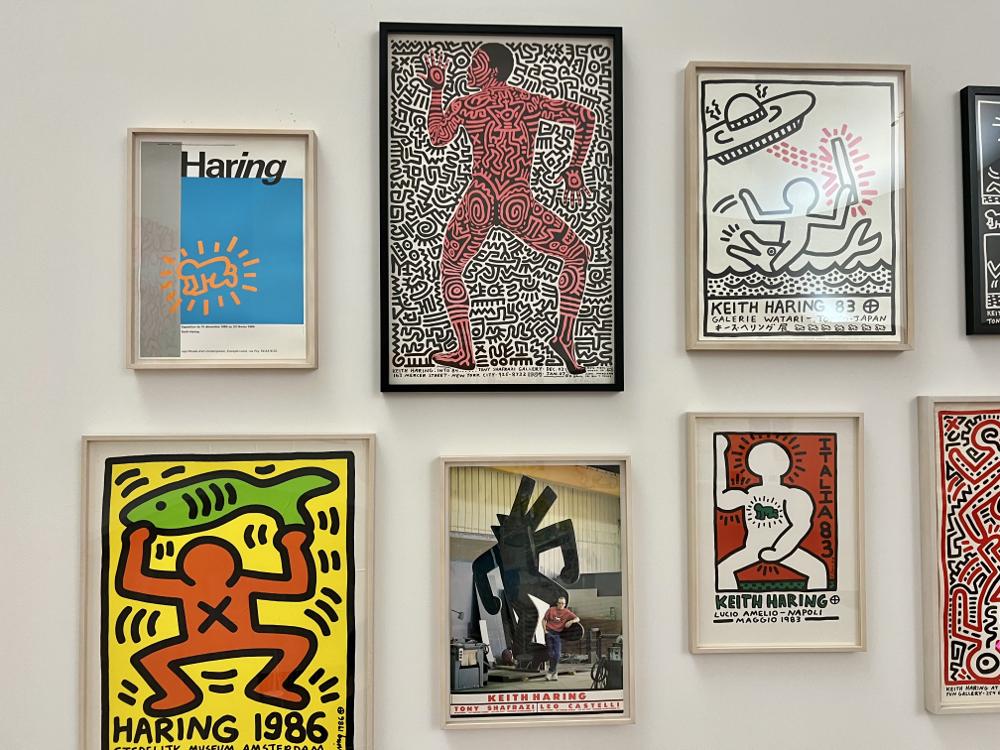
After a visit to the bath, I take a cab to a nearby museum I’d discovered while looking into the area: a museum dedicated to the work of American artist Keith Haring. The museum’s not huge, but to my untrained eye does a good job laying out Haring’s life and work.
Dinner at the hotel is a course menu that is unremarkable.
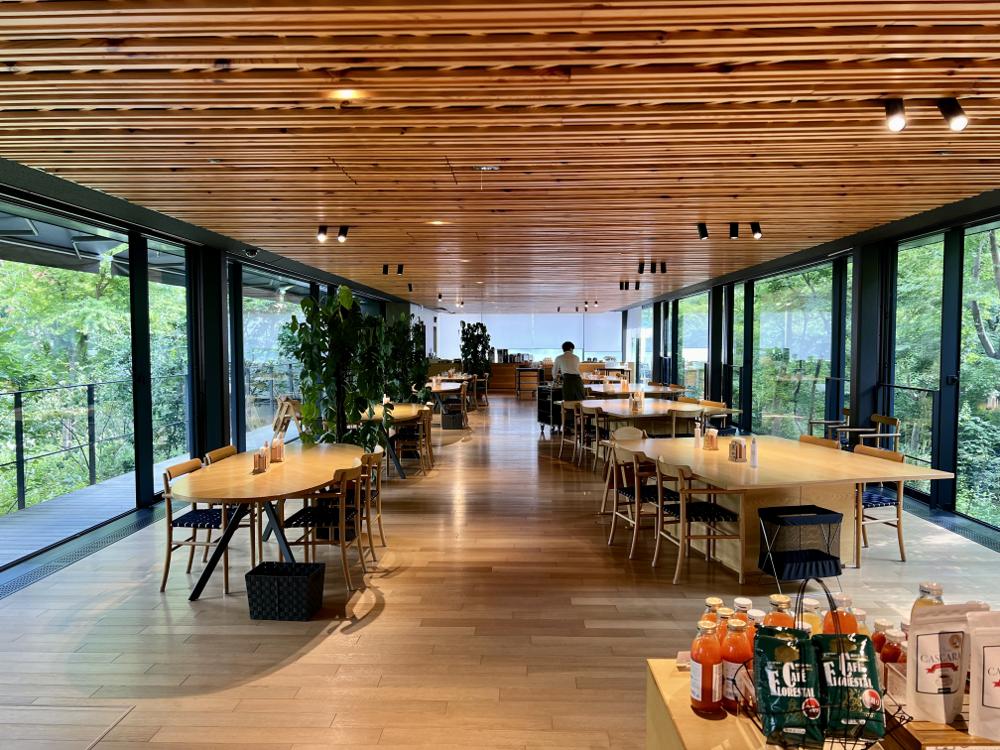
Jan’s Japan Hike, Day 11. A rest day! I spend the morning catching up on email and taking care of things. I hang out for a while on hotel’s back terrace. The hotel’s backyard has a pen in which they keep three goats. One of the goats has escaped and enjoys the terrace with me.
Our friend Hiroko happens to be spending the summer at her parent’s house in Nagano Prefecture, about an hour’s drive from here. My route won’t take me very close to them, but happily Hiroko and her father drive to my hotel to pick me up for lunch.
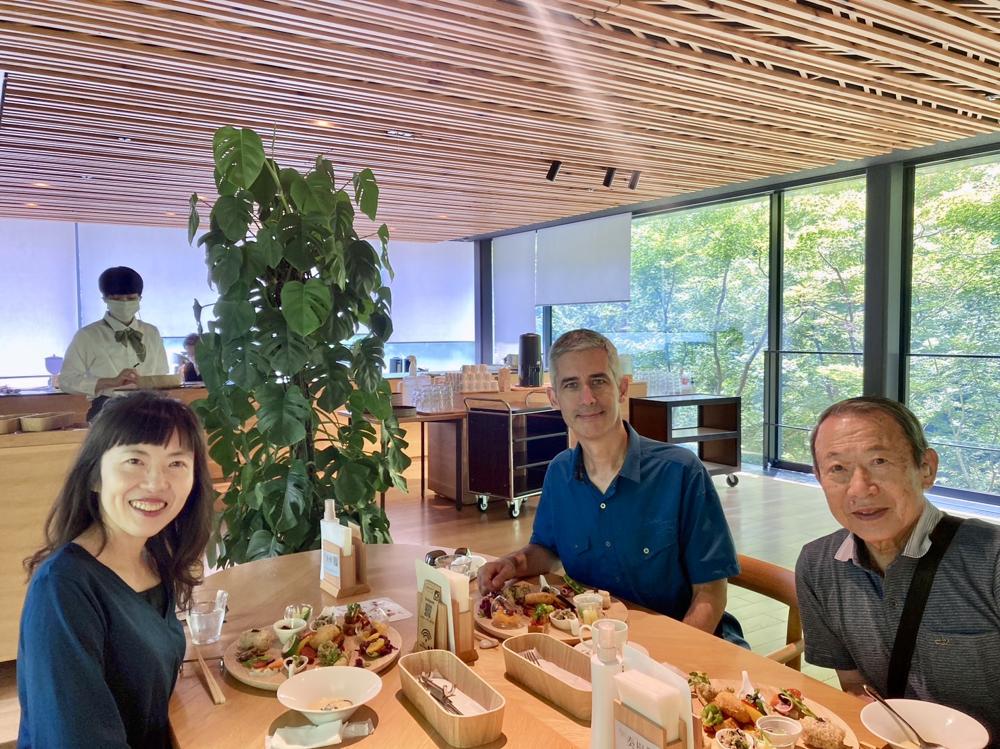
Yesterday I’d passed a stylish-looking cafe, so we try that for lunch. A sign outside says there’s a wait, but Hiroko inquires, and they can actualy seat us right away. The cafe focuses on vegetarian (or vegan?) cuisine made from local produce, and the food is delicious.
It’s great to catch up with Hiroko, and also to spend time with her father. Like Hiroko, both her parents are wonderfully kind people. We talk about my hike, but also share how our respective families are doing.
Before returning me to the hotel, they take me to a nearby Lawson’s convenience store so I can stock up on snacks for the next section of the hike.
I spend the rest of the day making more preparations, including a closer look at some of the harder hiking days. I’m learning that, due to the severe changes in elevation, my pace on these trails can be much slower than on trails back home. There are two upcoming days that had seemed plausible before the trip, but now look daunting. I’ll probably need to come with alternative plans for both of those days.
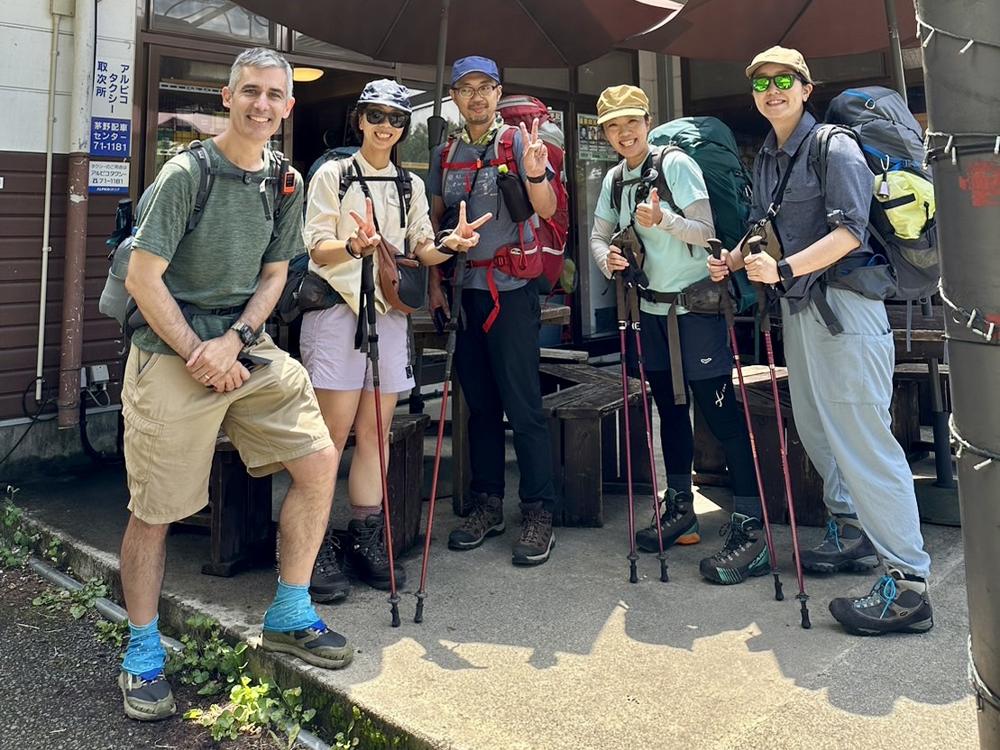
Jan’s Japan Hike, Day 12. Today starts with a modest road walk to a trailhead to meet some friends. After climbing a bit, I switch to a road that’s traversing a slope, so for the first time in a while I have a long, easy, flat section.
I’m walking around the base of the Yatsugatake mountain range. People must come here for outdoor activities, because there are campgrounds, golf courses, and wintertime ski areas. There are also lots of country villas. I pass the first joggers I’ve seen on this trip, as well as a number of cyclists. At some point in the morning, I cross into Nagano Prefecture.
I stop for breakfast at Hamamura Cafe, a small, upscale place that’s playing Enya. It advertises itself as dog-friendly — there are plenty of dogs outside, and the cafe itself has some chihuahuas inside. I enjoy a breakfast of fluffy french toast.
I reach the Minato trailhead parking area, and wait on the deck of a lodge. A sequence of big hiking groups arrive, and they’re all making preparations to leave. One big group of adults is doing group stretches to limber up.
A short while later, my friends Mari and Sosuke arrive, along with Mari’s friends Erika and Itsuko. The four of them will join me hiking for the rest of the day and a bit of tomorrow morning. The first hour of our walk is on a dirt road that climbs up to the trailhead proper. From there, we climb up and up to reach Akadake Kosen. It’s called a mountain hut, but it’s a huge sprawling complex, more like a very rustic hotel than hut.
Mari and company have brought tents, so they set about trying to find decent tent sites. These huts tend to be in the only flat places in the mountains, so tent camping is limited to areas next to the huts. It’s quite crowded, with tents pitched next to each other. Erika and Itsuko manage to find two spots that are relatively flat, but Mari and Sosuke end up on a distinct slope.
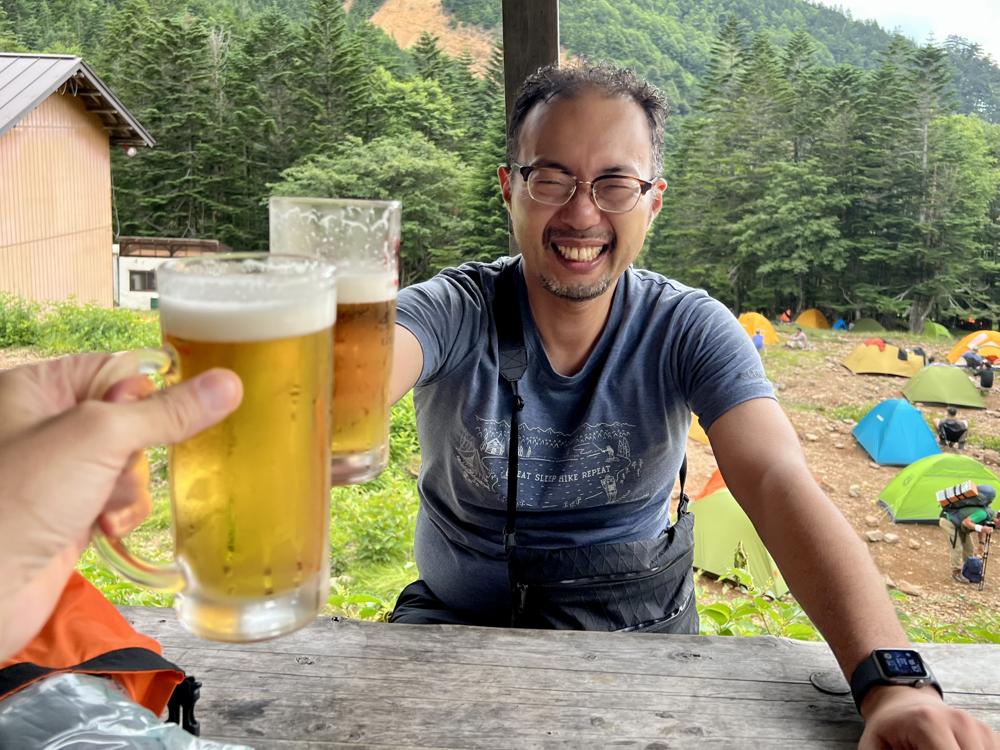
I visit the hut’s small attached bathhouse to rinse off, and after everyone else has set up their tents, we hang out over beers on a terrace. Amazingly, the hut has draft beer on tap, and Sosuke gets a beer for himself and one for me. A glass comes at a steep price of ¥1000 (maybe twice the usual price?). When Mari sits down, she bumps Sosuke’s beer. “Ah! There goes my 1000 yen beer!”
As the afternoon wears on, Mari and everyone get out the cooking gear and food and begin making their dinner. Mari and Sosuke have decided to make something other than curry rice. It involves rice, tomato paste, shiso leaves, and some other things. Everyone tries it and agrees it’s just okay. In the end, they pull out packages of curry to go with it. Now it tastes good, but of course now they’ve made curry rice again.
My stay inside the hut comes with a steak dinner. It’s not amazing, but it is a treat to have something heavy like this while hiking. After I’ve eaten, I hang outside some more with everyone and then it’s time for bed. I’m staying in the hut’s “Big Room”, which accommodates 20 people. This isn’t condusive to a great rest. I have extremely vigorous snorers on both my right and my left, and even with earplugs they’re pretty loud.
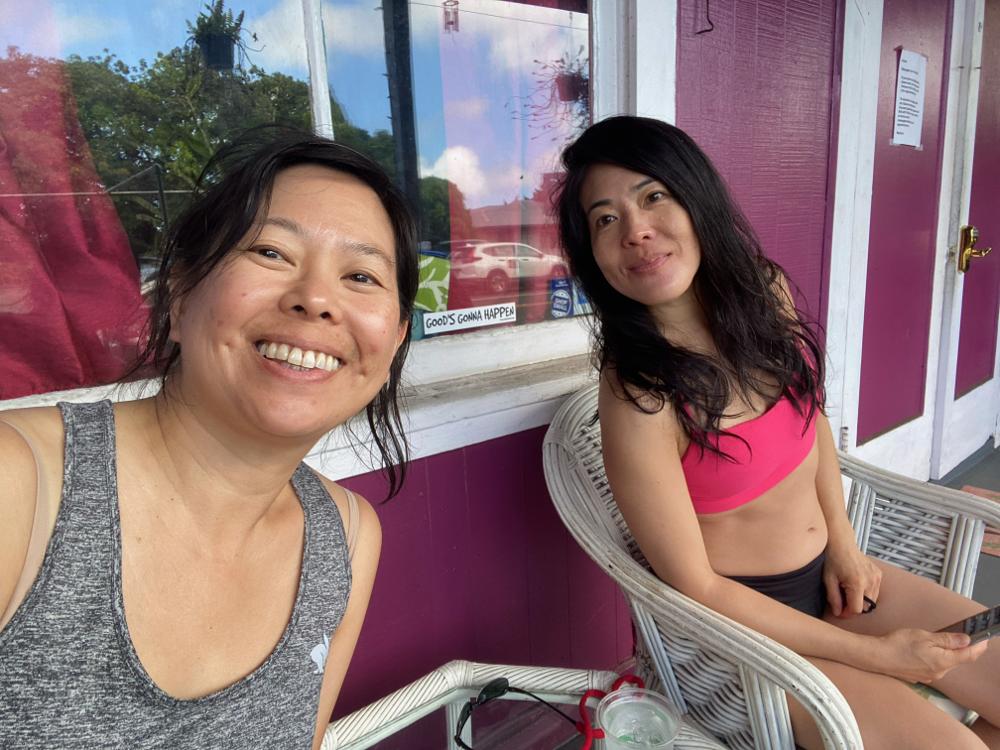
Angela leaves for a week in Hawaii with her longtime friend Dana. She’ll spend a week snorkeling, hiking, and hanging out in the Waikola area on the Big Island.
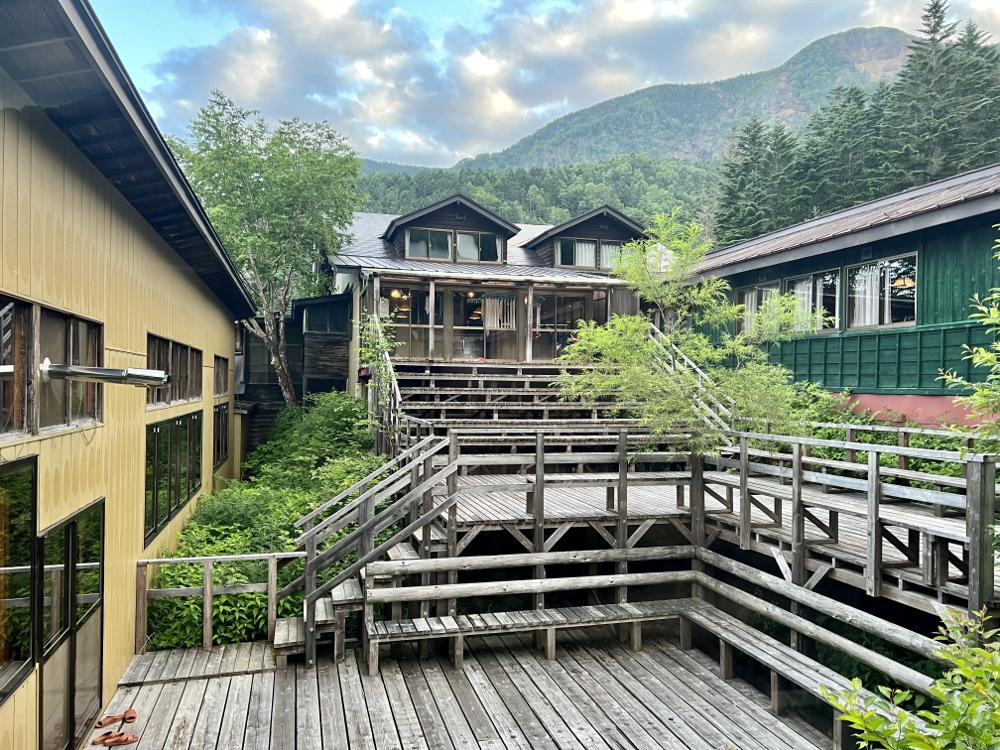
Jan’s Japan Hike, Day 13. We all wake up around 5:00. I have the hut’s basic Japanese breakfast (rice, miso soup, fish, pickles) while everyone else eats outside. At some point after 6:00 we’re mostly ready to continue hiking. Mari, Sosuke, and Erika will join me for the first part of the day up to the summit of Mt. Io, but Itsuko has decided she’s had enough hiking. She’ll wait at the hut for her friends to come back down, then the four of them will hike all the way back out to the trailhead and head home.
The morning climb is what I’m finding is typical of these trails: an endless staircase of roots and rocks. One thing that’s a little different is that everything here is covered in moss; the area must get a lot of rain. We occasionally get nice views of Mt. Akadake looming overhead, or else down the valley. We eventually reach a saddle below Mt. Io and take some photos. Unfortunately, fog is rolling in and stealing the view.
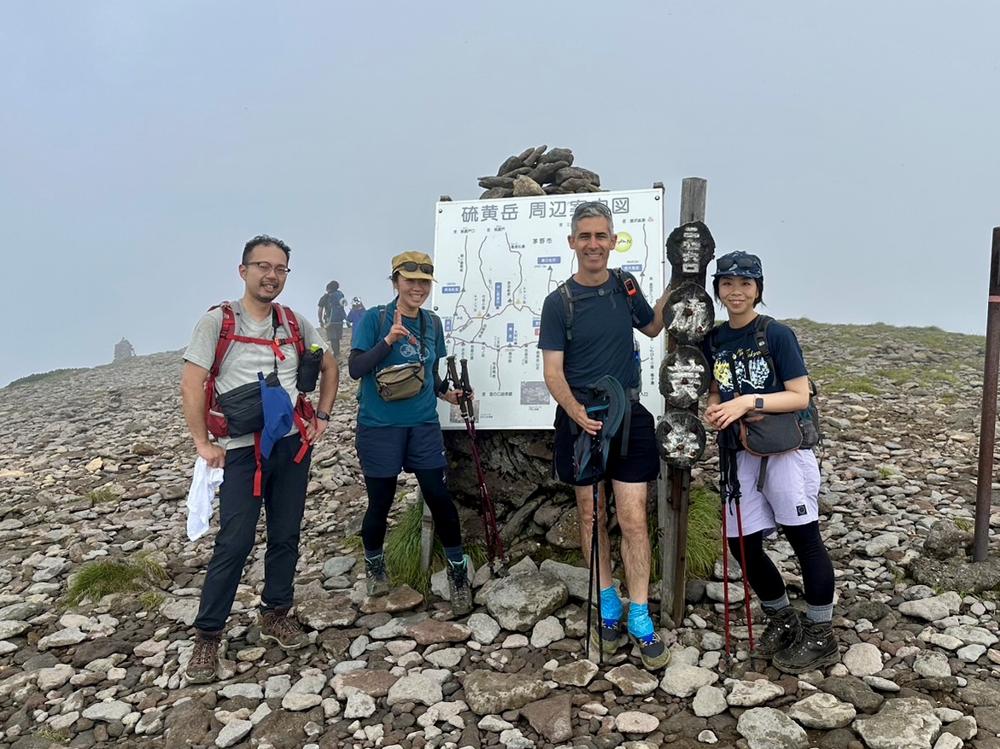
We continue the short but steep section of trail to reach the summit of Mt. Io. As feared, the fog has produced a whiteout. Mari laughs, because she climbed Mt. Io once before and that time it was socked in as well. We rest for a bit over a snack, and then it’s time for me to go on and for them to head back, so we all say goodbye.
For the rest of the morning, I continue north towards Mt. Tengu. The trail occasionally skirts cliffs. I dislike heights, so I’m glad that the trail usually keeps some distance from the top of the cliffs. The rocky final climb to the summit of Mt. Tengu is nevertheless a little unnerving for me, so I’m happy when I reach the top.
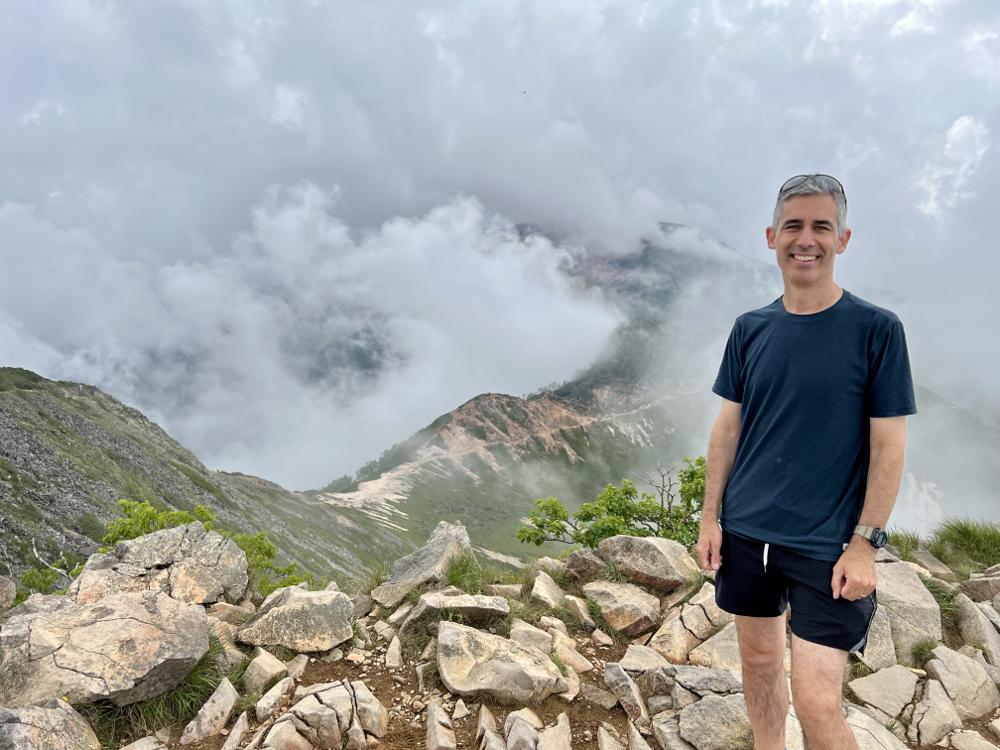
From there it’s a long, slow descent to reach a forested plateau and a hut called Kuroyuri Hyutte. After the extravagance of a bathhouse and wifi last night, the Kuroyuri hut is decidedly basic. I arrive before noon — this is one of the shortest days on this trip. Originally, Mari and Sosuke had hoped to hike with me for another night, so we’d picked this hut to keep the day short. Their plans had to change, but I ended up sticking with the reservation, so I now I have a whole afternoon to hang out.
The hut only offers a few kinds of snacks, but for some reason one of them is frozen chocolate-covered bananas. The hut doesn’t have many amenities — but there’s a piano in the corner, as well as a full string bass. The piano must have been air-lifted, but a staffer says he brought the bass up himself. In the mid-afternoon, he picks up the bass and begins plucking out jazz riffs. Later another staffer produces a trumpet, and the two play together for a while.
I meet a nice group of hikers over dinner: Ayumi, Keiko, and Mari (another one). We have fun talking about the hiking in the area.
Later an older man comes over to hear more about my hike. The hike is definitely a great conversation opener. Everyone’s very surprised to hear I’m walking across the country. Older Japanese men are less impressed by the hike; they are more amazed that anyone could ever take a month off from work. (It’s very hard in Japan to take more than a week or so of vacation.)
Before bedtime, the string bass player helps me adjust my route for tomorrow. My original plan didn’t account for the difficulty of the trails here, so together we work out a more plausible route that trades several difficult mountain climbs for some road walking.
He asks if I can show him the gear I’m hiking with. I don’t have much interesting gear with me, but I show him what I have. He’s very excited to see that I’m hiking in trail runners made by a company called Altra — he happily shows me his own pair of Altras. I think he feels like I’ve validated his choice in trail shoes.
I’m going to be sleeping in a big communal room again tonight, so I brace myself for the elderly male snoring chorus. The only comfortable sleeping position on these thin futons is sleeping on one’s back, which makes the snoring that much worse. There’s a man two futons over from me with the loudest snores I’ve ever heard — every few minutes, zzzzzzSNORK! Even through the earplugs, it’s as loud as a shout.
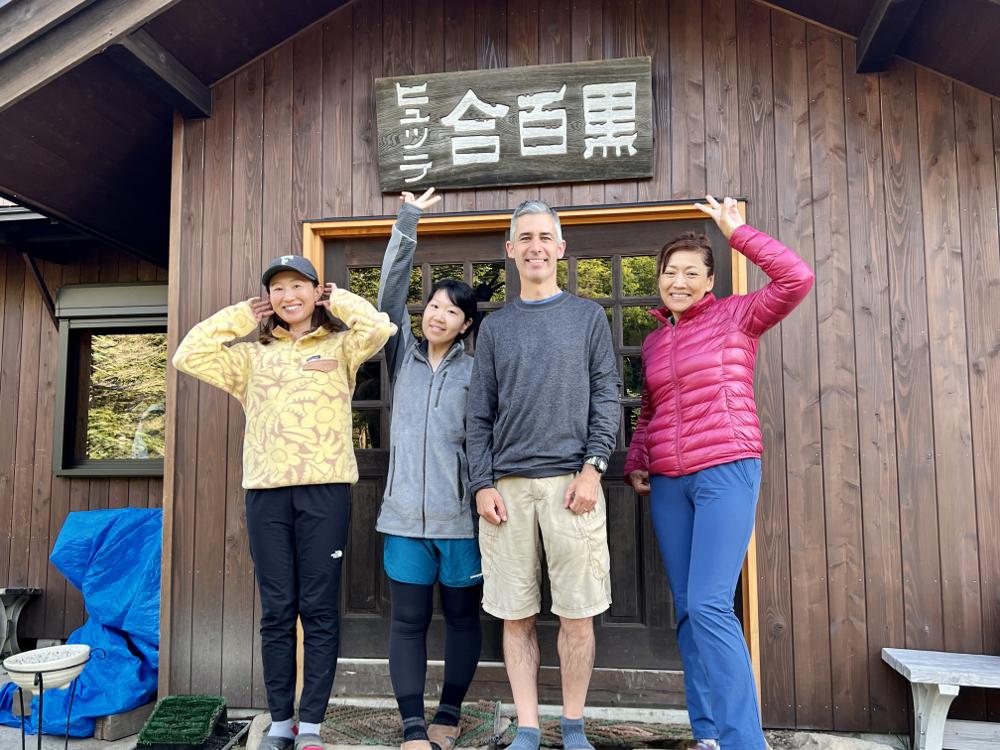
Jan’s Japan Hike, Day 14. As I’m preparing to leave the hut, I find that someone else’s mobile phone has been left behind in the men’s bathroom. The hut staff manage to locate its owner before he leaves, and he’s grateful for the return of his phone.
Losing my phone is one of my biggest concerns. My shoes are probably the most critical item of gear for this hike, and my phone is the second most critical item. The third most critical item is my stack of ¥100 coins which are needed for the pay toilets.
I say goodbye to Ayumi, Keiko, and Mari, as well as the nice old man who spoke with me last night. My first destination for the day is the summit of Nakayama, followed by a descent to Shirakoma Pond. I hadn’t originally planned to go past the pond, but the hut staffer last night recommended this route as faster, and I’m glad I’ve come this way — there aren’t many alpine lakes in this area, so the pond is a pretty sight.
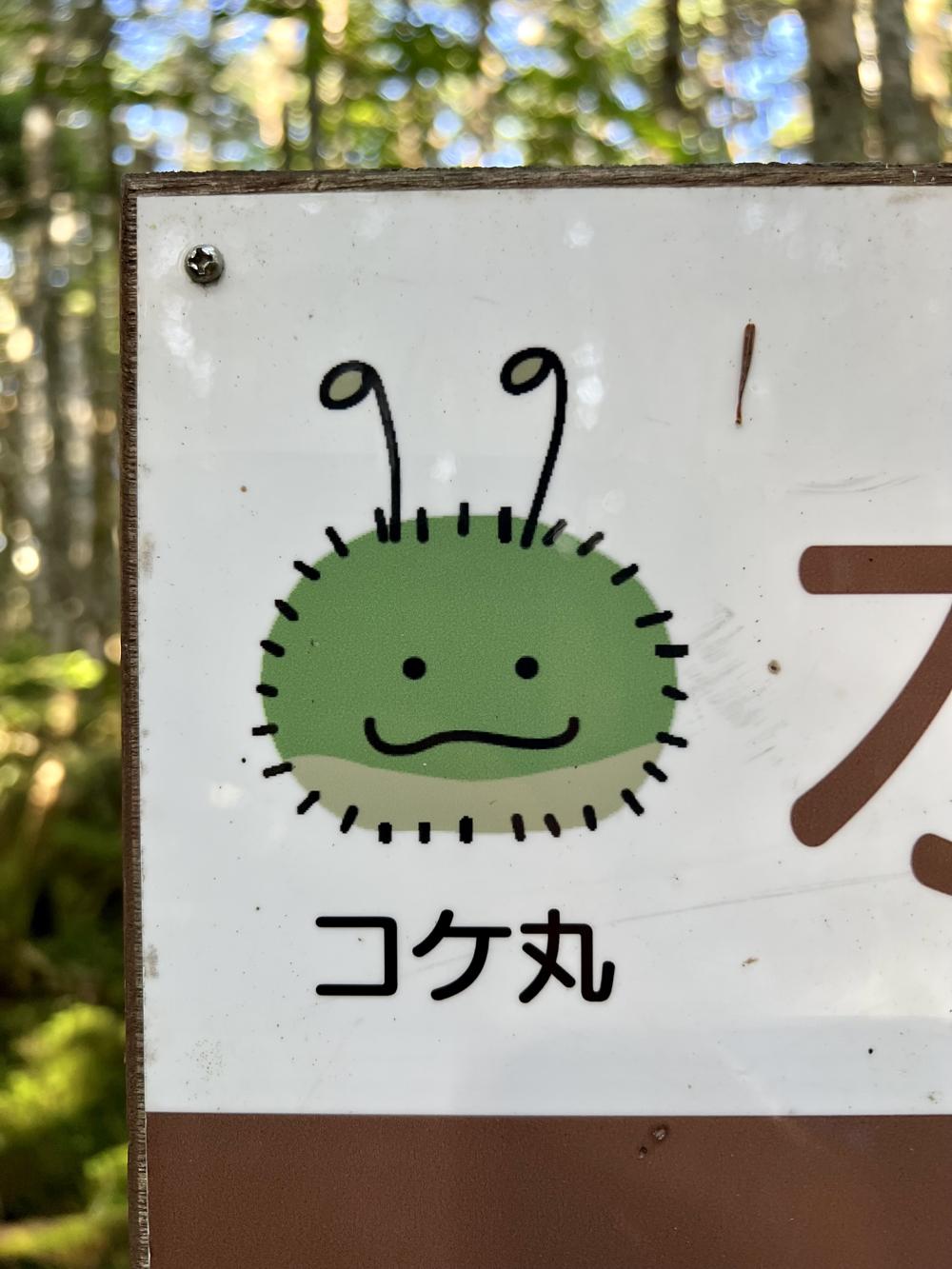
This part of the Yatstugatake range is famous for its mosses — something like 800 species of mosses are found here. This forest has its own little mossy mascot named Kokemaru. He’s cute, and I enjoy looking for him on the trail signage in the area.
I make a short detour to a trailhead in hopes of finding some refreshment, and am not disappointed. The small shop there sells juice from a local berry that in Japanese is called “kokemomo” and turns out to be lingonberry.
The next section of trail is somewhat unusual for the area, crossing some bushy alpine meadows. I eventually reach a long boardwalk that makes its way towards the top of a large gondola. I’m crossing my fingers that the gondola is operating, because that implies the existence of a restaurant selling food to tourists coming up the mountain. When I first spot the gondola’s top station, it looks like it’s not operating, but I eventually hear the sound of a giant motor spinning up. Yay! The expected tourist restaurant is there, serving (no surprise) curry rice for lunch.
I descend a trail that runs below the gondola down to the base station. There’s another, bigger tourist complex there, where I get some kokemomo/lingonberry soft serve ice cream.
From here, I’ll be walking on roads for the rest of the afternoon, mostly along a popular mountain sightseeing route called the Venus Line. This road might be the nicest rural route I’ve walked on so far — aside from the promised views, the road climbs at a steady, gentle slope that lets me move quickly without getting exhausted. I crest a mountain pass, then the road descends at the same gentle slope. I pass a long group of cyclists pumping their way towards the pass — a race of some kind?
I eventually reach Lake Shirakaba, where I’m going to spend the night. The east end of the lake is dominated by the Ikenotaira Resort, which is teeming with vacationers. I stop at a Lawson convenience store to stock up on snacks again. It’s pretty hot now, so I buy some kind of orange juice to drink outside the store. Bleah — it’s juice blended with saké, which isn’t what I’m looking for to rehydrate.
I walk a short distance along the lake to a small pension called Little Grebe. After a couple of nights in mountain huts, it feels great to have a bath, a good meal, and a rest on a real bed in a quiet room.
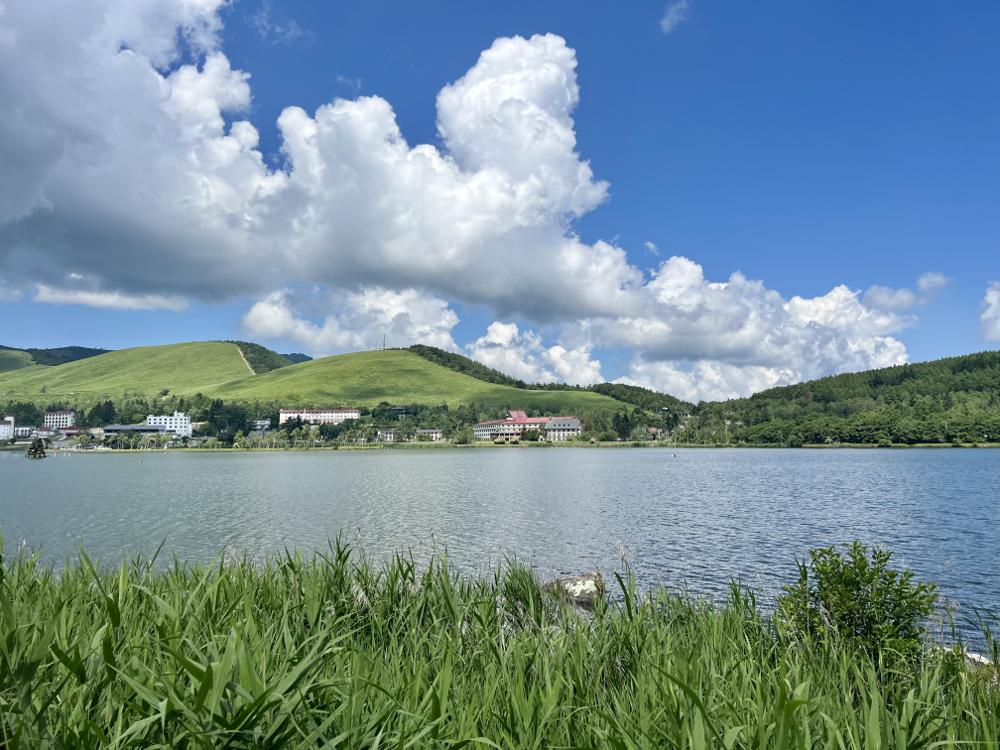
Jan’s Japan Hike, Day 15. After breakfast at the pension, I start walking around Lake Shirakaba. I stop a short while later for coffee at another cafe that roasts its own beans.
I begin climbing Mt. Kuruma, which is striking because instead of forest, it’s covered with grass. This change in environment is fun, and the views are great. On the other hand, it’s hot.
I aim for a cafe about halfway up the mountain, but when I reach it, I find that it’s closed today. I walk a little farther and stop at a trail junction to eat a lunch of snacks from Lawson.
While I’m eating, an older man stops me to ask where I’m from. When I say America, he asks from where in America. When I say Seattle, he reacts the same way most older people do: “Oh, Seattle — The Mariners! Ichiro!”
After my light lunch, I hike for ten minutes before realizing that I’d picked the wrong trail back at the junction. Rather than backtrack, I’ll keep going and then make my way down to the right trail. Serendipitously, this wrong trail leads to a hillside hut called Korobokkuru Hutte. It has a charming cafe — and it’s open! I have a second lunch of 3-inch thick buttered toast with strawberry jam and iced cafe au lait.
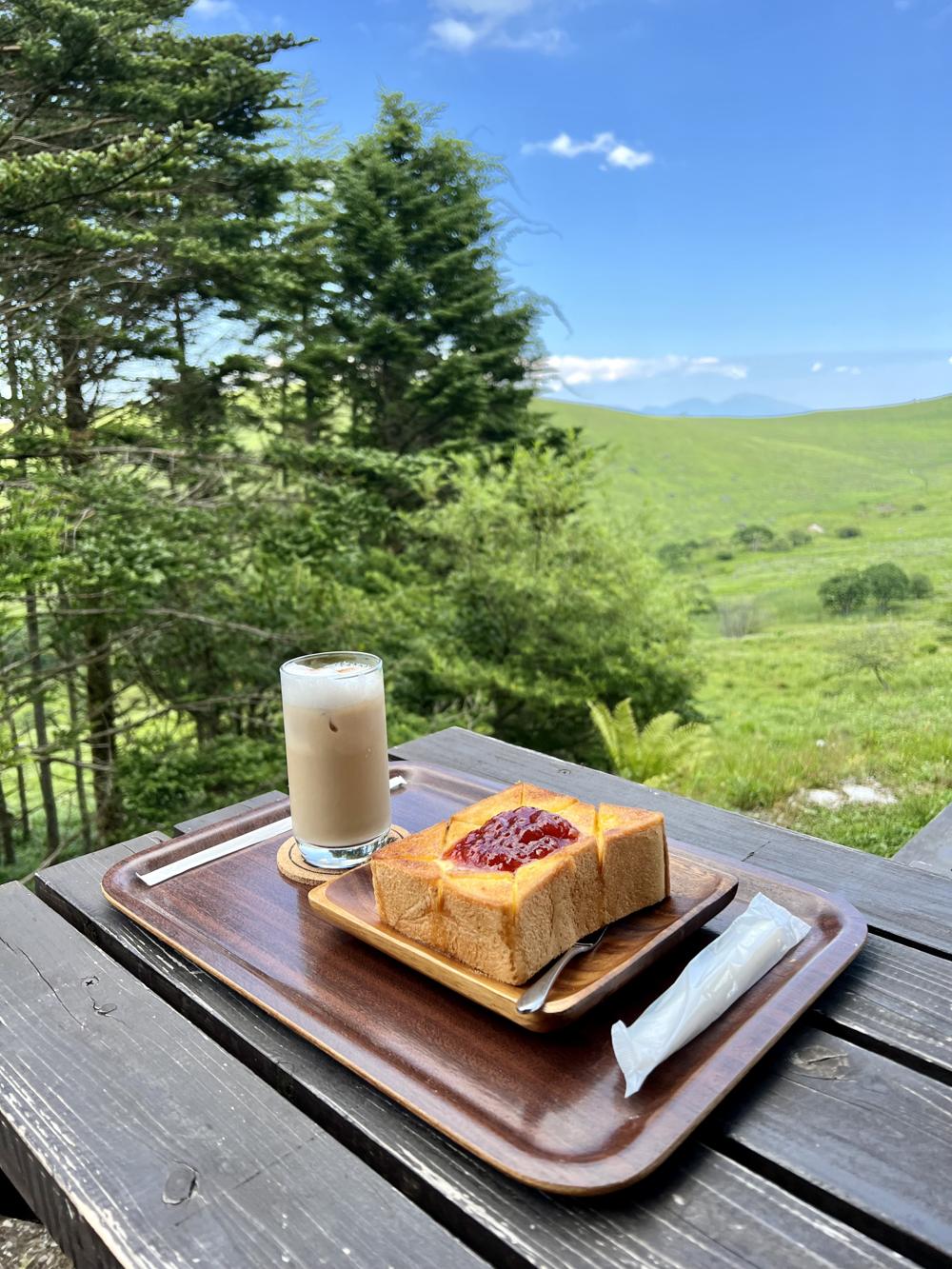
This area’s pretty popular with hikers who, in addition to the beautiful sweeping views, have come to see a particular flower called nikko kisuge, a kind of day lily. Our friends Satoru and Hiroko brought us to this area — maybe this spot? — many years ago to see the flowers, and it’s nice to see them again.
I descend a steep trail to a river, then pick up a beautiful shaded boardwalk that skirts the edges of the grassy Yashimagahara Marshlands. This bit of walking is, so far, the most pleasant and scenic of the trip so far (and maybe of the whole trip).
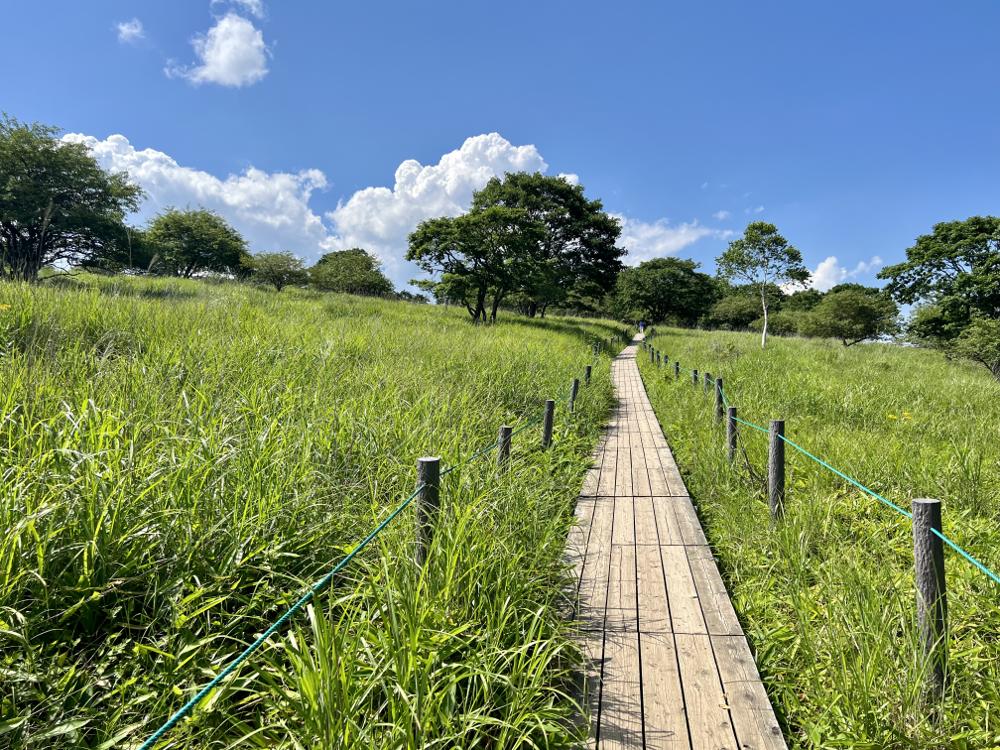
Tonight’s lodgings are at Washigamine Hut, a self-described “hermitage” near the edge of the marshlands. I’m a little early, so they make me wait out in the garden. The man who owns it eventually brings me inside to check in. For the first time on the trip, the check-in process includes a covid questionnaire — it’s a little unnerving to read it while he watches and make sure I’m answering the Yes/No questions correctly.
When I’d first filled out the online reservation form, this man had answered, “We almost never have foreign visitors. We can’t speak English. I’m very worried.” I’d reassured him that everything would be fine. I do my best to pay attention as he shows me the place to make sure I understand the many house rules.
Jan’s Japan Hike, Day 16. Today’s the second of three days I’ve had to replan to account for the insanely hard — and time-consuming — nature of the trails in the Japan Alps. In this case, instead of taking trails over several mountains, I’m going to walk on roads and go around the mountains.
Google Maps proposes two walking routes: 21 miles (34 km) mostly on twisty mountain roads, or 22 miles (35.4 km) mostly on regular rural and urban roads. Although I really don’t want to walk more than necessary, I opt for the 22-mile route so that I’ll have places to eat and cool off. It’s hot again, of course.
The first few miles are on a road that winds its way down a steep hillside through a forest. It’s well-shaded, and it’s still early, so this part of the day is thankfully cool.
After reaching the first little settlement, there’s a brief bit of walking I do on an old Japanese trail called the Nakasendo. This used to be one of the primary means of traveling to Tokyo and back. I hiked a little bit of this trail with Liya and Bree in 2018. Today the little section I’m walking isn’t particularly trail-like, but it’s still nice to walk a bit of the trail.
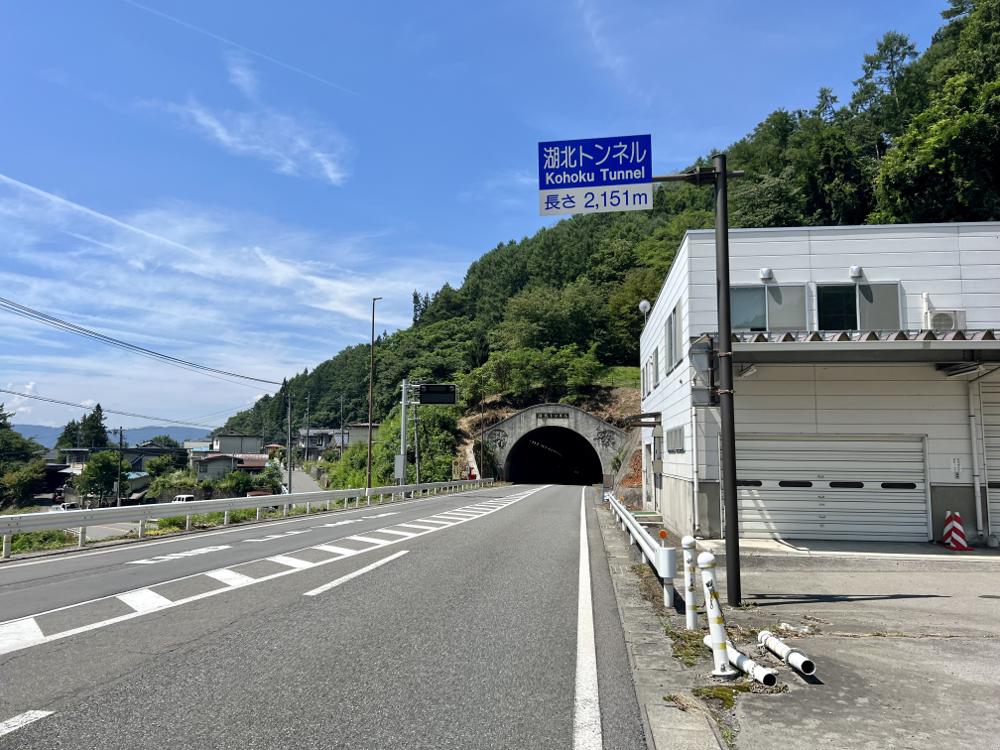
Sadly, a little later the walking route shifts on to the side of a highway, and then comes to the entrance of the 1.2 mile (2 km) Kohoku Tunnel. As with all the other tunnels, this one thankfully has a sidewalk on both sides, but it’s still a freakishly long way to walk beside a busy road in dim light. The trucks speeding through the tunnel create gusty winds.
I stop in the town of Okaya to eat a lunch of gyoza and to enjoy some air conditioning. After lunch, there’s another section of the Nakasendo trail to walk. This one goes up steeply to a mountain pass that has a little shrine at the top.
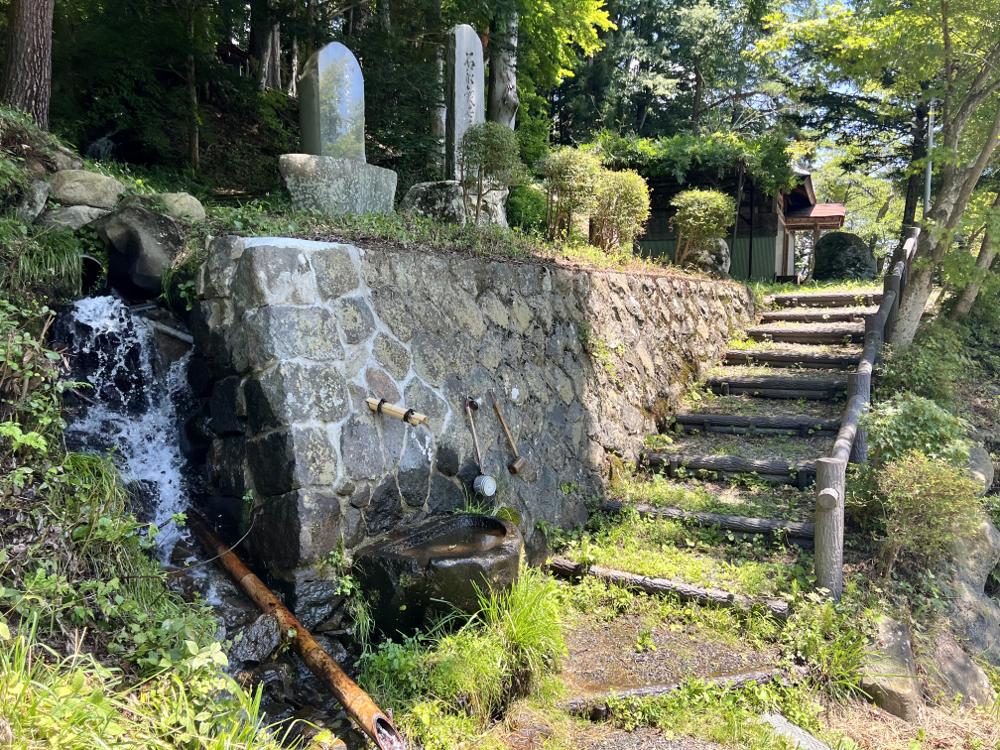
Coming down from the pass, I’m getting close to the city of Matsumoto where I’m going to spend the next two days. Unfortunately, for many miles the walking route is on a frontage road next to a huge expressway.
There’s a lot of noise from the expressway, but what’s worse is that the frontage road itself is fairly busy. The narrow shoulder to walk on is completely overgrown with bushes in some sections, and in those places I have to wait for traffic to clear out before I can hustle past the bushes.
I walk for hours in this way past rice paddies. I’m very happy when I finally reach the city outskirts and the first 7-11 convenience store so I can take another cool-down break.
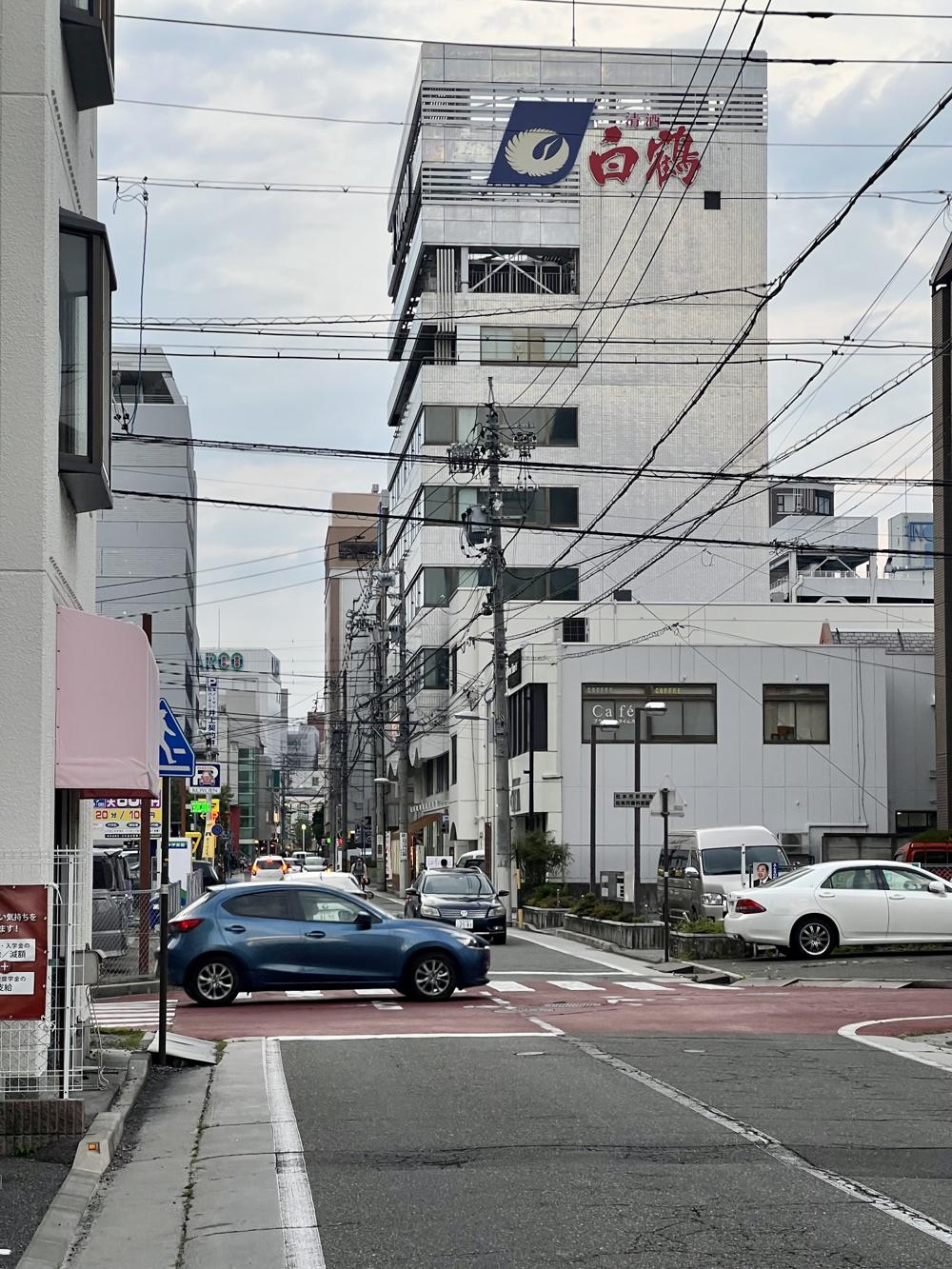
After about 8 hours of walking in the heat with occasional breaks, I finally reach the Hotel Buena Vista and can check in. My feet ache from walking on pavement for so long. After a shower, I find the closest Italian restaurant that looks like it serves a decent margherita pizza and slowly walk there for dinner.
Jan’s Japan Hike, Day 17. Today’s a day off from walking, but I’m up early so I take care of laundry. The hotel laundry machines combine a washer and dryer into a single unit that also automatically injects detergent.
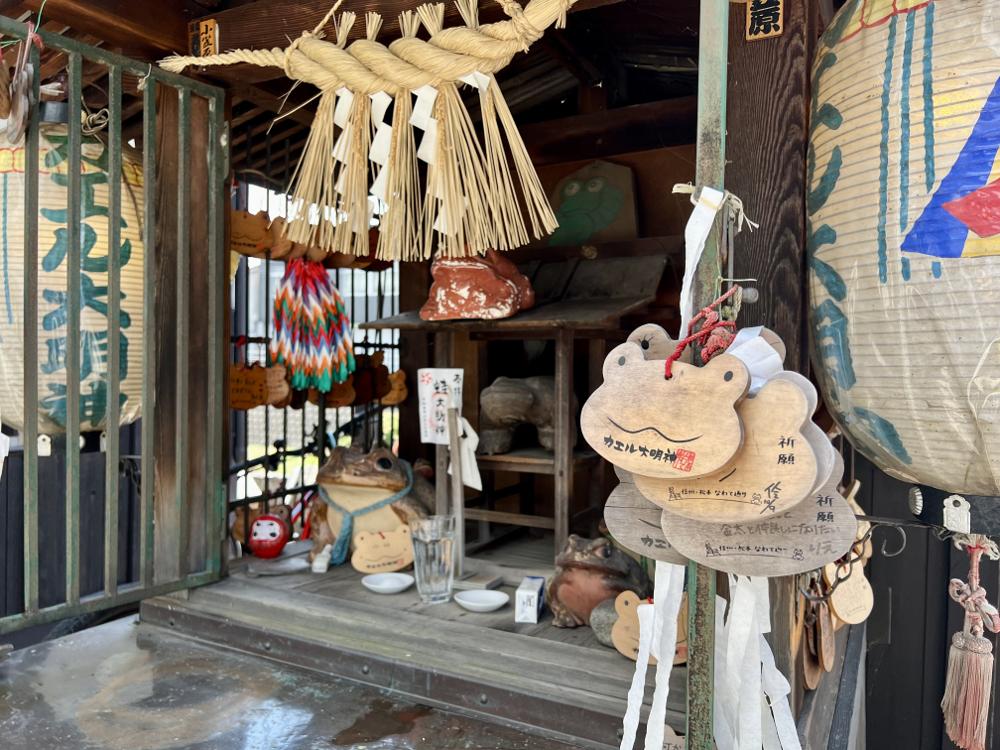
Japanese cafes tend to open late in the morning, but there’s one near my hotel that’s open early and it has decent coffee and cinnamon toast. After taking care of some things back at the hotel, I head out again and stop by a cute street called Niwate Dori. The street includes a small shrine to frogs. The river next to the street used to be home to lots of frogs, but years ago a flood wiped them out. Local residents build a shrine in honor of the frogs.
I now have to do an errand at a Lawson convenience store, which I enter with some trepidation. Back in May, I’d purchased tickets for the new Ghibli Park area near Nagoya for me, Angela, Liya, and Bree. Getting the tickets was next to impossible: the site intended for international visitors would make me wait in a virtual “line” for an hour for the privilege of buying tickets — and then crash. After this happened multiple times, I gave up and used the site for residents of Japan.
In theory, I should be able to pick up the tickets at a ticket kiosk at any Lawson, but I’m not sure if it’s actually going to work or whether it might put up more hurdles. I walk up to a ticket kiosk, punch through several screens, and miraculously the kiosk produces a slip of paper I can hand to the cashier, who prints out the tickets for me.
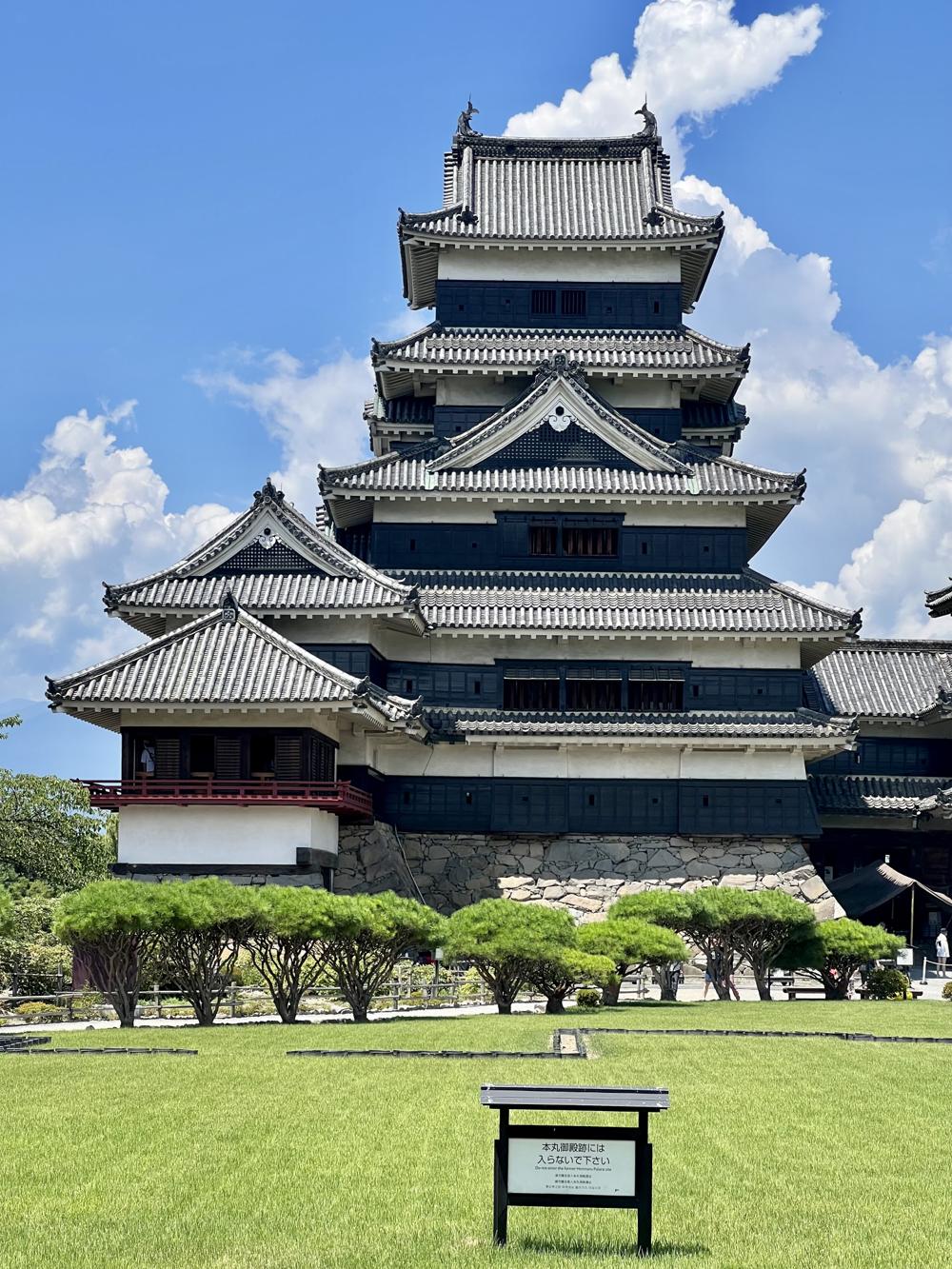
I get a late morning snack, then walk to Matsumoto Castle. It’s a beautiful stone and wooden building. That said, it’s very hot out today, so the inside of the castle is stifling. Leaving the castle grounds, I see some people getting out of a taxi and manage to flag it so I can avoid more walking in the sun.
In the afternoon I go to a movie theater to catch a showing of “The Boy and the Heron”. This is probably going to be the last movie drawn and directed by Hayao Miyazaki, so I’m happy to be able to see it in a theater.
Back at the hotel, I’m taking care of more things when there’s a thunderstorm. On long hikes, it’s delightful when a storm happens when I happen to be inside somewhere.
At dinnertime, I see that there’s a well-reviewed Chinese restaurant very close by, so leave the hotel in search of it. My phone’s map keeps twisting around and “Recalculating” the route. I eventually work out that the restaurant is inside my hotel.
Jan’s Japan Hike, Day 18. I follow the Narai River out of Matsumoto City, but then the route shifts to follow a busy highway I have to stay on for the rest of the morning.
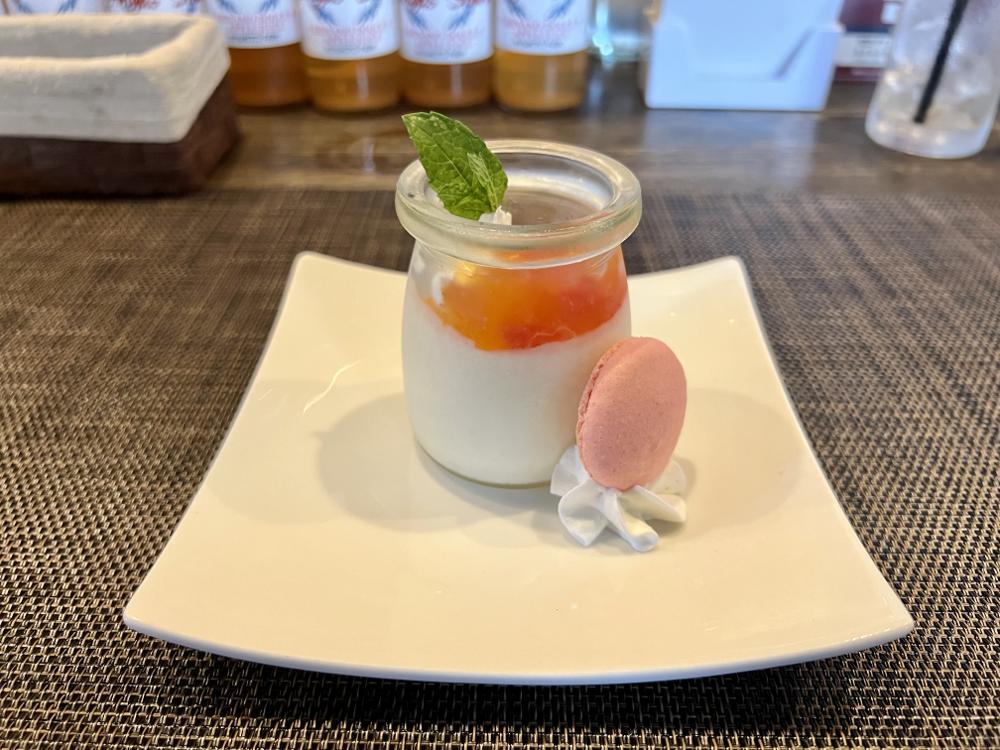
It’s 92°F (33°C) and humid, so I’m drenched by the time I reach the town of Toyoshina and a little Italian cafe called Bambi just as it’s opening for lunch. I order a pasta bolognese, and am surprised when it comes with a rather large plate of appetizers and a cold dessert as well.
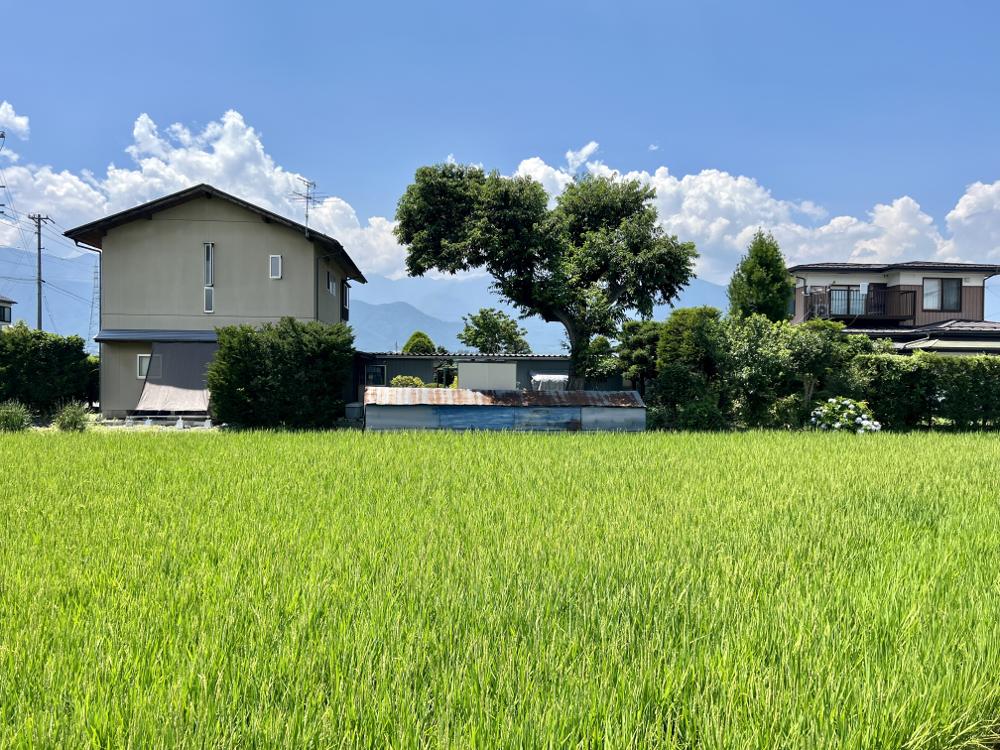
After lunch, my route heads through rice farms, which if anything are even hotter than the highway. I have to keep stopping in the tiny bits of shade I can find under trees near homes.
There’s exactly one little cafe, Cafe Bonbonsha, that lies along my afternoon route, and I’m so happy it’s open. I drink a housemade lemonade and wait to cool off before moving on.
The route now begins to climb up into the foothills of the Northern Alps range. The grade isn’t too bad, so I keep up a good pace. I eventually reach the edge of a huge golf course. I’m surprised when I see a monkey walking across the road in front of me. I’d known these mountains had monkeys, but didn’t expect to see one today. The monkey cuts across the road and heads into the country club parking lot.
I reach today’s destination, Hotel Ambient Azumino, which I’d picked because it was the furthest into the hills and so closest to a trailhead. It’s a little run-down, but even an old Japanese hotel will still have a nice bathhouse.
I discover that I left my reading glasses back at the Bambi restaurant where I’d stopped for lunch. I call them and they graciously agree to mail the reading glasses to a hotel I’ll stop at in a couple of days.
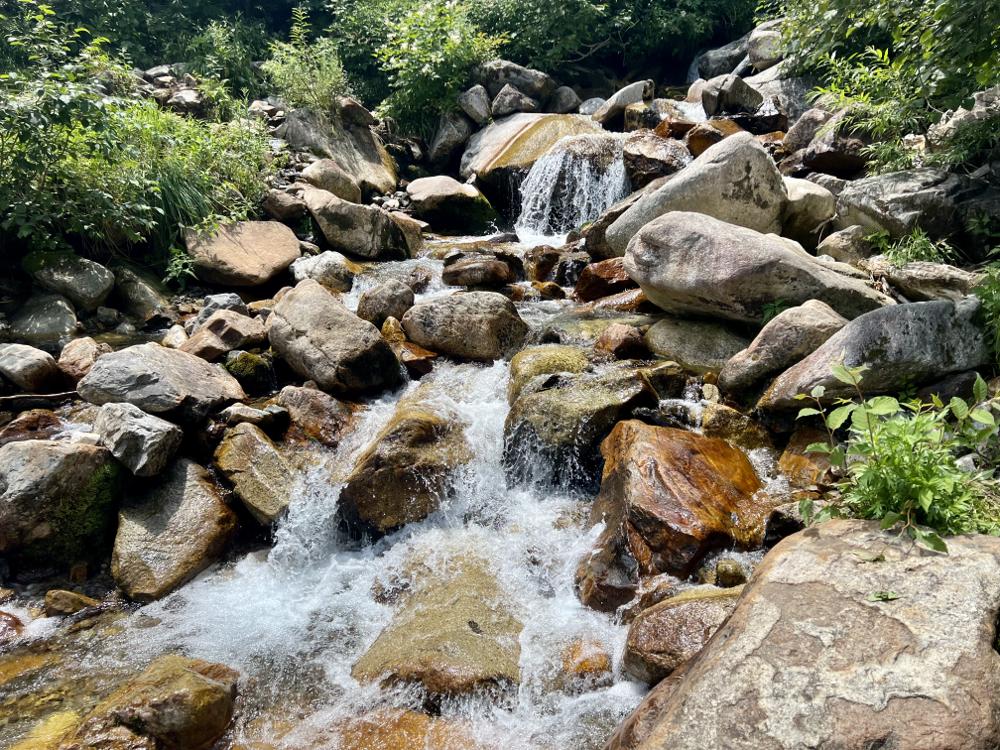
Jan’s Japan Hike, Day 19. I’ve been wrestling with what to do with the last week of my walk across Japan. The trail portions are taking longer than expected, and I can see there are a couple of days that looked fine in theory would be physically impossible. I’ve also discovered that the last day of the walking route proposed by Google Maps includes a 3.5 mile / 5.7 km long tunnel. Unlike all the other tunnels I’ve passed through so far, that tunnel doesn’t have a sidewalk. No, thank you! I need to come up with a new route that avoids that tunnel.
This morning I walk out of the hotel and head towards the Ichinosawa Trailhead. At the beginning, I’m passing country villas, but eventually there’s nothing but the road winding along a steep green hillside. Occasionally taxis pass me taking hikers to the trailhead. At the trailhead there’s a small building. Two taxi drivers are chatting under the building’s awning, passing the time as they wait for some hikers to arrive that need a ride back to town.
The trail is short (less than 3 miles / 5 km) but climbs steeply (over 3500 feet / 1000 m) to a ridge where tonight’s hut lies. The trail follows a river that tumbles down over rocks. This river is fed by countless streams. This is a change from the mountain trails I’ve hiked on this trip until now; none of them had many stream crossings. There are lots of other hikers on this trail, although everyone I see is coming down — perhaps everyone else heading up must have arrived much earlier than I did.
I come to a place where a kind of flow of rocks has come down the mountain. Other hikers have stopped here to rest, so I decide to stop and have an early lunch myself. It’s too much trouble to carry a real lunch, so I just keep eating snacks until I don’t feel hungry.
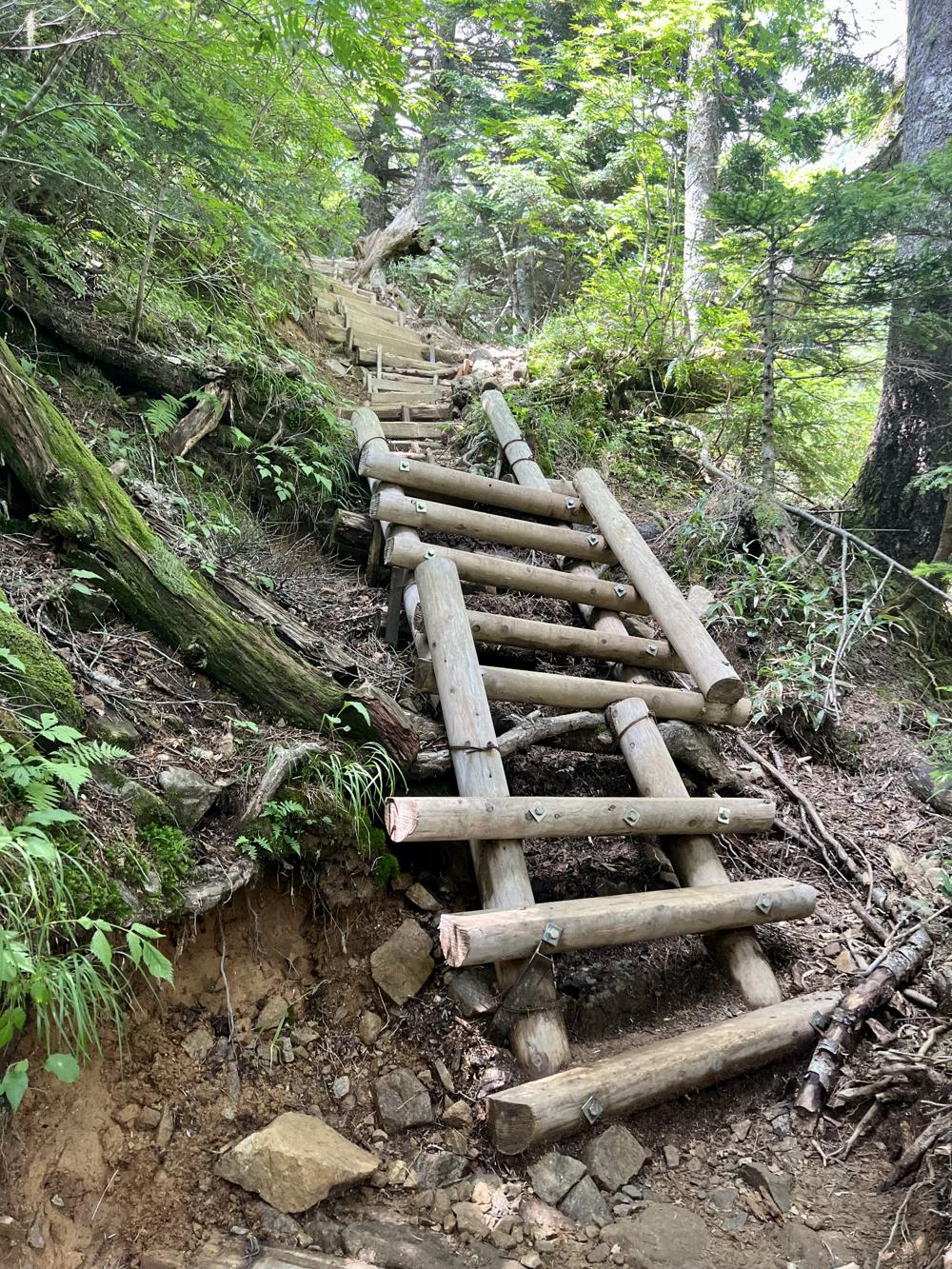
The trail gets steeper and steeper as it approaches the ridge. At one point, I see a rope alongside an extremely steep and sandy channel that looks precarious. When I reach that point, I’m enormously relieved to see an “×” mark indicating that the sketchy slope is not the trail (or, at least, is no longer the official trail). In the other direction, there’s a “○” mark indicating that the correct route is up a series of steep stairs. In between the stairs, the trail occasionally skirts the top of a big drop; I hustle past without looking down.
I reach a point where the trail is going to divert away from the river, so take the opportunity to take of my shoes and shirt and rinse off as best as I can — the hut won’t have any shower. There’s a young couple at the spot, and they’re taking turns dunking their heads in the river. They’re the only other people I’ve seen this entire trip that are cooling themselves off like that. After they leave, a group of older men comes down. One of the trips, falls, and bangs himself up a bit. He eventually dusts himself off, but seeing him fall is a reminder that these rocky trails really are treacherous, and it wouldn’t take much to receive an incapacitating injury.
After the river, there are more steep stairs and cliffy bits. The trail keeps getting steeper. When I’m less than a mile from tonight’s hut, I still have 2000 feet / 600 m of elevation to climb! I meet two men who tell me that they’ve seen a bear and that I should take care. I’m skeptical of this claim — there are so many hikers making so much noise, I can’t imagine a bear hanging out near this trail. But for a while I add “bears on cliffs” to my list of things to worry about.
I reach the hut, Jonen Goya, at 2:00 pm. The hut is large, and absolutely hopping with people; it’s a hiker party. I get checked in, then go get a snack from the little kitchen: yakionigiri (grilled rice ball) and a draft beer. I sit down in the dining area at a table with two men who are a little older than I am. We get to talking, and they’re fascinated to hear about my hike.
Once again I’ve been assigned to the big general sleeping area. This one’s in an attic space under the roof on the hut’s third floor. The space is divided into individual sleeping areas by small plastic partitions. One of the two men tell me that the partitions were only introduced during the covid pandemic. Before then, they used to pack twice as many futons into the same space.
The Men’s Snoring Chorus isn’t too bad tonight, although there’s one guy whose snores sound like a tiger growling. There are also many “Let’s see the sunrise from the summit!” groups that get up and bang around between 2:00–4:00 am.
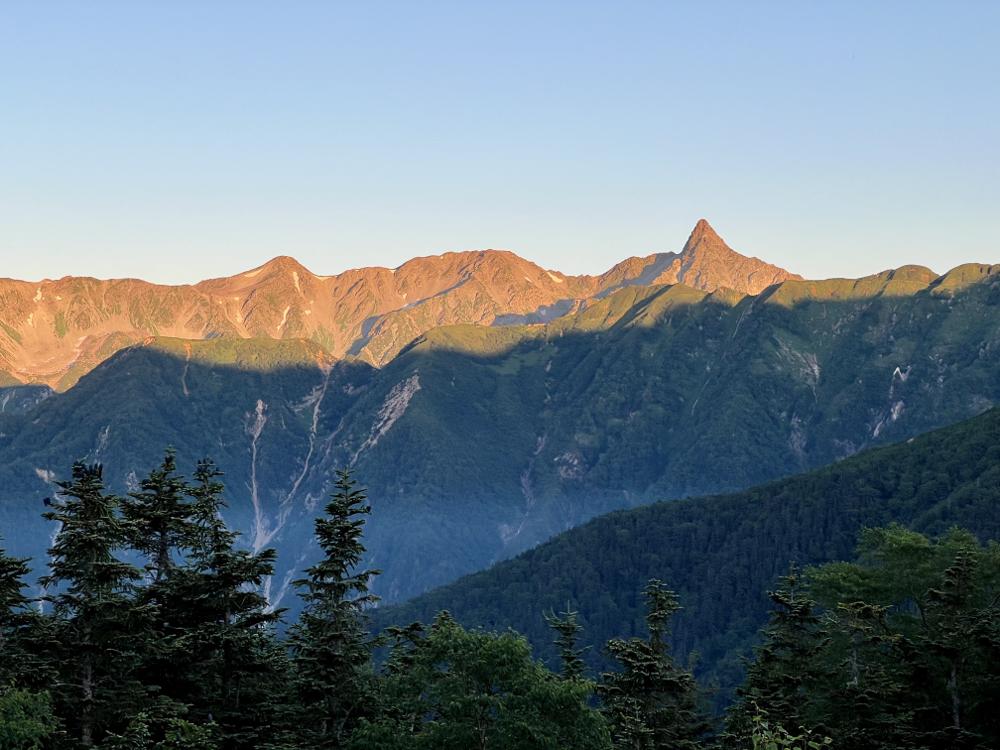
Jan’s Japan Hike, Day 20. I have breakfast with my two new friends from yesterday afternoon. It’s a beautiful morning, with amazing views of a long ridge of peaks that includes the very pointy Yarigatake (“Mount Spear”).
It takes a bit of time to pack up, but I’m out of the hut around 5:30 am. The first objective of the day is to climb up and over neighboring Mount Jonen. The summit is only about 1000 feet (300 m) higher than the saddle where the hut is, but it’s still a rocky, tiring climb. Along the way I meet the two men again; they’re already on their way back down, so we bid each other farewell.
The very top of Mount Jonen gets slightly steep, but I’m relieved there are no big drop-offs that would bother me. It’s nice to rest at the top for a bit and chat with other hikers. I talk with a European couple who spent last night at the same hut. They describe themselves as nomads who were trapped in Japan during the pandemic. They’re hiking a bunch of peaks in these Northern Alps before moving next month to San Francisco.
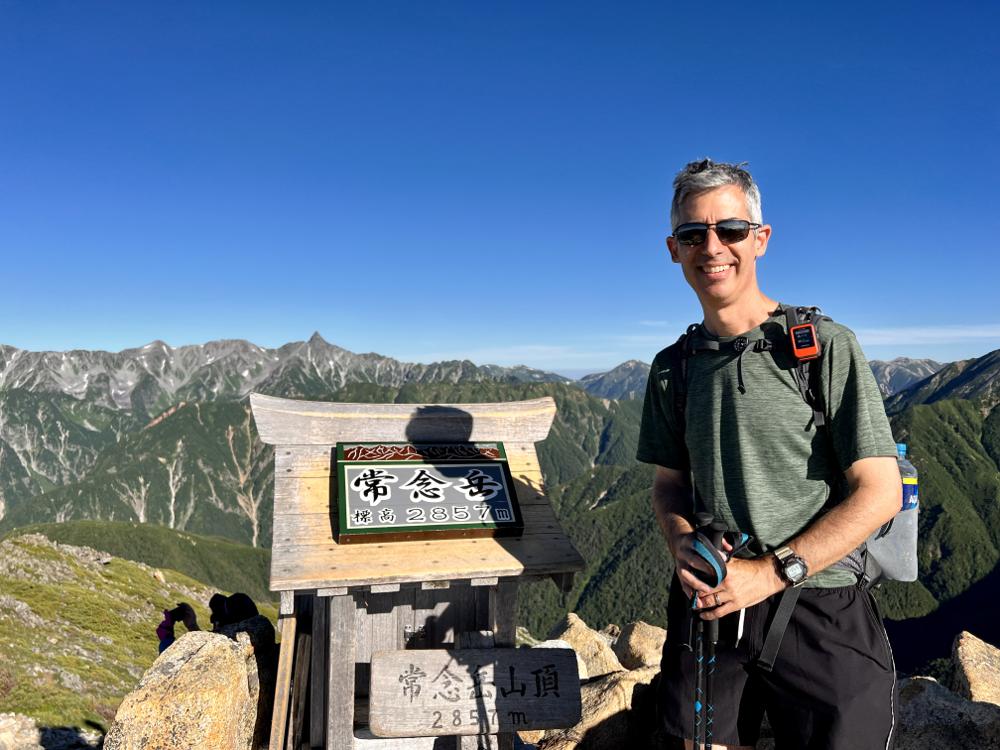
Although there was nothing on the way up to trigger my unease with heights, it turns out the way down on the other side requires traversing a short ridge with steep drop-offs on both sides. I try not to look as I hustle across.
I’m going to spend the rest of the morning hiking along a ridge — but the ridge itself isn’t particularly flat. In fact, it contains a number of steep descents and ascents to various peaks along the ridge. At the top of one of these peaks, Mount Choyari, I meet and talk with a group of young day hikers who live in the town of Azumino I passed through two days ago. They ask me where I’m headed today, and I say that I’m going along the ridge, then down into the valley to the west, then a long way down the valley to a popular area called Kamikochi.
“Oh, that’s pretty far”, they say.
“Yes”, I reply, “it’s too far.”
One of them says, “You have regrets.”
“Yes”, I say.
I reach the top of yet another peak, Mount Chogatake, where there’s a nice mountain hut. I have a lunch of curry cup noodles and a cafe au lait. The coffee tastes so good, I get a second one.
From there it’s a long, long way down an endless staircase of rocks and tree roots to the valley floor. I’m getting close to the bottom when I meet a trio of Americans heading up the trail. They’re aiming for the hut where I had lunch, but I don’t think they have a good sense of how many more hours they’re going to be hiking up. It’s unclear whether they’ll make it in time for dinner.
At the bottom of the descending trail there’s a large campground and inn, where I stop for a drink and a soft-serve ice cream. There are tons of people, but surprisingly, all of them have walked to get here. This inn is served by a road that’s not open to the general public, so everyone’s had to walk up the valley to reach this point. As I walk down along the main valley floor trail towards my hotel, I pass many, many people, and everyone of them is carrying some kind of pack. It’s hard to think of an area this popular in the U.S. that’s only accessible by walking.
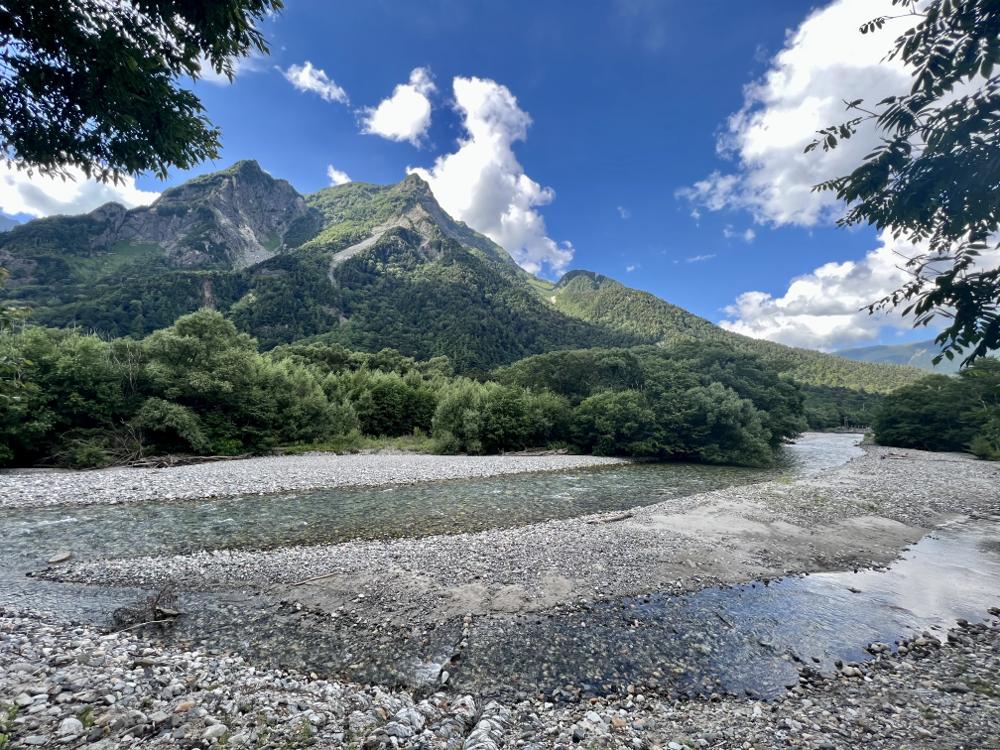
The Azusa River that flows down the valley is really quite pretty: it’s wide and very clear. Combined with the steep, picturesque mountain ridges on both sides of the valley, I can see why this area is so popular.
I eventually reach the Kappabashi Bridge, a nexus of hotels, shops, and restaurants. I cross the bridge, and a short while later reach my hotel.
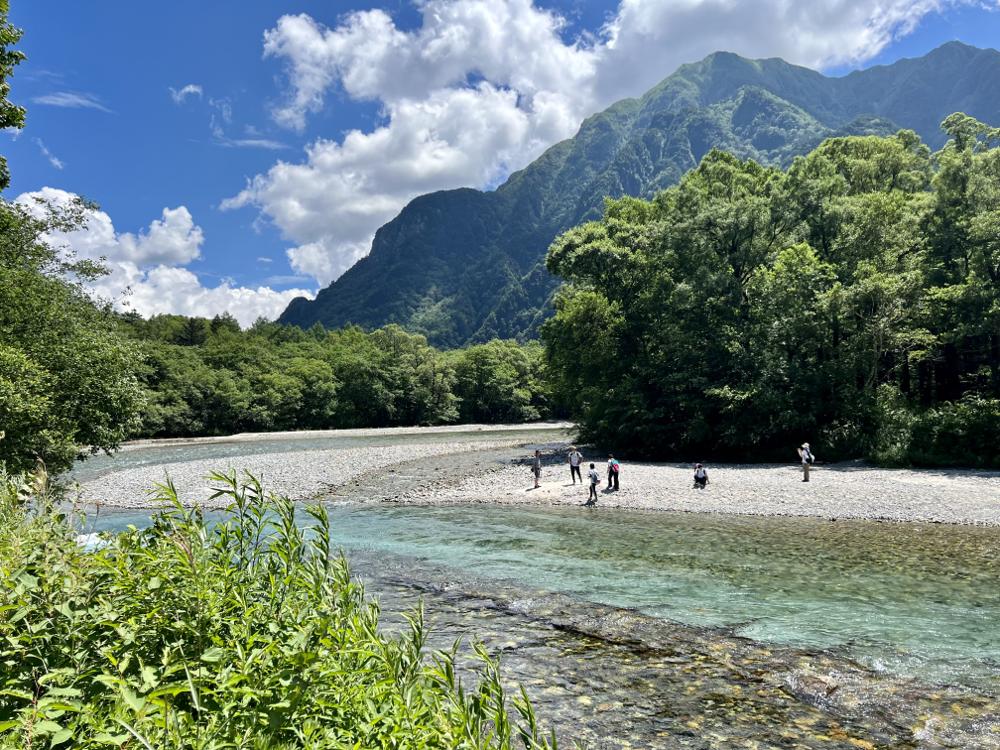
Jan’s Japan Hike, Day 21. This is a rest day from walking, and I spend much of it replanning the rest of the hike. My plan to hike through these mountains was too ambitious given the slow pace on the steep, challenging trails. It’s hard to let go of this plan, but there’s nothing for it. I make a long series of phone calls to cancel reservations and spend hours trying to find a new sequence of lodgings that are walking distance from each other.
I walk back to the Kappabashi Bridge area for lunch and to enjoy the scenery. There’s a wide, rocky part of the riverbed where people are wading out into the river a bit. I wade in, and quickly have to get back out — this pretty river is also painfully cold.