Jan’s hike to Tokyo, day 0. I arrive in Japan for a week of solo travel before Angela, Evan, and Liya join in for some family travel.
My plan for this week is to revisit a point on Mt. Fuji that I passed on my long 2023 hike across the main island of Honshū. From that point I’ll hike north and east for 6 days to connect my previous hike with downtown Tokyo. In Japan’s feudal period, a network of walking routes led to a spot in Tokyo’s Nihombashi district — but these days the city’s center of gravity has shifted westward to neighborhoods like Shibuya. So I’m going to hike from Mt. Fuji to a famous Shibuya landmark, a statue of a dog called Hachiko that sits just outside Shibuya Station.
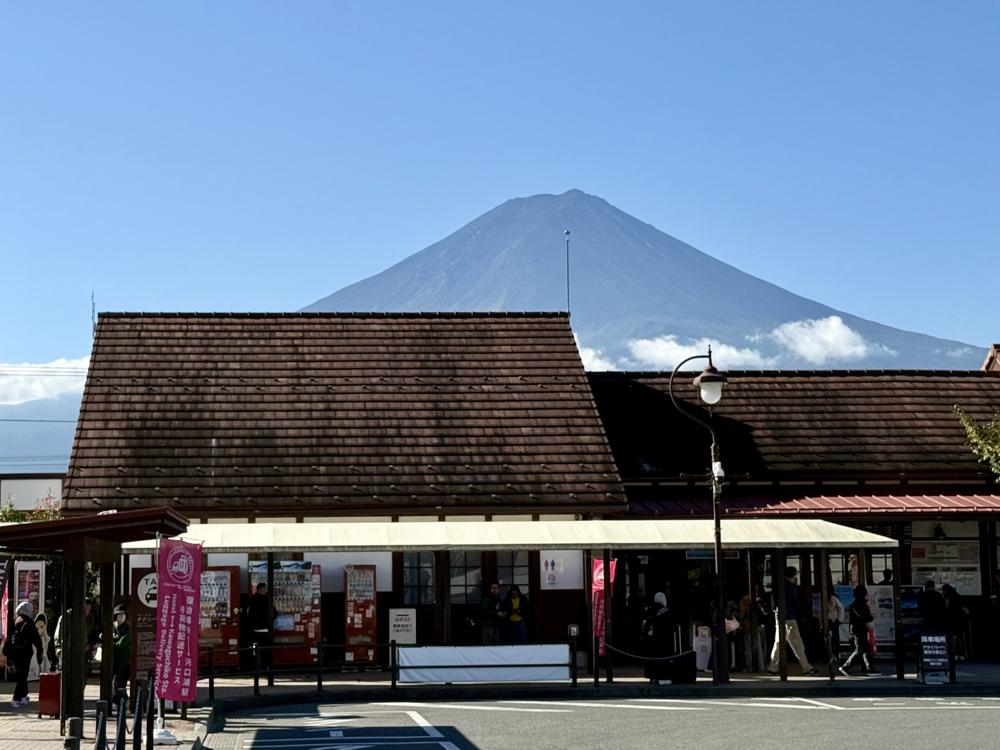
After landing at Haneda around 2:00, I make my way to the large “Busta Shinjuku” bus station and manage to catch a bus that will get me to Kawaguchiko Station by dinnertime. The bus route partly follows the rough route I’ll be walking, and I glimse one mountain, Mt. Takao, which I’ll cross over in a few days.
I barely slept on the plane so by the time I get off the bus, I’m in a bit of a daze. Kawaguchiko turns out to be a popular destination for tourists who want to see Mt. Fuji, so there are foreigners everywhere. I have a quick tempura dinner, then walk to my hotel by Lake Kawaguchi and collapse.
Jan’s Fuji to Tokyo Hike, day 1. Jet lag has me up at 5:30 am, but at least at that hour the hotel’s nice bathhouse is peaceful. I walk back to Kawaguchiko Station to meet my friends Miho and Atsushi, who are coming from nearby Takao to join me for this first day of my hike. I have enough time before we meet to stop at a busy stand for coffee — and as I’m waiting there in line, Miho and Atsushi walk by. It’s wonderful to see them again. Atsushi has brought me a thoughtful gift: an ultralight synthetic sweater made for backpacking. It looks nice and is very light.
At the station we board the taxi we’d reserved to drive us up to the Subaru Line 5th Station on Mt. Fuji, an extremely popular trailhead for people who are climbing to the summit. It’s a little like the Paradise trailhead on Mt. Rainier, only much, much busier. At this time of year, the summit route is closed, but many people still go up just to have a look around.
The taxi driver’s chatty. As we drive off he points out that we’re about to pass a Lawson convenience store that’s become Instagram famous because Mt. Fuji is behind it. Sure enough, there’s a line of tourists across the street getting a photo of the scene. Of course, literally every spot in this town has the same Mt. Fuji backdrop, so it’s a little odd that the convenience store gets all the attention.
As we head up the Subaru Line road, the driver tells us that in a minute we’ll come to a road section that “sings”: tires running over grooves in the pavement will produce a short sequence of notes from a folk song. Miho knows the song and sings a line with the driver. Sure enough, the road sings as advertised.
We have perfect weather for hiking today with clear blue skies and a warm temperature. This comes after 35 consecutive days of rain in the area, a fact that even made the news in the States. [During this hike, any time someone makes small talk about the nice weather, they inevitably bring up the 35 days of rain.] The weather’s expected to be nice for the next week.
We reach the Subaru Line 5th Station and take a few minutes to get sorted before starting our hike. It’s slightly chilly this high up, so I happily put on the new sweater from Atsushi.
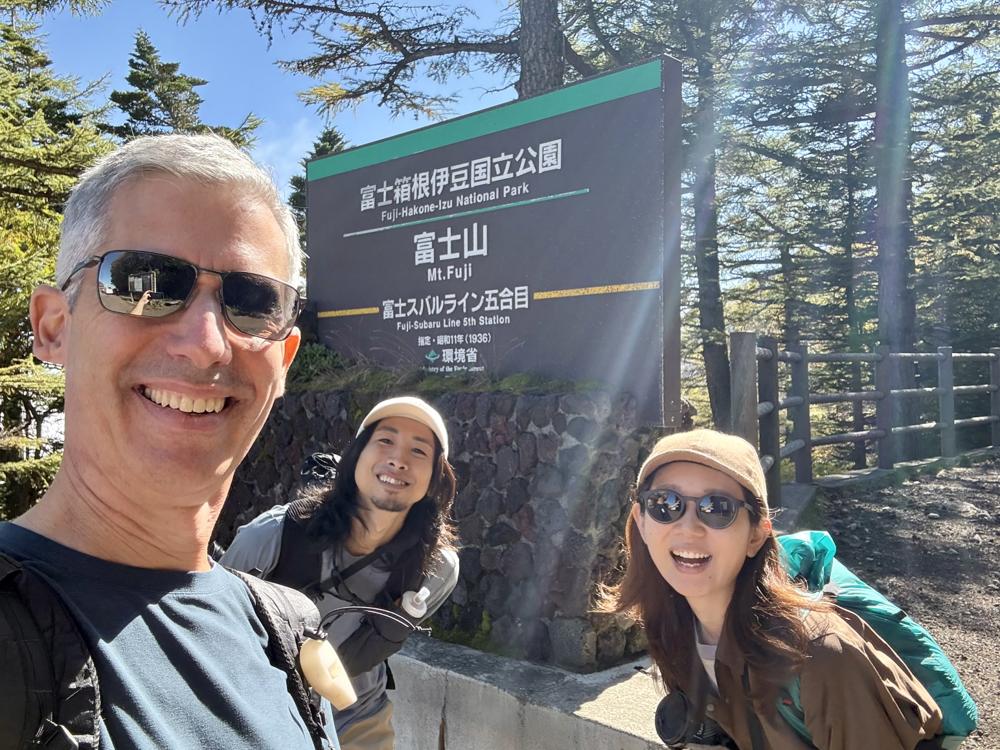
As we reach the trail entrance, there’s the expected sign saying the route to the summit is closed — but the sign includes an ominous map showing several other trail segments are closed. From the map, it looks like a segment crucial for reaching the descending Yoshida Trail might be closed. We decide to go ahead and hope for the best. A short while later we reach the possibly-closed trail section, but it’s not actually blocked off so we can reach the Yoshida trail and begin our long descent.
The trail goes basically straight north, making a steady descent through a lush forest. The barren upper half of Fuji gets millions of visitors, but it’s the lower half that’s actually pleasant to hike. We meet a handful of other hikers taking advantage of the nice weather and climbing up to the 5th Station. The trail doesn’t offer many views, but it does retain a fair number of small, old buildings — the remains of shrines or teahouses from when this was a popular hiking route before the modern bus-accessible trailheads were established.
As we descend, it warms up. We want to stop for lunch but there’s no obvious good place to stop and sit. We finally come to a teahouse that’s closed for the season but has benches out front. I eat my convenience store onigiri rice balls, while Atsushi breaks out a little stove to cook ramen for him and Miho. Sadly, the gas cannister he brought runs out of fuel before the cooking’s done so they end up with lukewarm ramen.
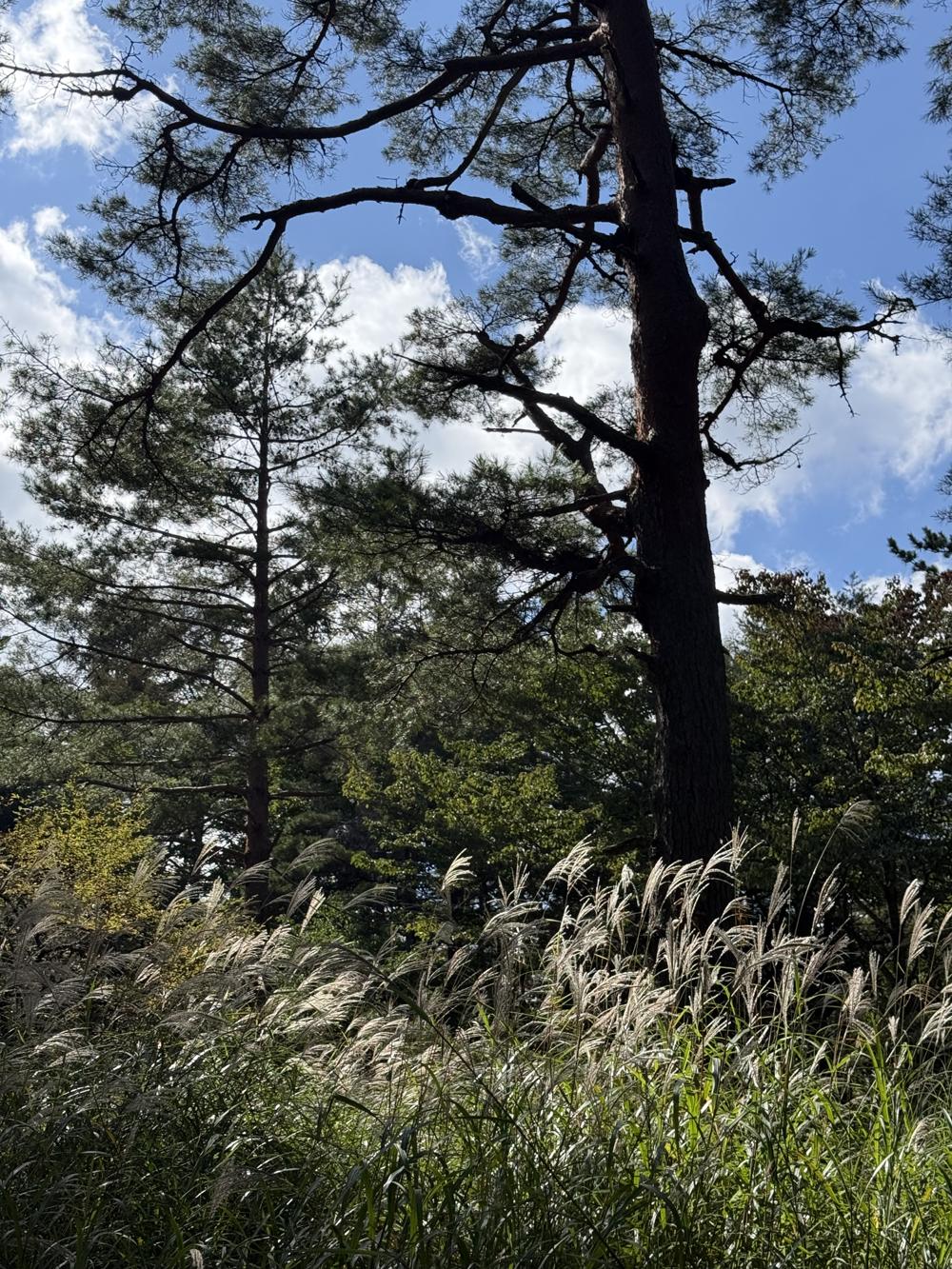
The rest of the hike is fairly flat as the trail makes its way to the outskirts of the town of Fuji-Yoshida. At one point, Atsushi sees a wild boar running through the trees far to the side of the trail, but it’s gone before Miho and I can get a look.
We walk into Fuji-Yoshida as far as Mt. Fuji Station, where Miho and Atsushi will catch a train back to their car at Kawaguchiko. We say goodbye, and then I continue walking north for a couple of hours to reach Higashi-Katsura Station.
This is where I’ll call an end to today’s hiking. There aren’t any places to spend the night here, so I’m taking a train a few stops north to the town of Ōtsuki where I’ve lined up an AirBnB. The station I’m at is tiny, and it’s hard to figure out which side of the tracks I need to be on to catch my train. I’m also flummoxed when the train arrives but the doors don’t open — luckily someone else is there to reach past me to press a small button on the outside of the train that opens the door.
I reach Ōtsuki with a while to wait before the AirBnB owner will let me into the apartment. She lives some distance away, so it’ll take her a while to get here. I kill time in the Tsuki Cafe by the station, where the owner talks up everyone who comes in.
At 6:00 the woman with the AirBnB meets me and lets me in. After getting cleaned up, I try and find a place to get dinner, but the first three restaurants that look good — and open — in Google Maps turn out to all be closed. I settle for an odd restaurant that advertises itself as “Mexican”, but the entrees don’t look Mexican at all. I opt for a pasta dish, which is enormous and just okay.
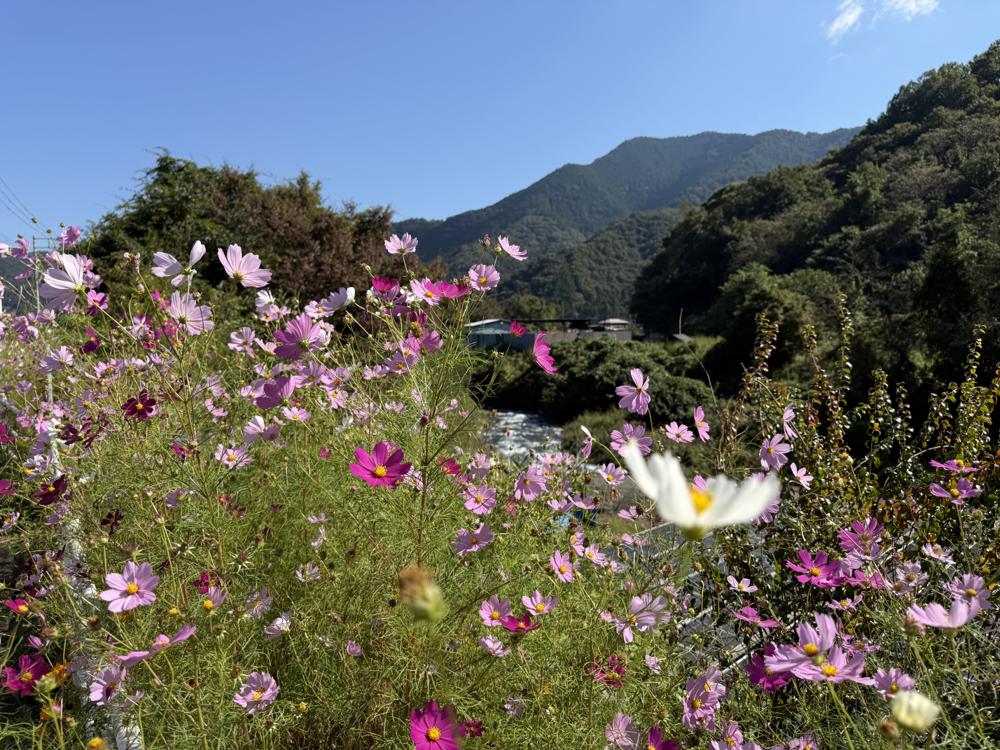
Jan’s Fuji to Tokyo Hike, day 2. I take the train back to tiny Higashi-Katsura Station and set out towards a restaurant for breakfast.
As I’m crossing a pedestrian bridge over a busy road, a woman is coming the other way. She seems vaguely familiar — maybe a little like the AirBnB owner from last night? As she passes, she slows down, then we both do a double-take: she is the AirBnB owner. She turns out to live in this area, and we’re both astonished by the improbable coincidence of running into each other here. She wishes me well on my hike.
Few Japanese restaurants are open for breakfast, so I make do with breakfast at a family restaurant called Gusto before starting today’s walk north. The first part of the day will be alongside a road. It’s morning, so there are people heading to the station for a commute.
I pass the entrance to an elementary school, and in that area I see scores of little kids, perhaps 1st or 2nd graders, who are walking to school on their own or with friends. It’s hard for Americans to even comprehend that such a society is possible, let alone muster the political vision to bring it about.
After a couple of hours, I’m ready for a break, so I make a slight detour to a coffee place called Cafe Bricco. I’m disappointed to discover that it’s one of those fake coffeehouses inside a big box retail store — in this case, a huge store called Cainz that feels like an upmarket Walmart. Surprisingly, the coffee’s actually fine, and the “plain muffin” I get with it is ridiculously good.
In the late morning I reach a wooded area where I’ll begin walking over the small mountain of Umatateyama. Sadly, the trail that’s marked on the map no longer exists: a little bridge over a small aqueduct leads straight into thick undergrowth.
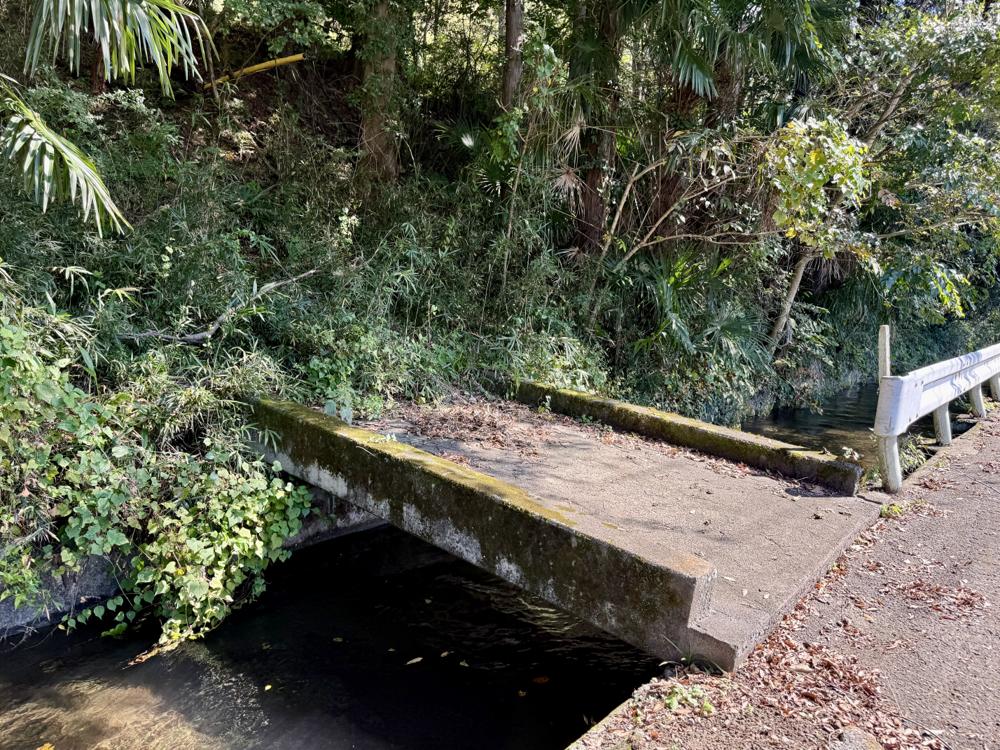
I push through the brush and walk through forest for a bit trying to pick up the trail, but after a while it’s clear the trail is gone. This happens sometimes — “The map is not the territory.” I call it a loss and make my way back out of the forest. On the way out, I stumble across a macabre sight: a monkey skull. The spaces between bushes are also full of webs with big spiders, so it feels fine to be heading out of this forest.
I’ll need to take more roads around the mountain to reach my destination for today. On the plus side, the detour takes me through Ōtsuki, where my AirBnB is. I stop there to eat lunch and take a nap before continuing today’s walk.
Much of the afternoon is along a rather busy road, a kind of minor highway. The challenging part of such highways is that the stretches between towns often don’t have sidewalks. Sometimes they’ll have a sidewalk on one side, but then it will randomly switch to the other side, forcing a dash across the road. Other times it’s necessary to walk on the shoulder of the road, which is fine except for all the places where bushes have grown in from the sides to make the shoulder impassable.
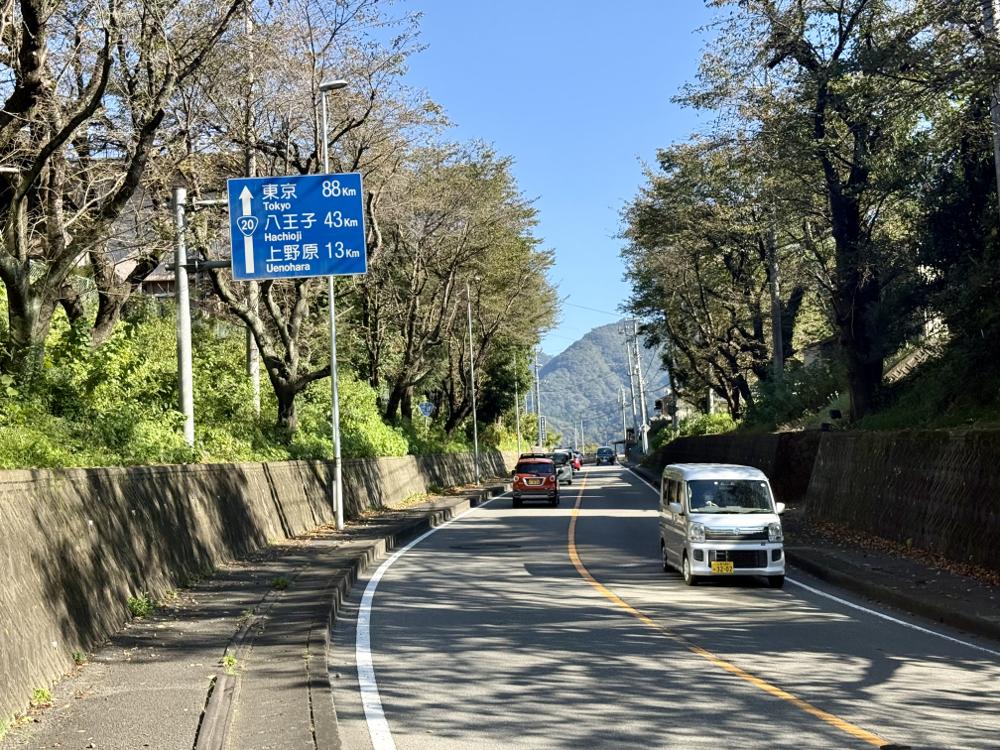
I reach the little town of Torisawa around 3:00. It’s quite warm now, so I stop for a rest in a pleasant, quite cafe called Torisawa Coffee. From here I can take the train back to Ōtsuki.
Tonight’s restaurant search goes better, and I find a place serving houtou: a noodle dish that Yamanashi Prefecture is known for. The noodles are hand-pulled and quite good.
Jan’s Fuji to Tokyo Hike, day 3. This area doesn’t even have chain restaurants that would be open for breakfast, so I head to a convenience store. At least Japanese convenience stores offer fresh food, and I’m able to assemble a breakfast of an omelet, cured ham, and a croissant that I eat back in the apartment.
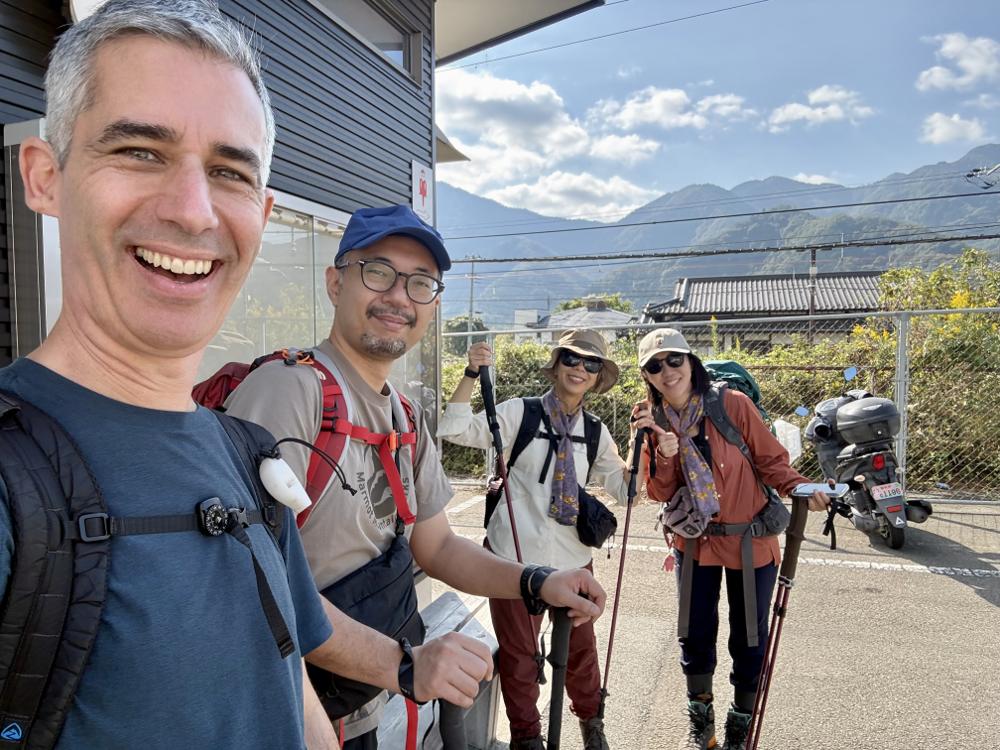
I take the train back to Torisawa to meet friends who will be joining me for the next two days: Mari, her husband Sosuke, and her friend Erika. It’s nice to see them again, and we’re all happy to have another nice day for hiking.
We walk through the small town to reach a trailhead, then begin a long climb. Japanese mountains tend to be steeper than Washington’s, and the trails tend to go straight up. On the plus side, the trail is in the shade, and climbs alongside a river whose water cools the air.
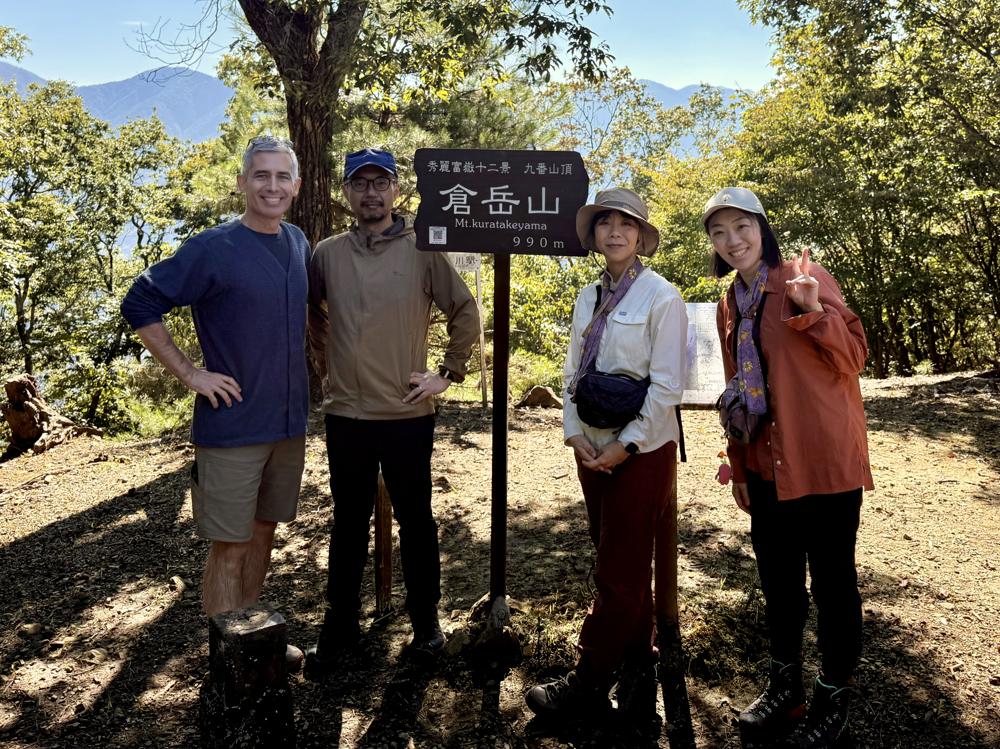
We reach today’s goal, the summit of Mt. Kuratakeyama. A number of other hikers are sitting on the ground eating lunch, but there’s a bench open where we can sit. There’s a bit of a view through the trees of Mt. Fuji, where I started my hike.
The descent from the top drops quite steeply, and negotiating the rocks and roots means that going down requires nearly as much time as climbing up. By the time the trail begins to flatten out near the end, the day has gotten fairly warm.
We walk together to Yanagawa Station. I’ve got more miles to walk today, but my friends will take the train a few stops ahead to a cottage we’ve rented at a spot on the Katsura River called Nissouen. While they check into the cottage and buy food for dinner at a nearby supermarket, I walk for the rest of the afternoon along a busy road. As usual, the sidewalk often disappears and randomly switches sides, giving extra spice to the mundane roadwalk.
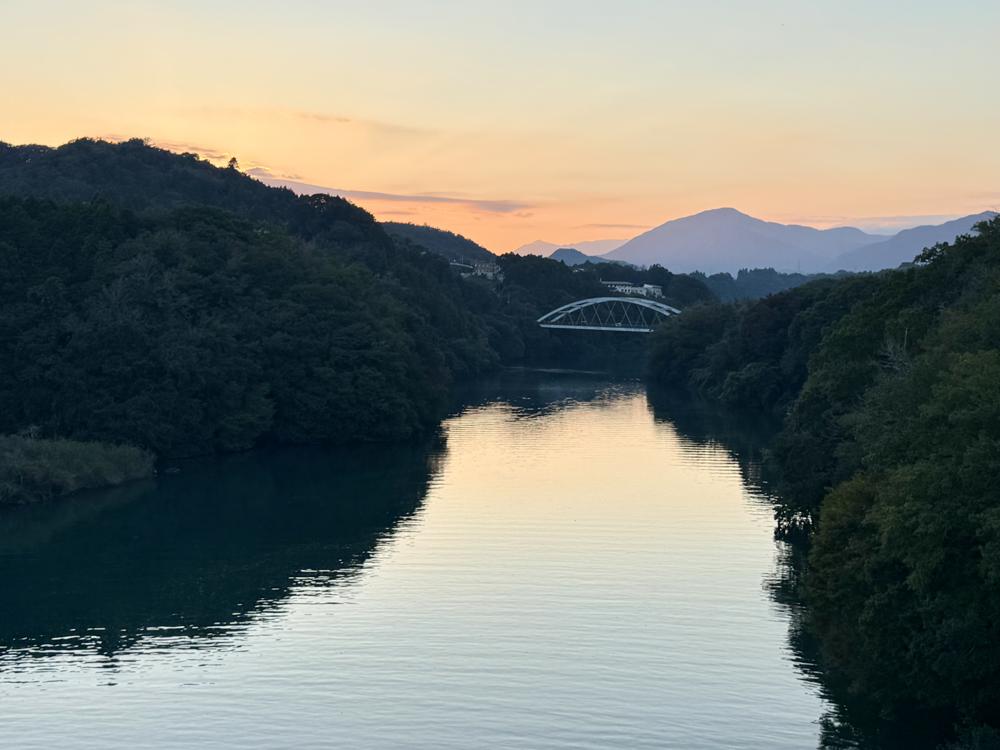
I arrive at the rental cottage where a barbecue dinner is taking shape on the porch. We’ve been joined by two more of Mari and Erika’s friends, Itsuko and Tsune. All four of the women met in high school, and have been friends for nearly 25 years.
We have a pleasant time eating and hanging out on the porch. Both Itsuko and I are big fans of the Japanese band Hitsujibungaku, so she plays them as background music. It’s also fun to learn that we’re all familiar with the anime “Laid-Back Camp”. Erika sets up a type of small gas lantern that was featured in that anime.
There’s a murmur of happy activity from the surrounding cottages as well, including one cottage that has a campfire going. It looks like a Boy Scout outing, with one man doing silly dances and leading a call-and-response song that makes the kids laugh.
When the barbecue is winding down, two of the women take the leftovers into the cottage’s kitchen to turn them into an improvised stir-friend yakisoba dish. They have a lot of fun doing this, going to the extent of throwing in the leftover potato chips.
After dinner, there’s a game of Uno, which is thankfully something simple enough for me to follow along and play in. The long day has made me tired, and Sosuke warns me that the women could easily stay up late talking. Sosuke himself needs to head home, so we all say goodbye to him, then I go up to bed. The cottage’s futons are thin, but there are extras so I can double up on the bottom futon to produce a servicable bed.
Jan’s Fuji to Tokyo Hike, day 4. Today’s hiking plan is to cross over Mt. Takao with Mari’s circle of friends. To reach the western trailhead, they’ll take a train to Sagamiko Station while I’ll get to that station on foot.
I start by taking a train back to Uenohara Station. Although we’re pretty far out in the country here, the train line through this river valley is the same Chūō Line train that runs through the center of Tokyo. The train has a fair number of passengers dressed for hiking — today’s a Sunday, maybe the nicest Sunday weather this Fall, and the nice weather has brought out all kinds of hiking groups.
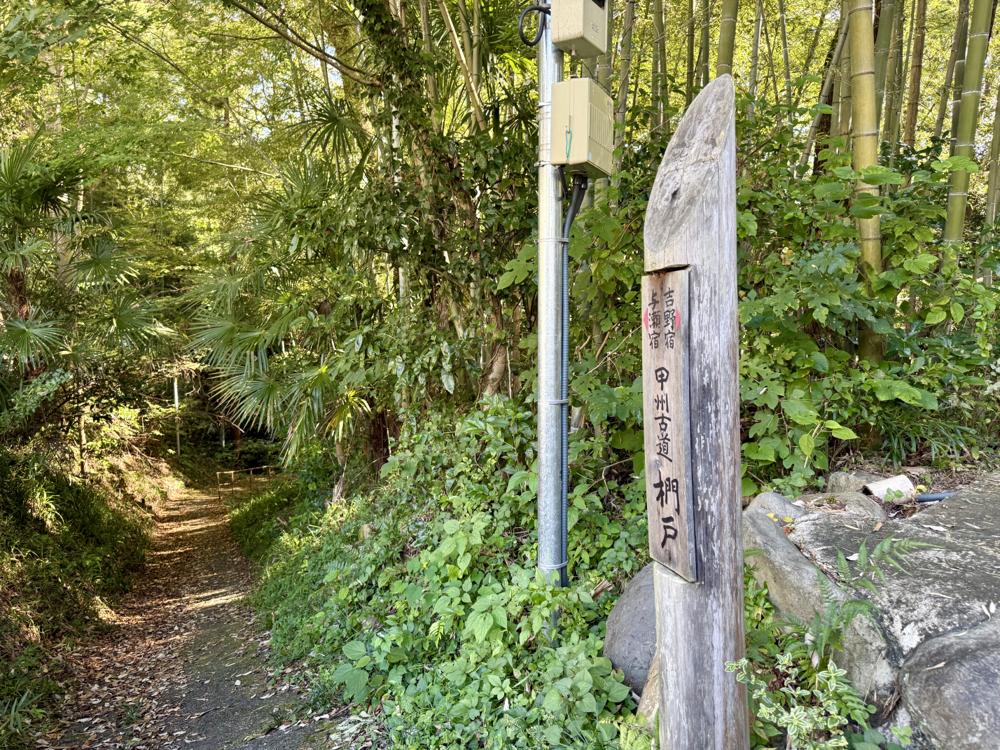
From Uenohara I walk to Sagamiko, mostly along the Old Kōshū Kaidō. This route was originally a walking trail in the days when the feudal lord made his vassals trek to the capital for part of the year so he could keep an eye on them. The route of the walking trail was also a good place to pave a road, obliterating most of the historic walking path.
Still, tiny bits of the original trail remain. At one point the map guides me off the busy road, through quiet streets, to a stone stairway leading down to a short piece of the original trail. This goes through a small forest and across a river before popping back up into civilization.
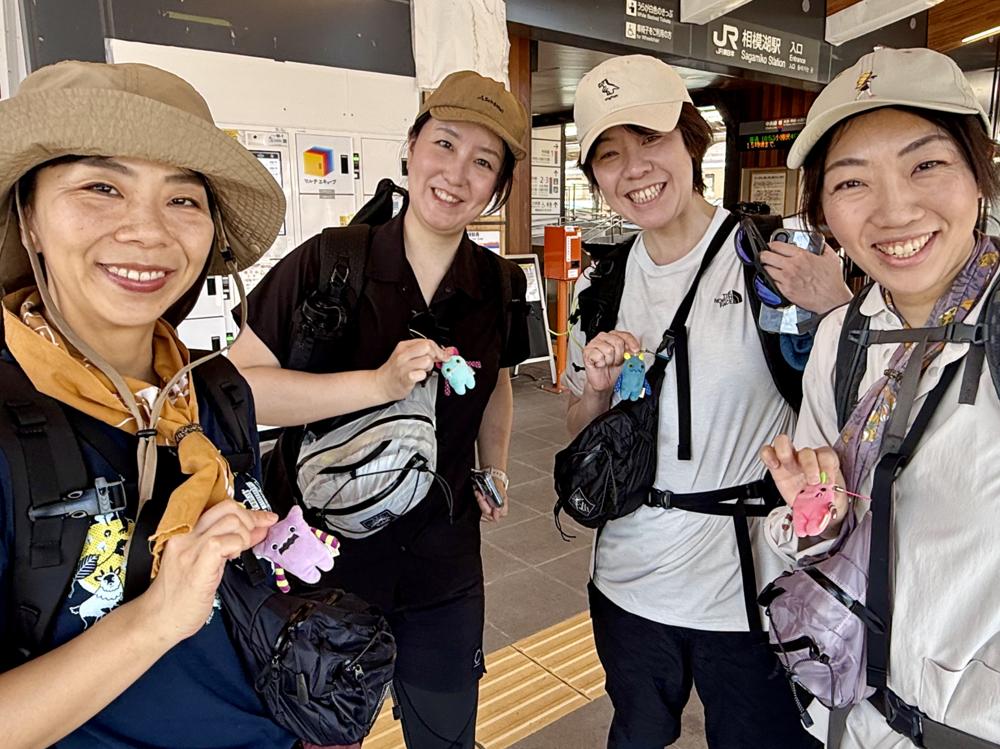
At Sagamiko Station I have time to kill before the women arrive, so I rest in a cafe across the street. Hiking groups are spilling out of the station, boarding a bus that will take them to the trailhead. Eventually Mari & co. arrive, and as we’re about to set out I notice that each of them has a matching charm on their backpack.
We walk through the town of Sagamiko and climb up a steep bit of road to reach the trailhead. A large group of young adults are preparing to set out. This is apparently a “Yamakon” group: an organized group hike for dating purposes. Erika does a pitch-perfect imitation of a young woman asking bashfully, “So, is this your first time doing something like this?”
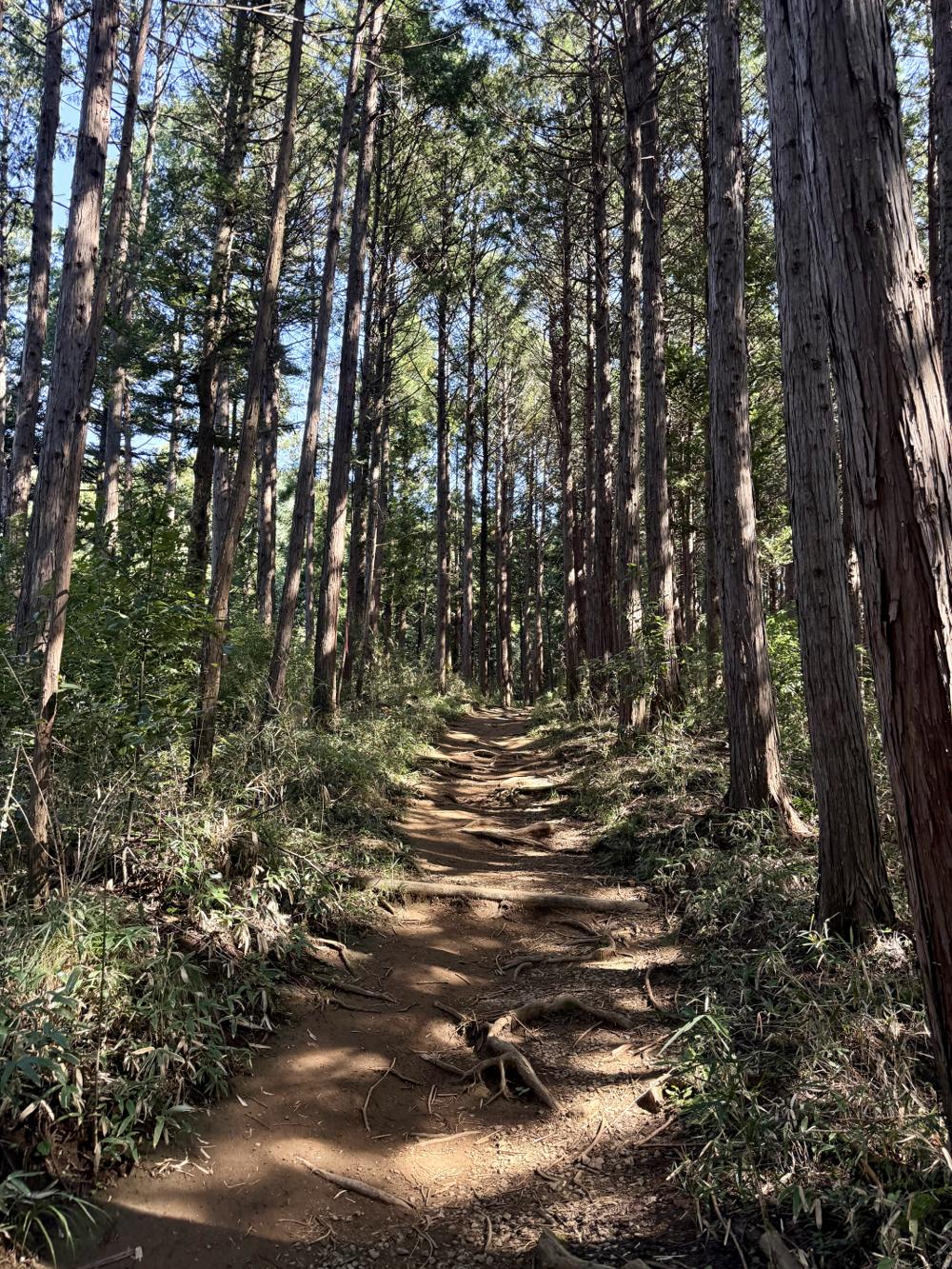
As usual, the trail climbs straight up towards the first summit, Mt. Shiroyama, but the forest is pretty. We finally reach the summit and its small collection of food stalls, a point I’ve hiked to before but from a different direction. On that earlier hike only a few people were here, but today it’s packed.
The second, main summit after this point is Mt. Takao, where we’d planned to eat lunch. But if this lesser summit is busy, Takao will surely be even busier. We decide to stop and eat here instead, and manage to snag a table in the shade. I get curry rice for lunch, essentially the default Japanese hiking meal. Three of the others get the same thing.
After lunch we make the short traverse over to the summit of Mt. Takao and, as expected, there are people everywhere. The summit approach is a wide series of steps on which people are sitting who couldn’t find a place at the summit proper, forming a veritable river of people alongside the trail. The top of Mt. Takao is busy any day, but today it’s a zoo. We get a group photo before heading down.
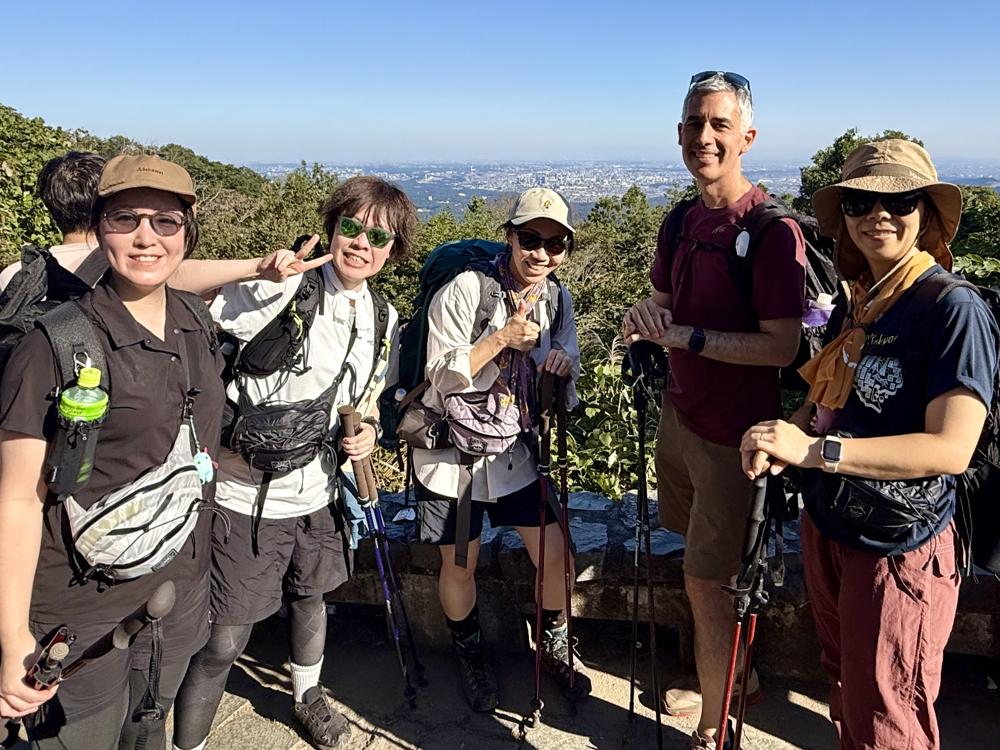
The women will take a funicular train that runs to the bottom; I’ll walk down and meet them. Itsuko recommends that, of the trails that led to the bottom, Route #6 is the nicest and most trail-like, so I head down that way. The trail is indeed pretty and follows a narrow stream — and sometimes necessitating walking in said stream.
I get to the bottom funicular station and receive a message from Mari that the line at the top is so long that they’ve decided to walk down instead. A short while later, we reunite and make the short walk together to Takaosanguchi Station. This is where they’ll all take the train back to their respective homes, so we say goodbye.
This station marks the very western extent of the Tokyo metropolis; from here I’ll mostly be walking in dense urban development. I still have six more miles to walk to the town of Hachiōji, and am very happy to reach my hotel. Today was an 18-mile day, the longest distance of this hike, with non-trivial elevation gain, so I’m beat.
For dinner I’m in the mood for yakitori: grilled stuff on skewers. There’s a place nearby called Yakiniku Kunii (串焼きくにヰ) so I head there. This turns out to be a small joint, but there’s an empty seat at the little bar where I can squeeze in between two couples.
The woman on my right is very chatty, and immediately comments on my ordering in Japanese. It transpires that both couples at the bar are restaurant regulars, and they’re all having a wide-ranging conversation with the “master” (cook) and the waitress. Participating in this casual discussion is fun but the intimacy also raises the stakes; I feel like I’m taking a language exam. Happily, the yakitori is indeed excellent, and a standout is the tomato and pork.
Heading back to my hotel, I stop at Mister Donuts for dessert. Like most Japanese chain restaurants, Mister Donuts is endlessly revising its menu, so I’m relieved to find they still make the same “Choco Old Fashioned” doughnut that was my favorite in my year studying abroad.
Jan’s Fuji to Tokyo Hike, day 5. The only breakfast place in reasonable walking distance is the same Mister Donuts from last night, so it’s more sugar for breakfast.
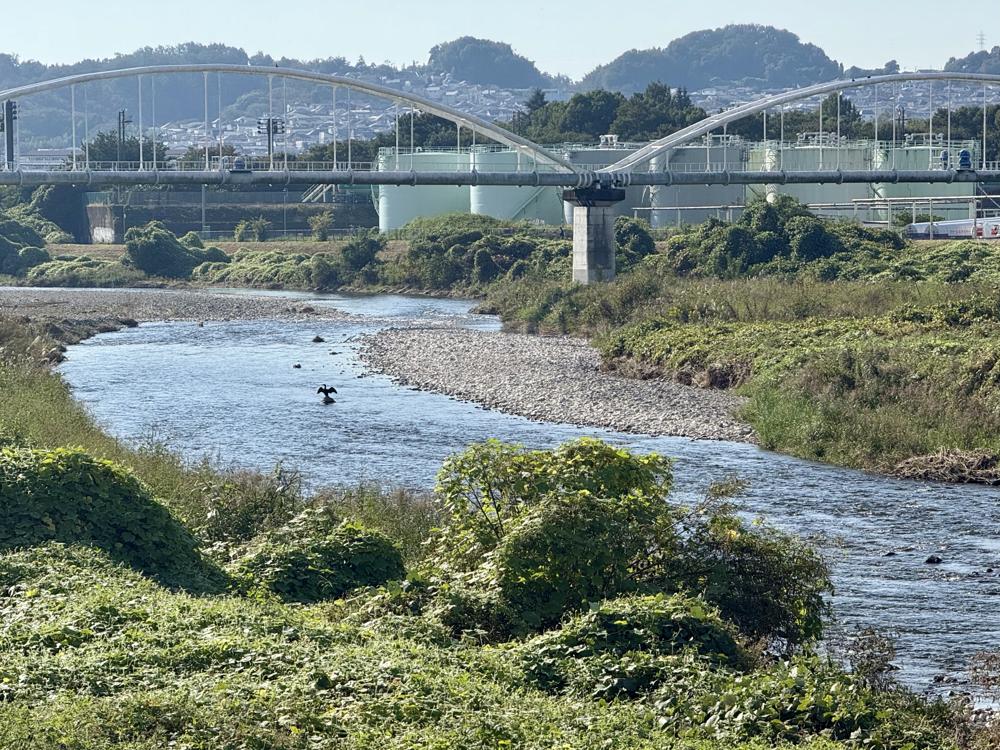
From this point eastward greenery will become scarce, but I have a great morning following the course of the Asakawa River. Most metropolitan rivers in Japan have large embankments on either side to prevent flooding, and these invariably have a pedestrian/bike path along the top. From the embankment path there’s a nice view of the river and the wide swatch of grass and bushes alongside it.
This is quite a pleasant way to move through the city. There are plenty of joggers, hard-core cyclists, moms on bikes with kids in child seats, and people walking their dogs. At one point I’m surprised to see, down at the level of the riverside, a woman riding on horseback.
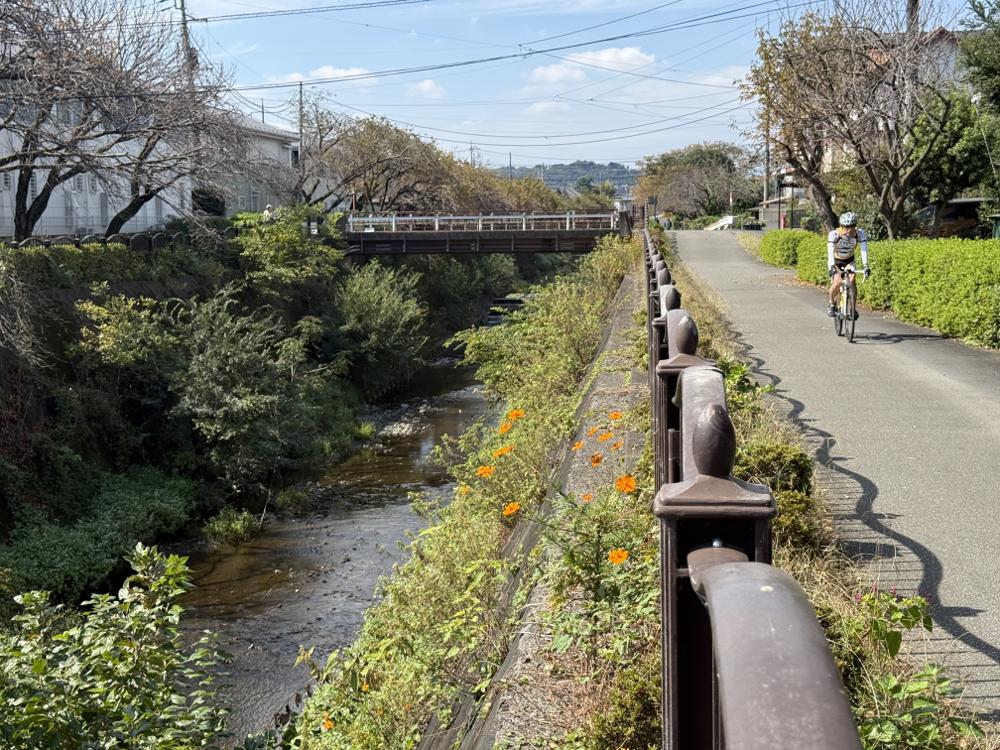
The Asakawa path isn’t continuous, and there are places where my map directs me walk on streets again for a bit. At one such detour, I can see a small staircase leading down to the level of the riverside and an informal dirt footpath. I decide to gamble on the footpath, and it pays off with a winding route through greenery. It goes under a bridge and eventually reaches another staircase going up.
I stop for a mid-morning break at Coffee House Anzumura Hino near Takahata Station. The coffee is excellent, as is the 3-inch thick butter toast with honey.
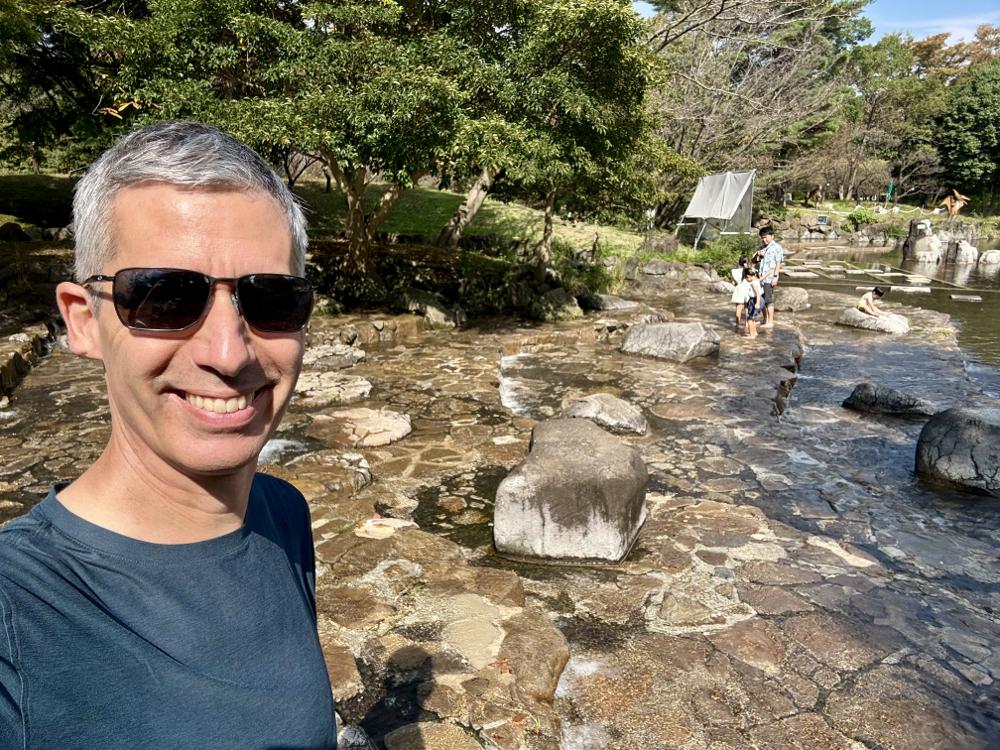
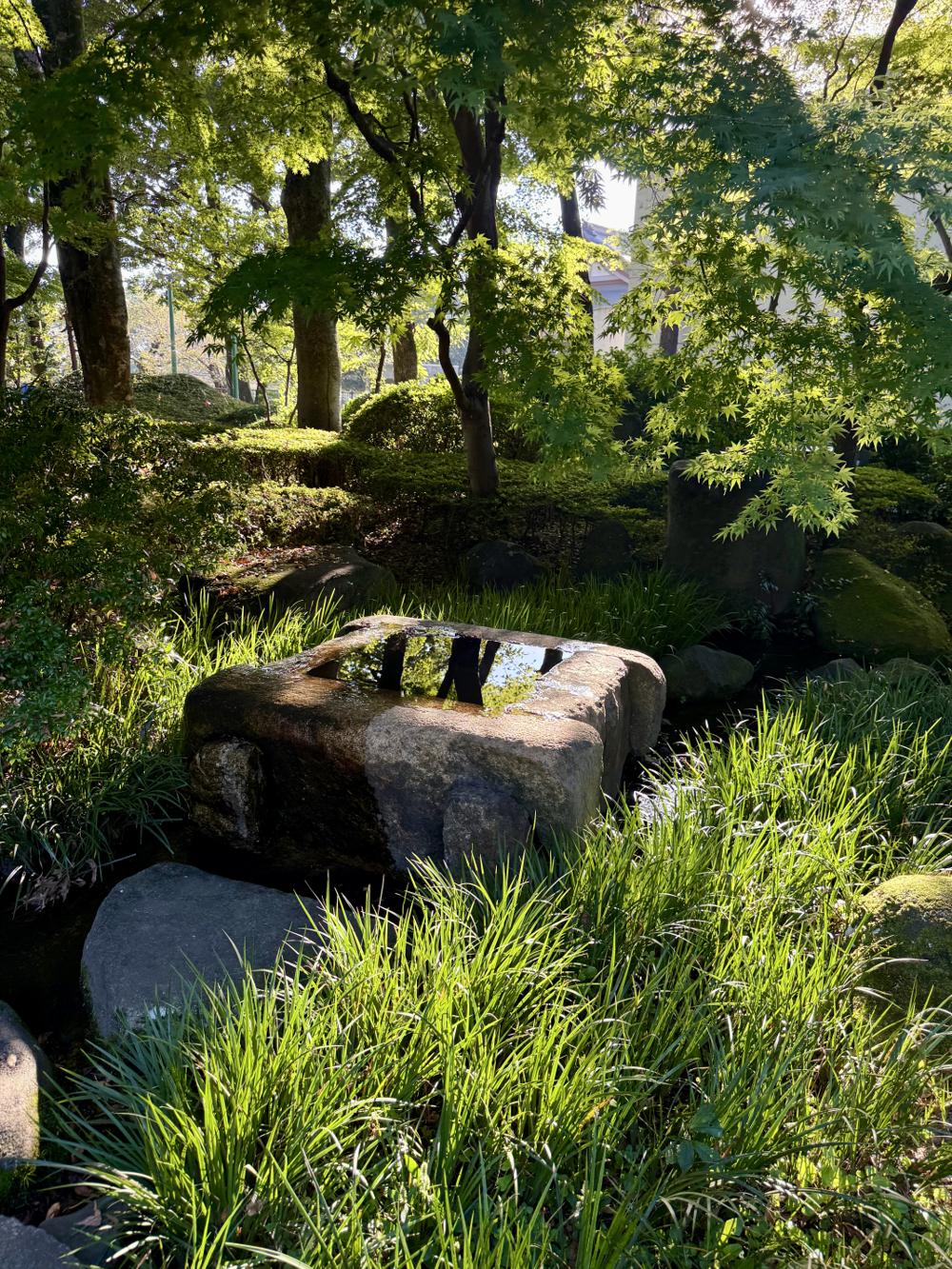
Today I’ll have time to visit two outdoor historical parks. The first is Kyōdo no Mori, a large park with a small collection of old residences, shops, and a city hall. The buildings are fine, but while exploring the park I come across a real delight: an artifical river water park for kids (or tired hikers) to wade in barefoot. The water and rocks make for a fantastic respite.
Looking for a place to eat lunch, there’s a promising Korean fried chicken spot nearby. When I get to the designated point, I’m confused: the map has led me to the vehicle entrance for an industrial-looking facility surrounded by a high fence. Google insists the fried chicken spot is inside. This appears to be some kind of wholesale marketplace and distribution center — which includes an attached corridor of food stalls for workers. I locate the Korean stall and it’s good.
After a bit more walking I come to Higashi-Fuchū Station, just a few minutes from tonight’s AirBnB. I have some hours of afternoon remaining, so hop on a bus to today’s second outdoor spot, the Edo-Tokyo Open-Air Architectural Museum. This is similar to the earlier park but on a much larger scale, and with a more impressive collection of historical buildings which have been moved from their original locations.
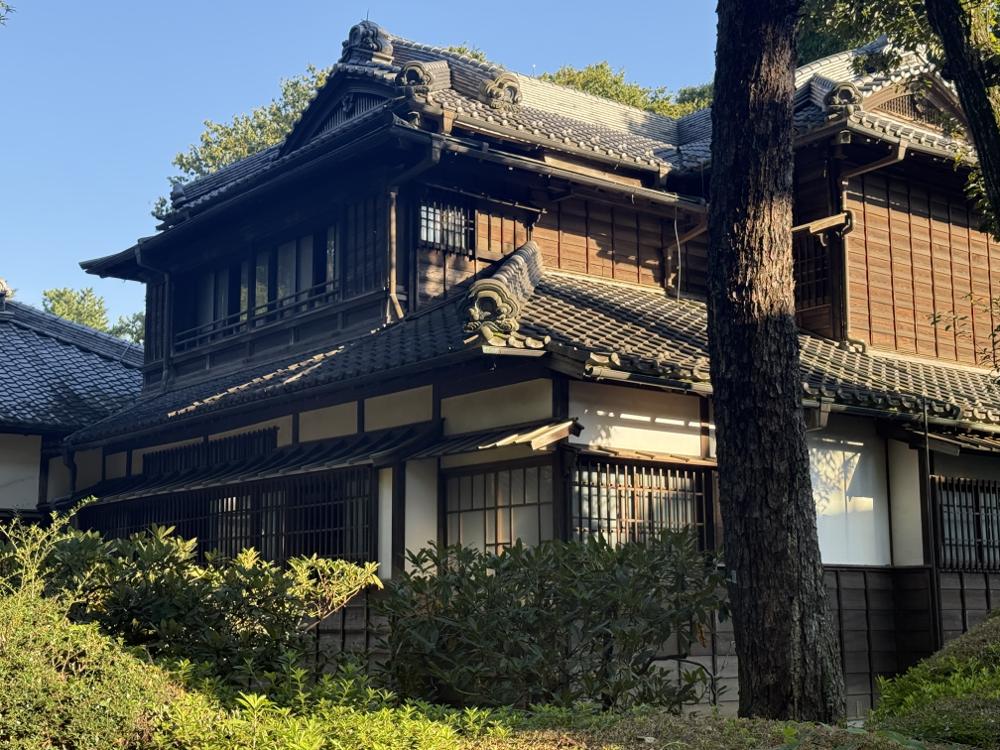
This museum’s information is better, and it’s fun to explore the residences.
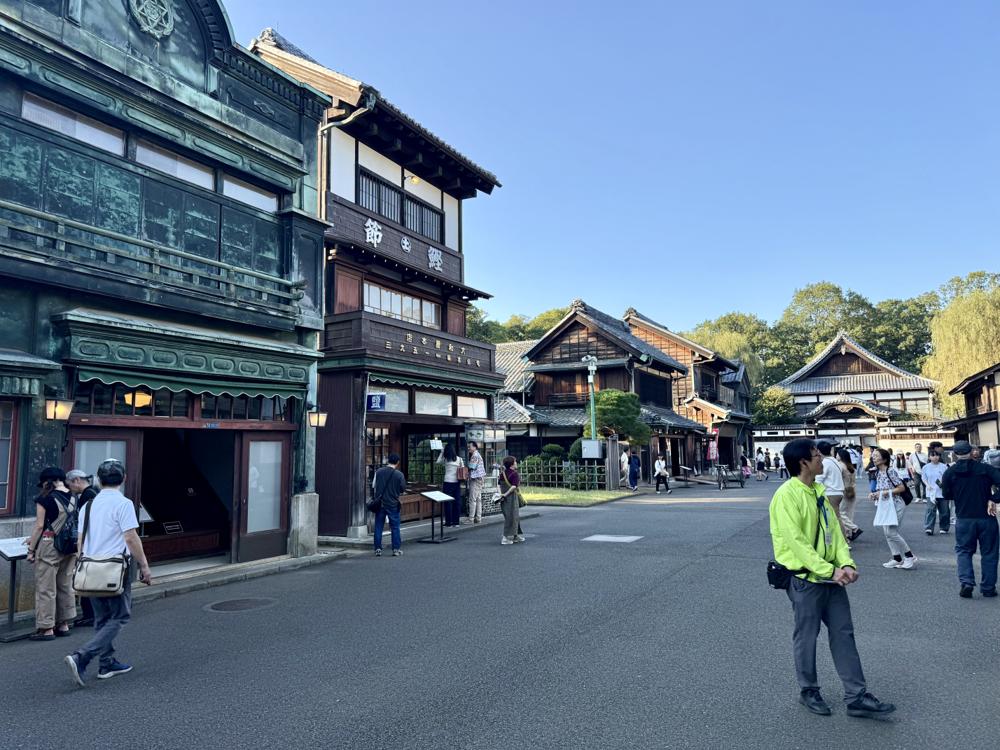
The highlight is a small street of compact reconstructed businesses; it looks like a theme park, but all the buildings are historic originals.
As I head out of the park to catch the bus back to Higashi-Fuchū, my phone’s battery is running out. This is a minor crisis; I not only need the phone to find my AirBnB, I also need it to check in. At a small shop selling high-end foodstuffs, I buy a soft serve ice cream so I can sit at the counter seating that has power outlets.
Even with the phone, getting into the AirBnB turns into a surprising frustration. The unit’s not owned by an individual but by a large business, so there’s a ridiculous web process to go through. Apparently I’m supposed to scan some sort of QR code to “check in”, but there’s no QR code outside the apartment. This is extremly irritating; I’m tired and just want to get inside. I finally notice a link on one of their pages that says “Key Guide”, which turns out to provide a PIN code I can use on the door lock. The indicated QR code is inside the apartment, making this the first time I’ve ever been asked to get into a room before I could “check in” to it.
After showering and resting, I head to back to the station to meet my friend, Genki. He was nice enough to come all the way out to this part of Tokyo to join me for dinner. He takes me around the corner to a traditional Japanese course restaurant, and we enjoy a nice evening catching up.
Jan’s Fuji to Tokyo Hike, day 6. Today’s breakfast is at another chain bakery at the station. As I’m leaving the station, I notice a schoolgirl with small plush charms on her backpack. Every schoolgirl has such a charm, maybe two — but this girl has dozens covering the back of her backpack. For Japan, this seems like transgressively expressive behavior.
This morning I walk again on the Old Kōshū Kaidō, the same historical route I’d walked on a couple of days ago. Now it runs through the city, and while it’s surrounded by dense development, it’s actually more pleasant to walk along because it consistently has a sidewalk.
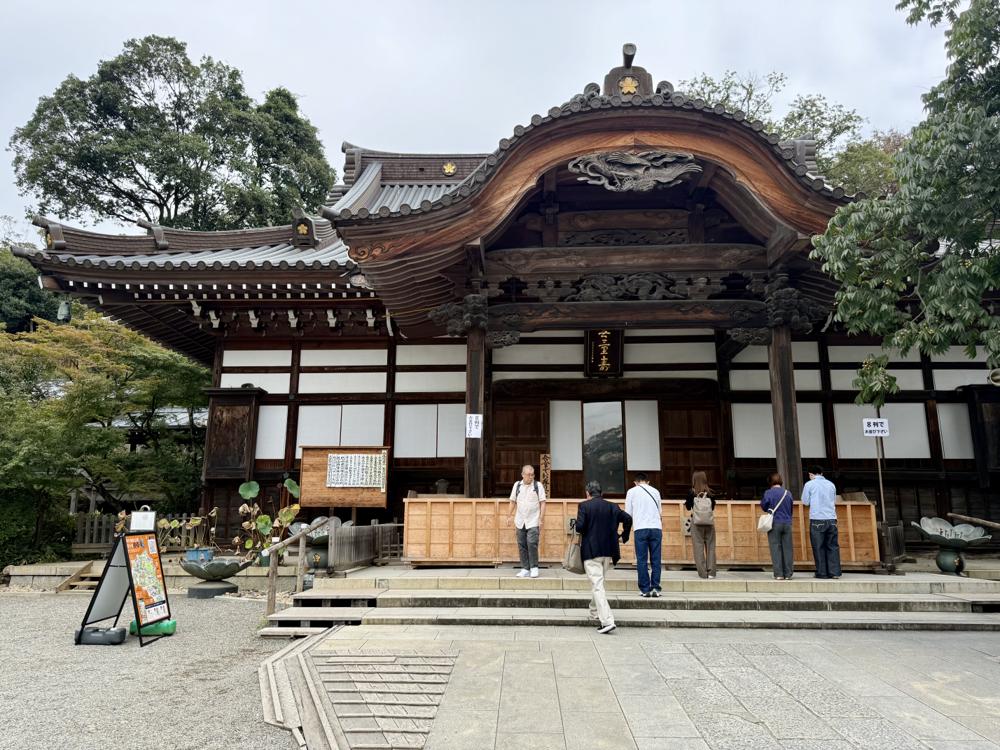
There’s not much in the way of tourist attractions along my route today, so to break things up I bend my route north a bit to reach Jindaiji Temple. I notice that the park with the temple also includes a large botanical garden, so make an addition detour to reach that. Sadly, the garden is closed today, so the extra walking was wasted.
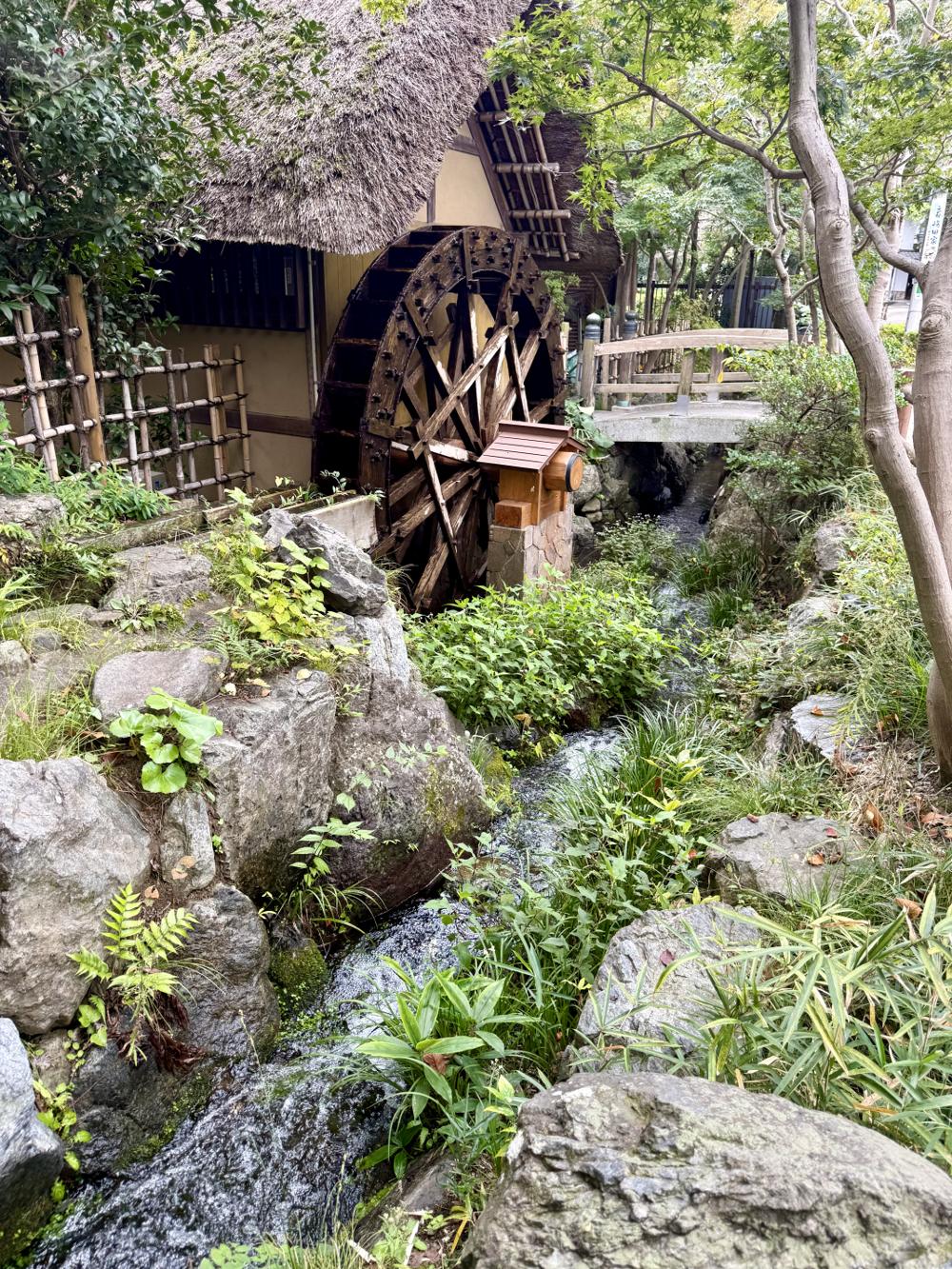
I rest for a while at the temple before continuing. I pass a small park where a handful of young women are tending to a group of toddlers. The kids look to be about 3 years old and they’re all wearing little matching red hats. They are playing a game of Tag. One of the women is It and all the toddlers are running after her, shrieking.
Despite being in a metropolis, transecting the city like this leads one to encounter odd little pockets of greenery. Google Maps sends me down what looks like a little-used path to a small forest by a highway. Crossing under the highway, there’s a small manicured garden with free entry.
I finally return to walking along the Old Kōshū Kaidō. I stop at a Musashino Coffee for lunch, finishing it off with fluffy souffle pancakes. Most of the rest of the afternoon is spent crossing Setagaya Ward. Many of the streets are lined with trees, making for a perfectly pleasant stroll.
As I reach Shibuya, there’s a light mist of rain that tails off. As I get closer to the district’s center, the sidewalks get more and more crowded, until I finally reach the famous Shibuya Scramble Crossing and the hundreds of people waiting to cross it.
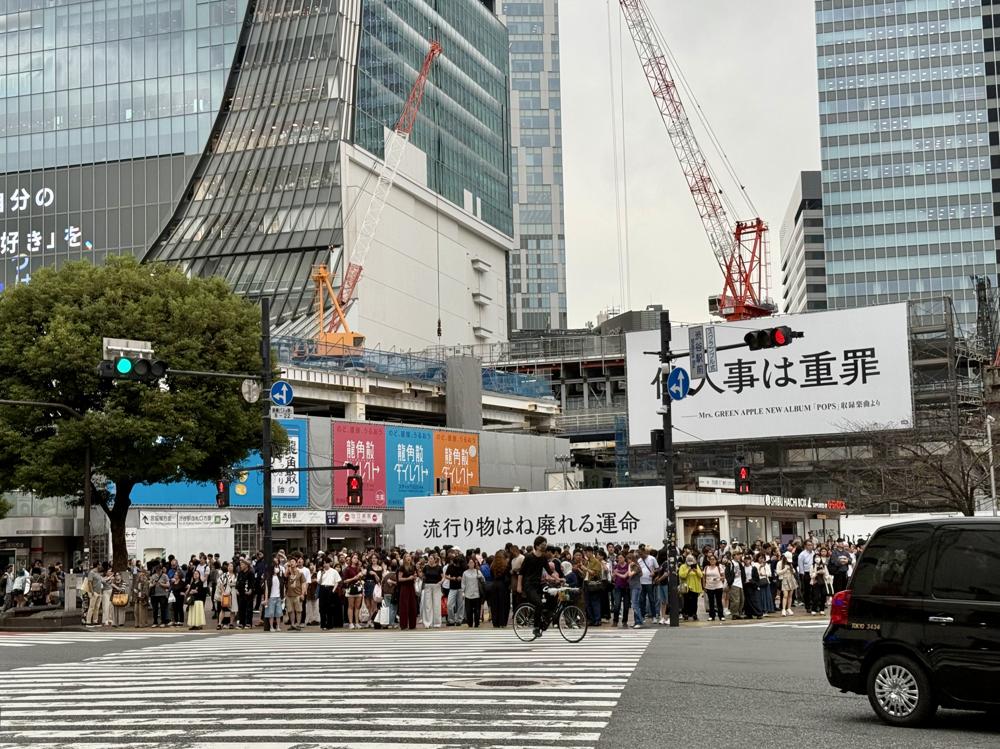
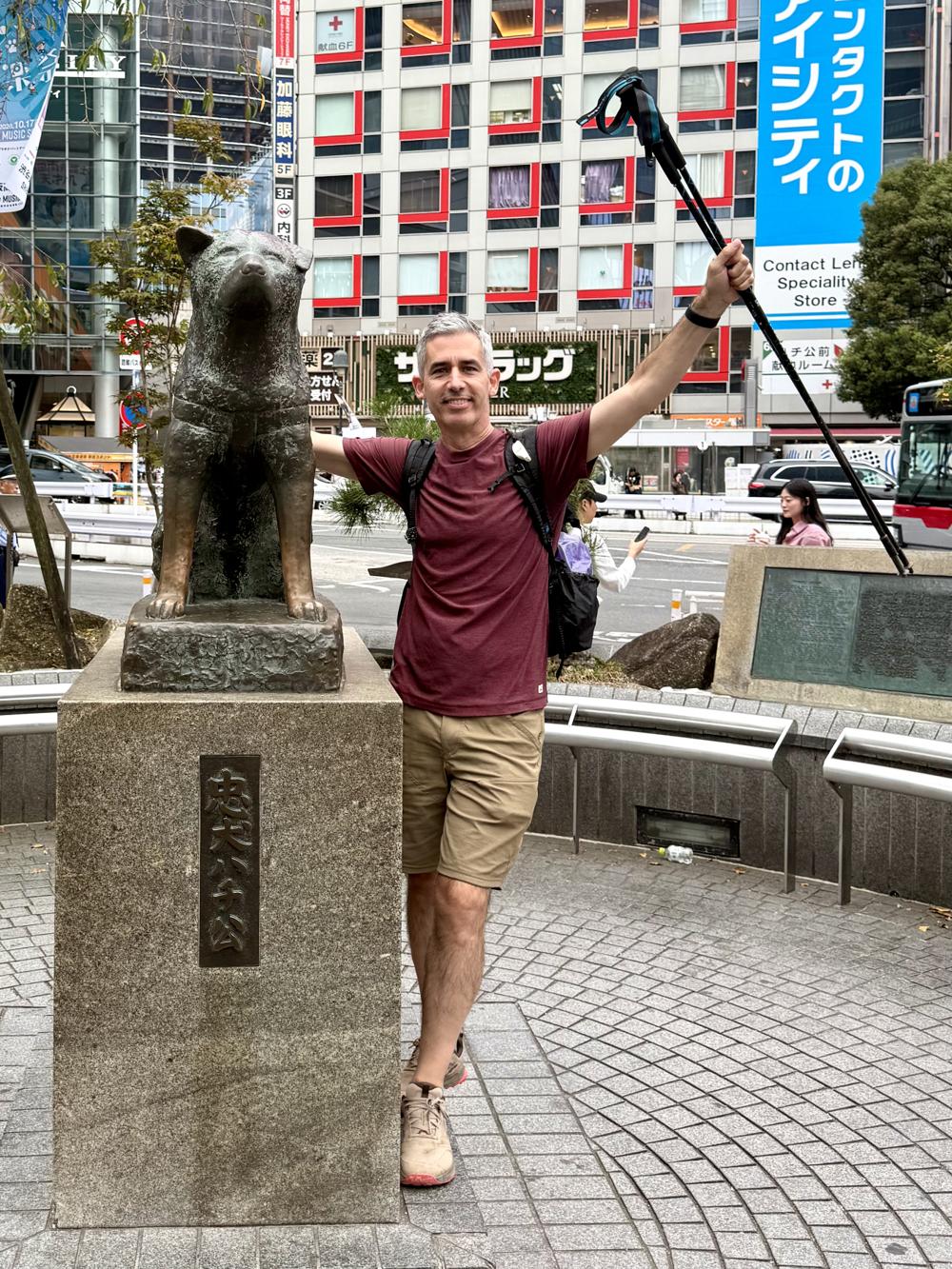
On the other side, I reach my target for this hike, the statue of Hachiko the dog, and have someone take a picture of me with Hachiko.
Dinner is a course menu at Tenki, a nearby spot I found last year with French-inspired tempura. I add on a dish of “black pork” — pork coated in a batter that includes squid ink — and am happy I do: it’s fantastic.
Tokyo family time, day 1. Today marks the beginning of a short family get-together in Tokyo. Bree is busy with classes at Boston University so won’t be able to join us for this.
In the morning Jan grabs coffee at a tiny shop with a puzzling name (“Hi Coffee, Hey Herb”) then walks to the Daikanyama where he and Angela lived in 1999–2000. Japanese buildings tend to only last 20 to 25 years before they’re demolished and replaced, so after 26 years very few of the buildings from that time still exist. Some of the only remaining recognizable landmarks are the Chez Lui patisserie and a large metal flower statue.
After high tea at the Peak Lounge, Jan waits at the hotel for Liya to arrive from Vancouver. She makes her way to Shibuya around 7:00 pm, so she and Jan go out for gyoza at Dandadan. They gyoza arrive quickly and are pretty good.
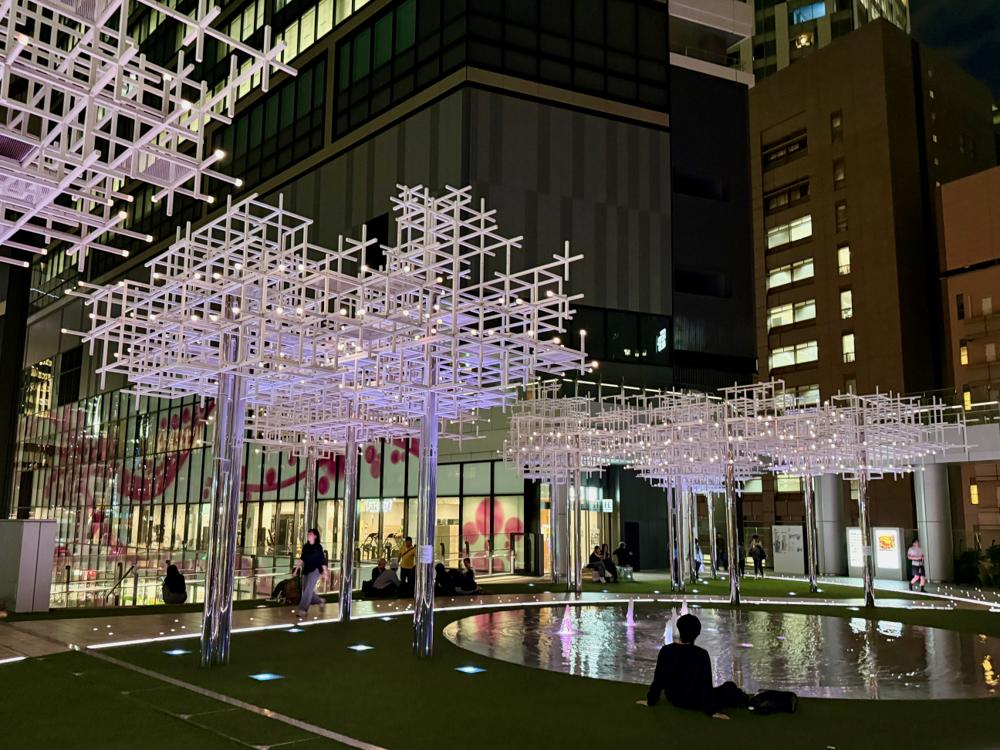
After dinner Liya’s ready to crash so she goes to bed. A short while later, Evan arrives from Taipei. He’s also hungry, so he and Jan go out looking for ramen. They find a nearby ramen shop that seems to have optimized as much as possible for throughput: customers purchase a meal ticket from a kiosk, then wait in numbered bench seats for a spot at the counter. When a spot opens up, they hand their ticket over to someone behind the counter, who assembles and serves their order. Everyone seems to be eating as quickly as possible — there’s almost no conversation — before placing their bowl on the upper counter and then leaving.
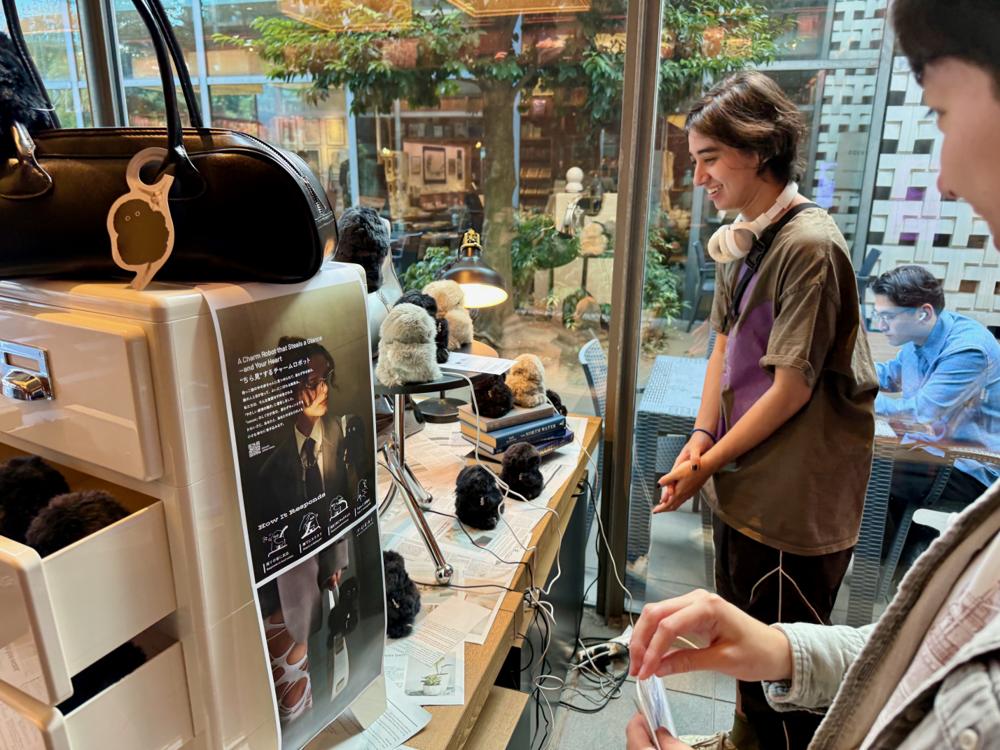
Tokyo family time, day 2. We have breakfast at White Glass Coffee then walk to the sprawling multi-building campus of the Tsutaya bookstore flagship store. There’s plenty of fun things to look at. Liya discovers a corner set up like a home office inhabited by small animatronic mammal-like robots that occasionally pop up their heads and look around.
We take the train to Shinjuku and visit the Sekaido stationery store. Liya enjoys Japanese wagashi (traditional sweets) so we have lunch at Cha Yu in the Takashimaya department store. The food is interesting but Jan and Liya don’t end up getting anything sweet.
In the afternoon we make a long walk back to Shibuya, passing through Yoyogi Park and visiting the Meiji Shrine. Inspecting the display of little wooden placards with wishes on them, Evan notices that the Japanese ones tend to be very specific: “Please let pass my exam” or “Please let me meet Tanaka-san” while the ones in English are more general, like “Let there be world peace”. Evan theorizes that, while the Japanese visitors know they can come by anytime, the foreign visitors feel like this is going to be their one chance in their life to make such a wish so feel obligated to go for something big.
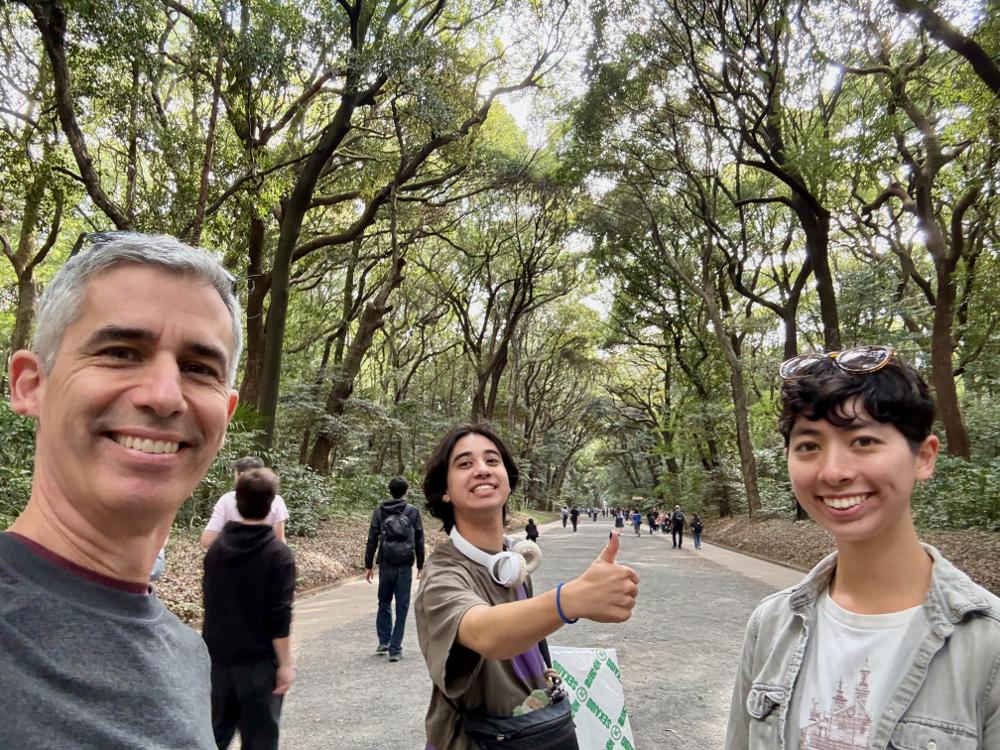
We walk through the iris garden even though it’s not iris season; it’s still a nice walk. At one point an odd middle-aged Japanese man arbuptly halts in the middle of the path with a sort of threatening grunt, causing Jan to nearly bump into him. Later we see this man being escorted out of the garden by staff.
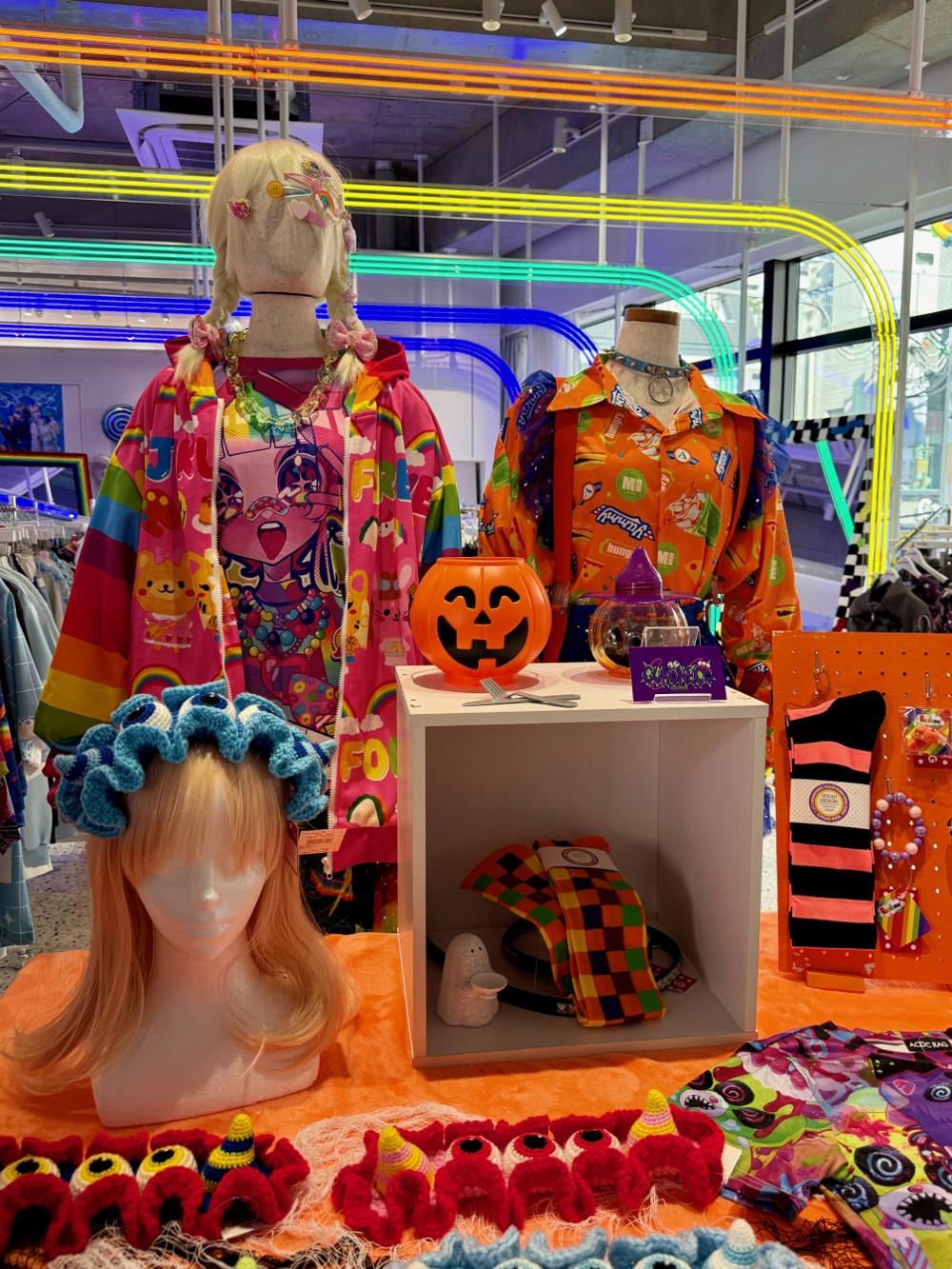
Exiting into Harajuku, Evan’s keen to shop for vintage clothes along Takeshita Street. Most of the shops have used clothes that are a little too nice or high-end to be interesting. One vintage shop has the grungy name “AC/DC Rag” but it’s bright and colorful:
Harajuku reliably offers odd food trends: we see a place offering “Rainbow Grilled Cheese” and the rainbow-colored cheese looks just as unappetizing as you’d imagine. We finish our long stroll going along Cat Street, which is cute but sadly has no cats. We end up at the Shibuya Scramble and happily cross with hundreds of other people.
On a trip to Japan this summer, Evan began to enjoy sushi, so we have dinner at Sushi no Ikumi. We have sushi on the beginner end of the menu; Evan keeps ordering salmon.
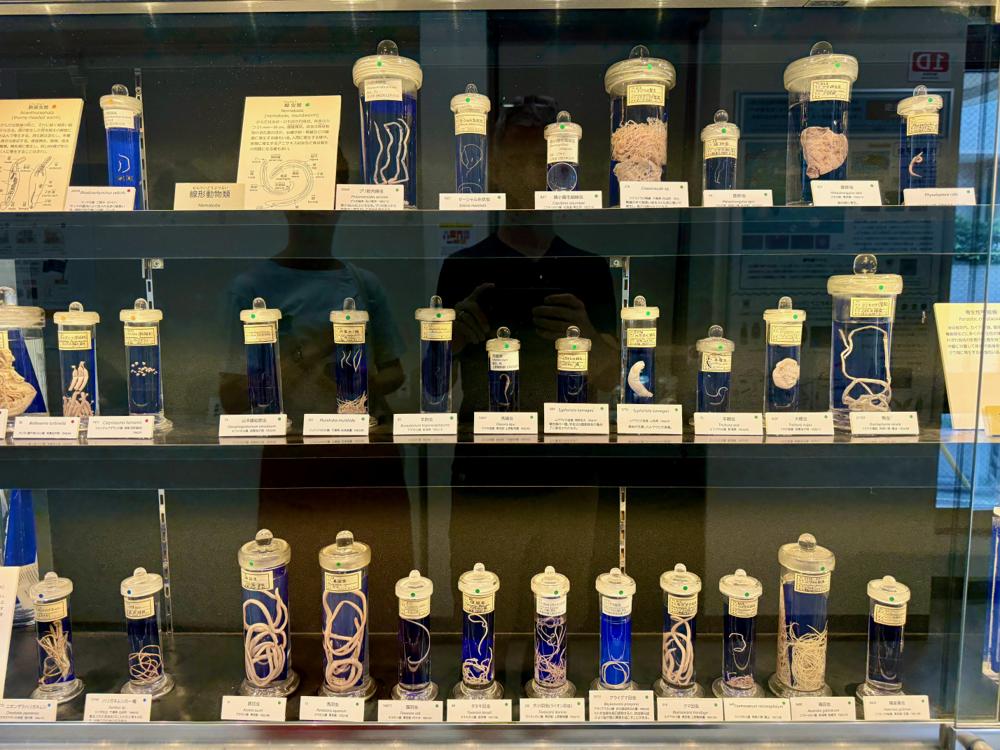
Tokyo family time, day 3. We walk to the edge of Daikanyama for breakfast at a cafe called Garden Crafts, then continue on to Naka-Meguro and walk along the Meguro River.
Our destination for this morning is an odd museum Liya discovered online called the Meguro Parasitological Museum. This displays two floors of all manner of parasite critters in specimen jars. We enjoy it but would have liked even more information (and maybe fewer disturbing photos of some of the conditions the parasites cause).
Evan’s hungry again so we stop at a little bagel shop nearby that’s pretty good. We make our way to Roppongi and the Suntory Art Museum. There’s an exhibition of calligraphy and tea ceremony paraphrenalia, including some stunningly beautiful lacquerware tea containers.
The museum is inside an upscale shopping mall that Jan’s visited before. The mall seems to be one where the restaurant you want to eat at is always full or closed; we have to visit several places before we find an Indian restaurant that can accommodate us. We’re happy to get outdoor seats on terrace so we can make the most of the nice, summer-like weather.
Before leaving the area, we try again to get wagashi sweets at a teahouse. This one is tiny and makes us wait in a small waiting area. A staffer briefly appears and Jan asks whether it’s okay that we don’t have reservations. The staffer ignores the question and asks us to wait. Another staffer finally lets us in but then says “We’re all full with reservations today.” We’re annoyed they didn’t just tell us this earlier.
Later in the afternoon Angela arrives from Seattle, and after a bit of a nap the four of us make a short walk around the corner to Akiyoshi, a yakitori restaurant where Jan and Angela ate many times when they lived in Japan. It’s still very good. Evan keeps ordering more skewers of steak and green onion.
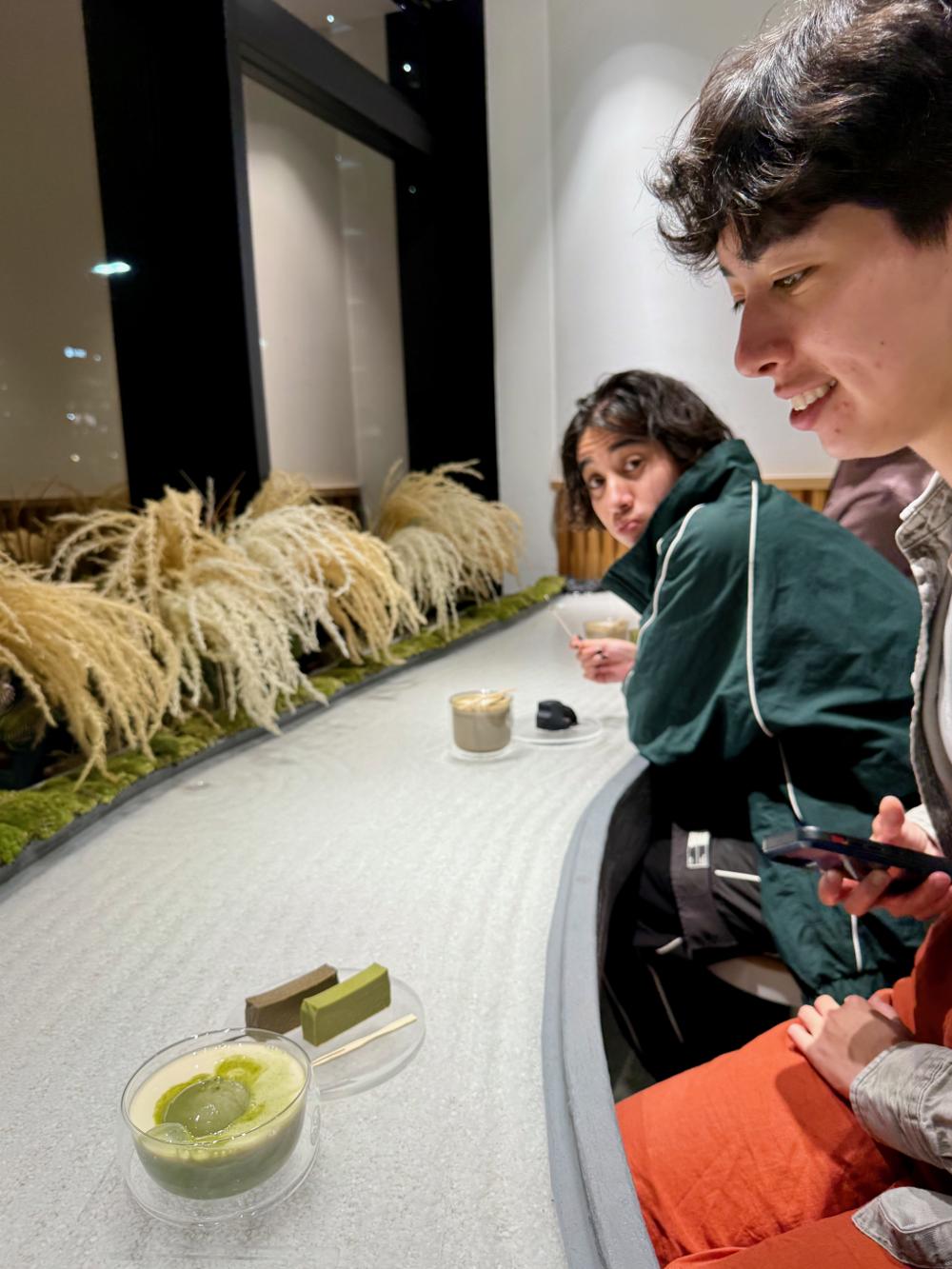
For dessert we try a curious cafe called Ruru Shibuya that we’d seen in the same complex as our hotel. The cafe serves dessert and tea pairings — on a table that’s covered by a shallow river of water. In front of each of us, the staff puts a clear plastic board in the little river that just sticks out above the water, then places our desserts and tea on them. Jan and Evan get a dessert that looks like a black lava rock but is in fact strawberry cheesecake.
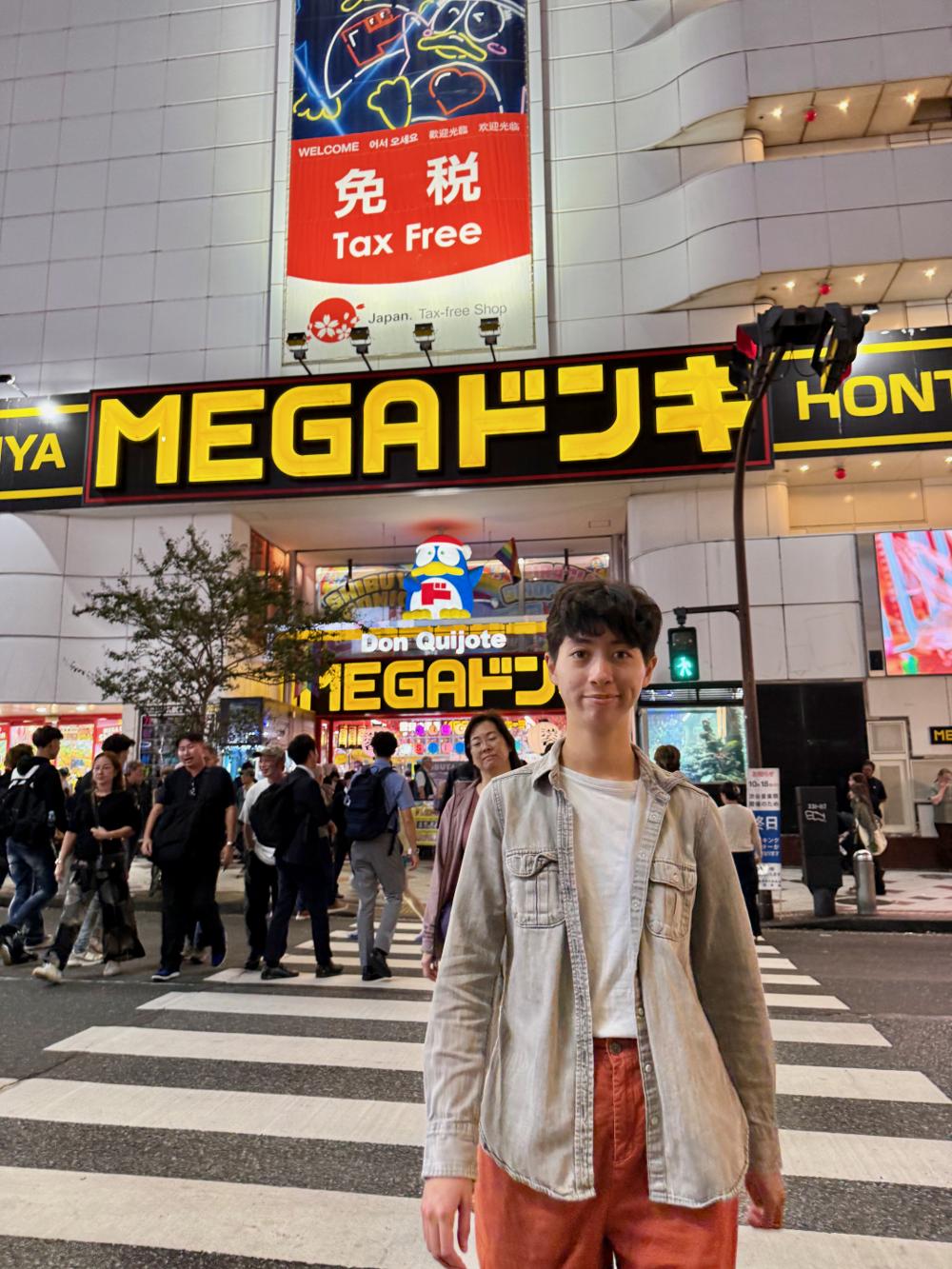
After dessert, Evan wants to visit a Don Quijote discount store, and Shibuya happens to have a massive “Mega Don Quijote” branch. As soon as we walk in, we’re assaulted by a wave of music and chirpy announcements and a dazzling riot of colorful displays. Liya and Evan both enjoy checking out a section selling blobby animal plush toys, and Evan picks out a cute, blobby sea slug plushie.
Tokyo family time, day 4. In the morning we make our way to the Tokyo Character Street mall beneath Tokyo Station. Some of the shops are fun to explore, but we’re all slightly disappointed that we can’t find anything both new and appealing. Jan’s noticed one new hit line of characters from a series called Chiikawa, but they’re not our cup of tea. We do enjoy picking out a few things in the Koupenchan and Dick Bruna stores.
We walk through Ginza for a tempura lunch at Tsunahachi. Both Liya and Jan enjoy the shrimp and onion fritters that Evan calls “shrimp clouds”. After lunch, we have just a bit of time to squeeze in a visit to the flagship store of Itoya stationers.
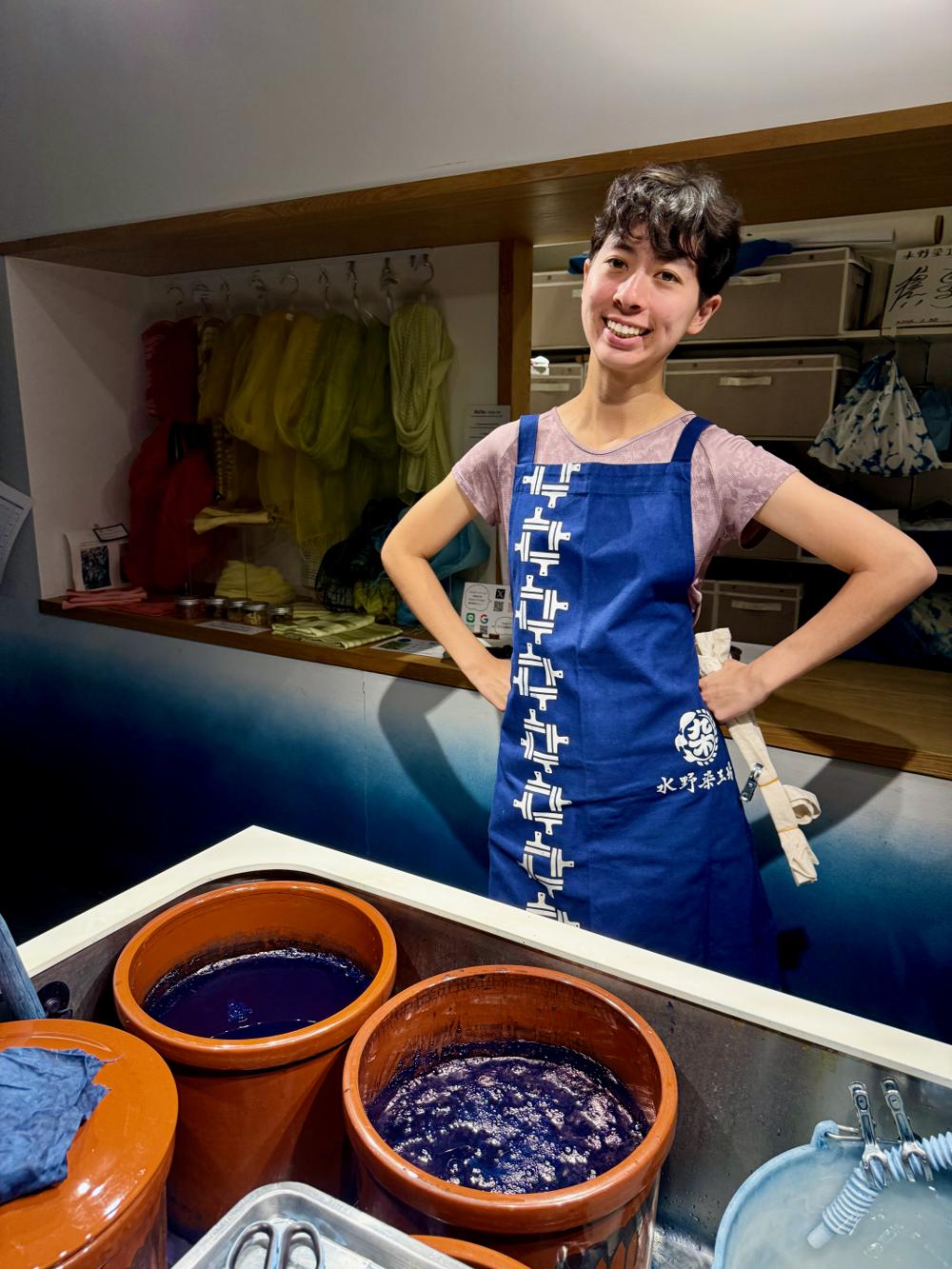
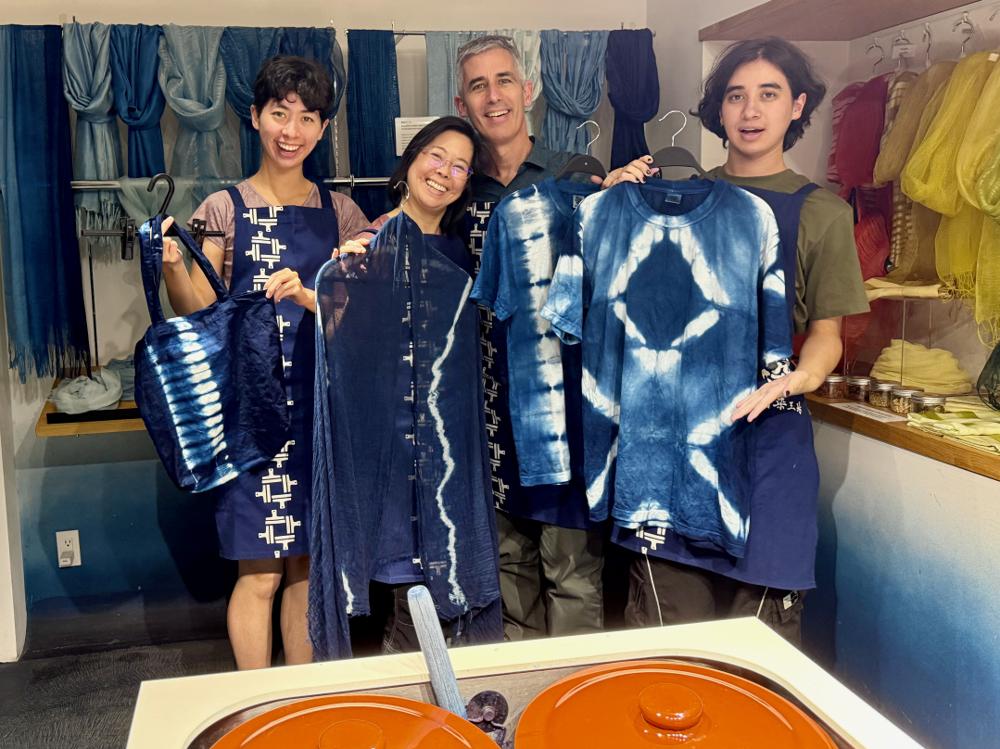
This afternoon we have a craft activity: a short indigo dyeing workshop at Mizuno Somekōjō Hibiya Ōkuroji. Two women get us set up, and we each pick out an undyed fabric article to dye: a tote bag for Liya, a scarf for Angela, and t-shirts for Evan and Jan. One woman walks us through the relatively straightforward steps needed to bind up the fabric to create white areas, then each of us in turn soaks our article in a small ceramic bucket of indigo dye.
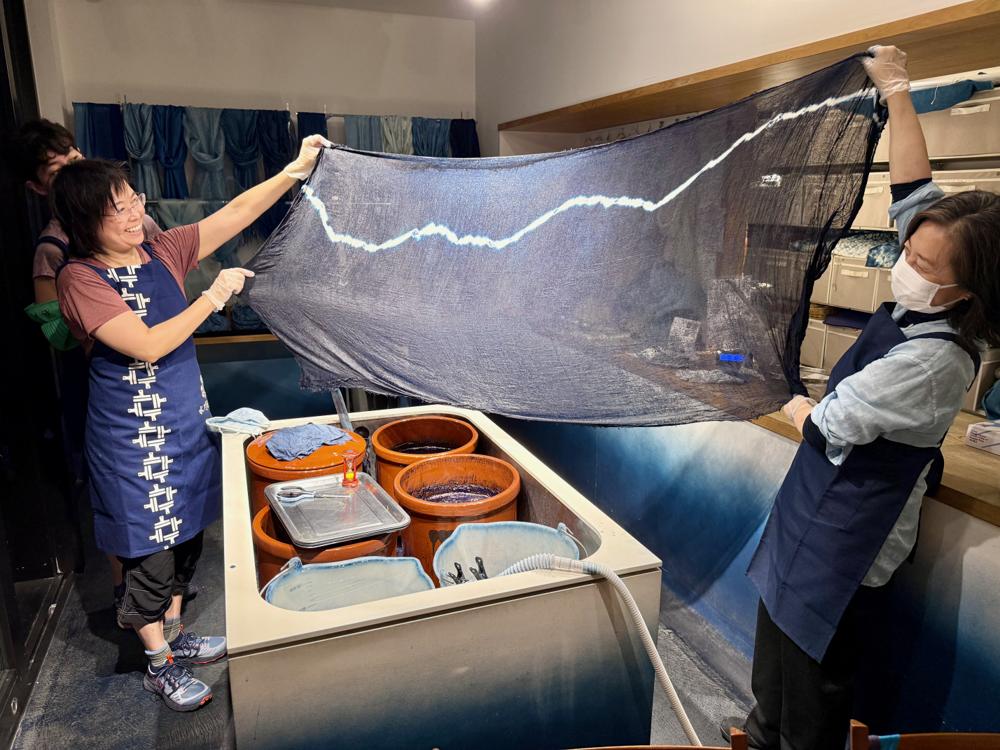
One thing that’s really interesting is that the dyed fabric is initially green; it’s only after reacting with oxygen that the dye turns deep blue. All of us are very happy with how our works turn out, and while the staff clearly say complimentary words to all guests, they do seem mildly impressed by our results.
In the evening, Evan goes out to dinner with a friend from Choate while the rest of us eat a course menu at Sowado. The restaurant describes itself as an izakaya (pub), but the food is several notches above typical pub fare. There’s an especially tasty rice pot towards the end, followed by matcha ice cream in animal shapes.
Tokyo family time, day 5. We have breakfast at TenCups, a Southeast Asian restaurant that also targets visiting foreigners with Western-style breakfast.
On the way to the Hamarikyu Gardens, we stop to look at a huge clockwork produced by Studio Ghibli. We’ve missed one of the clock’s semi-hourly displays, but it’s still an interesting piece of metal clockwork sculpture.
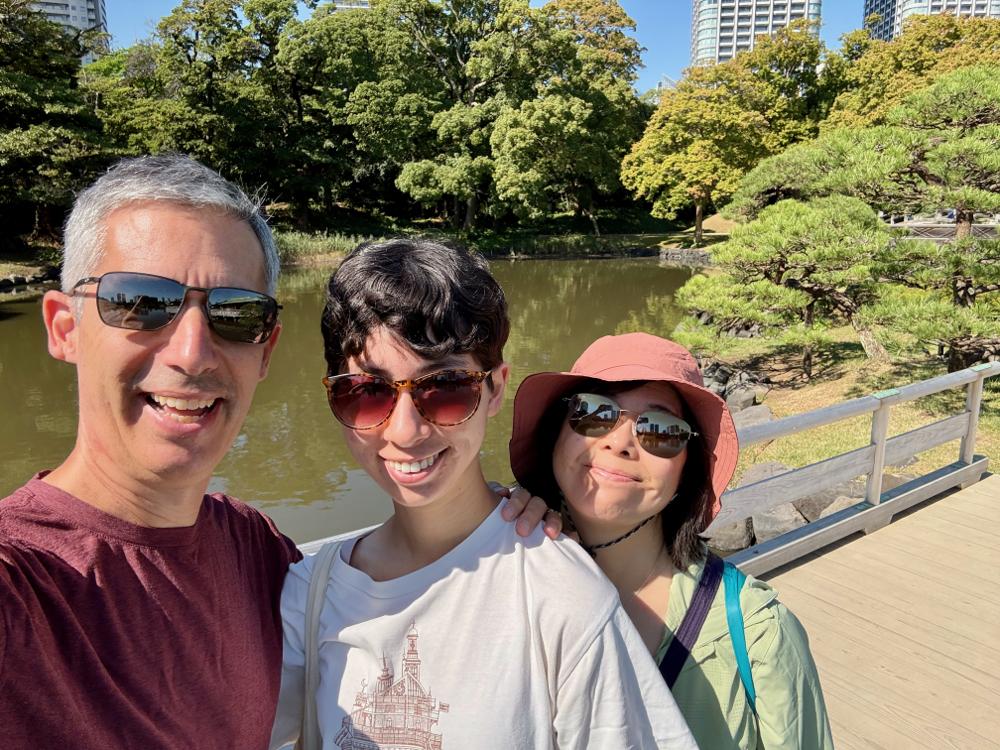
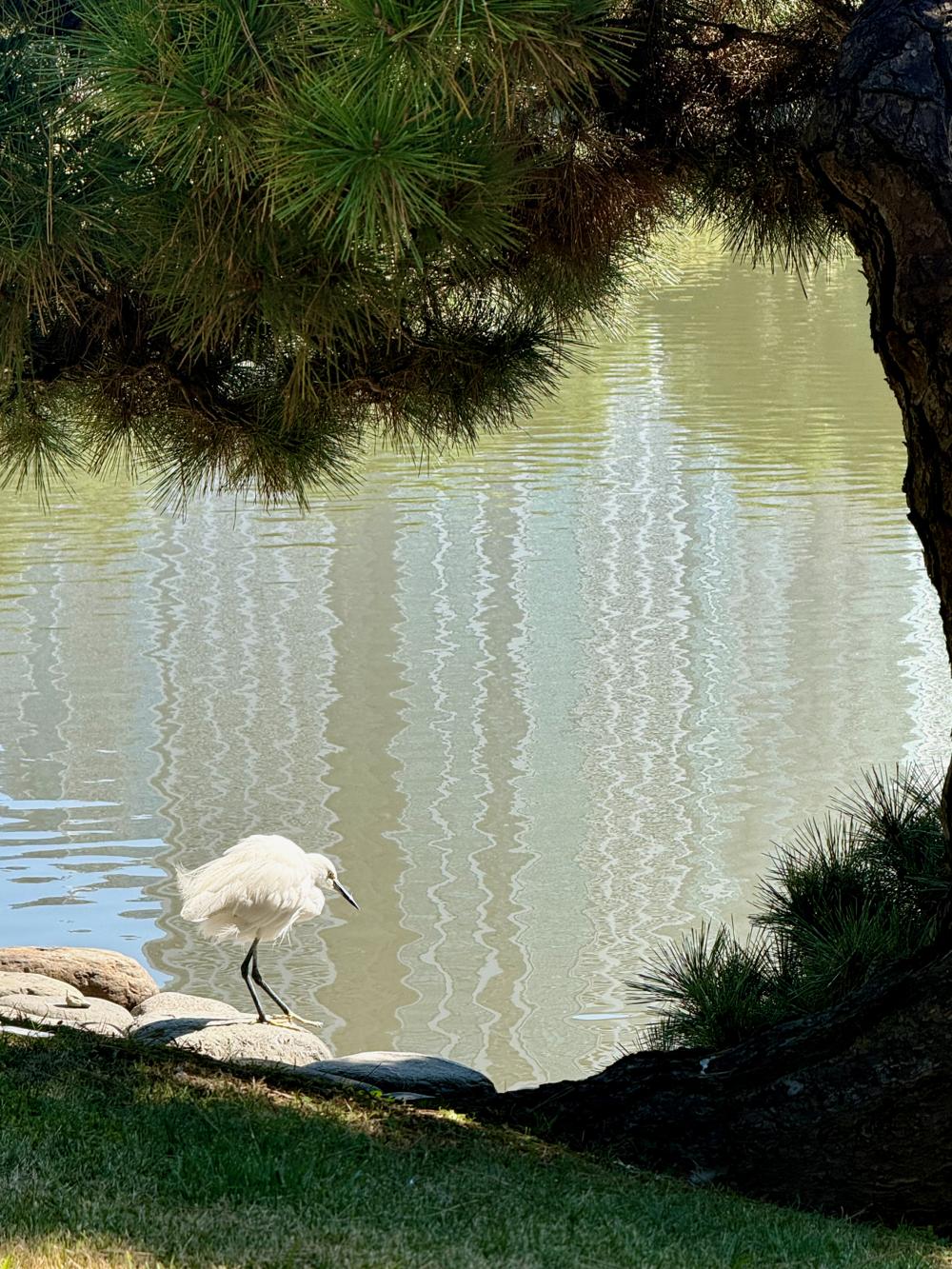
The gardens are nice but, as Liya describes, they’re more “lawn forward” than a typical Japanese garden. We enjoy crossing a series of bridges over ponds that are home to cranes and herons. We pass a construction that turns out to have been a duck blind used by the shogun and his guests for duck hunting.
We return to Shibuya for lunch, where Evan peels off to meet another friend and the rest of us have lunch at Wagyu Ramen Goku. The ramen’s unusual in that it features beef, and we’re happy we were able to just beat the lunch rush with three counter seats together.
We walk to the Yamatane Art Museum, home to an extremely nice collection of paintings and woodblock prints. The museum is celebrating its 60th anniversary with a “Best Of” exhibition, and we’re all particularly taken by a series of gorgeous lacquer prints. The museum cafe, Cafe Tsubaki, has worked with a local confectioner to create five wagashi sweets, each themed after one of the exhibition paintings. Liya’s, a collection of tiny autumn leaves in a clear gelatin, tastes the best.
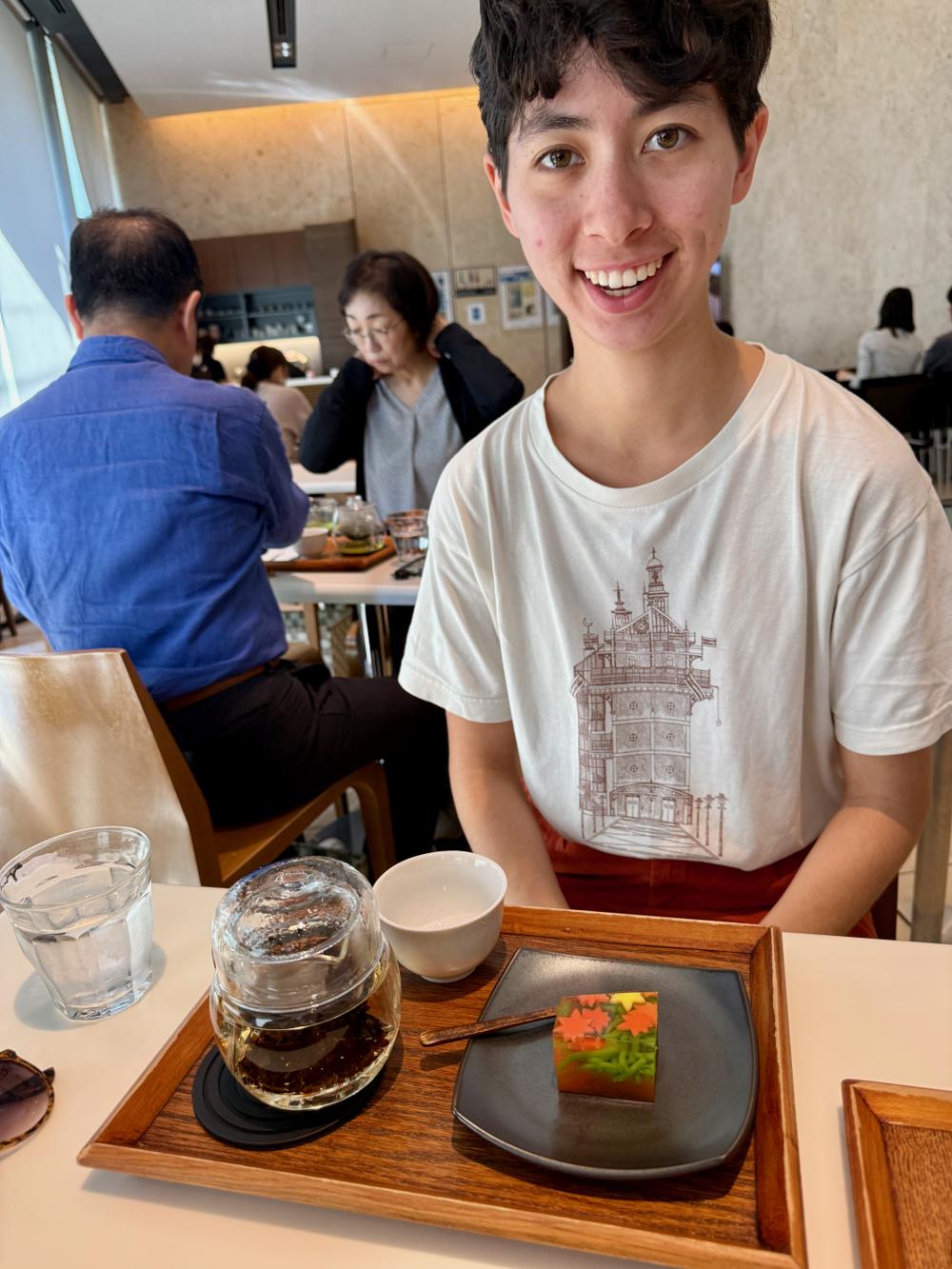
On this trip Jan’s made a couple attempts to summon a taxi using an official taxi company app but it once again fails to work. We end up hailing a cab the old fashioned way, something we haven’t done in a long time.
After resting at the hotel we navigate the three-dimensional hamster maze around Shibuya Station to reach the elevator for the Shibuya Sky observation deck. This opened a while back but we’ve never been up to see it. It’s a very nice open rooftop space, with glass walls in all directions but open to the sky. All along the walls there are people posing for photos.
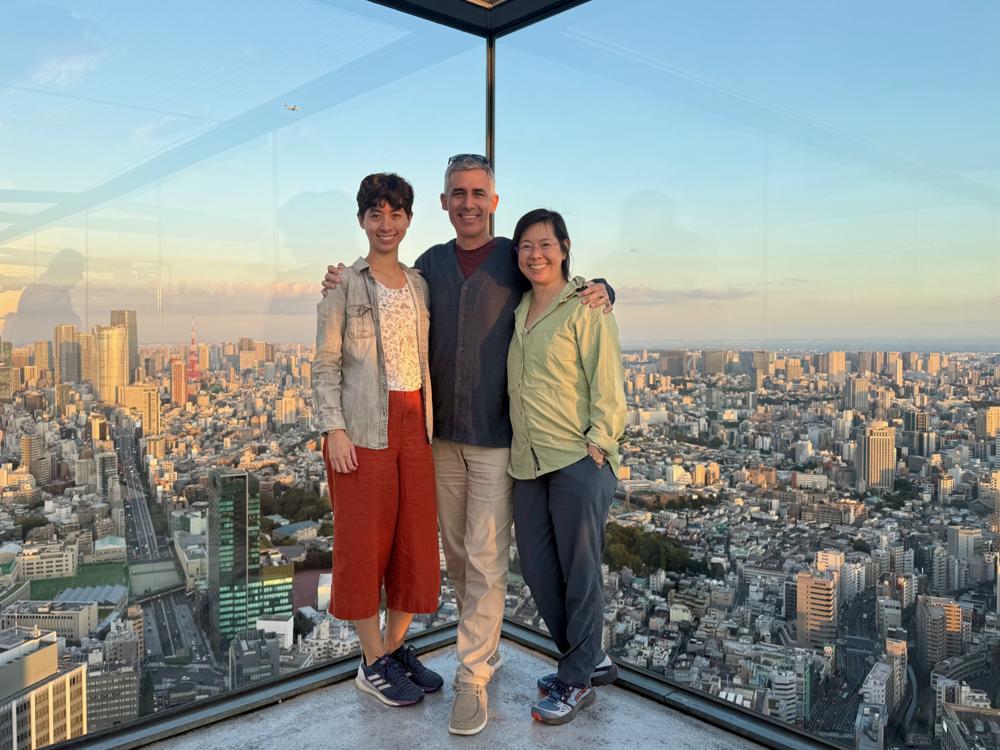
We get some snacks and drinks from the rooftop bar and have a seat in a sofa looking east. It’s nice to hang out while looking out over the city and watching the light change as the sun sets behind us. A little before 5:00 we get up to watch the sunset, which is a little early because there’s a line of clouds over the mountains on the western edge of Tokyo. Liya notices that you can just make out a tiny bit of Mt. Fuji’s summit sticking out above the clouds far away. We’re glad we picked this time slot for our visit or we would have missed the sunset.
Evan rejoins us for dinner at Barbacoa, a Brazilian churrascaria in Omotesando. It’s still tasty, although perhaps doesn’t quite measure up to our memory of it from years ago. We also eat a little less than we would have otherwise eaten — between lunch and dinner we sat down for two different snacktimes.
We again walk back to the hotel via Cat Street, stopping this time to go up to Miyashita Park on the roof of a shopping mall and walk along it to the scramble crossing.
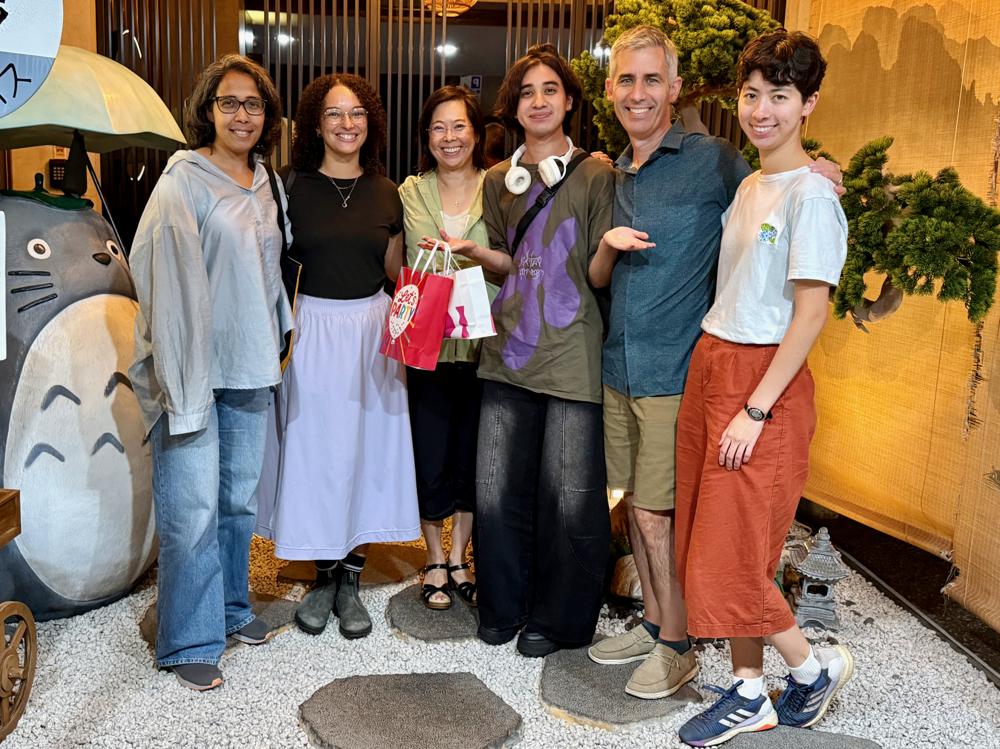
Taiwan family trip, day 1. We pack up and head to Haneda Airport for our flight to Taipei. Arriving at the airport, Angela is excited to finally use her shiny new Taiwanese passport, which she spent a substantial part of the year obtaining. She goes into the “Taiwanese Passport Holders” line while we go through the regular visitors line. Somehow Angela is the last person through immigration.
Evan heads back to his dorm, while the rest of us go to our hotel nearby. Although it’s past the oppressive heat of summer, Taipei in the second half of October is still sultry, so we’re happy to reach the air conditioned lobby.
Today is Evan’s birthday — he’s now 25 years old — but Liya still needs to find a gift for him, so we spend the afternoon shopping. We visit two different Sogo department stores in search of cute things, then try Yongkang Street where Angela and the kids lived for a month during summer school in 2015. Yongkang delivers: Liya finds a store with a cute hippo-esque felt bowl. We also stop at a stand selling sugar cane drinks.
In the evening we host a small birthday hot pot dinner for Evan that includes Holly and Rupali, two friends from his master’s degree program. We enjoy hearing stories about their studies and life in the program; they’re now about ⅔ of the way through their degree.
Holly and Rupali share one story about a recent exam in a math class. Both of them had found the material challenging, and so had devoted a substantial amount of energy to preparing for the exam. Evan, meanwhile, seemed comfortable with the material. They were irked to see Evan show up 15 minutes late for the exam, then finish early and walk out, and still end up doing well on the exam.
Taiwan family trip, day 2. The wheels completely fall off our plan for Taiwan.
An approaching typhoon named Champi will touch eastern Taiwan later this week — exactly when we had been planning to do a 3-day bike trip down the east coast from Hualien to Taidong. We’d seen rain in the forecast before, but now the rain has changed to diluvian proportions: on the middle day of our bike trip, it’s expected to rain 10 inches (25 cm). There will also be multiple days of strong winds. So the bike trip is out and we’ll need to cancel all our arrangements and make new ones.
We discuss this on our way to a Taiwanese breakfast place. As we’re waiting for our food, Jan suddenly feels exhausted. He’s been wondering whether he was coming down with an illness, and now it’s clear he actually is sick. Angela rides with him in a cab back to the hotel, where he will spend the next 3 days in bed.
Liya and Angela head to Da’An Park for a morning walk. The wildlife is beautiful and the park includes places to exercise, even providing a path with narrow handrails for older folks who want to practice walking without their walker.
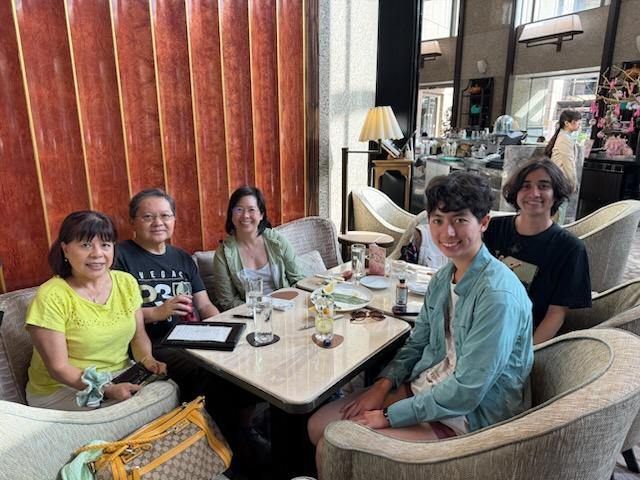
In the afternoon, Angela, Liya, and Evan meet Angela’s cousins Endry and Victor for tea and cakes in the lobby of the Shangri-La Hotel.
Evan comes over again for dinner with Liya and Angela at Namaste Restaurant near the Shi-Da night market. The Indian food is quite good but takes a long time to come. Evan leaves early for a club meeting but has Angela and Liya take home the leftovers for him to pick up later. Liya and Angela walk around the night market a little before Angela heads back to the hotel and Liya heads to a weekly social dance that Evan shared with her. Liya comes back happy but late.
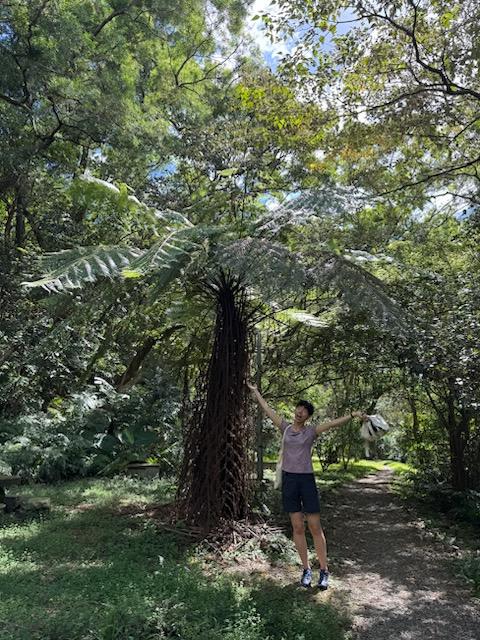
Taiwan family trip, day 3. On Wednesday, Liya proposes an outing to Er Ba Zi Botanical Garden a little outside of Taipei. The taxi driver is a little confused and takes Angela and Liya the wrong way. We clear up the confusion and drive up a mountain to the Botanical Garden. After being dropped off, we linger long enough for the taxi driver to call out, “Miss! Miss! You forgot these!” Liya runs to grab her AirPods, thankful not to be separated from her steady transit companions.
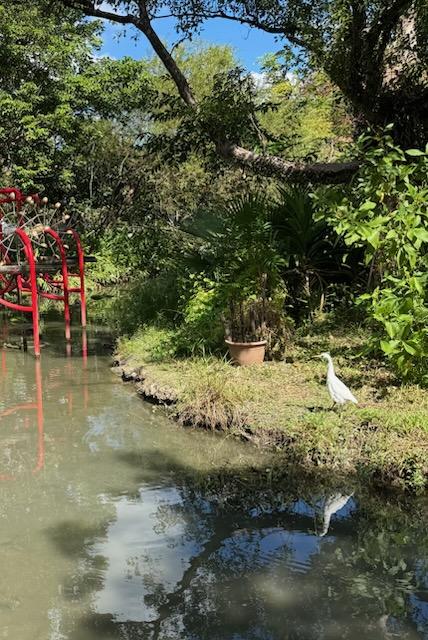
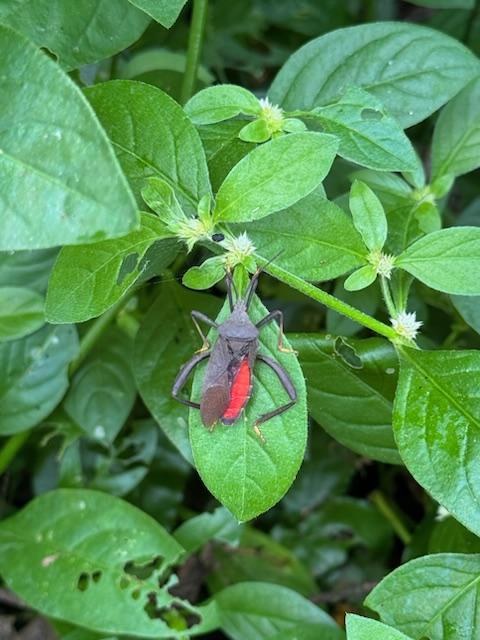
As we wander up the road, Angela and Liya come across so many different kinds of plants and bugs! Liya notes that Angela’s camera phone is much better than hers and absconds with it. Now Angela’s phone has many bug pictures on it.
While Taipei is hot, up on this mountain path shaded by trees, the air feels much cooler. We enjoy nature and decide to hike down the mountain instead of taking the bus. The path is made of railway ties recycled into stairs, and as we descend the weather gets hotter and stickier. We are grateful that we drove up and are hiking down instead of the other way around.
For dinner, Angela and Liya head to Din Tai Fung to meet Evan. There’s a wait so the three of them wander around Da’An Park. It is much cooler in the evening! As our number is called, we run into one of Evan’s SCDS classmates, Sasha Rothstein, and Sasha’s parents Amy and Jesse. Small world!
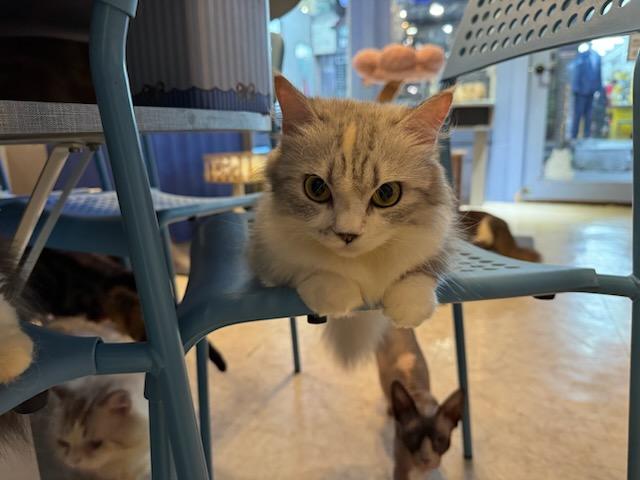
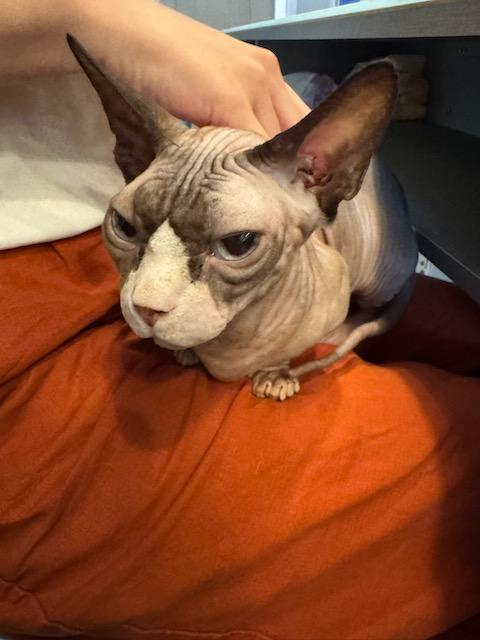
Taiwan family trip, day 4. For lunch Liya and Angela head to Taipei’s XinYi district. This is the district most like Tokyo’s Shibuya: full of shops, neon lights, famous foods, and (most importantly), Le Mao Chef a 5-star cat cafe! Liya and Angela struggle with understanding the protocol (put protective shoe coverings on over socks, not shoes — take those off) but once we figure it out, we enter. The cats are mostly Munchkin cats - a new breed with short legs. They are super cute and super friendly. Especially the Bambino, which is a cross between a Munchkin and a Sphinx. He looks super creepy but can’t wait to jump into your lap:
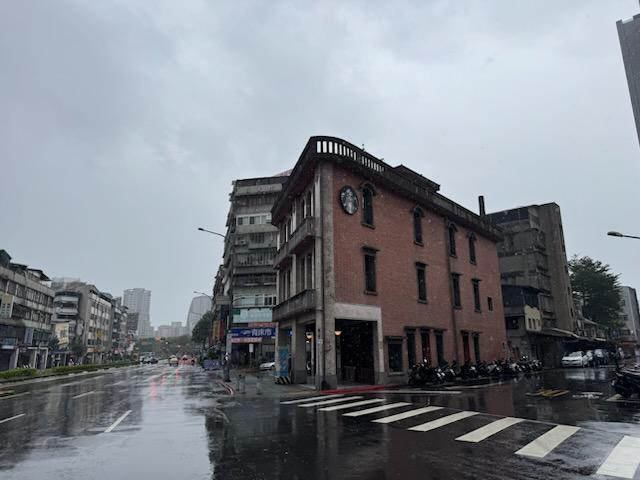
In the afternoon, we head to the WanHe Lin Family Home, a traditional house from the colonial Japanese era. It now hosts a Starbucks, but there’s a free tour from 2-4 on Thursdays. The tour guide is super helpful and friendly, and speaks slowly enough for Liya and Google Translate. Sadly it is the wrong Lin family home, not one that belonged to Angela’s friends Joanne, Fiona, and Jessie Lin. Lin A Tai will have to be on a different trip…who knew there were two Lin homes preserved in Taipei?
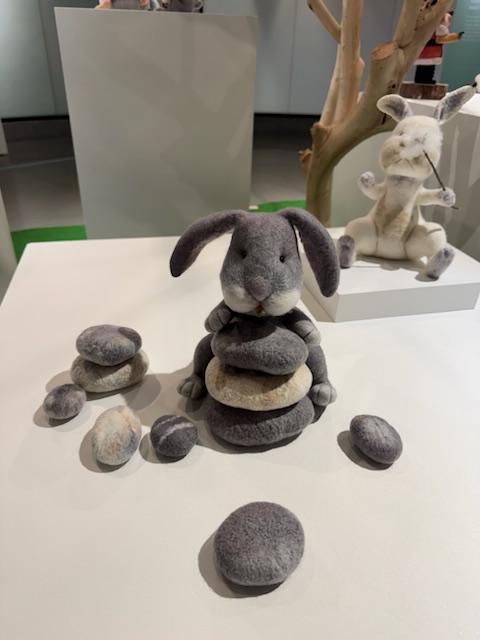
After visiting the WanHe Lin Family home, Liya and Angela head to the Taiwan Craft Museum. The front edge of Typhoon Champi is coming, and Liya is grateful to have her umbrella from Yongkang Street. At the museum, we marvel over all the high quality crafts which honestly could be in a regular art museum. Don’t be fooled: both the bunny and the rocks are made of felt.
Liya and Angela have beef noodle soup for dinner nearby. Jan is feeling better and manages to eat a little in the room. Evan comes over to pick up Indian leftovers, then heads back to his dorm.
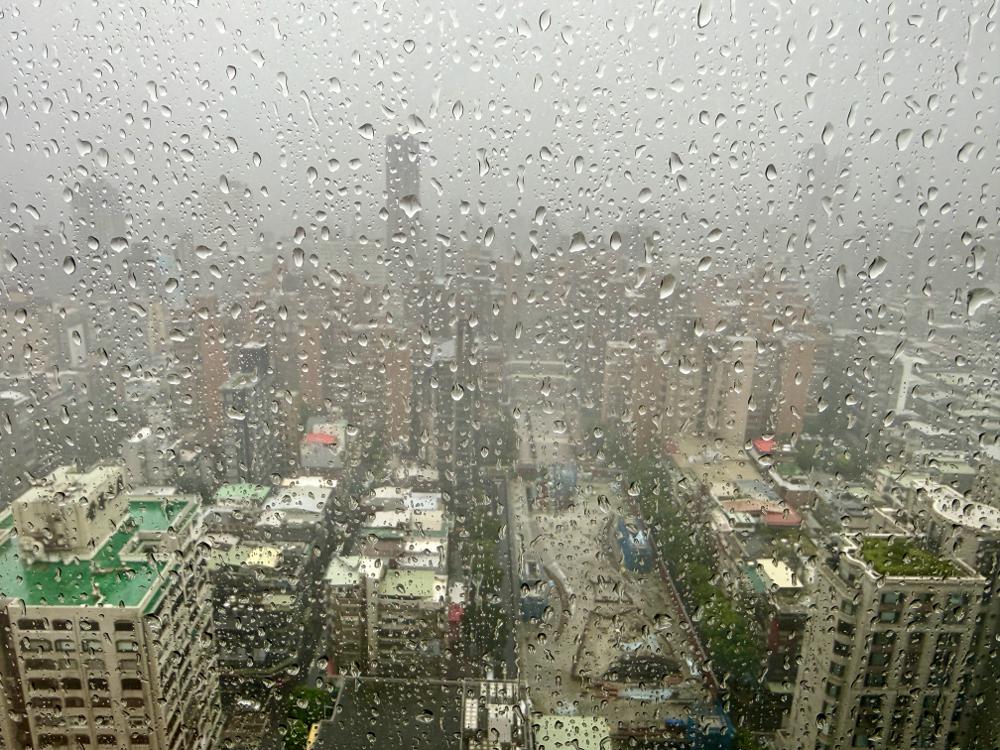
Taiwan family trip, day 5. Our plan is to move to Taichung today, and Jan’s finally feeling mostly better so has the energy to pack up. Typhoon Champi is expected to hit today, and some trains have already been cancelled, but it seems like our train is still going to run. We get into a taxi to the station. Along the way, Angela checks the train status again, and now our train has also been cancelled.
We ask the driver to turn around and drive back across town to the hotel. Thankfully we’re able to get our rooms back, and miraculously they let us back into the rooms even though it’s still the mid-morning and so hours away from normal check-in time.
So now we’re going to stay put in the hotel for at least another 2 days, along with all the other travelers that have been stranded by the typhoon. We’re happy that we’re at least in a huge hotel with numerous restaruant options. It feels like we’re stuck on a cruise ship. We spend the day reading, napping, or watching people outside have their umbrellas turned inside-out by the howling wind.
For dinner Evan comes over from his dorm and we go to the hotel’s “Cafe” restaurant, which is in fact a gigantic buffet. Our family often uses the epithet “Food of Many Nations” to refer to a dinner of leftovers, but this buffet is indeed Food of Many Nations — there are something like eight different cuisines represented. Evan’s dinner, for example, is Indian food and sushi.
Taiwan family trip, day 6. This is the second day of Typhoon Champi, although the rain and wind have died down a bit. Jan and Liya go to one of the hotel’s Chinese restaurants, this one near the top floor floor, and eventually Evan comes over to join them.
Our hotel is named the Shangri-La after the fictional utopia in James Hilton’s Lost Horizon, where the inhabitants cannot die but neither can they leave.
Jan: “This is the fifth straight day I’m stuck in this hotel.”
Evan: “It’s just like Shangri-La!”
For dinner we manage to get a table at the hotel’s Italian restaurant, a nice change of pace.
Taiwan family trip, day 7. The typhoon has passed so we’re finally able to make our way to Taichung. (Evan stays behind in Taipei for classes.) Angela’s cousin, Ike, meets us and takes to lunch at a restaurant specializing in Peking duck, where we’re joined by two other men, Jack and Ben (?). Both seem to be more distant relatives.
After lunch Ike takes us to the Buddhist temple and columbarium where Ike’s father (Angela’s uncle) was interred after he passed away earlier this year.
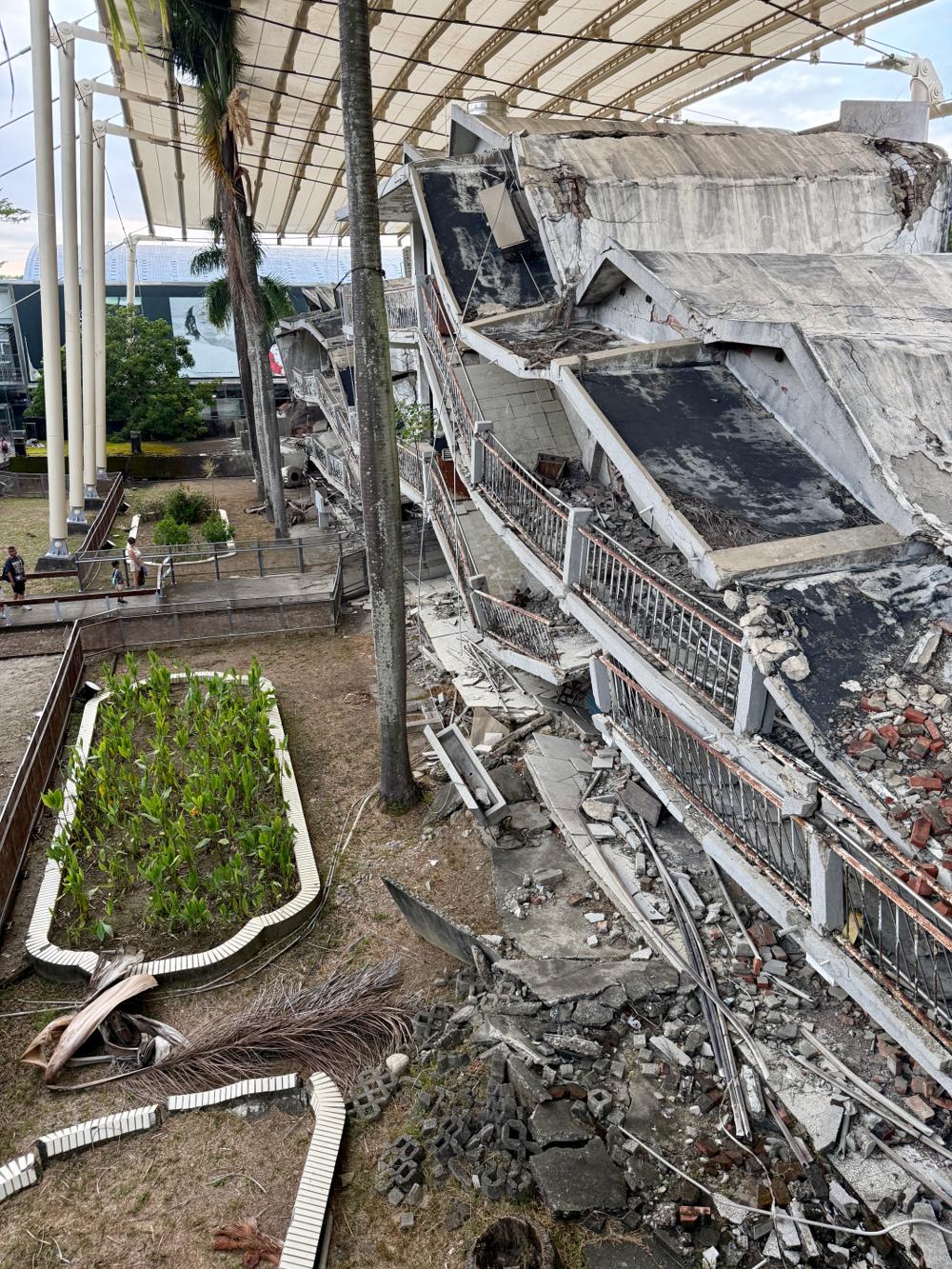
We’re interested in seeing the 921 Earthquake Museum of Taiwan in nearby Changhua, and Ike’s up for driving us there. The museum’s dedicated to a large 1999 earthquake that flattened a junior high school. (The earthquake took place in the middle of the night, so the school itself was empty, although the earthquake overall killed thousands.) The ruin of the school building was left intact and the museum constructed around it, creating a rare opportunity to directly observe an earthquake’s effects firsthand.
Ike drives us back to central Taichung, but the area around our hotel is thronged with cars and people, so he finally lets us out a few blocks from the hotel and we walk the rest of the way. There’s some sort of music festival going on in the large park across from the hotel, which makes for a fun vibe but also crowds everywhere. We walk outside of the festival zone to a yakitori restaurant, which has an unusual format: you pick out uncooked skewers of meat and vegetables and place them in a little tray, which you then hand to someone who grills them for you. The food’s good.
By 10 pm we’re tired and ready for bed, but the music festival is still going strong, so we need earplugs until things finally wind down.
Taiwan family trip, day 8. Although finding a place for breakfast is hard in Japan, it’s easy in Taiwan, and there’s a wide range of places spanning the range of Taiwanese and Western-style breakfasts. We find a restaurant whose large breakfast platters combine a bit of both. Liya’s plate puzzlingly includes a “bone-in sausage”: a sausage formed around a rib bone. This seems to defeat one of the reasons you’d make a sausage in the first place.
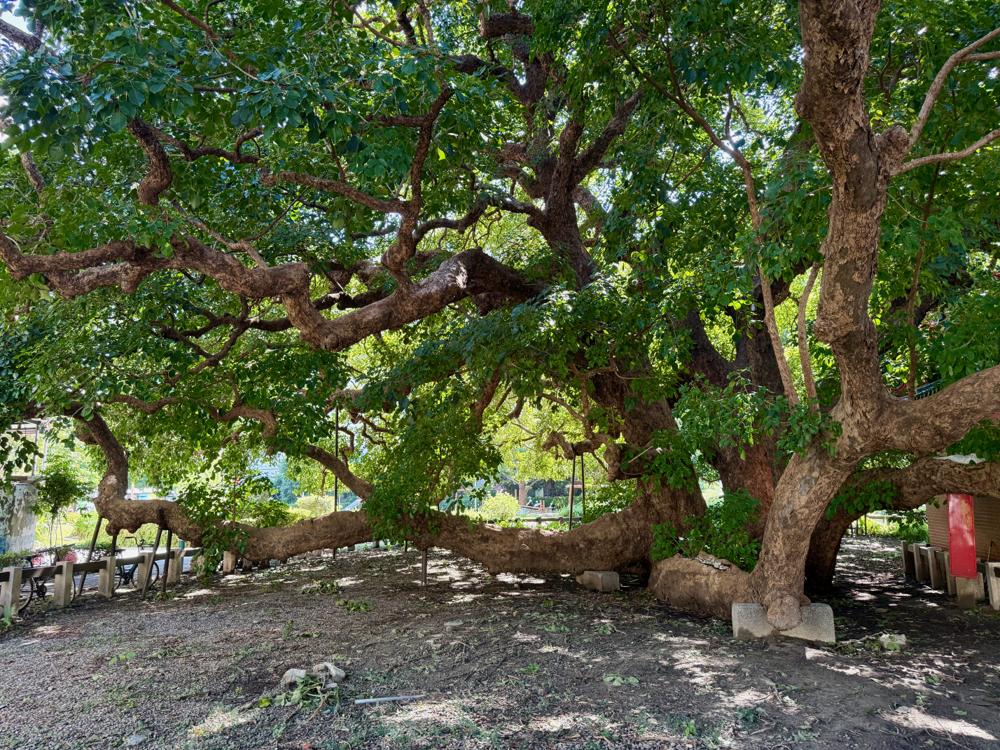
After checking out, we walk to the “Ancient Bishop Wood Eco-Cultural Park”, which turns out to be a fairly small park with a large, 1000 year-old tree. From there we make our way to the LaLaPort mall and browse in the Muji store until it’s time for our train back to Taipei. Our seats include a bento box lunch, but we’re not sure how good it’ll be, so we pick up extra lunch food at a Family Mart.
In Taipei we check back into the same Shangri-La hotel. In the evening we meet up with Evan and his friend Holly to participate in a local activity: indoor shrimp fishing. We rent rods and buy bait, then take seats around one of two indoor pools stocked with large shrimp.
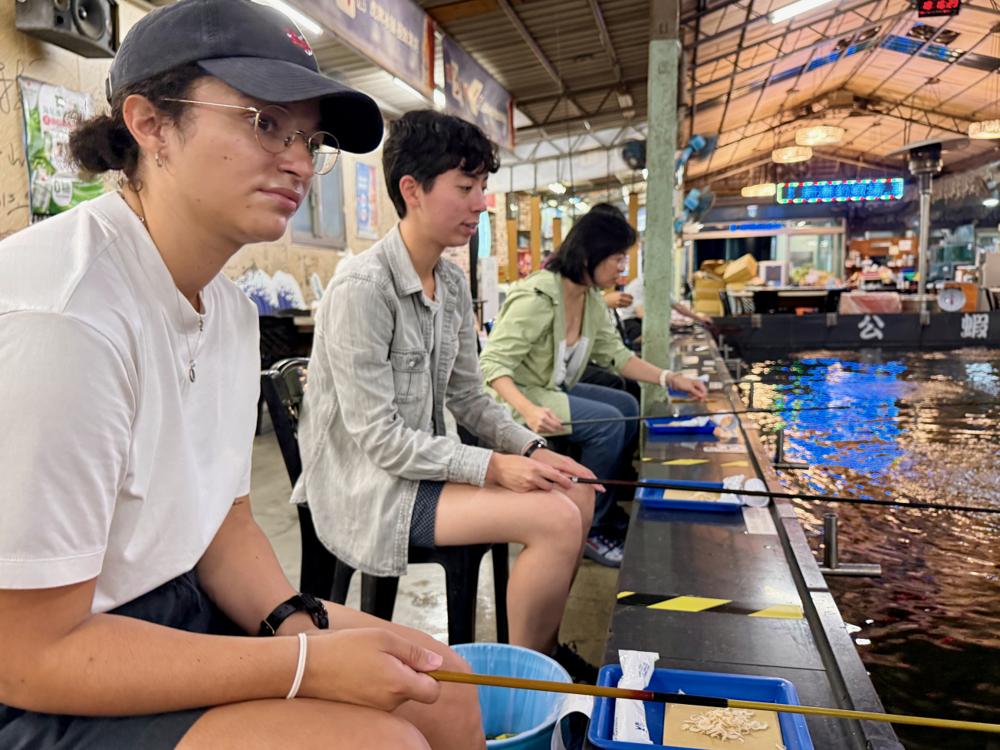
Some of the people around the pool are extremely good at catching the shrimp; we don’t know what we’re doing so make slower progress. Angela ends up catching the most (3), while Jan catches nothing.
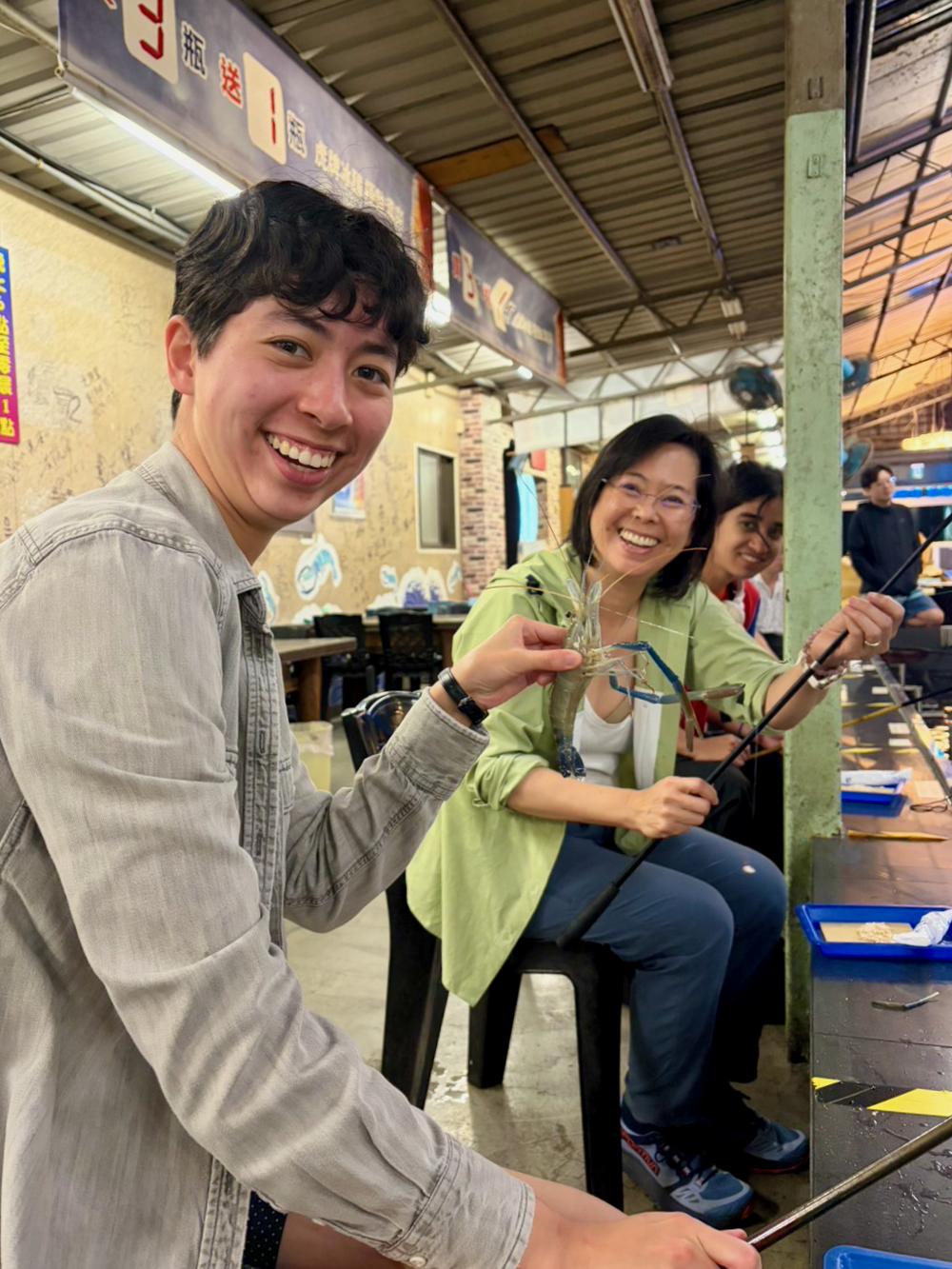
After our designated hour of fishing time is up, we move to the designated grilling area where we cook the shrimp we’ve caught. Evan and Liya were more interested in the fishing part of the experience than the actual eating experience, so Jan ends up having to eat a number of shrimp. We’re all amazed by one man sitting nearby who’s polishing off a mountain of shrimp he caught.
Since the shrimp meal wasn’t very large, we walk to a branch of the Sushiro chain for a dinner of conveyor belt sushi.
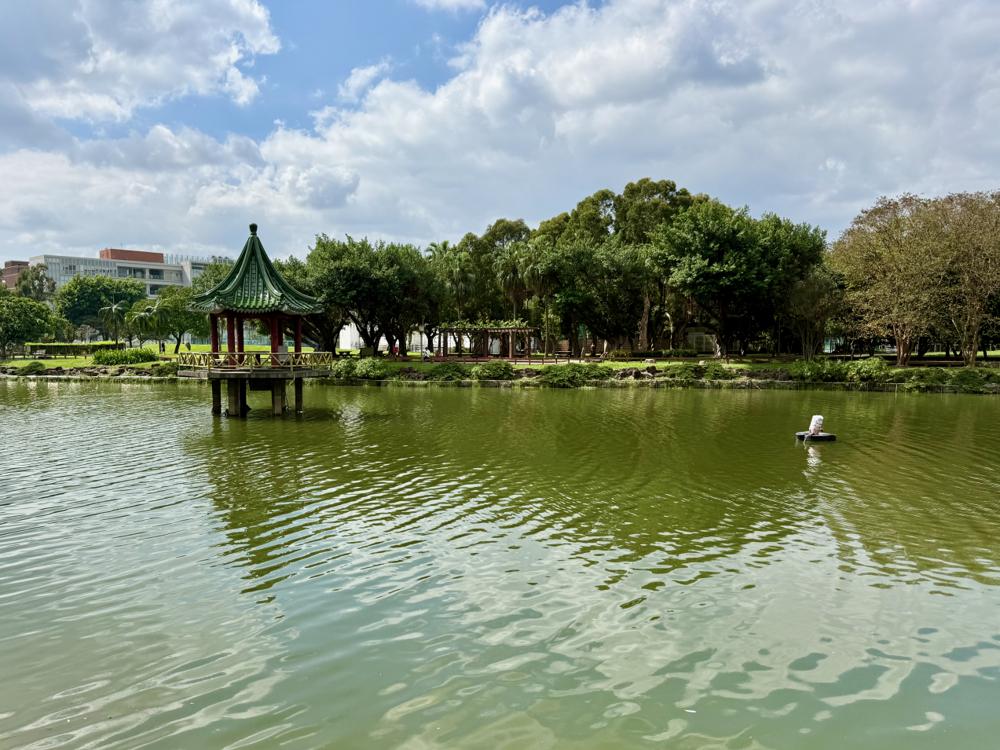
Taiwan family trip, day 9. We start our day at Yolo Cafe which offers thick-cut toast. In the late morning we walk to the campus of National Taiwan University where Evan’s getting his master’s degree in global health policy. The campus includes a number of pretty ponds, including a larger one called Drunken Moon Lake.
We meet Evan at his graduate dorm. At a reception desk, we hand over passports and IDs to receive passes to get inside the building. Evan then takes us up to see his room and we hang out there for a bit. When we go back downstairs, the receptionist is out on a lunch break, so for the time being we can’t get our IDs back.
We make our way across town to the Zongshan district for a lunch at Flipper’s, a place known for their soufflé pancakes. These take a long time to prepare but are good. The main downside is that we are basically eating dessert for lunch, so afterwards we’re all a bit maxxed out on sugar.
After lunch Angela heads out in search of Taiwanese pineapple cakes to bring home as gifts while Jan and Liya go back with Evan to the university campus so we can finally get back our IDs.
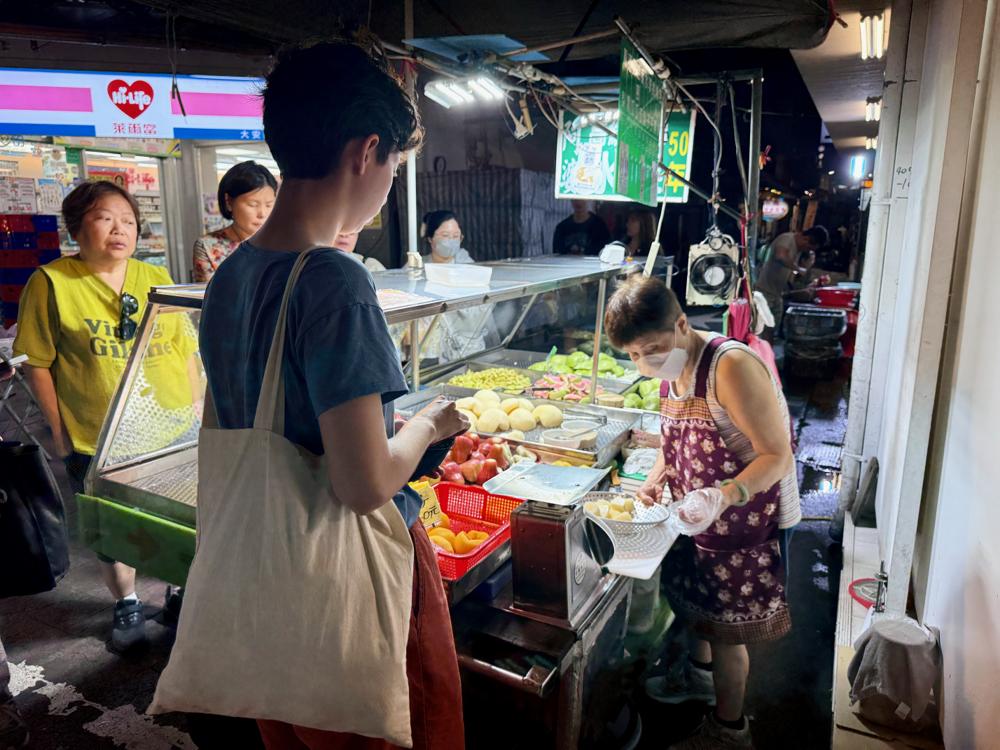
In the early evening, Liya and Jan explore a nearby night market. They’re not really looking to get food, but make a stop at a fruit vendor for snack.
We meet up again with Evan for dinner at a branch of the Haidilao hot pot chain. The food’s good, although the light and noise of the restaurant makes for somewhat overwhelming experience. Jan says it feels a bit like being inside a Don Quixote discount store.
We all take a cab back to our hotel, then we say goodbye to Evan who takes the cab onward to his dorm. We’ll next see him in a couple of months at Christmastime.