Liya heads back to Vancouver and moves into her new apartment in the Kitsilano neighborhood. She’s now further away from the UBC campus and her lab, but closer to everything else: shops, a supermarket, restaurants.
In the afternoon we do a family video call and hold a small memorial service for Mojo, who died earlier this week. We take turns sharing stories about him that we want to remember, and we watch a slideshow of photos that Bree and Jan collected.
More Mojo memories from our memorial service:
Moxie may not be completely aware of what’s happened, but he’s nevertheless been out of sorts the last few days. He meows the way he does when he wants to go outside or receive food, only he doesn’t want either of those things. While Mojo often antagonized Moxie, they were still close siblings who often slept together and groomed each other. At some level, Moxie is making his own adjustment to the loss of his brother.
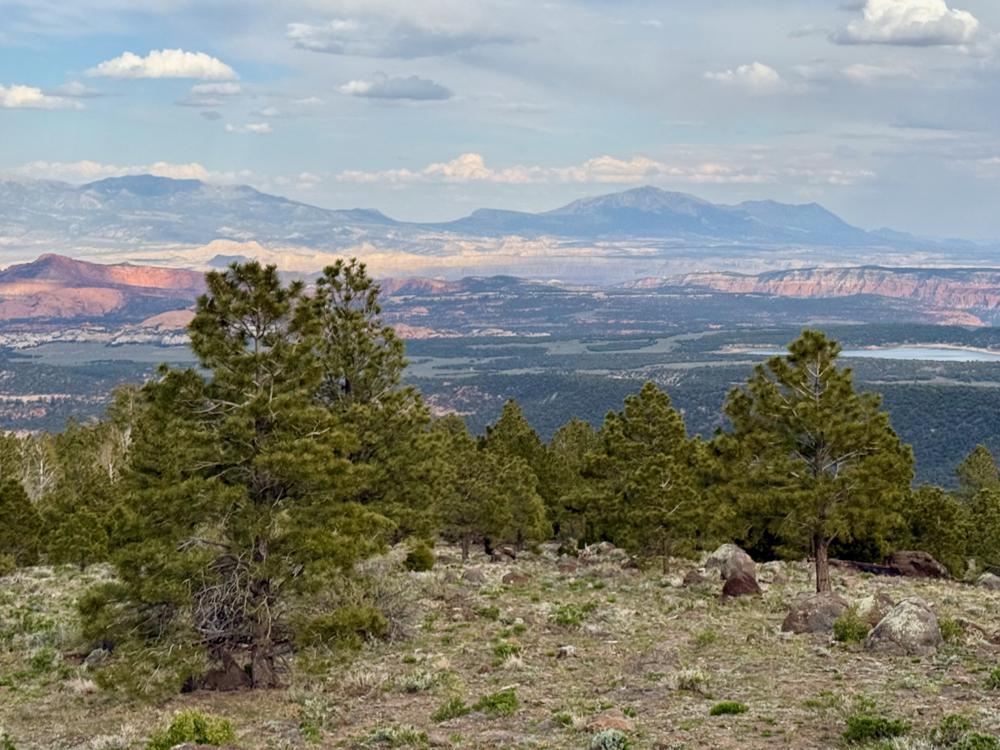
Jan’s Utah backpacking trip, Day 0. Angela drops me off at the airport on her way to work for a flight to Salt Lake City. I’m heading to Grand Staircase–Escalante National Monument for a 5-day off-trail backpacking trip with Andrew Skurka Adventures, the same outfit that led a trip I did in the Sierras 4 years ago.
After picking up a rental car and stopping to buy camping fuel (which I can’t bring on a plane), I make the long drive to the small town of Escalante. I stop for dinner in the tiny town of Boulder at a well-rated restaurant called Hell’s Backbone Cafe. Despite being in the middle of nowhere, comments on the restaurant listing recommended getting reservations. I pull up without any reservation, and manage to get one of the last open seats in the bar area. The food is, as hoped, quite good. After dinner there’s a bit more driving to reach my room at the Loubird Inn, a rustic hotel in Escalante.
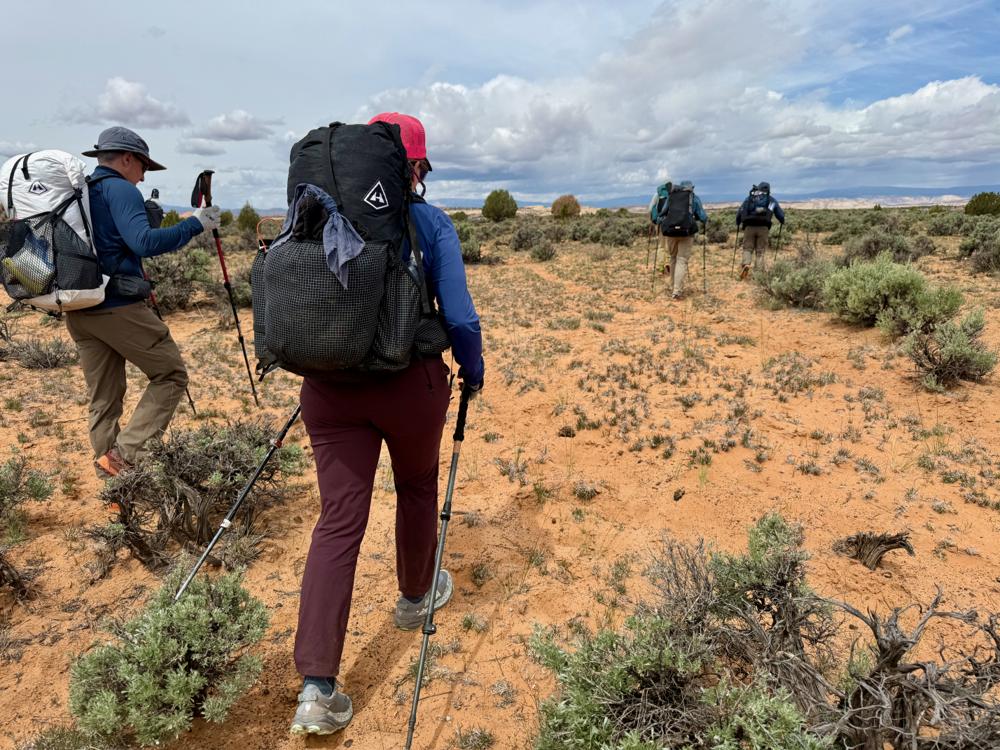
Jan’s Utah backpacking trip, Day 1. The guiding company has everyone starting trips today meet at the Escalante City Park. The company owner, Andrew Skurka, is there to welcome perhaps 60 people going out in eight or so groups. I meet my group’s guides, Jessica and Nicco. Andrew and Nicco were the two guides on my last trip, so it’s nice to meet them again. I also meet my fellow hikers: Bikram, Brad, Chris, Joel, Kym, and Paul. The guides check our gear to make sure we’ve got everything we need, and then distribute the ingredients for the group breakfasts and dinners.
We caravan to a trailhead with a large parking area, then consolidate into a smaller number of cars for the short drive to the smaller trailhead in the Spencer Flats: a large, flat, sandy expanse dotted with bushes, juniper, and pinyon trees. After a bit of orientation, we shoulder our packs and get ready to hike. The focus of this trip is off-trail hiking, so we set out immediately across the flats towards our first goal: a dry canyon called Phipps Wash.
One of the guiding company’s goals is teaching people how to navigate with a map and compass (instead of a GPS and phone). We each take turns navigating the group along a particular compass bearing. Sometimes this can be done by finding a distinct tree in the distance and walking towards it, but the landscape doesn’t offer many such markers. For a long stretch we try an alternate form of “leapfrog” navigation in which a navigator stands with a compass as the rest of the group walks forward; the navigator occasionally shouts for them to adjust their course. When the group reaches the end of shouting distance, a different person takes up the navigator role, and the previous navigator walks to catch up.
We encounter stretches of cryptobiotic soil, a combination of organisms like bacteria, fungus, and lichens. This soil helps plants grow in the arid desert but is damaged by walking on it, so to minimize the damage we walk in a single file and reuse the footprints of the person in front of us. We stop for lunch and find shade in juniper trees. The weather’s sunny — not too hot — but the shade is welcome.
Continuing after lunch, we encounter more and more stretches of slickrock: sandstone that’s actually not slick at all. (Europeans called it that because it’s slippery to horses.) Eventually we navigate our way to the top of Phipps Wash.
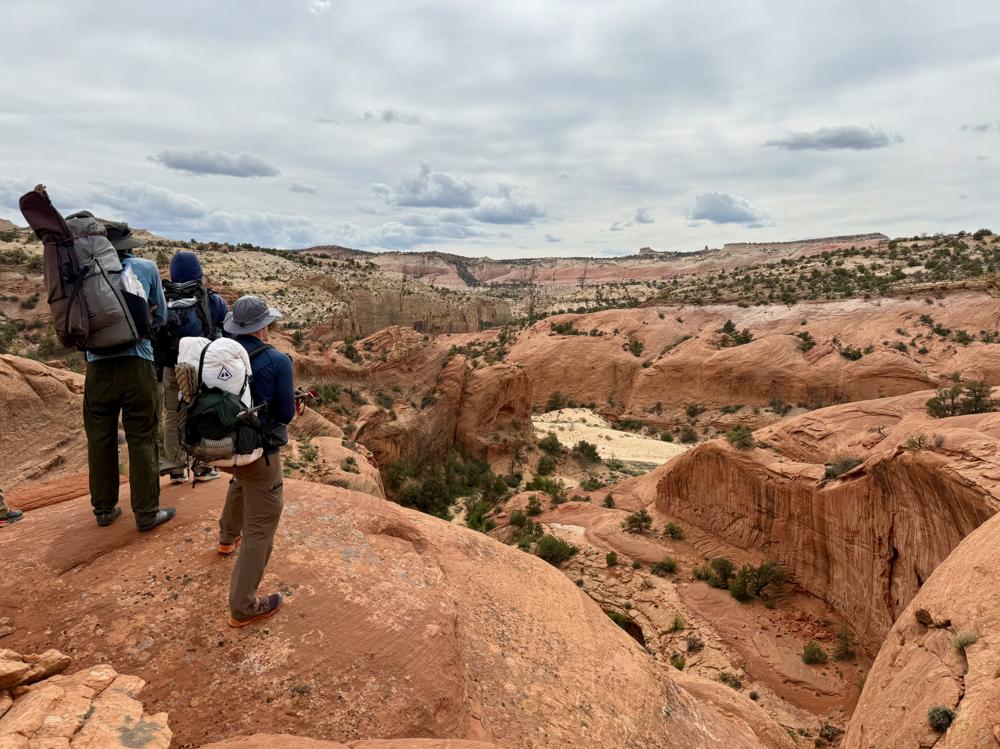
This is one of several canyons we’ll encounter. They’re quite deep (a couple hundred feet, perhaps) and are generally walled by cliffs, so they can only be entered or exited at specific points. I’m pretty uncomfortable with heights, so I haven’t been looking forward to our first descent, but Nicco leads us to a break in the canyon edge to reach a lower bench, then follows a sequence of twists and turns to reach lower and lower levels. We finally stand on the sandy bottom of the wash.
We walk north along the bottom of the wash. Here thin Phipps Creek feeds a comparatively lush ecosystem of trees and grasses. We refill our water bottles, treating the water with a chemical to kill germs and parasites. This threat is not abstract: someone spots a thin, horrific parasite called a horsehair worm wriggling in the water. They don’t infect people — but you wouldn’t want to drink one.
After descending the wash for a while, the guides lead us up a side canyon so we can camp at today’s destination, Phipps Arch. This requires some a short scramble up a slope steep enough to present some difficulty. Nicco and Jessica set up a hand line of thick webbing with handholds tied into it to assist our climb. A short while later, we reach a high amphitheater dominated by a blocky tower and a wall with large, eye-shaped arch in it.
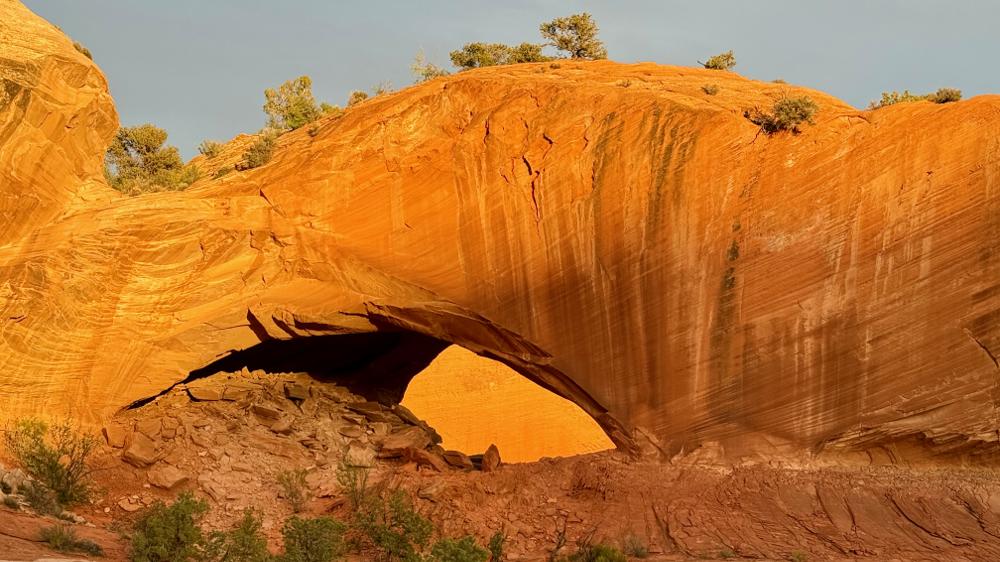
We set up camp. Since the weather’s fine, most of us opt to just set up our air mattresses and sleeping bags on the ground, spreading out to find flat spots out of the wind. We gather in a central spot to have dinner. The guiding company’s dinners are generally good, typically some sort of rehydrated starch (rice, oats, potatoes) combined with dried meat, cheese, nuts, or vegetables and spices. They also tend to be generous portions, so as expected it takes me a while to actually finish my dinner. (There’s nowhere to dispose of leftovers — I would have to carry them out.)
We’re all in bed by the time it gets dark around 9:00 pm. The skies in this part of Utah have nearly no light pollution, so in the middle of the night there are countless stars overhead. I’m glad I brought a sleep mask — when the moon rises, it’s extremely bright.
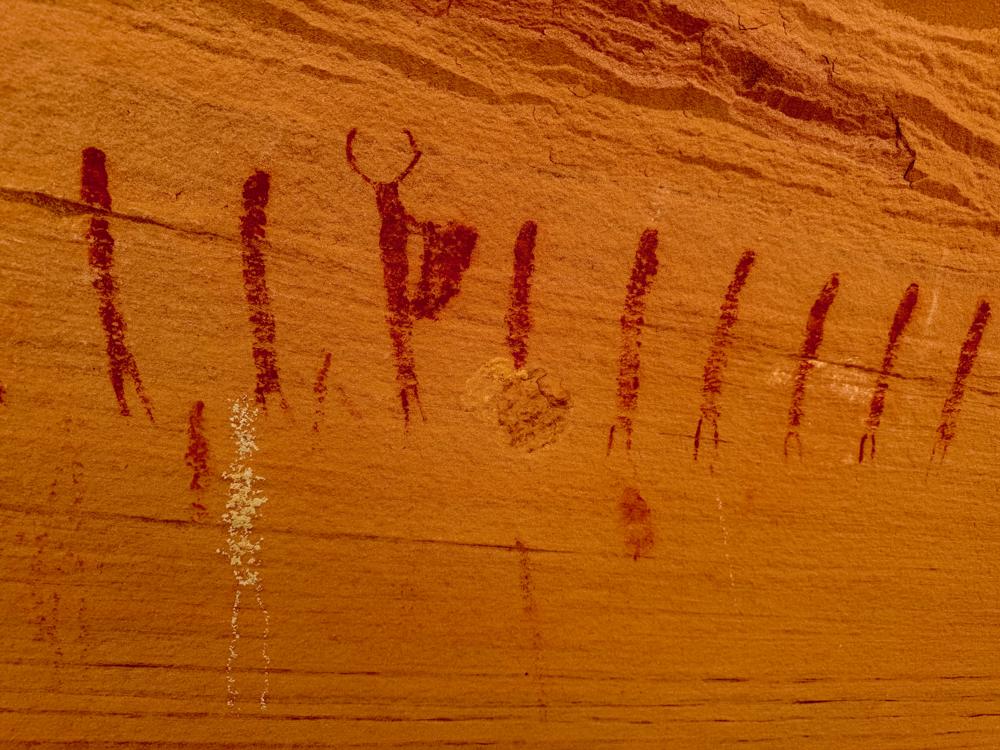
Jan’s Utah backpacking trip, Day 2. After breakfast, we begin our day’s hike by hiking out of our campsite through Phipps Arch. Jessica claims it’s a “portal”, and we’re now walking in an alternate world — a joke that we’ll reference for the next several days. We descend the steep slope we climbed up yesterday, again using a handline for safety.
We follow the bottom of Phipps Wash north to reach the Escalante River. It’s the largest river in this area, but given the size of the enormous canyon it’s carved, it’s surprisingly modest in size: at this time of year, perhaps only twenty feet across and a foot or two deep. It’s a gorgeous river nevertheless, and surrounded on both sides by sandy banks and cottonwood trees. In narrow points of the canyon the river’s banks disappear, so we walk directly in the river.
We follow the river downstream. At one point, Nicco stops the group so we can explore a small cave. Such caves would have served as shelters for the various peoples that lived in this area before Europeans came. Further downstream, Deer Canyon enters from the left. We drop our backs in a shady spot and then walk up Deer Canyon to see some petroglyphs.
Continuing down the Escalante, we reach a point where we leave the river and begin ascending out of the canyon on slickrock to reach a high, flat, bench of land between the Escalante and a tributary called Boulder Creek. In this stretch, Kym spots an arrowhead lying on the ground. It’s been knapped on both sides, and is still somewhat sharp. We leave it where we found it. Kym turns out to be extremely sharp at spotting these — over the next few days she finds a total of four.
On the other side of the bench, we descend to Boulder Creek. I request a short rest break, and take advantage of it rinse off in the river and rinse out the outfit I’ve been wearing to this point. It feels wonderful to wash off the sand and grit.
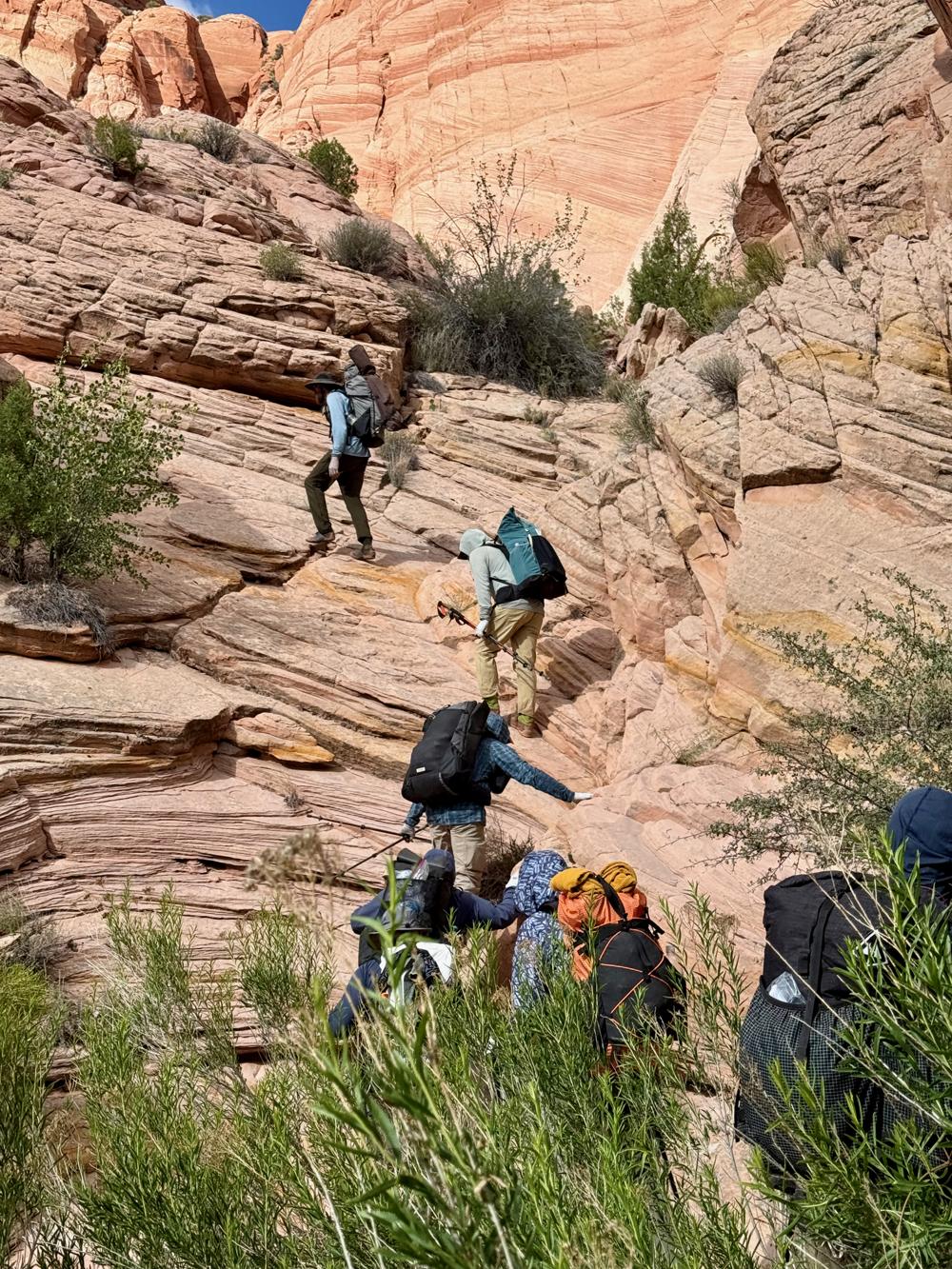
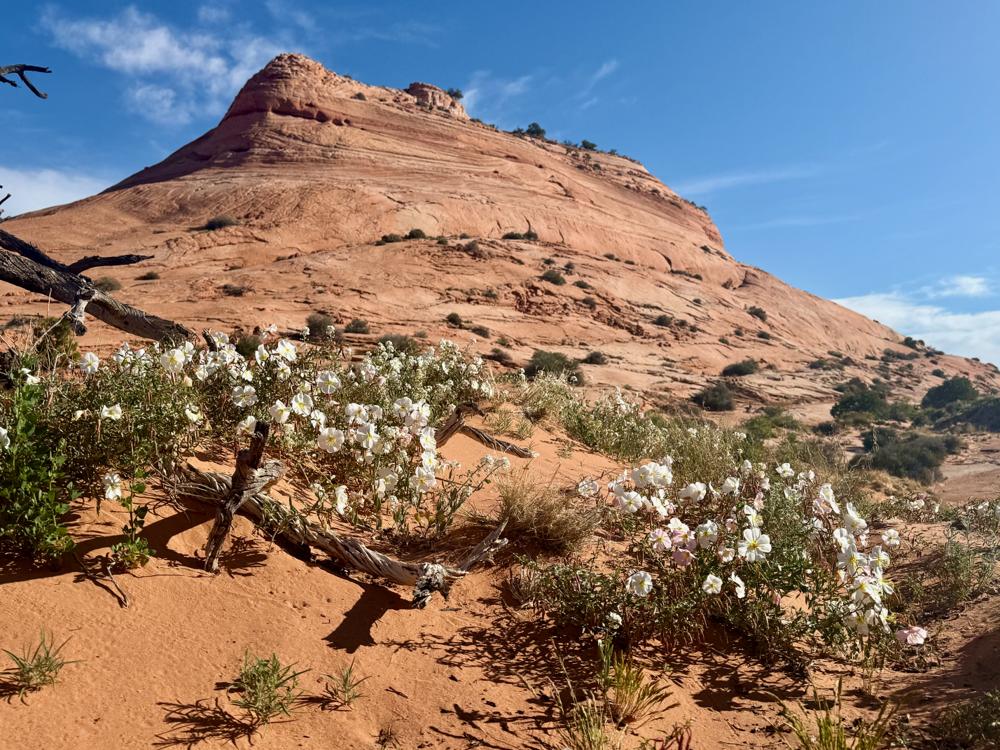
We head up Boulder Breek, and Nicco leads us up out of the canyon to a higher basin of slickrock surrounded by small peaks. Along the way there are plenty of flowering prickly pear cactus and other flowers. Jessica and Nicco remark that this is the best they’ve ever seen the wildflowers in Escalante. We stop to camp near some “tanks” — holes carved in the slickrock, some of which contain water we can use for dinner and breakfast.
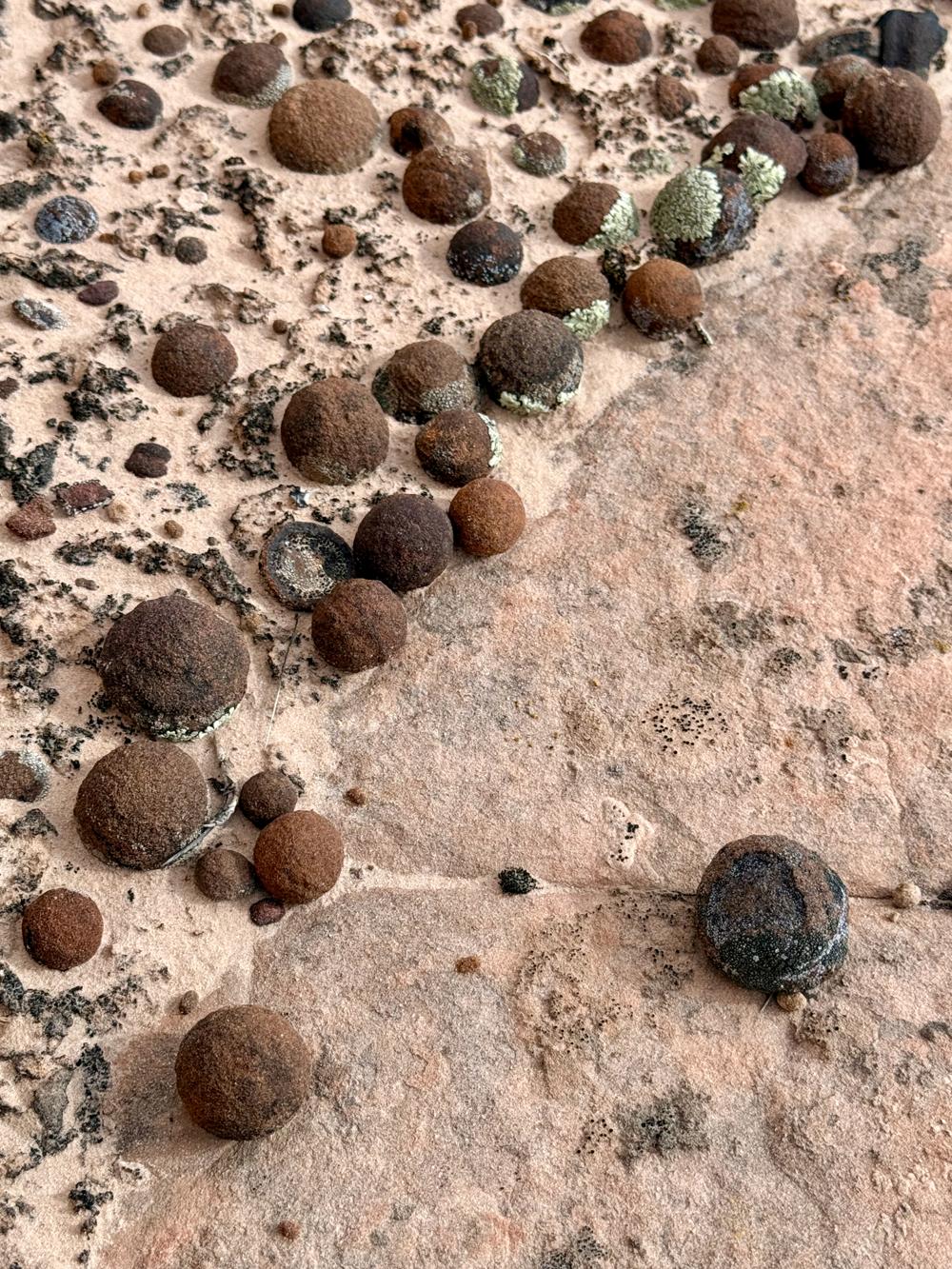
Jan’s Utah backpacking trip, Day 3. We start our day’s hiking up climbing out of the basin we camped in and up onto a wide flat area called the Brigham Tea Bench. In some stretches the slickrock is covered with countless “Moqui Marbles”: dark spherical balls which are natural concretions of iron oxide. We cross the bench all morning, and eventually drop down into a canyon called simply The Gulch.
We have lunch by the small creek at the bottom, but there’s very little visible water in the creek. There is, however, a lot of water soaked in sand — in one place I poke the sand with my trekking pole, and the sand undulates. It’s quicksand. It’s shallow, so if one were to get caught in it the worst that might happen would be losing a shoe, but it’s still crazy to see solid-looking sand wobble.
We hike down The Gulch, occasionally fighting through the brush on the banks, or walking in the dwindling creek. We reach a natural amphitheater called The Cathedral, where water has cut away the cliffs on both sides so that they both overhang the creek. We stop for a break, during which time Nicco unstraps the small travelling guitar he carries on his pack. He sings Leonard Cohen’s “Hallelujah”, and the natural acoustics and setting give the song extra emotional heft.
Jessica and Nicco offer us the option of stopping early to camp in The Gulch, which we’re all fine with, but unfortunately there’s no surface water in the creek near the potential camping site; we’d have to walk a way for it. We decide to keep descending The Gulch until its confluence with the Escalante, which has ample water.
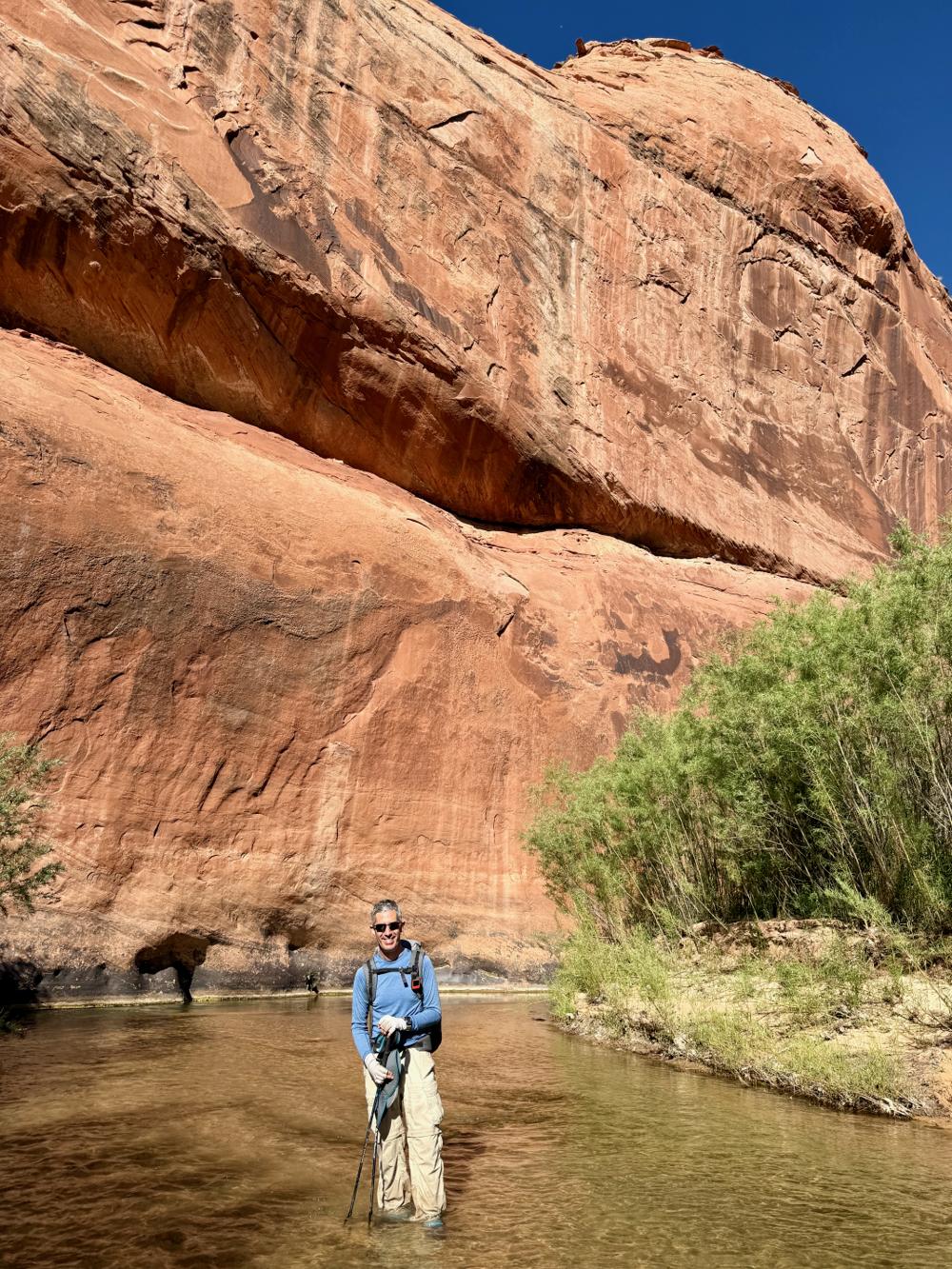
We walk down the middle of the Escalante for a short distance to reach a large wooded area with a sandy beach, and set up camp there. I’m happy to get another chance to rinse off me and my clothes. We have a nice dinner by the river — it feels like a beach party.
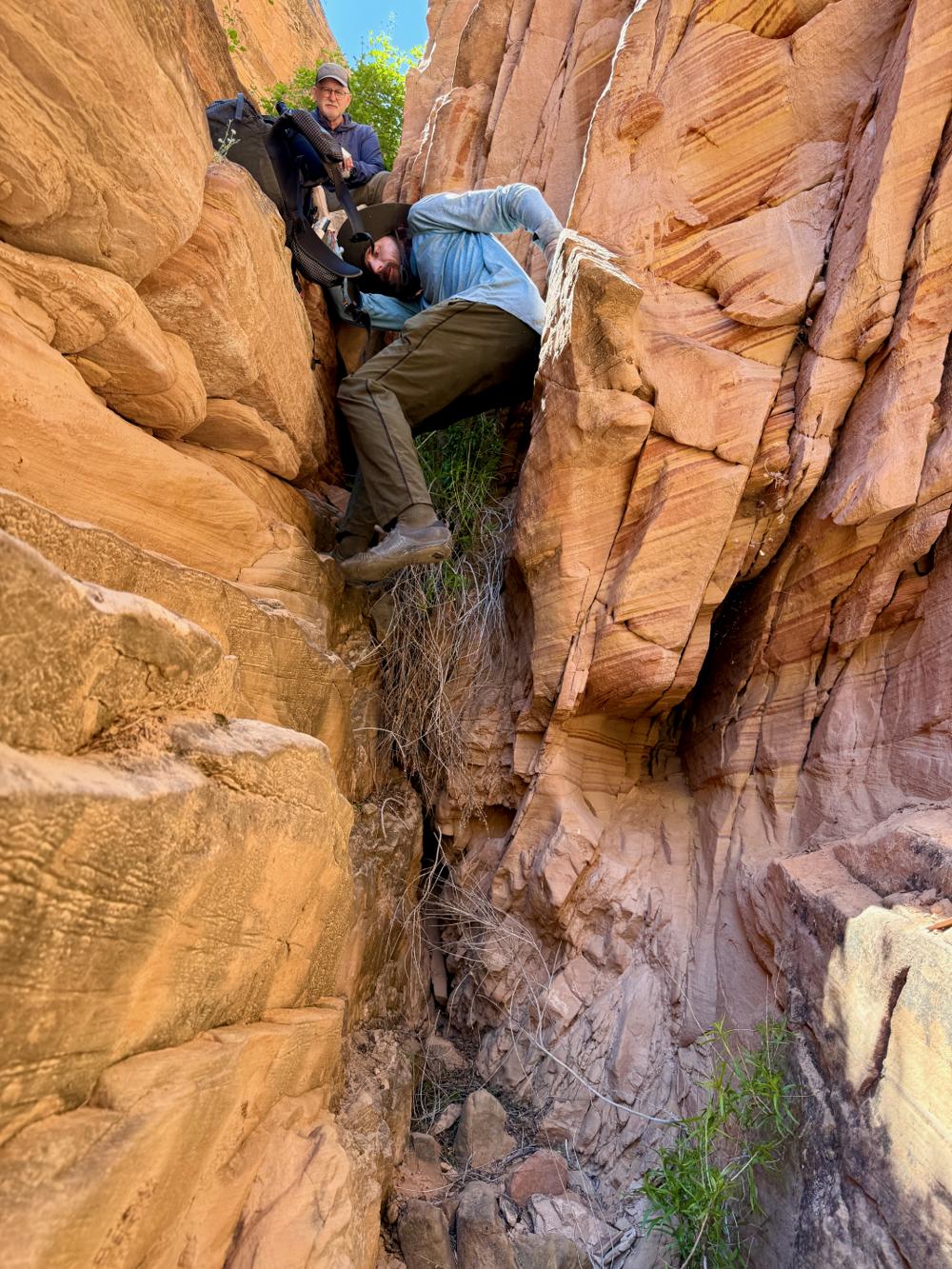
Jan’s Utah backpacking trip, Day 4. After breakfast it’s my turn to navigate again, assisted by Brad, so after getting a description from the guides about where we’re going, we walk in front as the group makes its way up the Escalante for a bit. Brad and I find the slot canyon on the left we’re looking for. It’s choked with boulders, but there are a series of rough “cowboy steps” that early ranchers built with wood and rocks so they could get cattle into and out of the Escalante’s canyon. This is going to be our exit from the canyon, and judging from the narrow, steep path, those must have been some brave cows.
We eventually reach a small plateau, and cross that to descend into Spencer Canyon. At this point we’re following a route that neither of the guides has personally hiked before, so they’re not entirely sure what kinds of obstacles we’ll find. As we hike up the canyon, there are a number of minor steps up in the rock that take a few seconds to negotiate, but nothing that prevents progress.
We pass a small puddle with water, then at the head of the canyon reach a larger puddle. Jessica tells the group we’re going to head back to another slot on the side to exit Spencer Canyon. Depending upon the availability of water a spot we’ll reach later in the afternoon, this might be the last water we’ll pass today, so she tells us all to fill up with 4 liters of water. That’s nearly 9 pounds of water, so a significant addition to our pack weight. Nicco and I decide that we’ll save some work by refilling when we get back to the smaller puddle. That water turns out to be far more… lively, with plenty of bugs on the surface and things swimming in it. We do our best to avoid scooping anything living into our water bottles. Chemicals can render the microbes in the water harmless, but they can’t remove the critters.
We enter the slot canyon on the side, and though it’s narrow, it’s a nice shady spot so we sit down in a long line to have lunch. After lunch, we begin clambering up rocks out of the slot canyon. Nicco scouts ahead, and reports two challenges. The first is a tall step, maybe 10 feet in height, that requires a bit of climbing. We take turns negotiating this, handing our poles and packs up and then climbing up after them. The second obstacle is a narrow fin of rock we have to walk up, with bushes on either side. The climb isn’t bad, but as each person passes by the bushes, the bushes send up an enormous cloud of pollen. This is somewhat suffocating.
We finally exit the top of the slot canyon, having now reattained the Spencer Flats where we parked our hike a few days ago. Tonight we head to a different corner of the Flats. We eventually reach a watering hole that still has good water, so Nicco and I happily empty our water bottles over some plants so we can fill up with better water. There are a number of other watering holes nearby, one of which is out of sight; cows occasionally pop up from that watering hole to look at us.
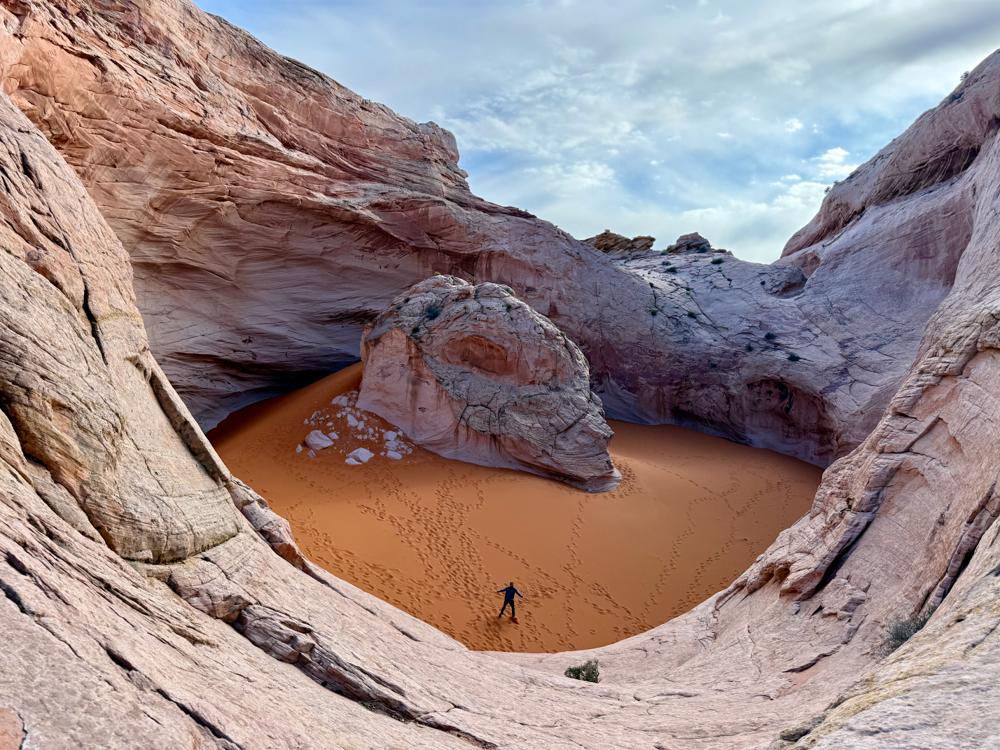
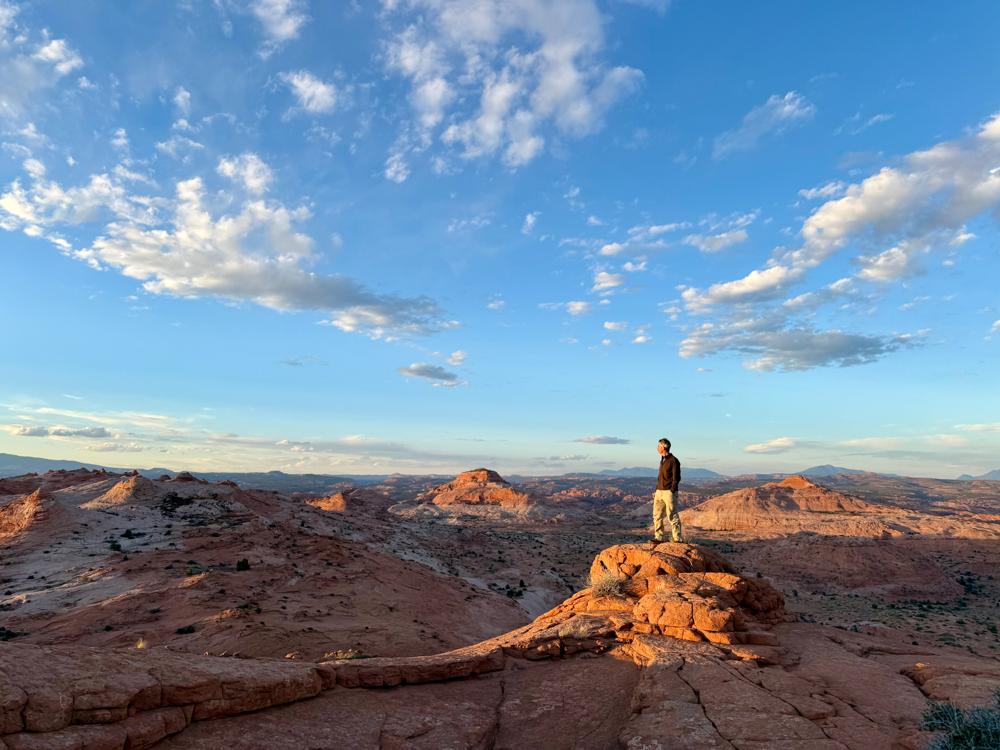
From the watering hole we climb to a rocky hill and traverse its side to reach a geological oddity called the Cosmic Ashtray. This is a huge rocky bowl filled with sand; the center of the bowl has a large, vaguely skull-shaped rock. Some of the group climbs down into the bowl, but I’m happy to stay at the edge. We climb from that point to the top of the hill, reaching a summit that affords 360° views of the desert. This is our final campsite of the trip and it’s gorgeous.
Back in the real world, Angela’s mom, E-moon, has a bad fall. She’s taken to the hospital and they diagnose a broken rib and a punctured lung. She’s generally okay but this is all a tremendous inconvenience. E-moon and Cheng-nan recently moved from their longtime home in McLean, VA, to the Los Angeles area, and they’re just beginning to settle in.
Jan’s Utah backpacking trip, Day 5. We enjoy a final breakfast from our viewpoint looking far out over the Utah desert. After packing up, it’s just a matter of a couple of hours’ walking to bring us back to our parked cars. We shuttle everyone back to the place we dropped the other cars, and begin saying our goodbyes.
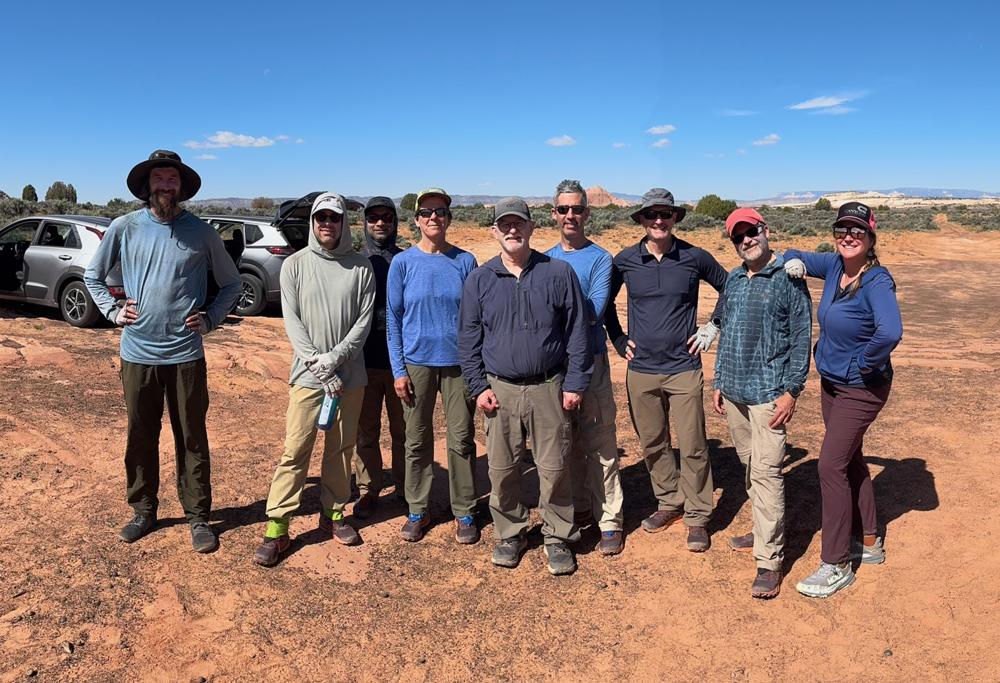
I join the bulk of the group in heading into the town of Escalante for a pizza lunch at Escalante Outfitters. I make my own goodbyes and then get back in the car for the 5-hour drive to Salt Lake City and a flight home.

Bree and a number of people involved with Choate’s theater program attend the Stephen Sondheim Awards, a regional awards program for high school musical theater in Connecticut and Massachusetts. Bree wins an award for her costume work on Choate’s production of, “The Old Man and the Old Moon”. Bree’s friend Xyla is recording video of the ceremony, and when Xyla hears Bree’s name get called, they squeal so excitedly they accidentally stop the recording.
When Bree receives the award, she discovers the curse of having a Slavic last name in the U.S.: the organization giving the award has engraved it with “Bree Mikovsky”. They had actually sent a list of names to the school for the students to check, but Bree had figured she wouldn’t win anything so didn’t bother correcting it.
In his master’s program in Global Health in Taipei, Evan is meeting students from all over — particularly from a number of small countries that are willing to risk China’s ire by having some degree of a close relationship with Taiwan.
A case in point: Gambia, officially The Gambia, is continental Africa’s tiniest country, being essentially a single river valley of the lower Gambia River. The Gambia and Taiwan get along, and Taiwan makes it easier for Gambian students to study in Taiwan.
When Evan mentions a Gambian friend, Jan says: “That’s cool that you have a friend from The Gambia.” Evan clarifies: “I have two friends from The Gambia.”
Jan makes his way to Wallingford, CT, to attend his 40th Choate reunion. Bree is just two weeks from graduation, so in two weeks Jan will come back with Angela to watch Bree graduate.
Jan arrives in Wallingford around 8:00 pm. This is convenient timing for Bree — she accidentally slept through dinner, so Jan can take her off campus for a late make-up dinner.
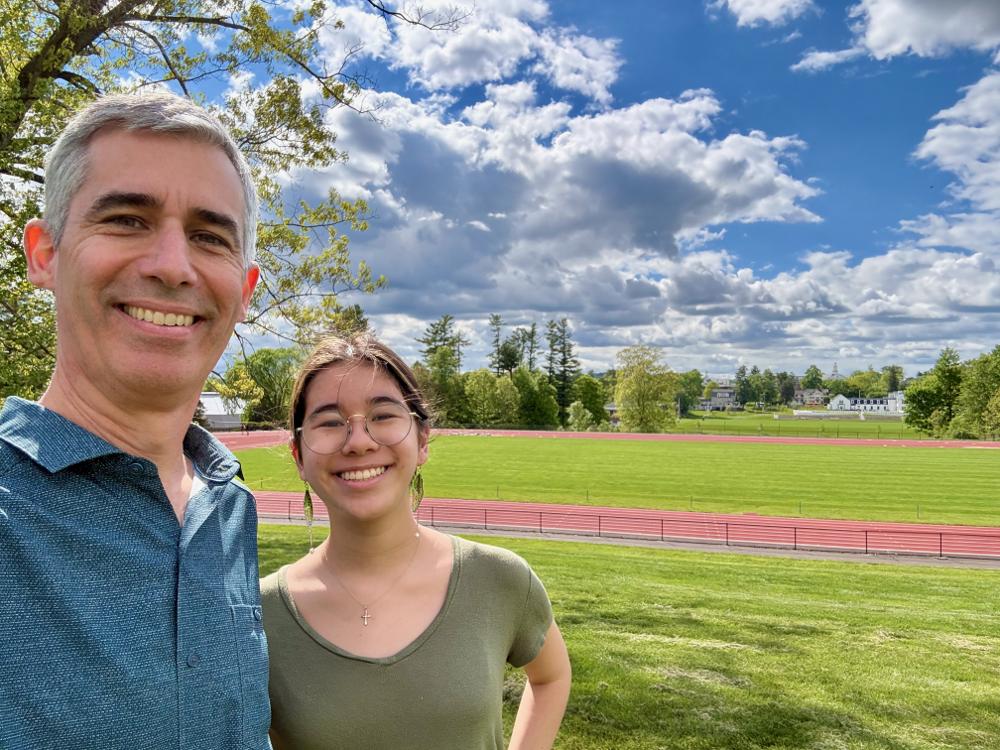
Choate reunion, Day One. Jan and Bree have breakfast at the cozy Bee’s Knees Cafe, arriving early enough to beat the rush. It’s going to be a gorgeous weekend on campus, and it’s nice to make the walk to town and back.
Bree had notified Jan that the school seniors are currently engaged in a multi-day game of “Assassin”. Each senior playing has the name of another senior they have to “kill” (essentially, tag). The killer then has to go after whomever their victim had been designated to assassinate; play continues until a single student is victorious. Bree was happy to be eliminated early on, as the game made simply moving about the campus stressful. One rule in the Choate game is that a senior can make themselves temporarily invulnerable by walking around holding a spoon to their nose. Jan is glad Bree had warned him about this part, as it’s pretty weird to see the spoon behavior in action without any explanation.
Today alumni are allowed to sit in on designated classes, but in the afternoon Jan’s able to sit in on Bree’s math class instead. The students are taking turns presenting a topic to the class, and today one student gives an introduction to a branch of topology called knot theory. Next week, Bree and a classmate will go into more depth in knot theory. After the class, Bree and Jan go for a long walk through a forest on the school’s cross-country running trails.
The returning alumni classes meet for dinner in the Hill House dining hall. Jan reunites with a number of people from the class of 1986, and is relieved that among the people he barely remembers, there are some people he’s actually looking forward to catching up with. The alums sit at the big wooden tables for hours, yelling stories at each other to be heard over the din. At one point in the evening, Jan’s roommate, Tolomy, arrives with his wife Danielle.
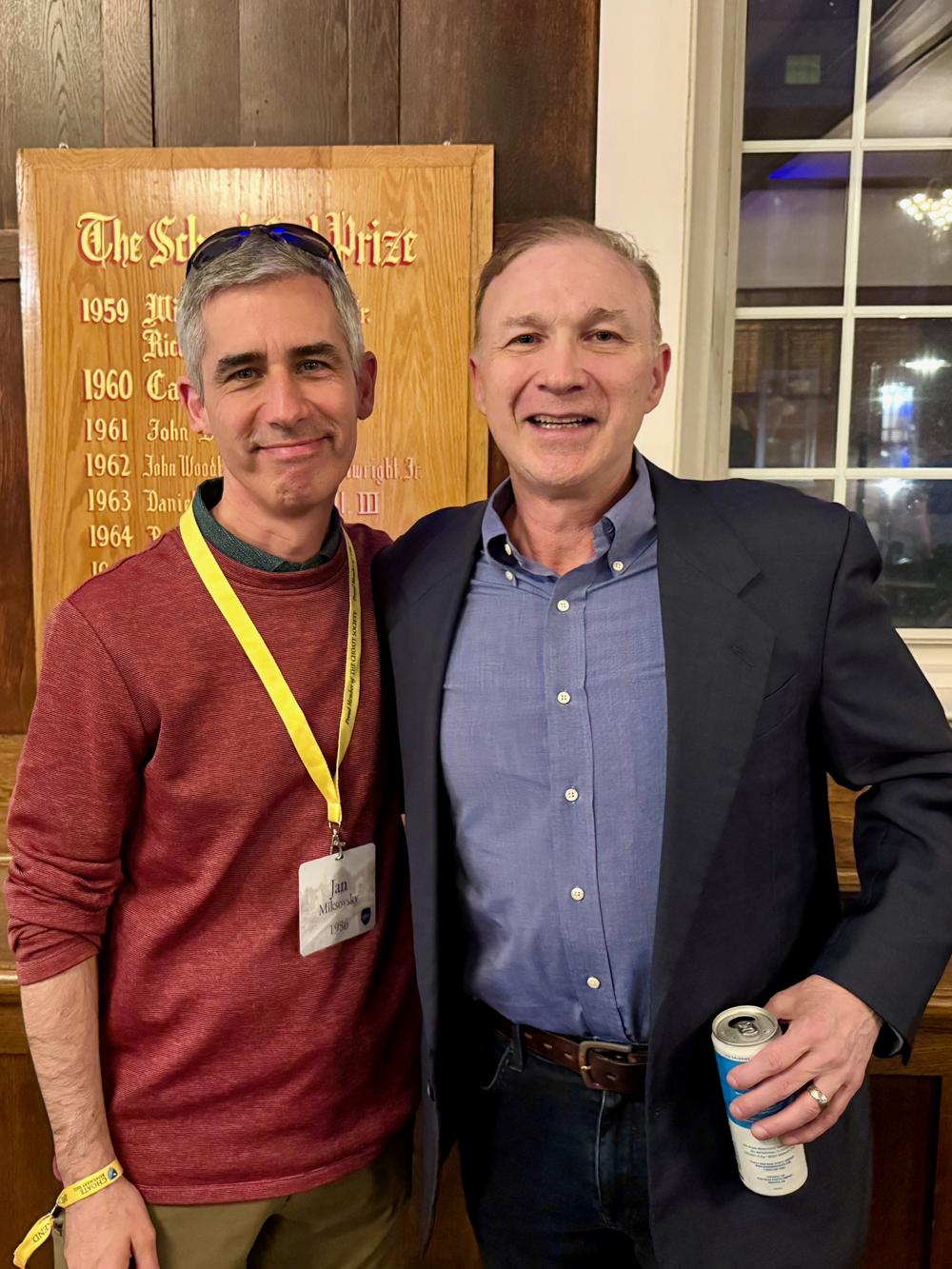
Jan and Tolomy are glad to see each other again; it’s been 15 years since they last attended a reunion.
Choate reunion, Day Two. Jan attends a talk by the head of school, Dr. Alex Curtis, then walks with Bree into town for lunch. Bree’s happy to have so many opportunities to eat food off campus this weekend.
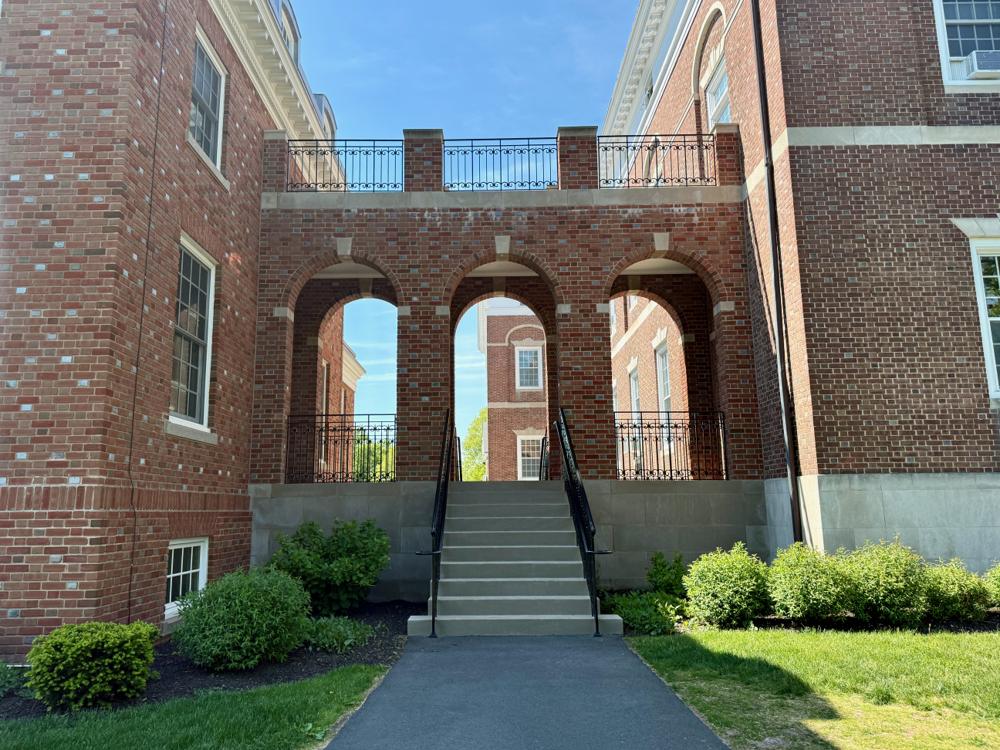
In the afternoon Dr. Curtis gives a second talk on the architecture of the school. A small part of the talk touches on the recent restoration work on Hill House following a fire. This part explains a mystery from the start of Bree’s time at Choate, when she posed for a picture in the same archway that Jan had posed in 40 years earlier. When they looked at the two pictures, there were some small, inexplicable differences in the detail of the brick arch. Now we know that the entire archway had to be rebuilt, and shrunk from five arches to three.
Jan also takes a tour of the school’s Kohler Environmental Center, a small campus a short drive from the main campus. The self-contained residence, education, and research facility is only about 15 years old, so came long after Jan and Chris’ time at the school.
Jan attends the big reunion dinner in a huge tent that’s been setup on a lawn. He breaks away to have a separate dinner with Bree in town, then returns for more deafening noise and shouted stories.
Bree and Jan have a final breakfast together in Wallingford, this time at Le Jardin Cafe. Bree spends the morning doing tech work for the school’s upcoming production: a musical version of Shakespeare’s Twelfth Night. Then the two have time for one final meal in town, plus a stop at a market so Bree can pick up some more food to keep in her room.
Bree returns to her dorm, and Jan makes the drive back to JFK Airport. The 2-hour drive turns into a 3-hour drive, and the TSA line inside is a zoo, so despite having left plenty of time to get to the flight, Jan ends up sprinting all the way to the last gate in Terminal 8 and barely makes it before they close the door.
Liya has been overseeing a couple of undergraduate students in her lab this year. She is learning that not all students are thoughtful and meticulous enough to do lab work. Preparing samples or conducting tests are procedures that can have many steps, and without proper care it’s easy to miss a step or do it out of order. And if you have to titrate a tiny bit of liquid to 100 little tubes, it’s easy to lose your place or accidentally dip the tip of the titration device into a sample and contaminate future samples.
The consequences of a mistake go beyond messing up an experiment. If a lab’s feedstocks of cultures become contaminated, all of the lab’s work might get ruined for months. This leads to some hard questions about how much supervision or freedom a particular undergrad should be given.
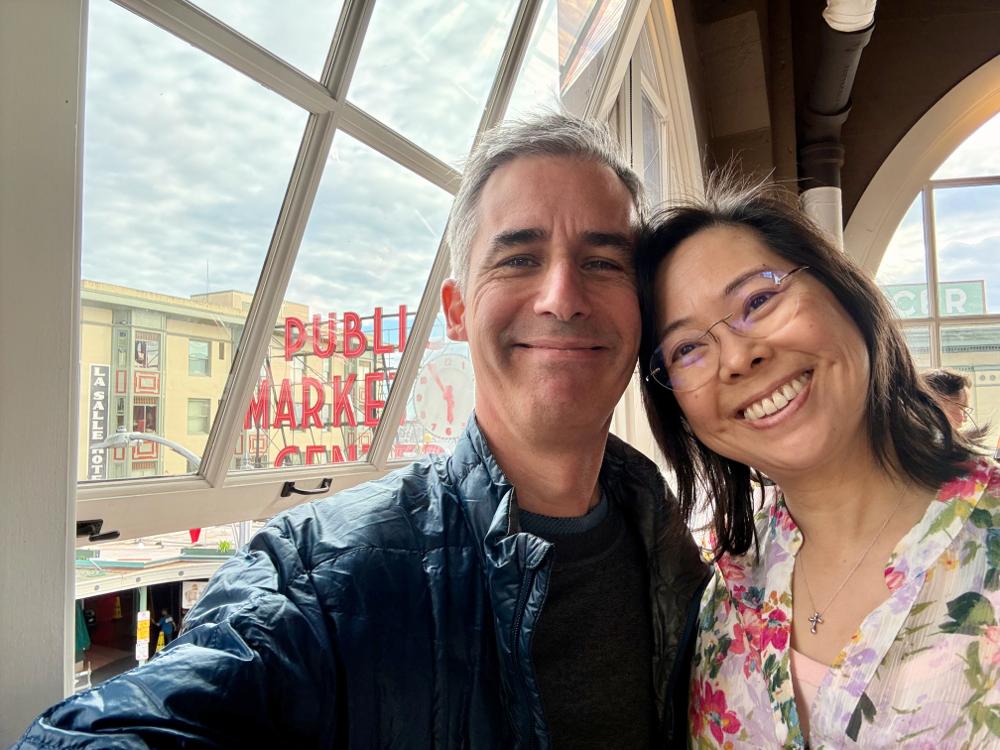
We go downtown to see the last lecture in this year’s National Geographic Live series at Benaroya Hall. Before the lecture we have a great dinner at Matt’s in the Market, sitting at a table overlooking Pike Place Market.
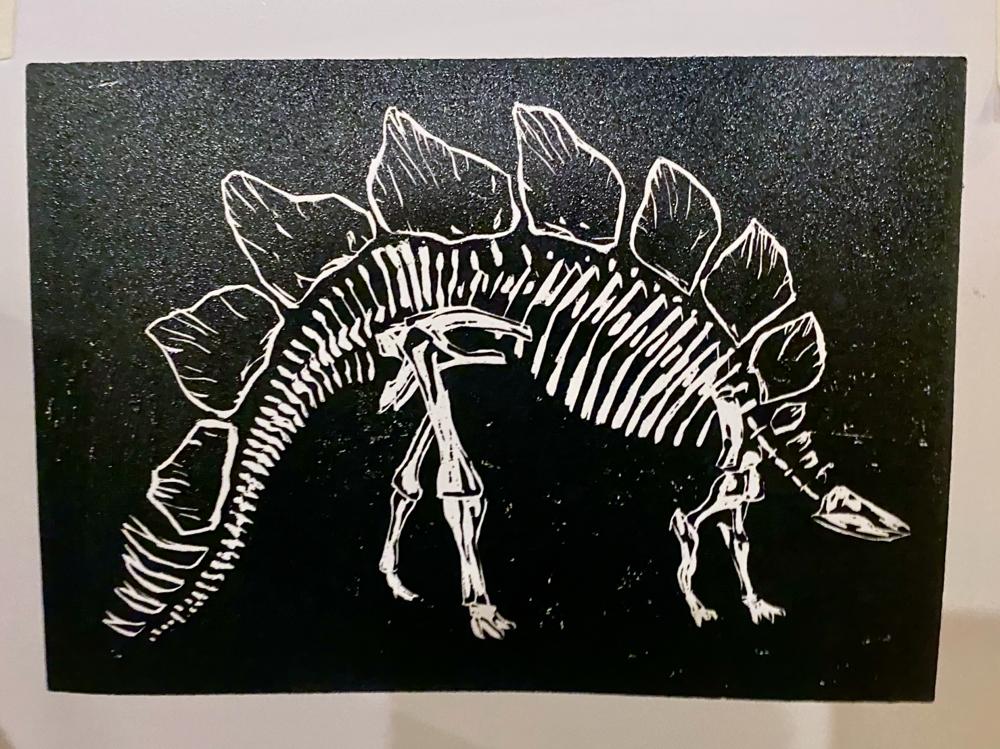
Evan has fun trying his hand at carving a woodblock for printing.
Bree texts a cryptic message: “I am now topologically a different shape!!”
In the mathematical field of topology, two objects are considered to be the same shape if they have the same number of holes going all the way through them; the rest of the shape doesn’t matter. In a classic example, a doughnut and a coffee mug are the same shape because they each have a single hole (for the mug, the hole formed by the handle).
Jan correctly guesses that Bree’s gotten a new ear piercing.
Angela and Jan travel to Choate for Bree’s graduation. This is the third time Jan’s been on the East Coast in two months.
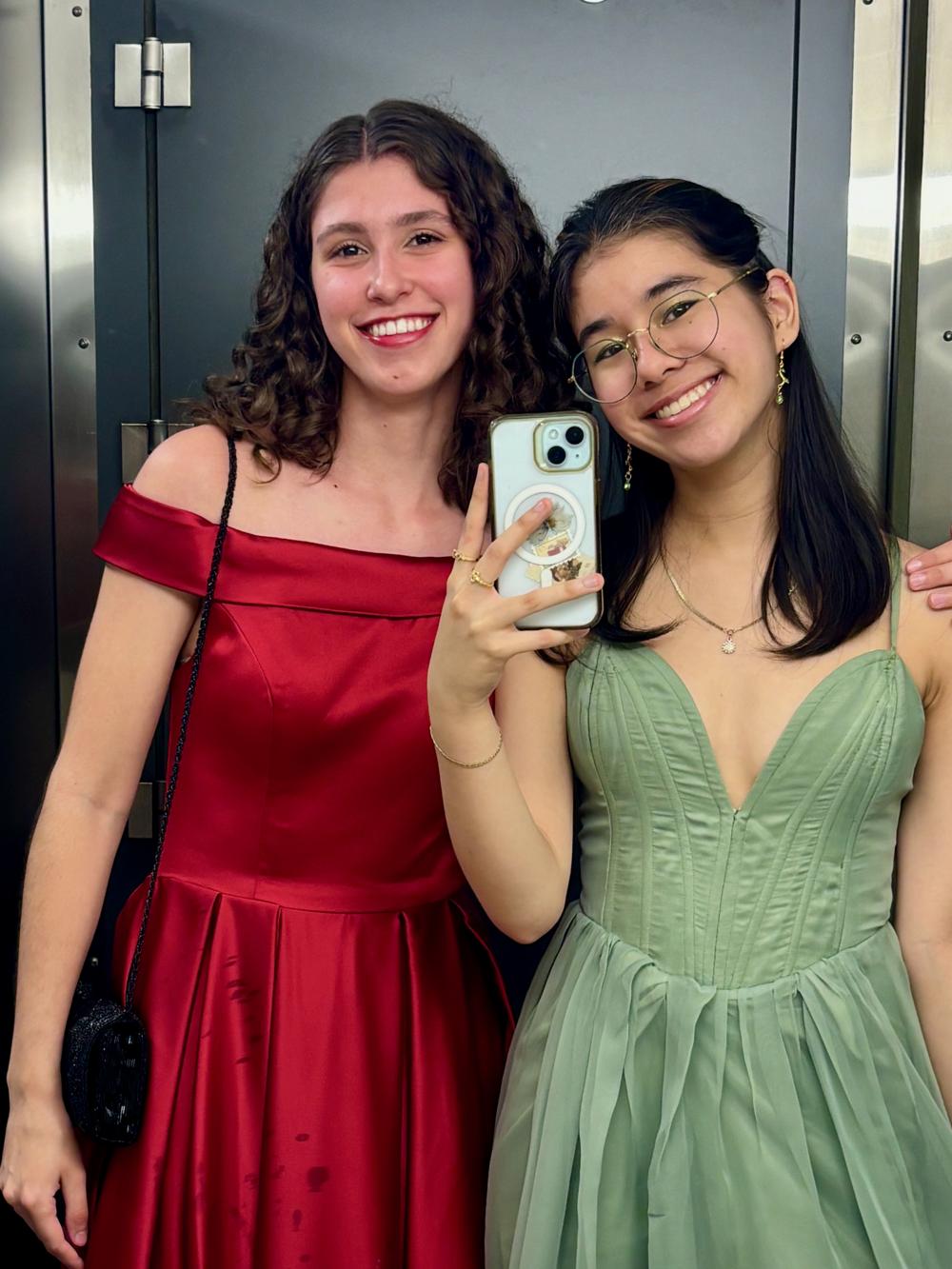
Meanwhile, at Choate, Bree works madly to finish sewing her dress for the school’s Last Hurrah prom. She finishes it just in time, stopping to take a photo with her friend Evelyn.
At Choate’s year-end Prize Day ceremony, Bree is awarded the Christopher L. Rives ’76 Prize for excellence in technical theater. She also gets an honorable mention for advanced mathematics.
Immediately before the ceremony, Bree decided that the vintage necktie she’s weaing is too long, so cuts a chunk off the bottom. She brought sewing gear with her to the auditorium, and while waiting for the event to start she finished a new hem for the tie.
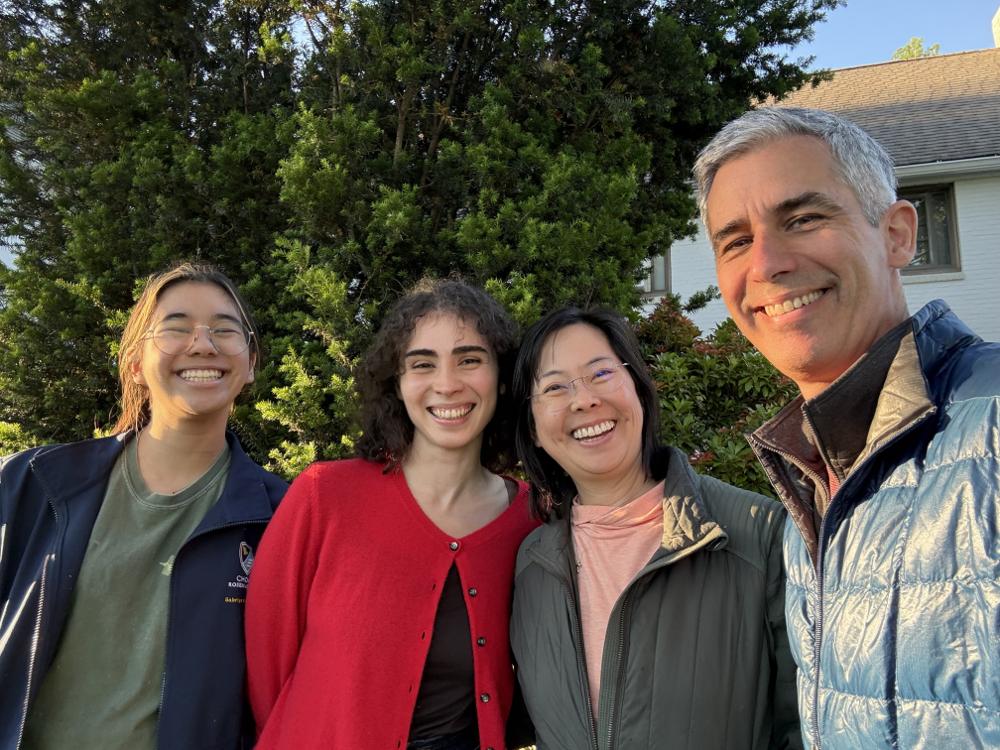
Evrim takes the train from Providence to join us for the day in Wallingford. We spend most of the day helping Bree take care of various errands and pack up things in her room. We also attend the Baccalaureate service in St. John Chapel; chat with Bree’s house advisor, Kathryn; and go for a little walk around campus.
We finish off the day with pasta at La Piazza; our meals are good but the portions are 2–3 bigger than what we can eat.
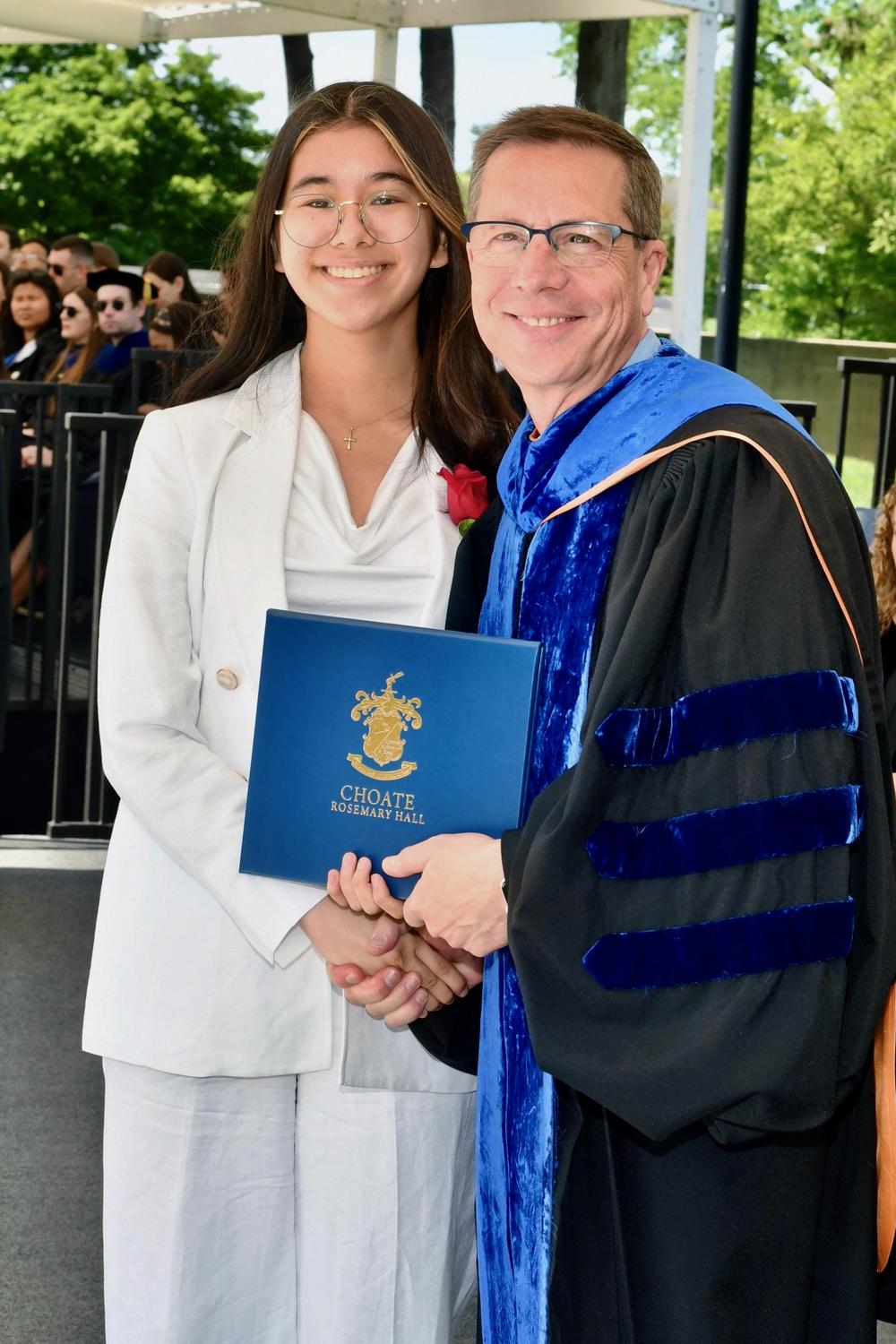
Bree graduates from Choate Rosemary Hall. The day starts out cold but warms up into a very nice day. The ceremony goes smoothly and hits all the notes.
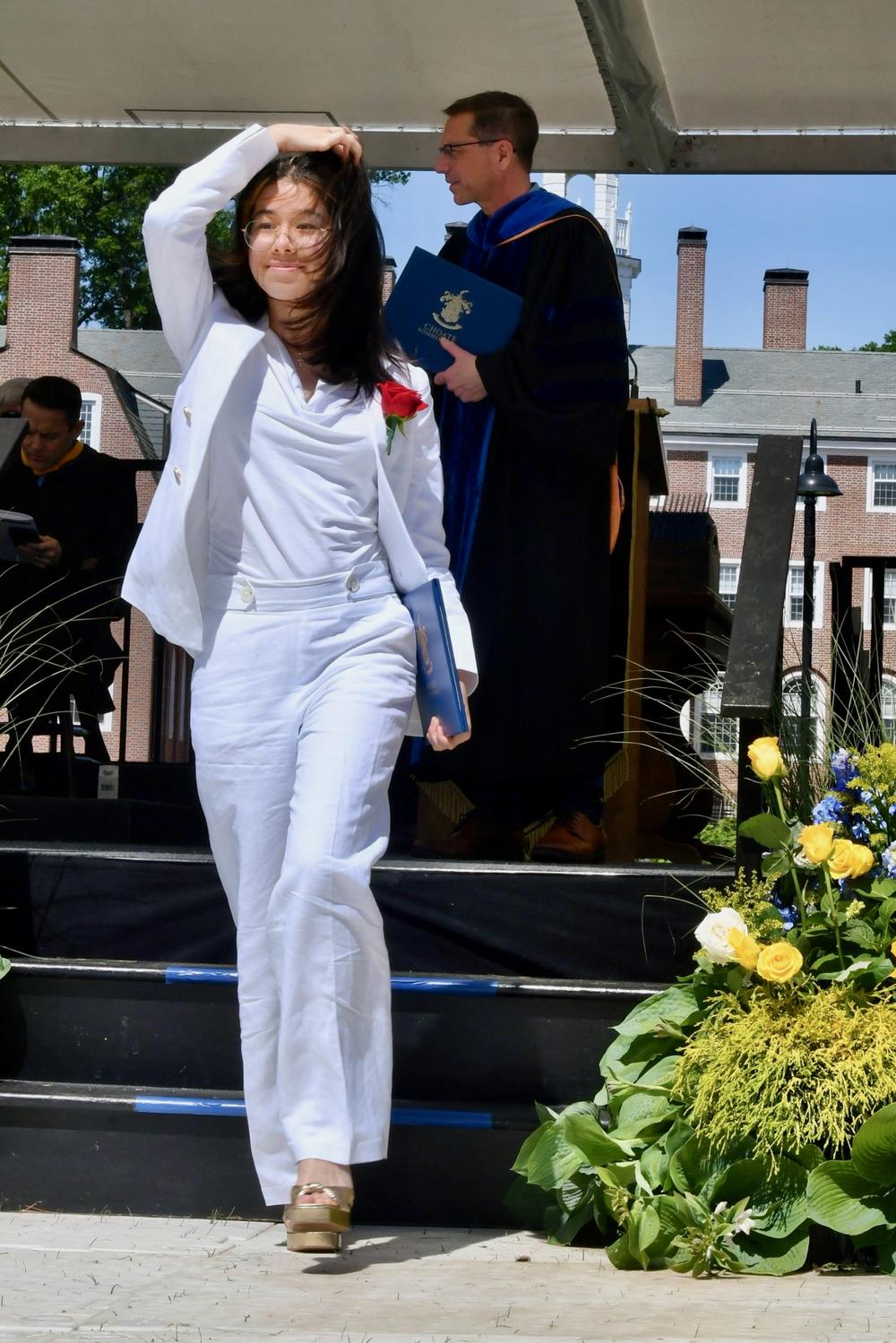
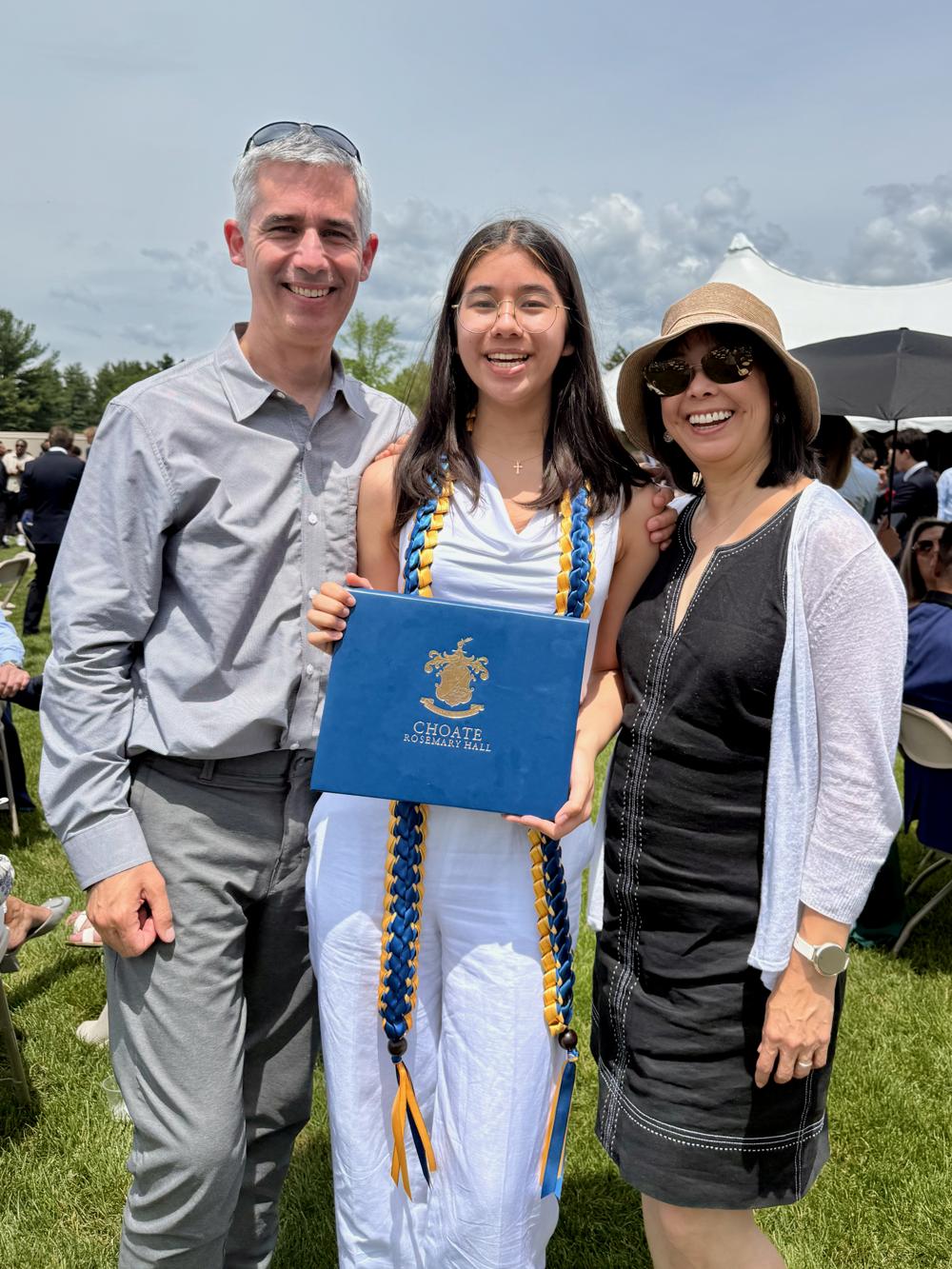
The graduation is followed by a lunch on an upper campus field.
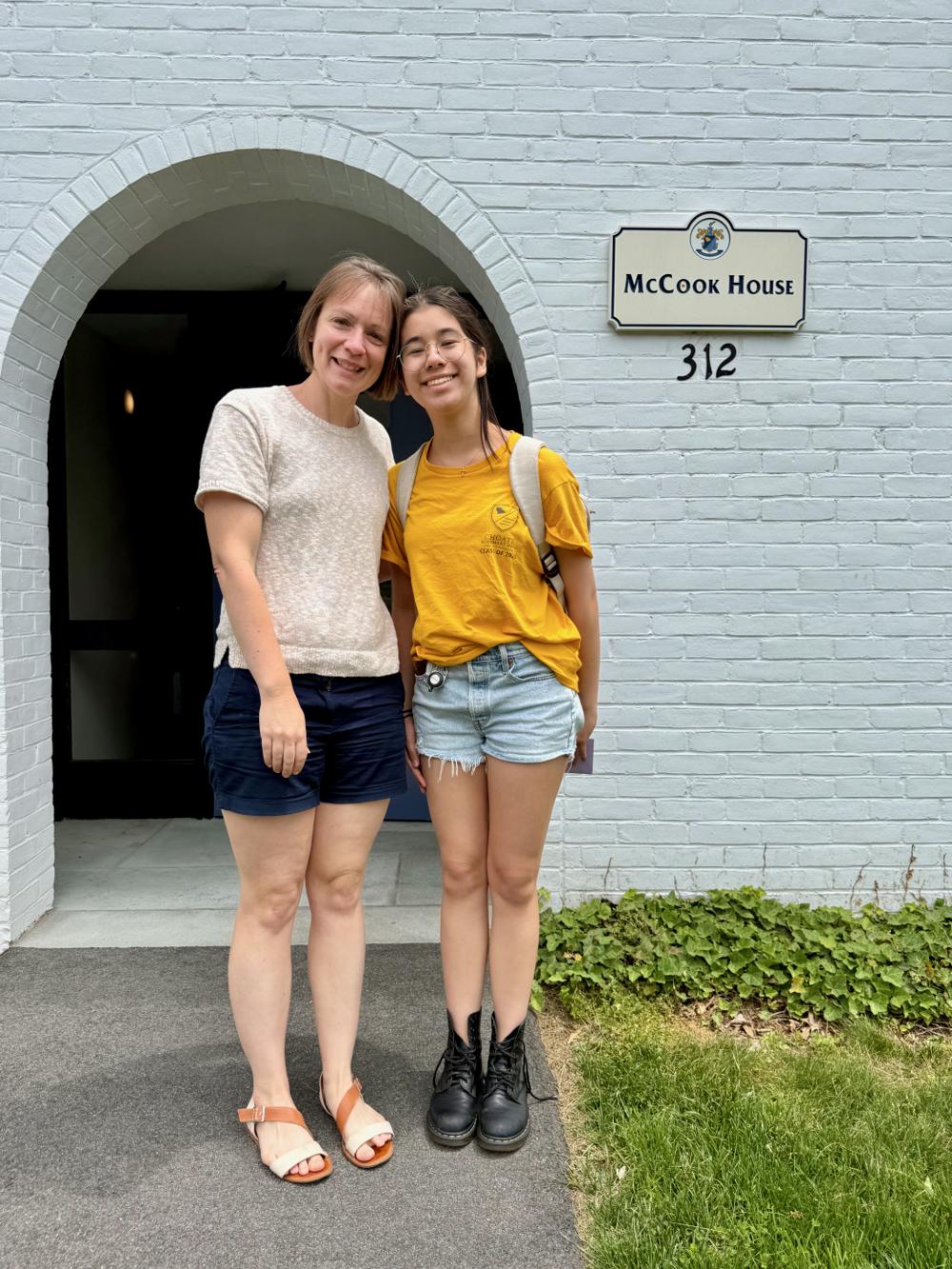
We return to Bree’s dorm to finish packing everything up. This actually proceeds faster than might have been expected, especially with help from Bree’s junior friend Shaleen. Finally the car is packed, and Bree says goodbye to her wonderful house advisor. Kathryn herself tears up; she enjoyed getting to know both Evan and Bree during the separate years in McCook House.
There are some final goodbyes to Bree’s friends Shaleen and Friday, then we get on the road to New York City, where we’ll spend a few nights before heading home.
Tonight’s dinner is at Gurumé, which bills itself as a Korean tapas bar. The food’s interesting and pretty good; our favorites are the wings and chimichurri steak with potatoes. Then we walk around the corner to the Golden Theater to see the musical, Operation Mincemeat.
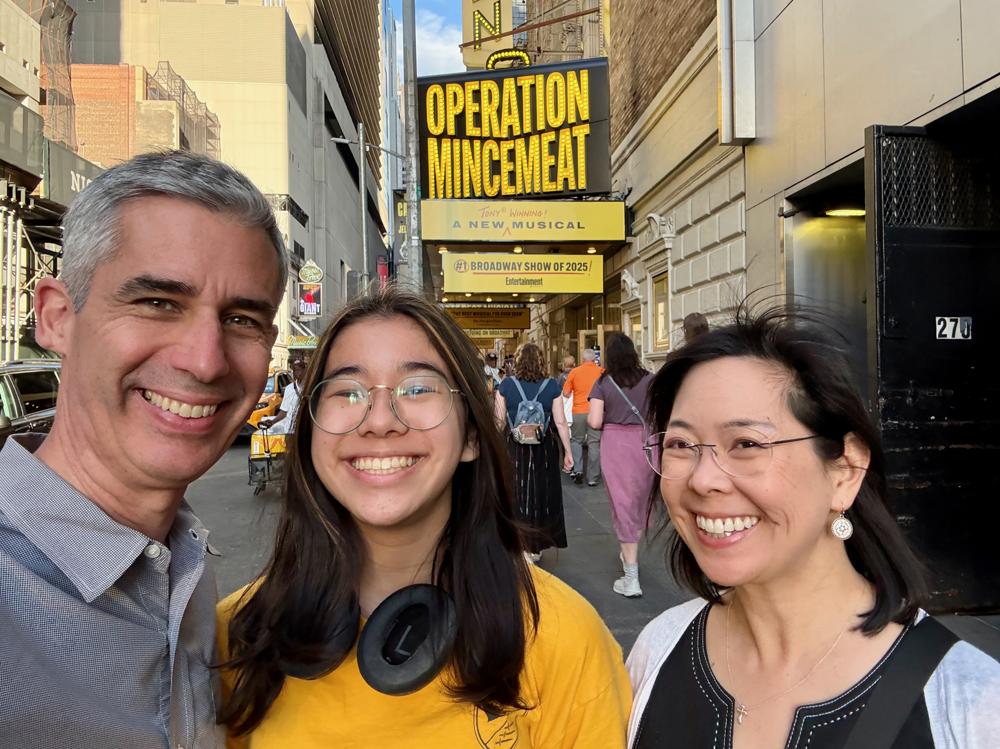
Bree first saw the show back in January and loved it; she’s extremely excited to see it again. The original cast has all been replaced, but the show is still a frenetic, zany affair.