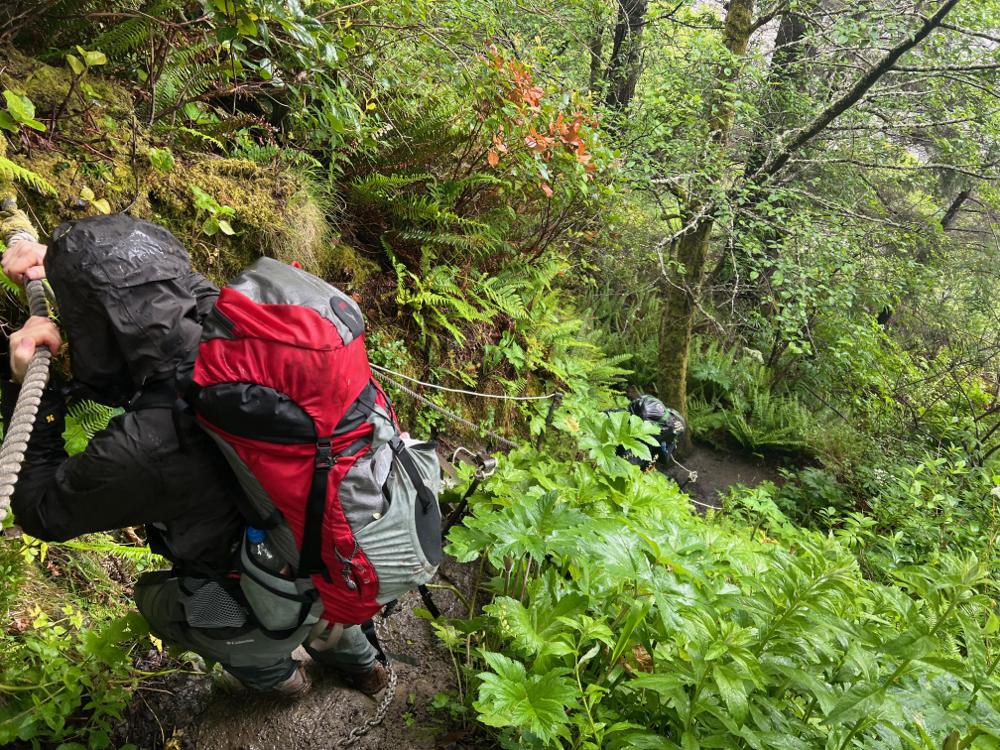
Jan’s Olympic Coast backpacking trip, Day 3. [You can read about the first two days of this trip in our journal for May 2024.]
There’s a light rain in morning, so we eat breakfast under large tarp someone’s left up in a corner of the campsite. The drizzle doesn’t bother us much because we’re heading back to a dry car and home this afternoon, but after we break camp and hit the trail, we discover that the rain has made the trail muddy, muddy, muddy.
We spend most of the morning and the early afternoon on a long inland trail. There are many ups and downs, and on the slopes the mud is precarious. We can see long skid marks where other hikers have slipped a bit. At the southern end of the inland trail we also have a couple of steep ladders to descend before finally regaining the beach.
It’s lunchtime, but we now have a window of low tide in which we can skirt Diamond Rock, the final tide chokepoint on this trip. The tide won’t come back in for several hours, but we figure lunch will be more relaxing if we eat it after we pass the chokepoint, so we press on.
The coast around Diamond Rock is rocky, so we have to hop from rock to rock. Happily the rocks are covered with small barnacles and other things that give the rocks a grippy texture even when wet.

We come to a small sandy beach and stop for a lunch for a kind of rehydrated “burger” wrap that everyone’s happy with. We’re lingering a bit when Joe walks to look further down the beach and announces that “It looks like the water’s coming up”. Maybe I read the tide chart incorrectly? We hastily repack everything and begin to hustle up the beach, but after a moment it becomes clear that everything’s fine — our exit along the beach is clear and we actually do have plenty of time.
We finally reach the mouth of the Hoh River, where the trail leaves the beach and heads into the muddy forest once more. After a short while we return to the Oil City Trailhead and our car. We’re happy to have completed our thru-hike of the South Coast Trail. We shed our wet gear and begin the drive home.
We make a short stop for coffee again, and are back home by 7:30 pm. Chris, Joe, and John head their separate ways. I need to start thinking about what I’m going to do for dinner, and am delighted that Bree has taken the initiative to start cooking a dinner for the two of us, leaving me just enough time for a warm shower and a change to clean clothes before dinner’s ready.
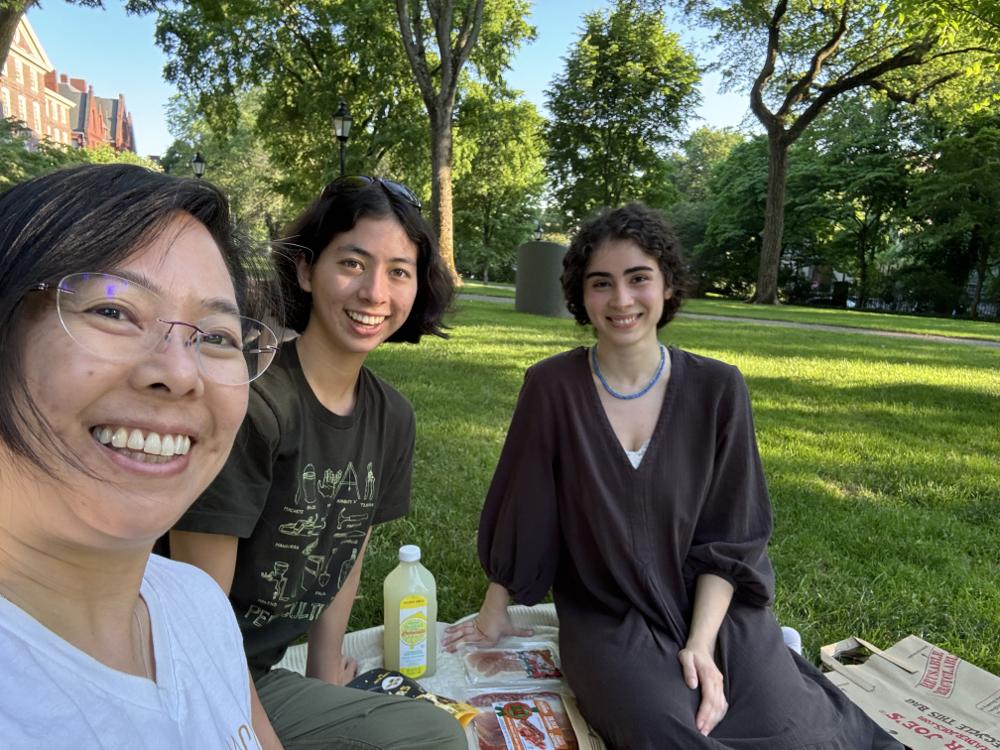
Angela and Liya drive to Providence to spend time with our family friend Evrim. She’s wrapping up her academic year at Brown University, and will stay in Providence for the summer. The three enjoy a nice picnic on Brown’s Quiet Green.
Evan still has an exam and a paper remaining to complete his junior year at Stanford, but his summer program in Taiwan starts this week. He leaves Stanford early and comes home to prepare for the summer and to finish up the things for Stanford.
Evan leaves for a summer in Taiwan. He’ll be studying Mandarin with the International Chinese Language Program at National Taiwan University – the same program Liya did a couple of summers ago.
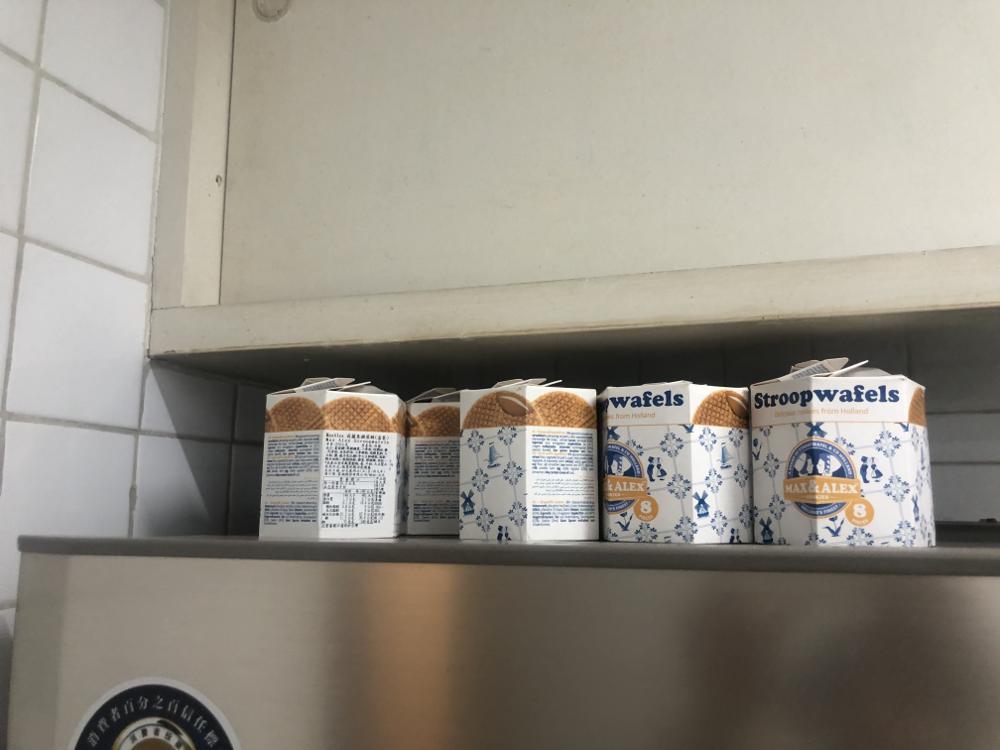
Evan arrives in Taiwan and makes his way to the student dorm apartment he’ll be sharing. The other students in the apartment are all Dutch. Evan reports, “They’ve marked their territory with stroopwafels.”
Bree’s last day at Holy Names Academy. Angela drives Bree to school for her last day of final exams. This is the last time Angela or Jan will drive any of the kids to any school – wrapping up something like 20 years of driving to various schools.
Before Jan leaves for a trip tomorrow, Angela wants to make sure she can summon our cats from outside when locking up the house for the evening. Every night Jan normally whistles at the front and back doors to call Mojo and Moxie inside. He whistles the same little notes that his dad Mirek had used when doing the same thing decades ago.
Mojo usually comes running instantly. Moxie often takes longer, and on warm summer nights may prefer to spend the night outside.
Angela isn’t so good at whistling, so she tries using one of our ocarinas instead: a series of alternating high D and B notes sounds roughly like what Jan whistles. [As it turns out, Angela’s whistling is good enough on its own, and she doesn’t need the ocarina.]
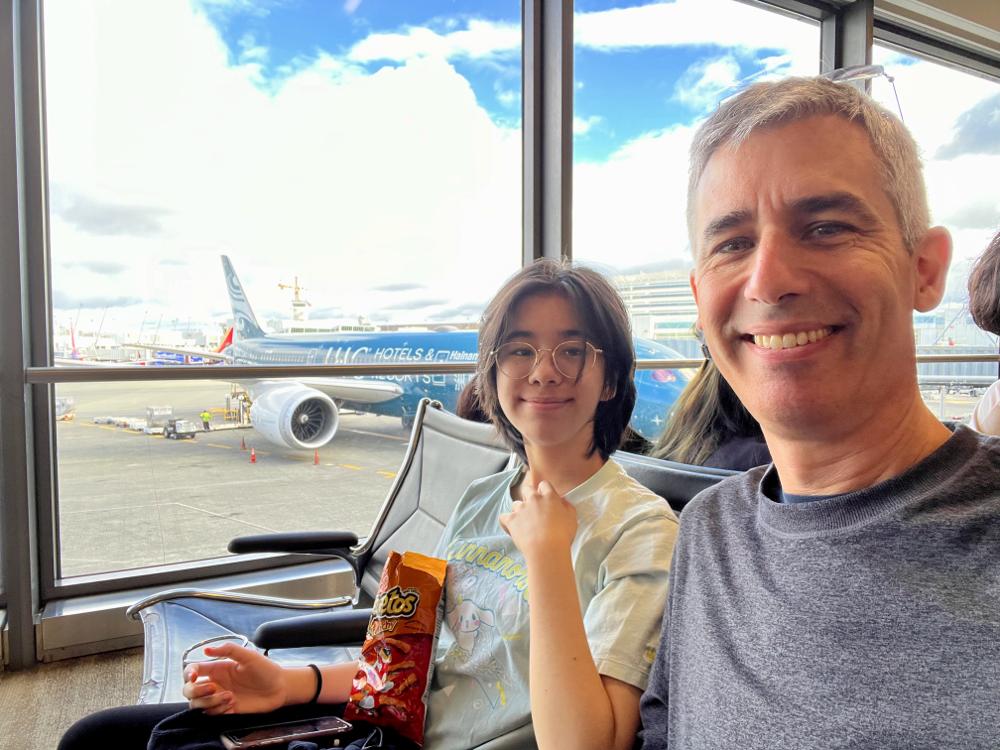
Jan and Bree leave for Japan on a relatively short vacation. Jan spent 6 weeks in Japan last year, and Bree was there for 2 weeks, so they’re keeping this trip short. Bree’s also keen to spend time in Seattle this summer with her friends before she heads to Choate in the fall.
Jan/Bree Japan trip, Day 1. We fly into Haneda Airport in the mid-afternoon. The immigration hall is as crowded as Jan’s ever seen it, so it takes a bit of time to get through it and onto a train toward the city center.
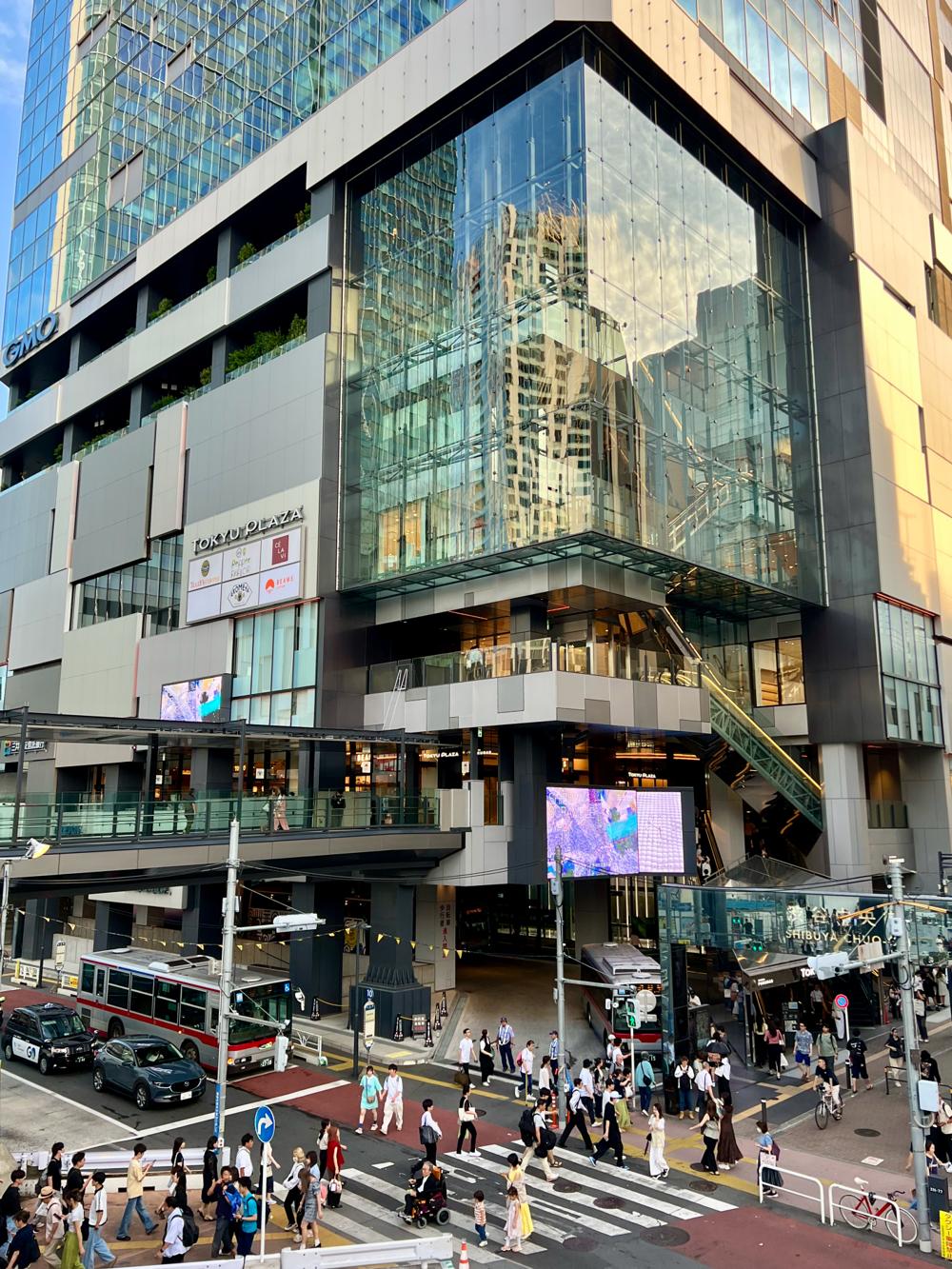
On this trip Jan’s trying something new: staying in a hotel at one of the big train stations. Nearly every outing begins with a train trip, and instead of having to walk or take a bus or cab to the closest station, why not stay at a station itself? In this case, our hotel is the Shibuya Excel Hotel in the Shibuya Mark City building connected to the Shibuya station by a skybridge.
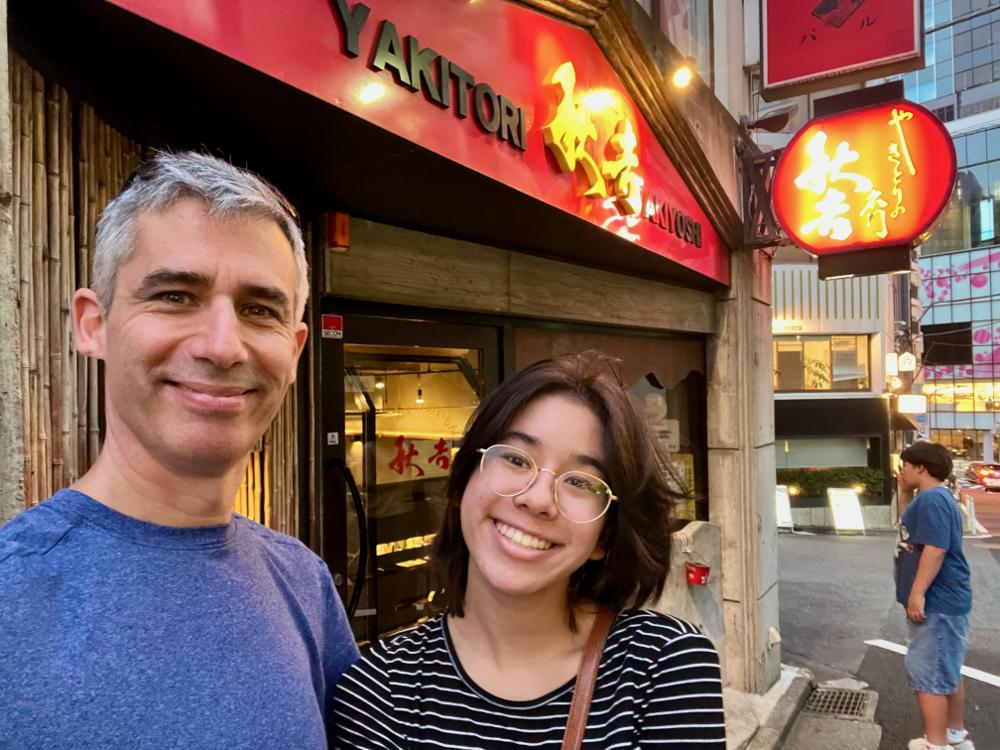
After taking a nap and freshening up, we make a short walk to the nearby Sakuragaoka neighborhood for dinner at Akiyoshi Yakitori, a restaurant Jan and Angela frequented when they lived in Tokyo 25 years ago. While we wait for a table, we chat with nice Australian couple who pass along some recommendations. (We’ll follow up on two of them.)
We’re eventually seated at the counter where we can watch the cooks grill stuff on sticks over a charcoal fire. Everything tastes great.
Jan/Bree Japan trip, Day 2. From our hotel we can see a gigantic orb atop a nearby building. (The building appears to be the Shibuya Cultural Center, and the orb is likely a planetarium.) When we head out for breakfast at White Glass Coffee, the cafe turns out to be right next to this orb building. The cafe itself has good food, and looks out over a small but lush garden.
After breakfast we walk to the Omotesando neighborhood via the intriguingly-named Cat Street, which turns out to be full of cute shops but not cats.
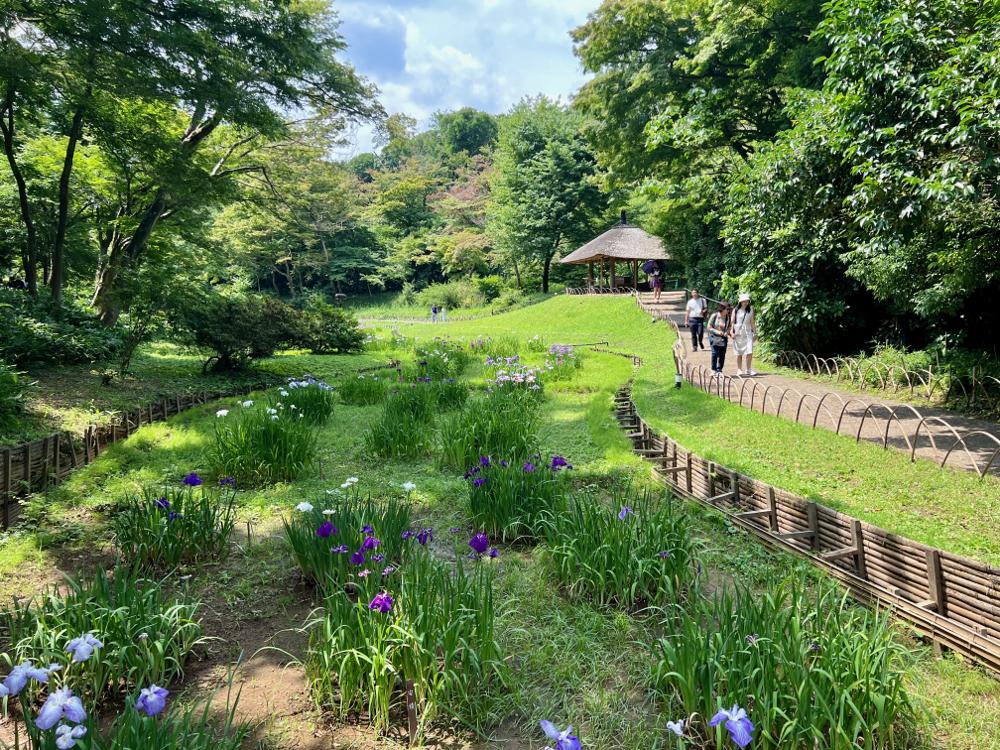
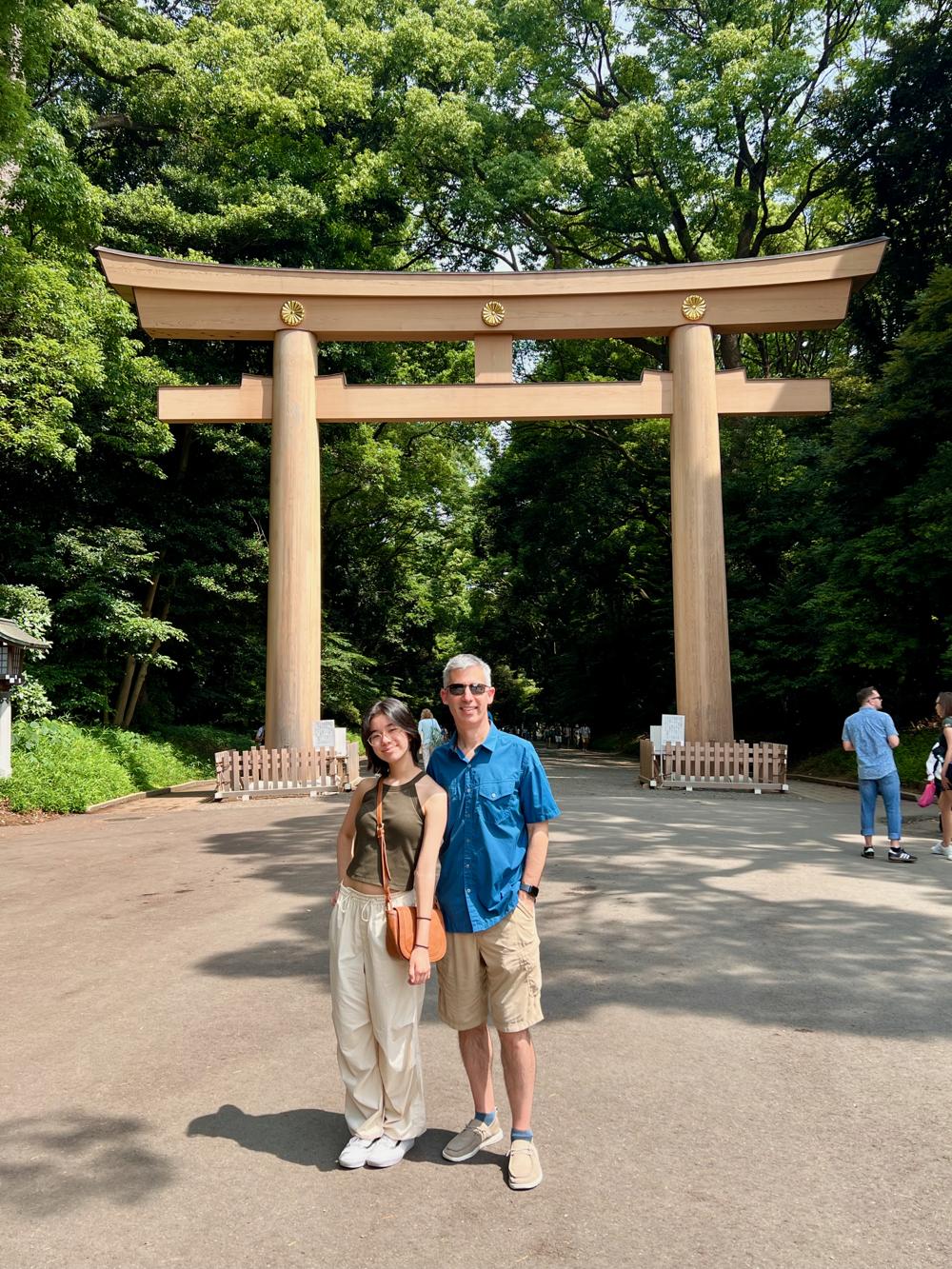
We walk up Omotesando into Meiji Park to the iris garden. We’re fortunate to be here at the perfect time to see the irises, and early enough in the day that the garden’s not crowded yet. Even the line for the strangely popular Kiyomasa Well is short, so we wait for a few seconds to get a chance to take photos by the well.
On the way into the park, we noticed that the small Meiji Shrine Museum is showing an exhibit of Meiji Era dresses, so we stop in to see that. There are only a few dresses on display, but they’re quite interesting.
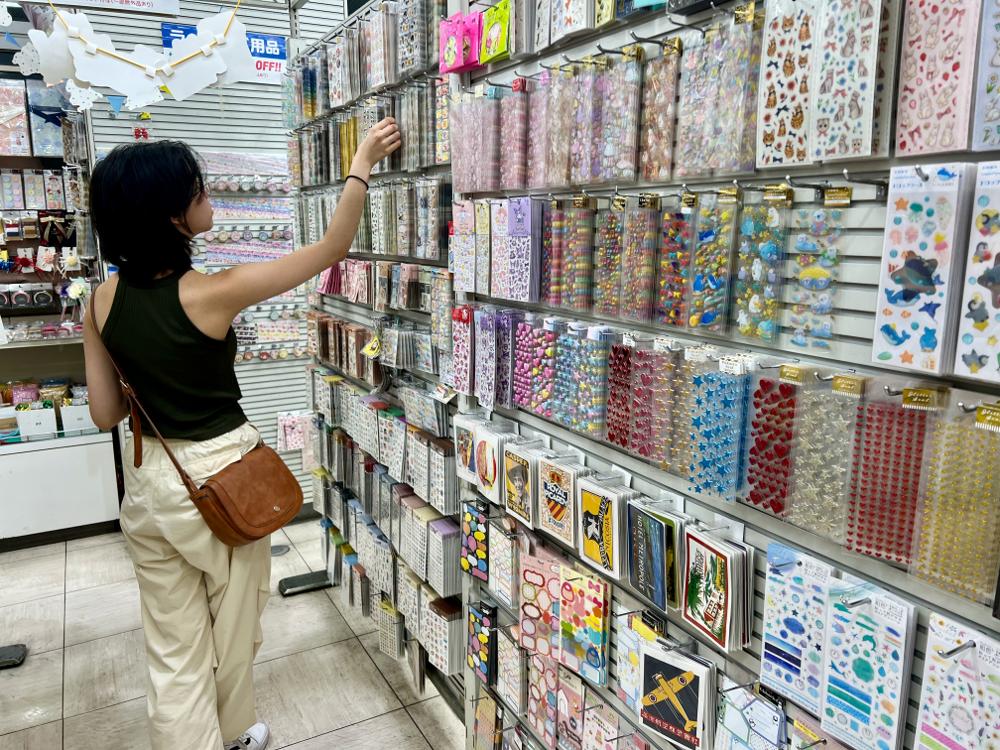
We make our way to Shinjuku so Bree can buy stationery at Sekaido, then we have a tempura lunch set at an outlet of the Tsunahachi tempura chain.
After a nap in the hotel, we make our way back to Shinjuku to visit the Costume Museum at Bunka Gakuen University. They have an interesting exhibit called “Big, Heavy, Long, Tall, Round” that features extremely examples of clothes with those attributes. There are really, really long pants, for example, that must be extensively gathered up so they can be worn.
In the evening we have dinner in Dogenzaka at Shibuya Gyoza. The gyoza are fine, although not amazing. They also serve a weird mapo tofu: it has cheese in it, which is entirely unnecessary, and it’s served in a bowl on a plate. The bowl is deliberately overfilled so that some of the sauce spills over onto the plate. The result is a mess. [Later in the trip, our friend Mari will chide us: “That’s what you get for eating dinner in Shibuya.” Shibuya’s known for places young people like to eat, and young people like weird things like cheese in mapo tofu.]
After dinner we stop at Maison Creperie. The strawberry-chocolate crepes have waaaay too much whipped cream.
Jan/Bree Japan trip, Day 3. It’s pouring rain today — not too surprising, since this is the rainy season.
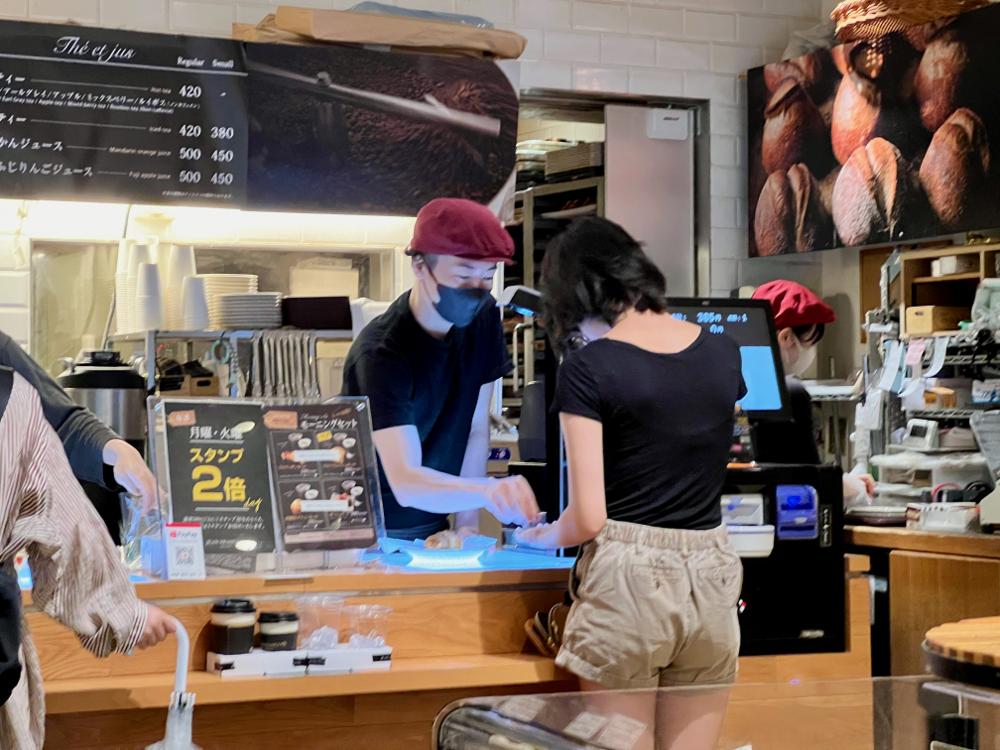
We have breakfast in the Jean Francois bakery in the Mark City mall downstairs so we can stay indoors. After eating a chocolate croissant, Bree decides she wants a second one. Jan’s still eating, so he makes her go up and pay for it herself. She’s nervous about doing a transaction with a Japanese merchant, but Jan assures her it’ll be fine.
She carefully prepares the correct amount of change — but when she gets to the register, she discovers that she also needs to pay sales tax. She doesn’t know Japanese coins are worth what, and she’s mortified that the cashier has to help her pick out the correct change. When she returns to the table, Bree says this experience will scar her forever. Jan points out that the cashier has almost certainly already forgotten about it.
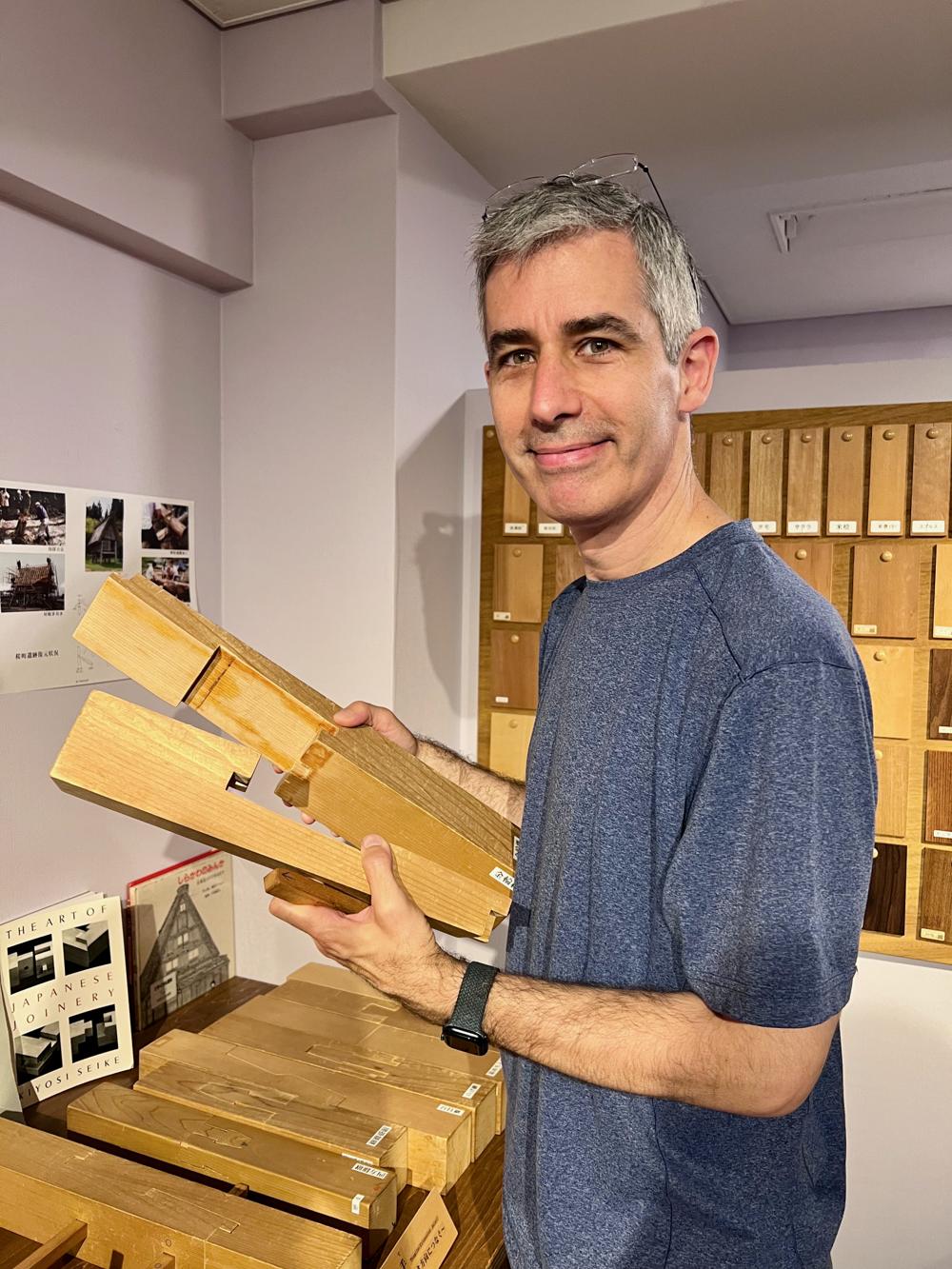
Our first stop for the day is the Kigumi Museum of Japanese wood joinery in the Waseda neighborhood. We’d tried to visit this museum last year but they were closed for a summer vacation. We take the train there, then hurry as best we can for the two blocks to the museum. Our tiny umbrellas don’t do a great job keeping us dry.
When we get to the museum, we’re met by two old guys, presumably volunteers, who are serving as docents. They’re delighted to have visitors. The museum has many models showing how Japanese carpenters traditionally joined wood in different ways without using nails or glue. The docents explain that we can play with the models. Each is like a little puzzle.
We can’t figure out how to take apart one of the models and ask for help. One of the old men is happy to pull out a little breakaway copy of the model that shows how it works inside. It seems that this particular kind of join is one-way: once put together, it can’t be taken apart.
From Waseda, we make our way to the main stop for the day: the Nippori fabric district. Last year we visited this area too, but happened to do so on a new national holiday we’d never heard of, so the biggest chain of fabric stores was closed.
Jan suggests to Bree that she do the navigation for this trip, so she looks up our destination on her phone, then figures out how to get to the right train and when to get off at Nippori. Exiting Nippori Station, we stop at a Doutor cafe to warm up over royal milk teas, then run through the rain to the fabric shops.
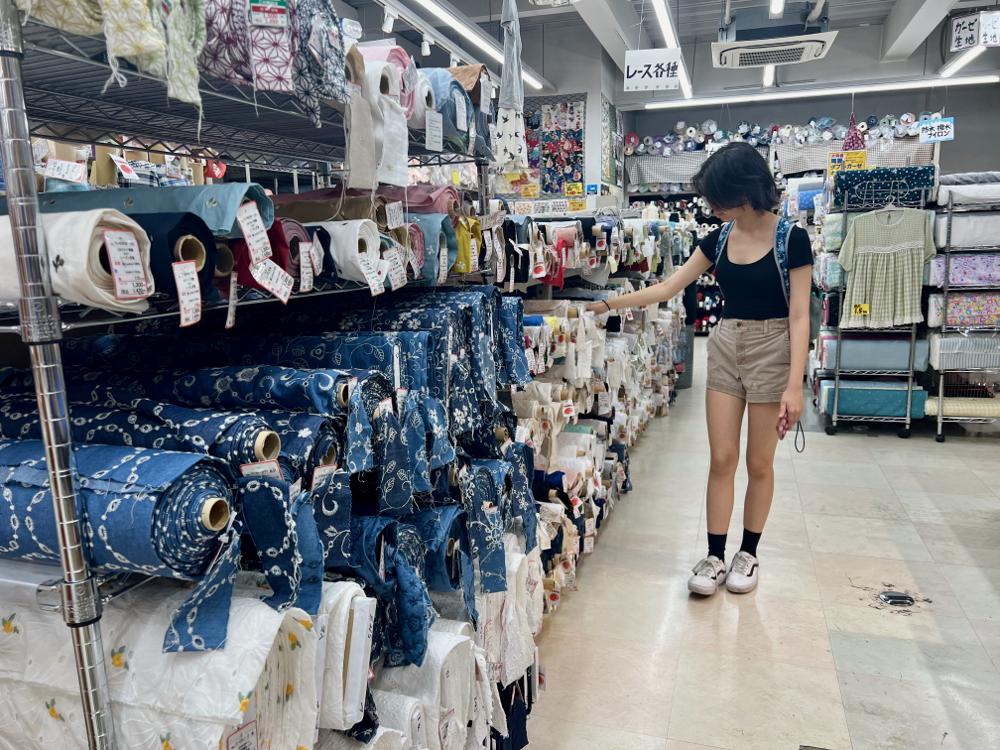
The main chain Bree wants to visit is called Tomato, and they have a number of shops on the same street. We end up visiting most of them, as well as a number of smaller shops specializing in things like buttons or ribbons. Bree picks out fabrics so she can update one of her cosplay outfits.
We eat lunch at a noodle restaurant called Bazoku. The characters for the restaurants name translate roughly as “horse pirate” or “mounted bandit”. The place caught our eye because there’s a chef in the window making noodles by hand. We get ramen with the handmade noodles and it’s quite good.
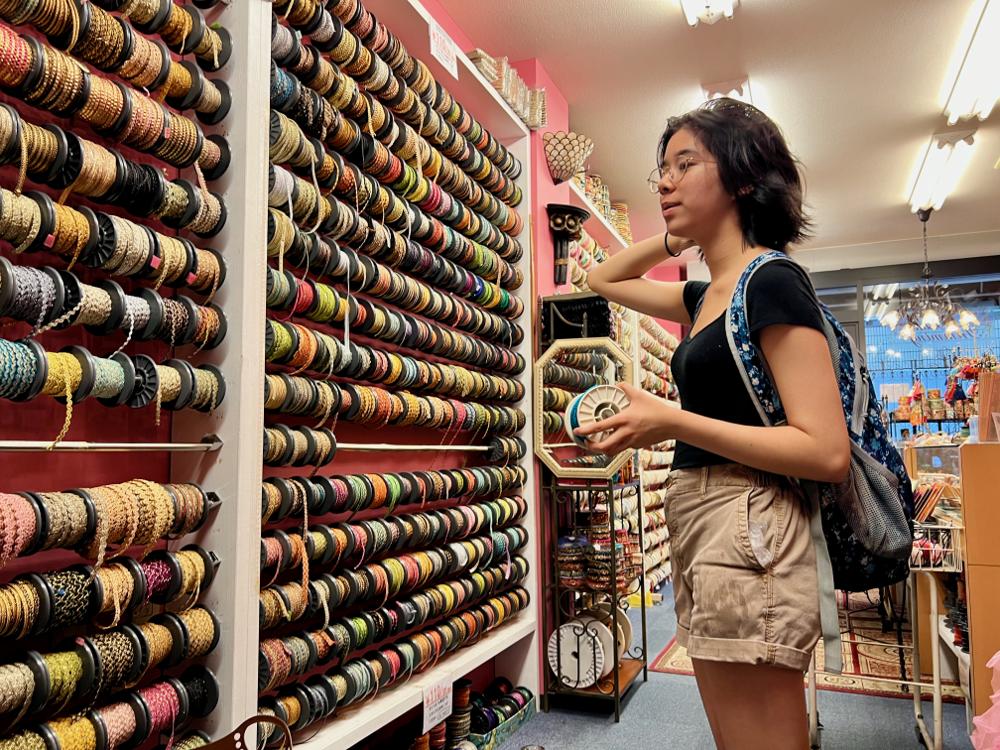
We visit more fabric stores after lunch. After going in and out of the rain so much, our shoes are soaked. We head back to the hotel in Shibuya.
In the evening we head to a place called Chaseco for Italian food; it’s fine. We still have some energy afterwards, so make a long walk to the Shibuya Fureai indoor botanical garden. Along the way, we’re waiting at a crosswalk when we notice some odd lights above the adjacent river — there’s some sort of laser artwork set up that projecting beams through water vapor.
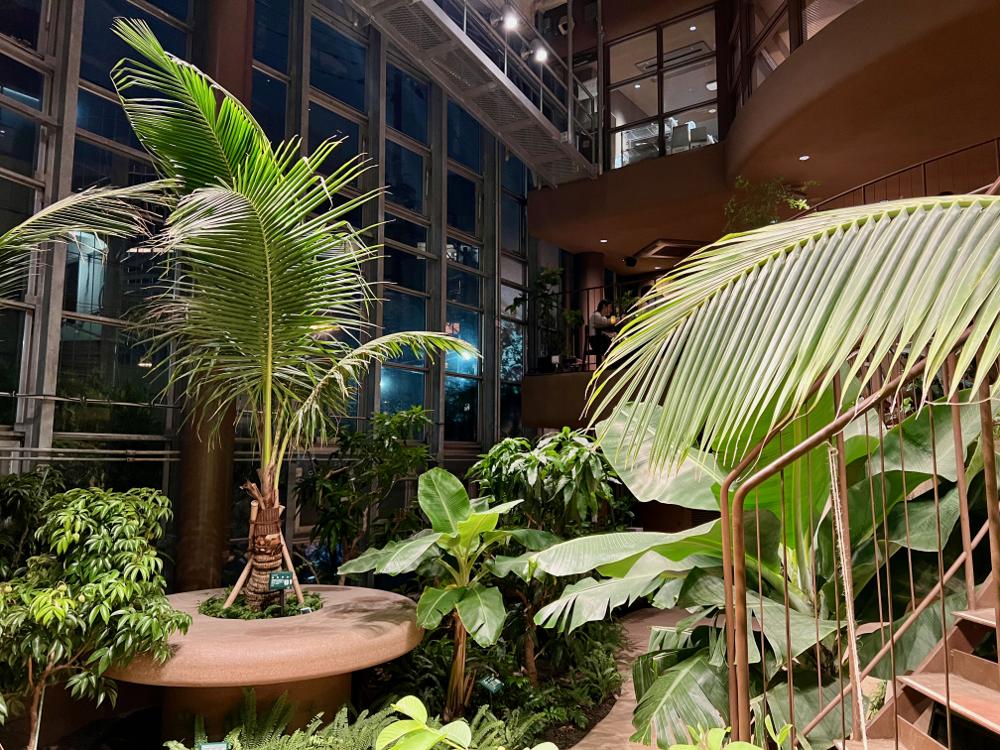
The botanical garden is small but interesting. Sadly, we’re too late to have dessert at the garden’s cafe. We make the long walk back to the hotel, taking a slightly different route back that takes us through a series of stylish shopping malls. Bree observes that all the malls we’ve seen on this trip look much healthier than most of the malls back home.
By the time we’re going to bed, Jan has begun to sniffle. Apparently spending hours in Nippori popping between the torrential rain and the small air-conditioned shops isn’t good for one’s health.
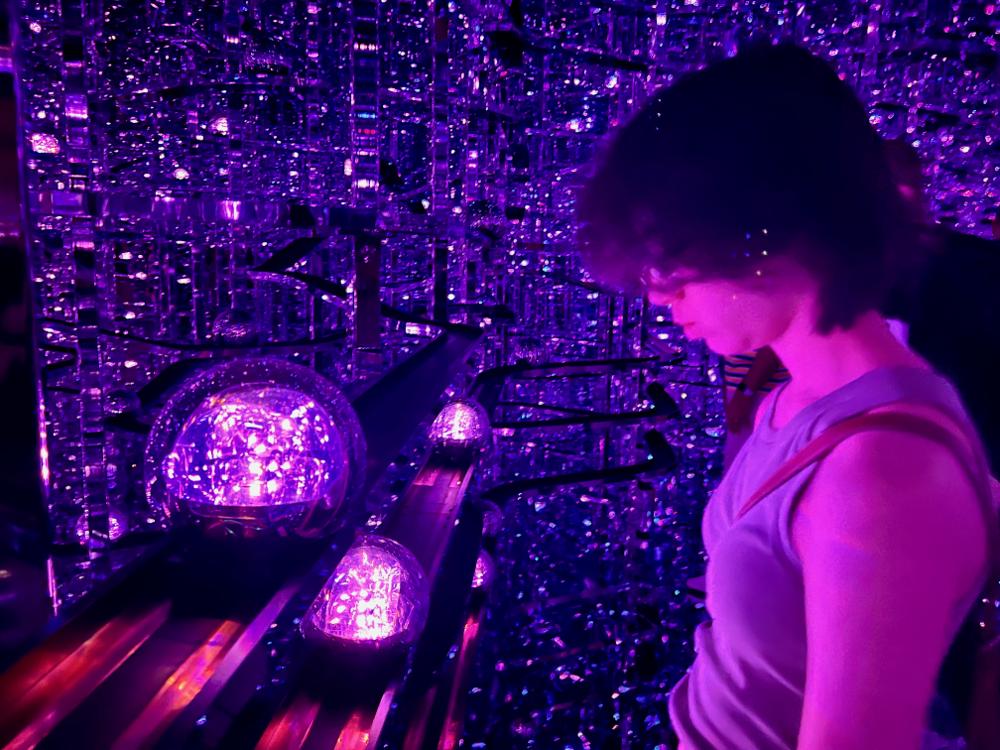
Jan/Bree Japan trip, Day 4. Today the rain has stopped but it’s hot. We spend the morning at teamLab Borderless, a huge interactive digital art installation in the Azubadai Hills area. Unlike the teamLab exhibition we saw last year, this one doesn’t have a defined route. We take care to follow a wall through the maze to maximize the chance we see all the rooms. Our favorite room is one with glowing orbs rolling around on countless tracks at different levels of the room. They wobble as they move, and stop to wait for orbs in front of them to make room — they seem like partially alive space snails.
We’re amused to see one of the exhibits — a creepy parade of rabbits and snails — move from one room and along the halls of a hallway to another room. We stop in the cafe for a cup of tea. Sensors on the ceiling see where the cups are, triggering projectors that show flowers blooming on the surface of the tea.
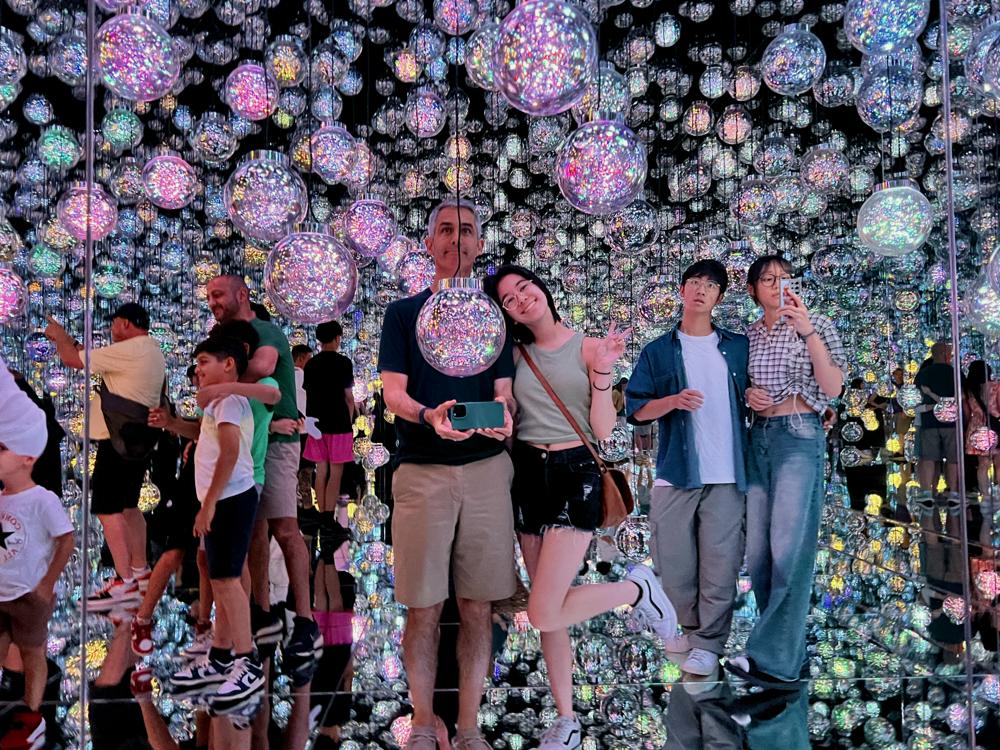
Another room we like features childish drawings of fish swimming on the walls. We realize that all the drawings have been done by visitors, and wait our turn to be able to draw fish ourselves. Bree draws a small group of sharks; Jan draws a colorful pufferfish. A museum staffer scans the drawings and they drop into the “water” on the walls of the room. When tapped, the drawings react. Jan added an eye to his pufferfish, and the eye occasionally winks.
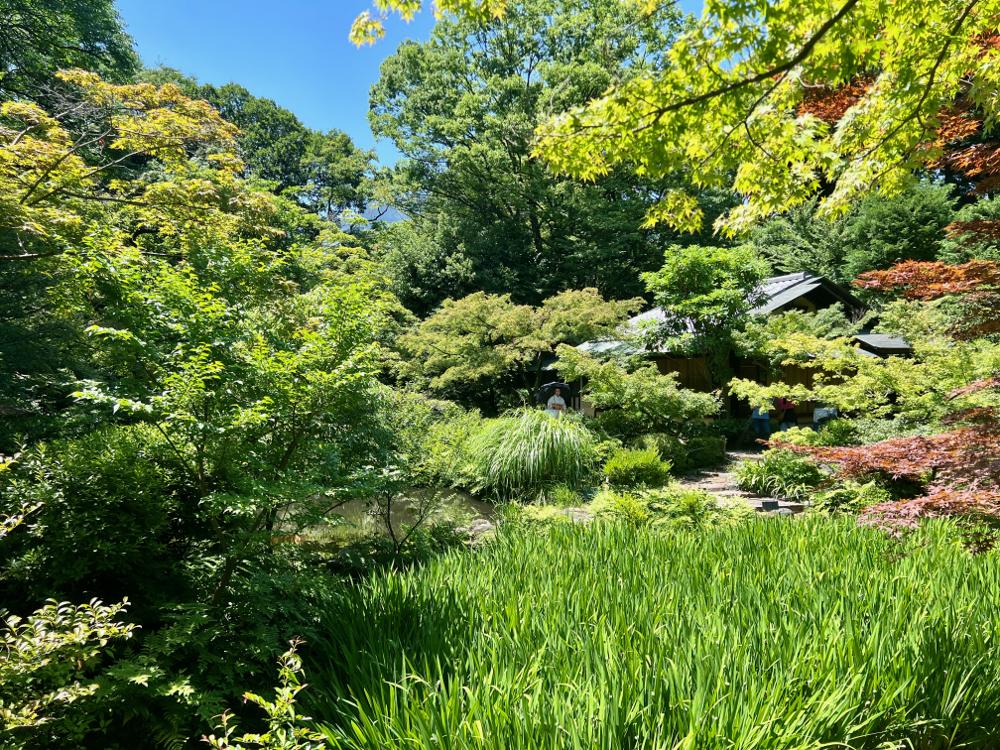
For lunch we go to the nearby Nezu Museum. Jan had wanted to check out the museum’s cafe, but the Australian couple we met the first night also recommended the museum itself. The cafe is pretty and looks out over a dense forest garden. After lunch we thoroughly explore the many paths through the forest.
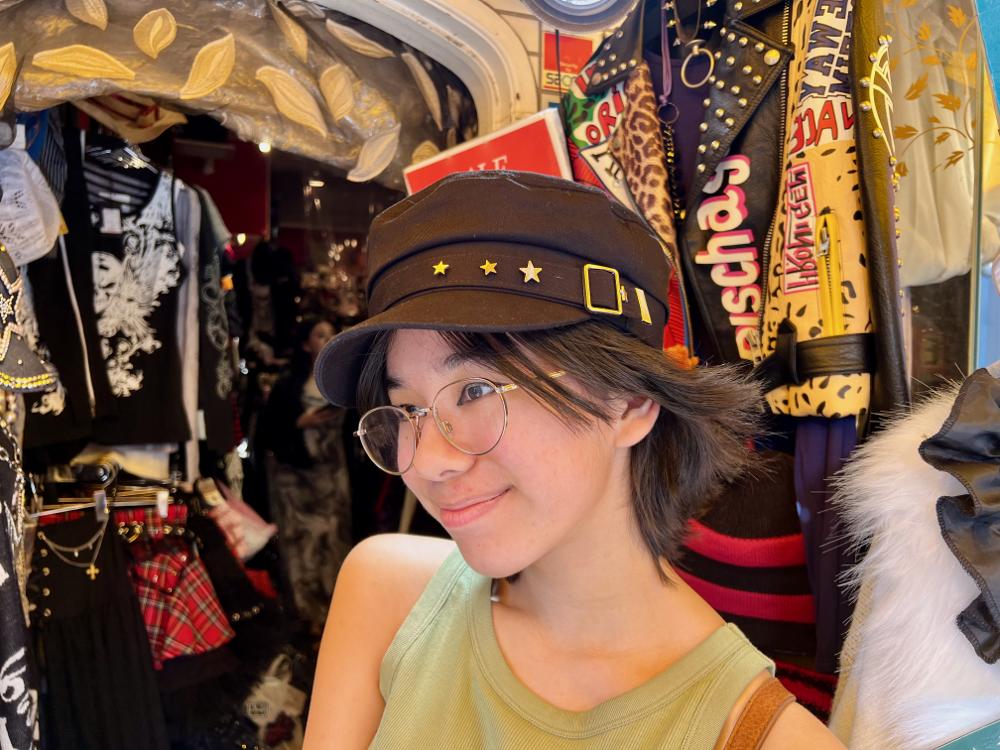
We spend the afternoon shopping in Harajuku. Bree’s keen to buy a pair of platform shoes. The kind she wants is out of stock in her size; she selects a pair with a taller heel instead. In a mini mall halfway down Takeshita Street, she picks out a green top and a snazzy hat that looks like part of some uniform. We’re eventually exhausted by the warm, crowded area and stop for a drink.
Our dinner tonight is at l’élan, a French restaurant with a prix fixe menu. When we walk in at 6:30, we’re the first people to sit down. Bree notices that, while some of the other tables are set, none of them have menus on them — apparently we’re the only customers tonight. This gets us even more attention from the sole waiter/maitre d’ than is probably usual. Early on, Bree excuses herself to use the restroom, and notices the end of the toilet paper roll is folded into a triangle. Later, she visits the same restroom and notices the end of the roll has been carefully folded back into a triangle again. The waiter must not have enough to do.
The meal itself is well-prepared, but a number of the dishes are based on ingredients we don’t love. At one point the waiter comes out to show us a small Dutch oven and opens it to display the next course: a giant abalone in its shell that’s been steamed in seaweed. Hrm. Bree doesn’t like shellfish, and I don’t love abalone. The waiter takes the oven away, and brings back the abalone cut up into large pieces. Bree gamely manages to eat a few, and I take a long time to finish the whole thing.
When we finish the meal, the waiter walks toward the exit. We’re surprised to see the chef, Ryoma Shida, who joins the waiter in walking us out of the restaurant to call an elevator for us.
Jan/Bree Japan trip, Day 5. Today we’re heading a few hours to the town of Nikko. As we’re packing up, we have two problems: we need to find some place to eat a quick breakfast, and we need to decide what to do about the leftover snacks and food we’ve acquired over the past few days. Jan eventually proposes solving both these problems by eating breakfast in our room. It actually all makes for a fine breakfast.
We take the subway to Asakusa and then a train to Nikko. Jan hunts for a pharmacy so he can buy some decongestant, but the first one we find is a tiny little office — they only handle prescriptions, not over-the-counter medications. We walk to a regular retail pharmacy and pick up decongestant for Jan and anti-itch treatment for Bree’s numerous bug bites. Neither seems to do much.
It’s lunchtime, and Bree’s always up for pasta, so we walk into Trattoria Gigli and are happy they have one table left. We order the lunch set. The waitress says something about the pasta we’ve chosen being different today; Jan doesn’t really follow what she’s saying but agrees. A minute later he realizes she said that the sauce contains lamb, which we don’t eat, and is relieved that there’s still time to change our order.
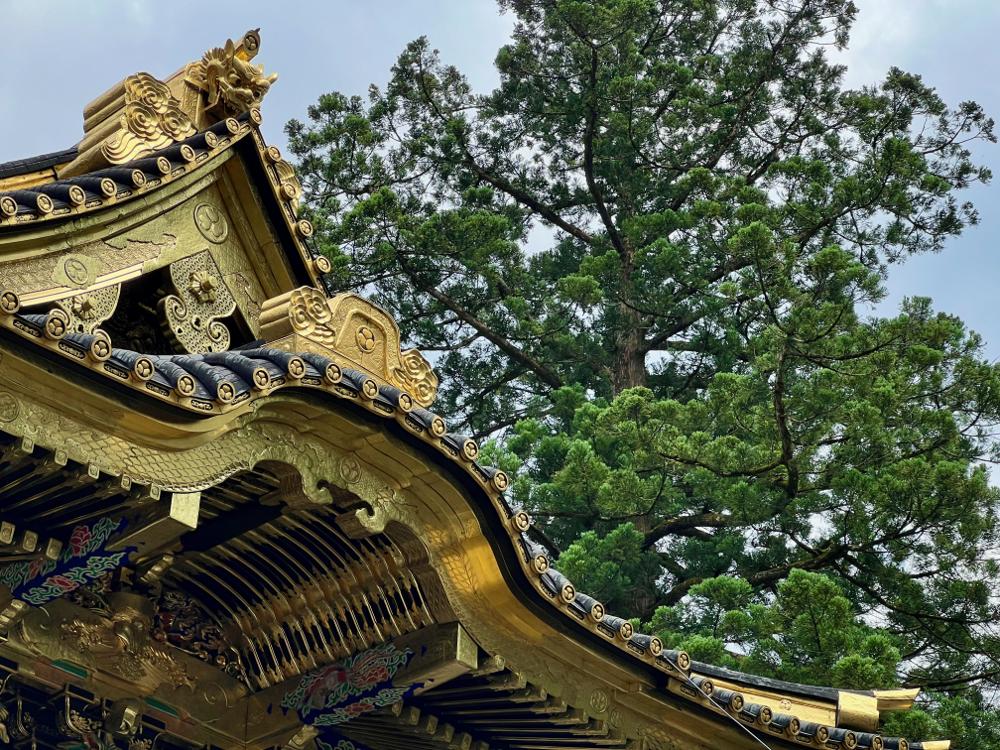
We take a bus from the town to the sprawling Nikko Toshogu shrine nearby. This is a very popular tourist destination that Jan last visited 25 years ago. We check our bags into a coin locker and enter the shrine. We see the famous sculpture of the three monkeys that see, hear, and speak no evil. There’s also a small, well-known sculpture of a sleeping cat. We walk up a steep set of stairs to visit part of the shrine. Although the shrine itself is lavishly decorated, what makes it really beautiful is the surrounding forest of pines.
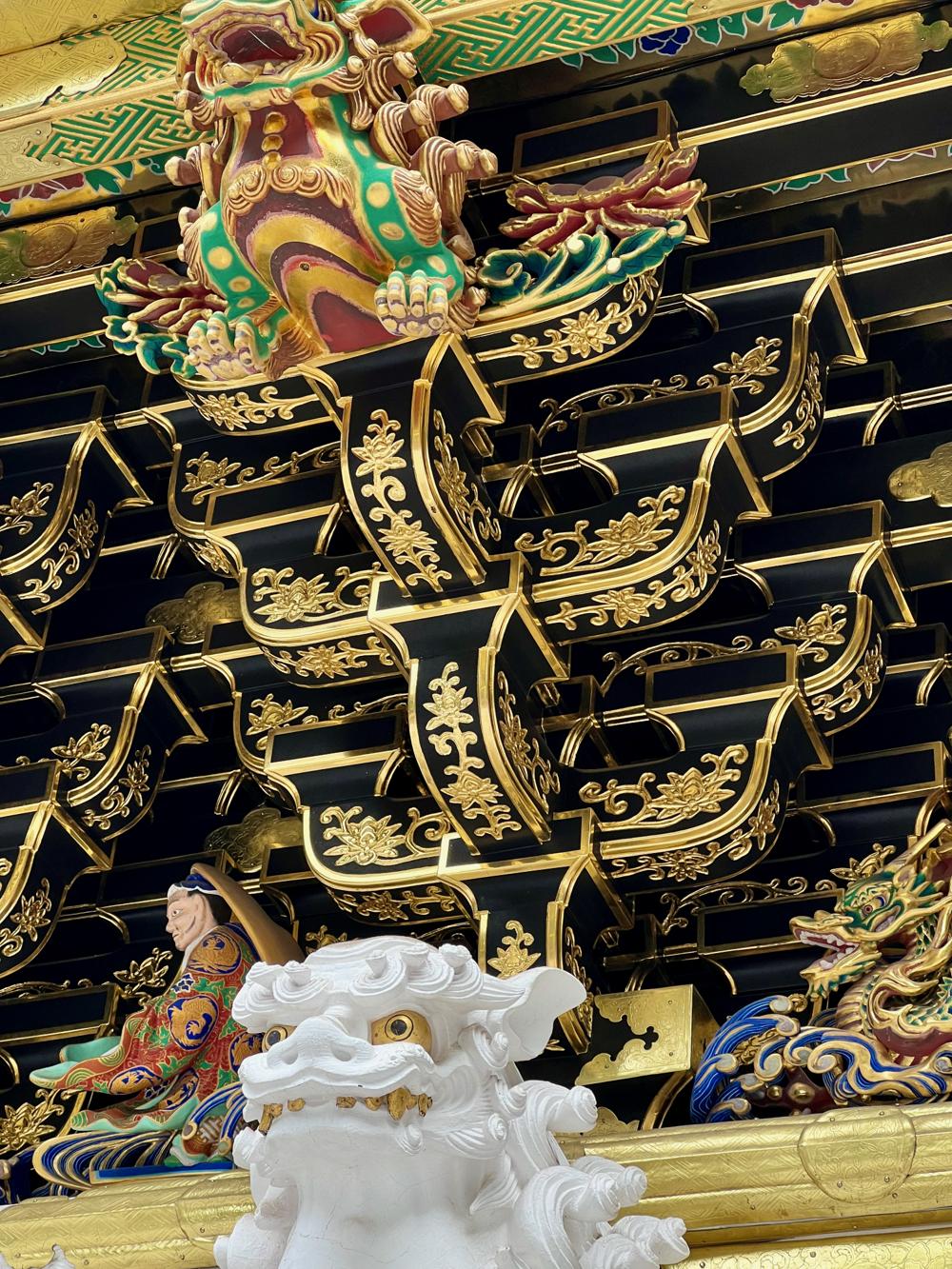
As we take our shoes off to enter another shrine building, Bree notices that the modern structure that provides a roof over that area nevertheless is built with traditional Japanese carpentry techniques, and spots one of the wood joins we’d seen earlier at the Kigumi Museum in Tokyo.
As we’re leaving, Jan’s accosted by a group of 6th graders that want to interview him for a school assignment. Jan does his best to answer their questions. They’re supposed to be asking their questions in English, but only one of the students is really confident in his English; the rest quickly slip back into Japanese.
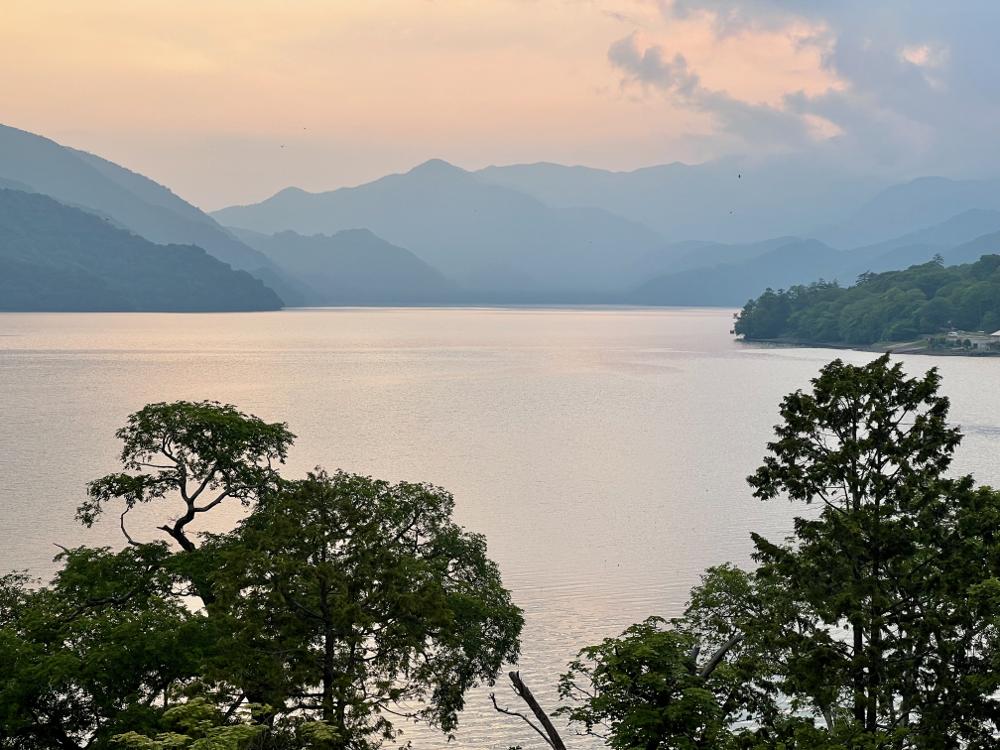
We get back on the bus and take it as far as Lake Chuzenji where we’re staying for the next two nights. Our hotel is really nice, and we have a great view over the lake. The room has wonderfully comfortable beds so we take a nap. Tonight’s dinner is at the western-style Lakehouse restaurant, and it’s quite good. By the time we’re finished we’re exhausted and return to the comfy beds.
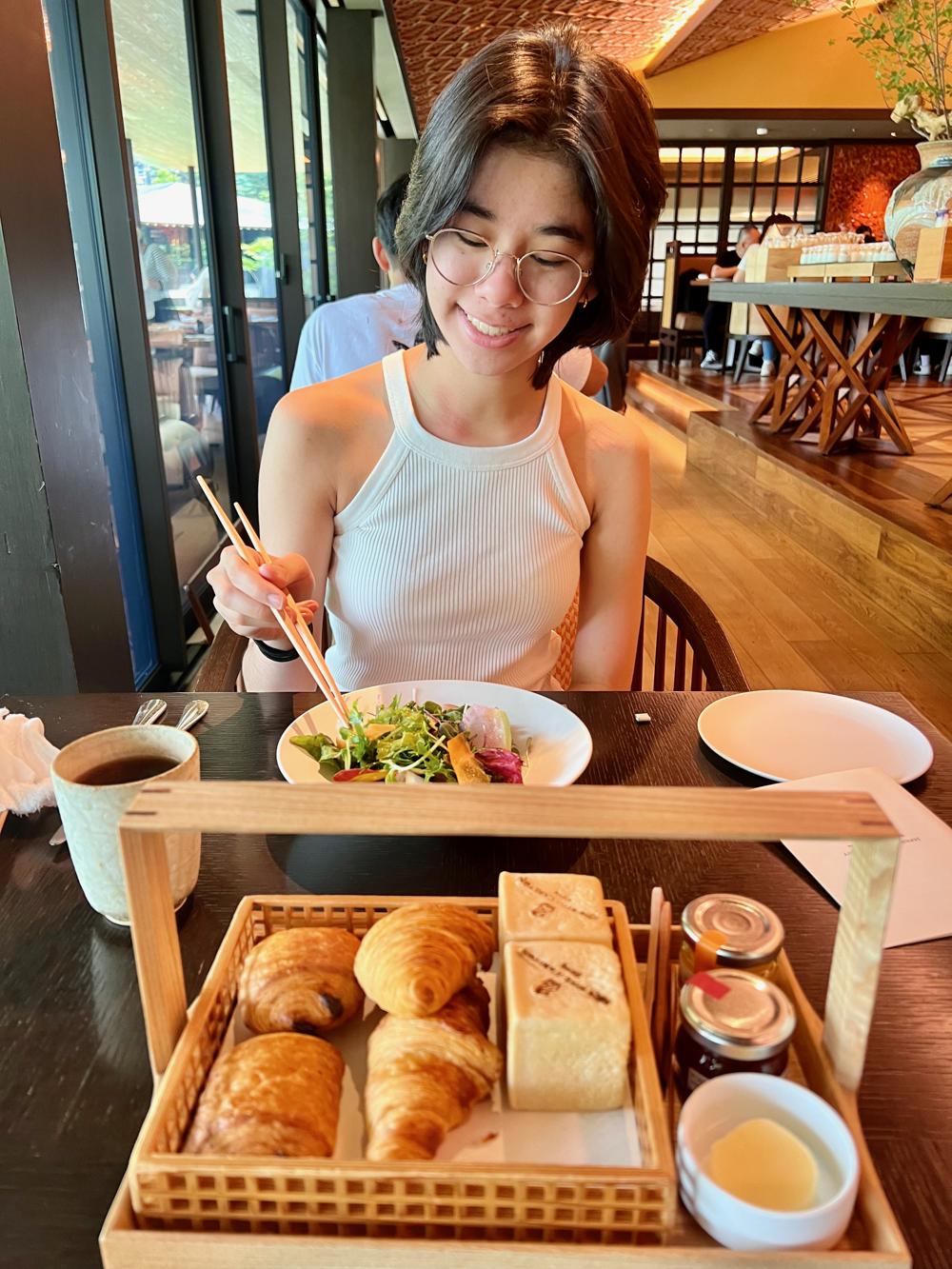
Jan/Bree Japan trip, Day 6. The hotel’s western-style bento box breakfast is huge. Bree is delighted there’s a bit of pasta in the box, and we both like the perfect cubes of fluffy toast.
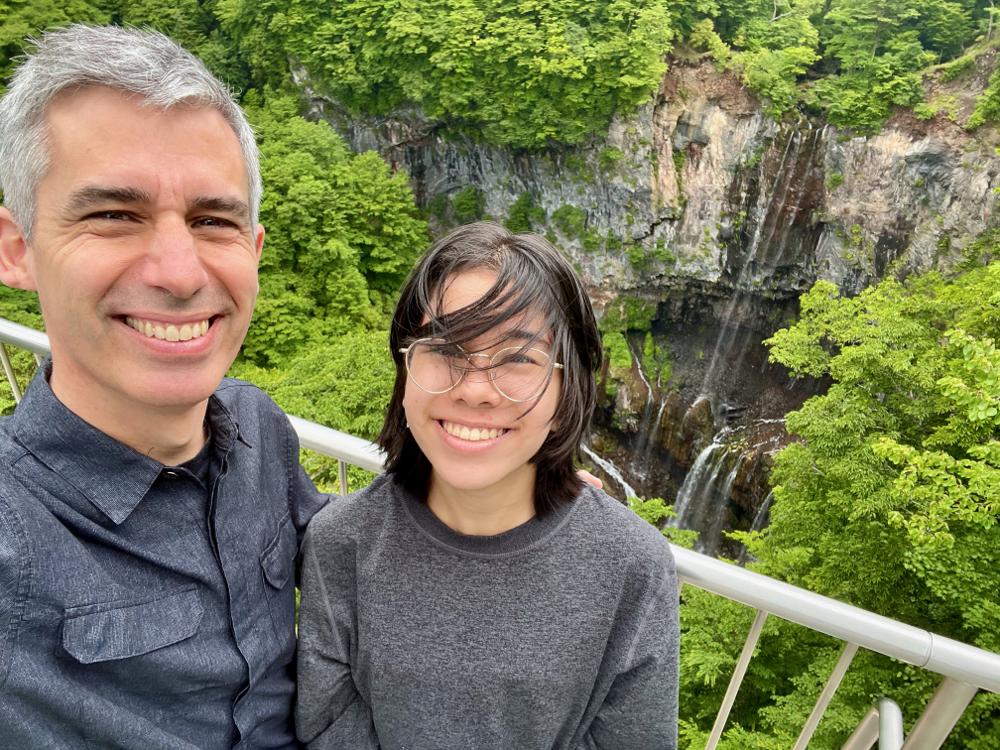
Our original plan for today had been a short hike somewhere in the area, but it’s misty and drizzling out and we’re feeling lazy. Instead we make a short 10-minute walk to the Kegon Waterfall.
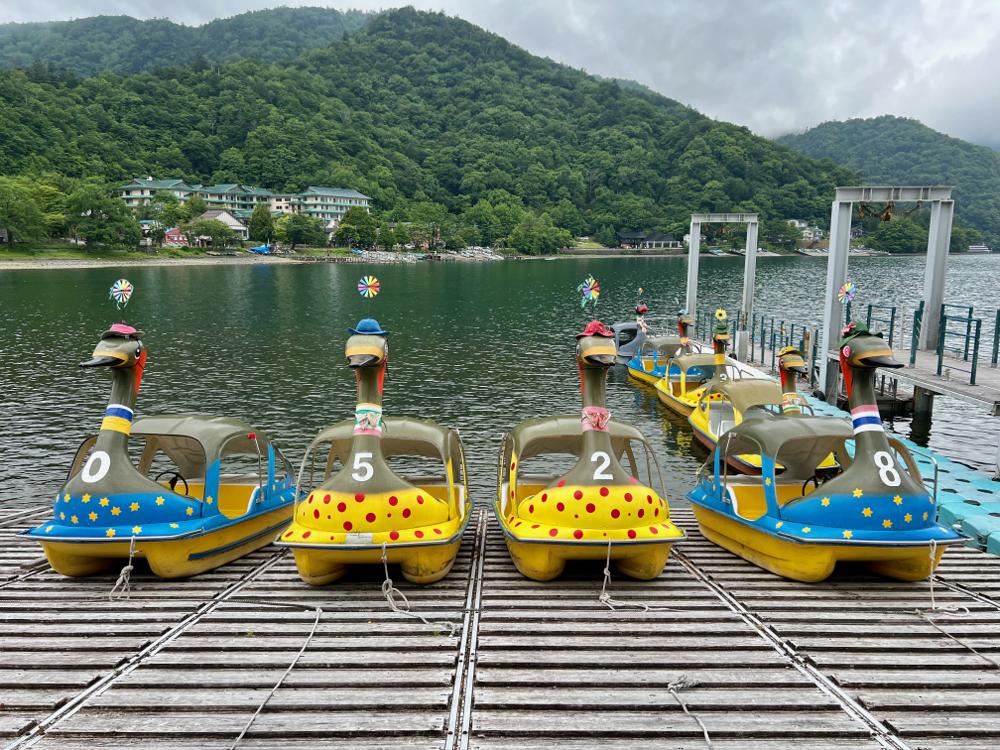
We also walk down to the shore of Lake Chuzenji. A number of places have weird, ancient swan boats for rent, but no one’s out on the lake this morning.
We have lunch in the hotel’s pretty lounge, and after a nap we both get massages at the hotel spa. We also each check out the hotel’s hot spring baths. Dinner is a kaiseki course dinner at the hotel’s Japanese restaurant. It’s good but surprisingly modest in scope — we don’t feel exhausted by the end of it.
Jan/Bree Japan trip, Day 6. We check out of our hotel and catch the bus back to Nikko Station. The bus returns by a different route, which deliberately includes the Irohazaka Route: a steep, unbelievably twisty road that makes 48 very tight switchbacks on its way down to the valley floor. The “iroha” in the name refers to the Japanese hiragana syllabary; there are 48 main syllables in the language, and each switchback is labeled with one of the hiragana characters.
Sadly, 48 tight turns also means 48 stomach-churning chances to induce carsickness. The bus keeps speeding up for the short straightaways, then slowing to a near stop to make the next turn. After the first few switchbacks, Bree feels miserable.
By the time we reach the bottom, Bree isn’t sure she’s going to make it to our stop, but she manages to hold it together. There’s a public restroom and gazebo with benches next to the bus stop, so Bree gets a drink, splashes water on her face, and lies down for a moment to recuperate.
Our intended lunchtime restaurant is full, and in any event Bree’s not up for a big meal, so we get lunch from a Family Mart convenience store. A meal of hiyashi chūka noodles and onigiri is perfect.
We take the long train back to Asakusa, then switch to the Ginza subway line. This afternoon Bree has made plans to get together with two Seattle friends who are in town. They want to meet up for shopping at Harajuku. Since Jan’s already seen enough of the district, Bree’s going to head to the district on her own while Jan checks into our next hotel in Ginza.
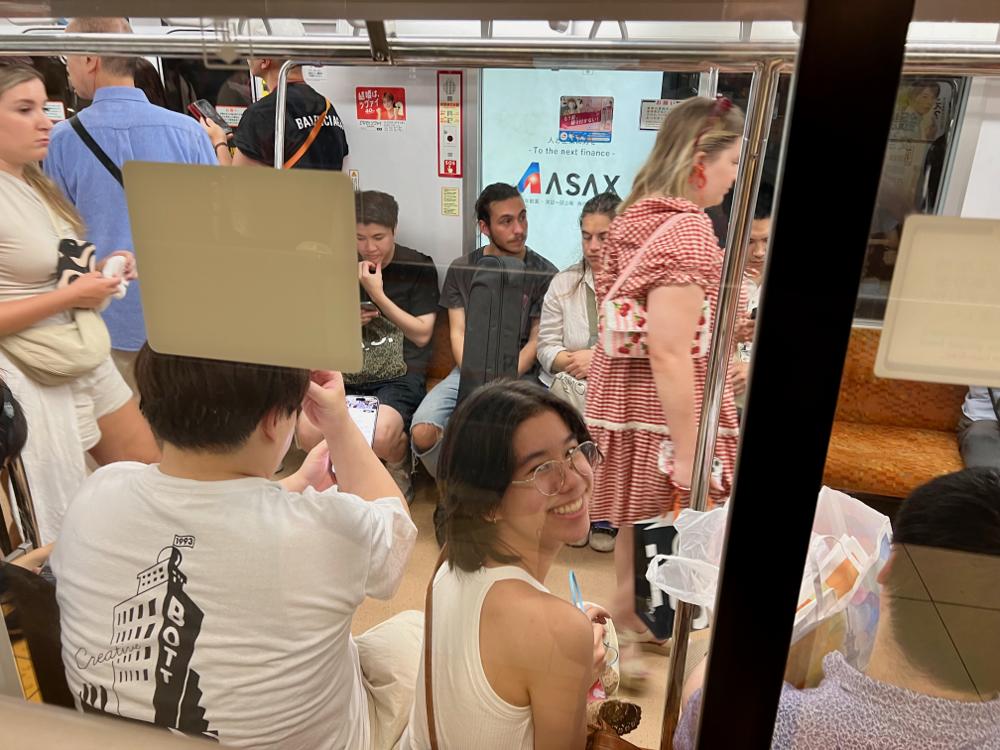
Having already practiced navigating the train system herself earlier in the week, Bree’s up for making her own way to Harajuku. She meets her friends at the Togo Shrine, then spend the next few hours shopping along Takeshita Street.
Meanwhile, Jan checks into the Hyatt Centric Ginza. The hotel has a convenient location but is a bit of a zoo, so there’s a delay getting into the room. Afterwards he stops for a snack at Ginza Ginger, a cafe specializing in shaved ice desserts topped with ginger-based fruit syrups. He also checks out the Muji flagship store but can’t find the right size of tatami sandals Angela had asked for.
This evening, our nephew/cousin Brian Chen is in Tokyo with his friend Matthew; they’re wrapping up a two-week Japan trip following their graduation from high school. We’ve invited them to join us for a Korean-style barbecue at Yakiniku Toraji. We haven’t seen Brian in a while, and his friend Matthew seems nice. The barbecue is fairly good if unremarkable.
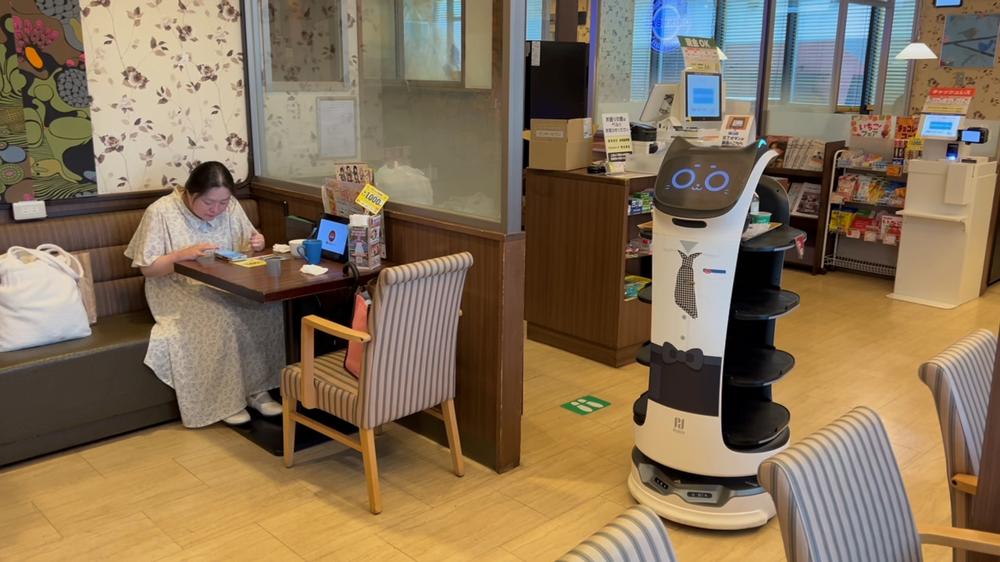
Jan/Bree Japan trip, Day 7. Most Japanese restaurants aren’t open early for breakfast, but one nearby place called Jonathan’s serves American-style breakfasts. They seem to be known for their French toast.
The customer-facing front of the house is heavily automated, so we place our order through a screen on the table. What really floors us, though, is when we hear a little musical jingle, and turn to see a 4 foot tall robot with a cat face driving across the restaurant to deliver our food. The cat robot spins around so that Bree can take the places from the serving shelves in the back, then it plays its little musical jingle as it returns to the kitchen.
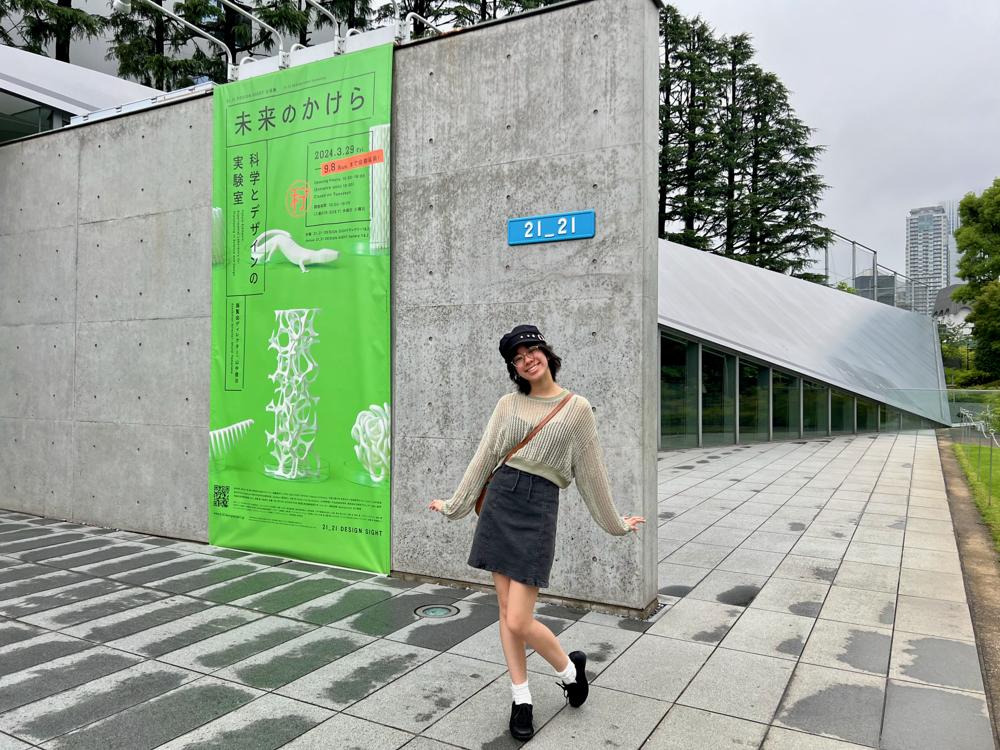
In the late morning we head to the 21_21 Design Sight museum of design in the Nogisaka neighborhood. This is one of the other places recommended by the Australian couple we met on day one. We’ve made arrangements with our friends Mari and Sosuke to join us for the museum visit.
Mari’s been to the museum a number of times, but each exhibition is completely different so she doesn’t mind coming back. The current exhibition focuses on 3D printing and textiles, and both parts are interesting.
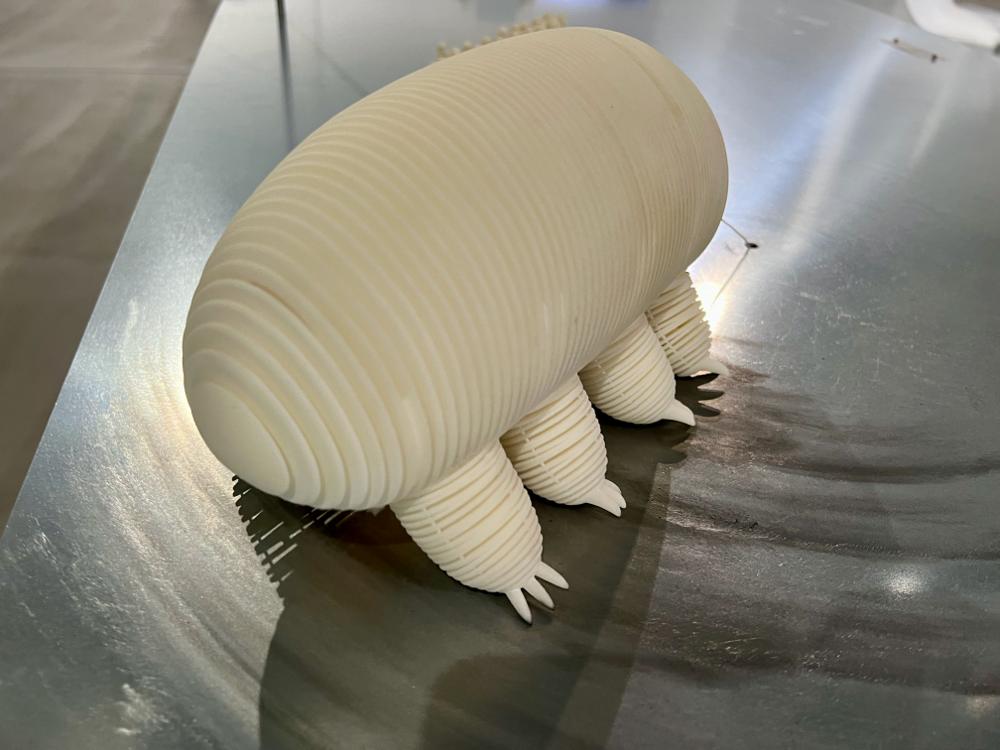
On the 3D printing side, we both like a small robotic tardigrade that walks around on a table. It’s attached to a leash, and is straining at the end of the leash in one particular direction; its endless walking there has left tracks on the table.
After the museum we enter the adjacent Tokyo Midtown Garden Terrace mall in search of a spot for lunch. We eventually find a table at a Chinese place called Silim Fuan Long Yuen. As we eat, Bree and Jan both look out the window at a large lawn. We notice a western tourist has crossed a cordon around a giant outdoor sculpture so that he can climb up inside the sculpture and take a selfie from the top. A mall guard comes running across the lawn to yell at him to get down. Following the pandemic, Japan has experienced a tourism boom, but along with that have come tourists that don’t particularly care to observe rules or cultural norms.
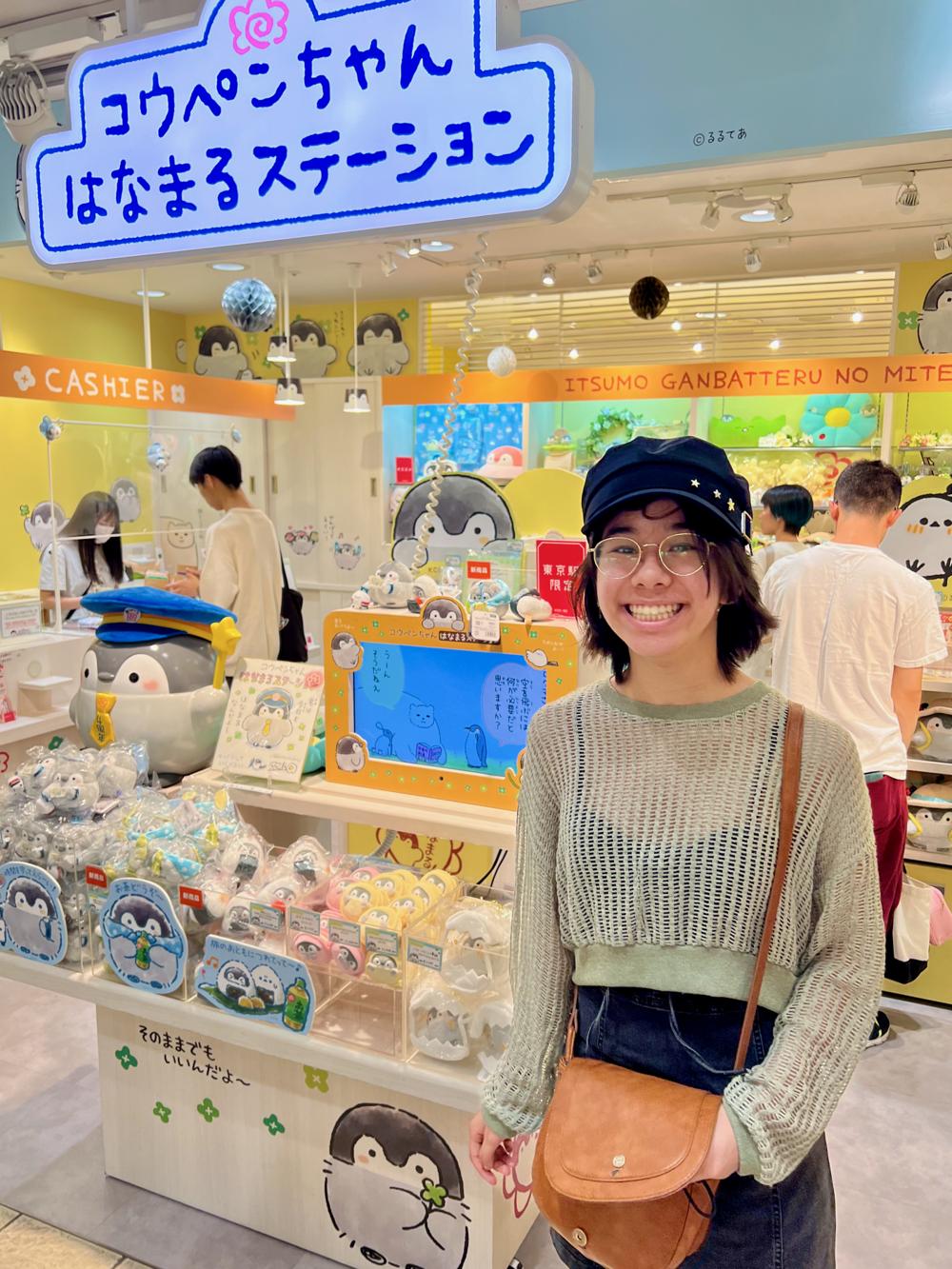
After saying goodbye to Mari and Sosuke, we ride to Tokyo Station to visit the station’s underground Tokyo Character Street mall. Bree picks up character goods at the Koupenchan store and a cute elephant at the Dick Bruna store, along with gifts for her friends from the Peanuts store and a nearby Sanrio store.
Before leaving the station area, Jan wants to stop at the Hitotsubu Kanro candy store. Many years ago some friends gave us chocolate-covered gummy candies from this store and we all liked them, so Jan’s keen to see if they still sell those candies.
The candy store, unfortunately, takes forever to find. While Google Maps generally makes navigating around Japan easy, it doesn’t know what floor of the giant station we’re on, nor does it know which areas of the station are behind ticket wickets that require paying an entrance fare. The station is also crammed with people on a Sunday afternoon. It takes us a very long time to even get to the right side of the station, and then many more minutes to work out that the candy store is within the subway fee area. Happily, the store does still sell some chocolate-covered gummy candies, and we buy a couple of boxes before heading back to the hotel.
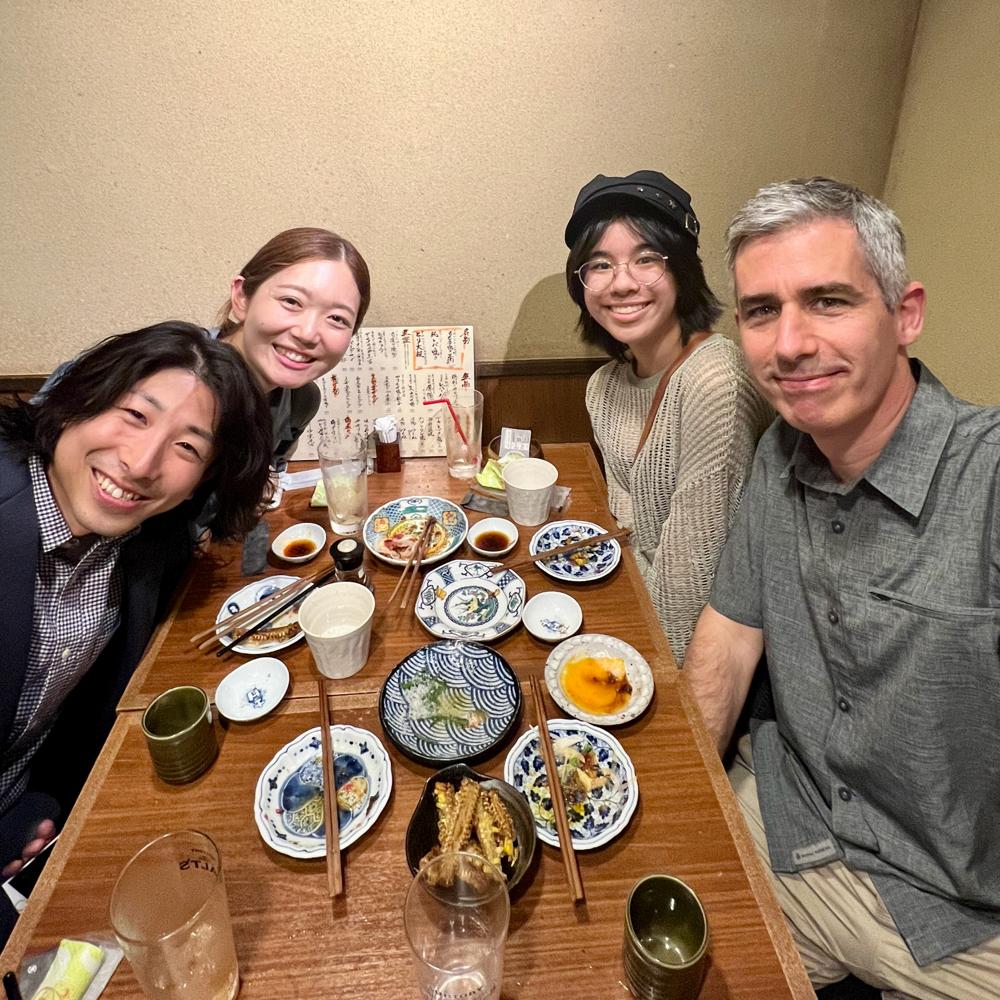
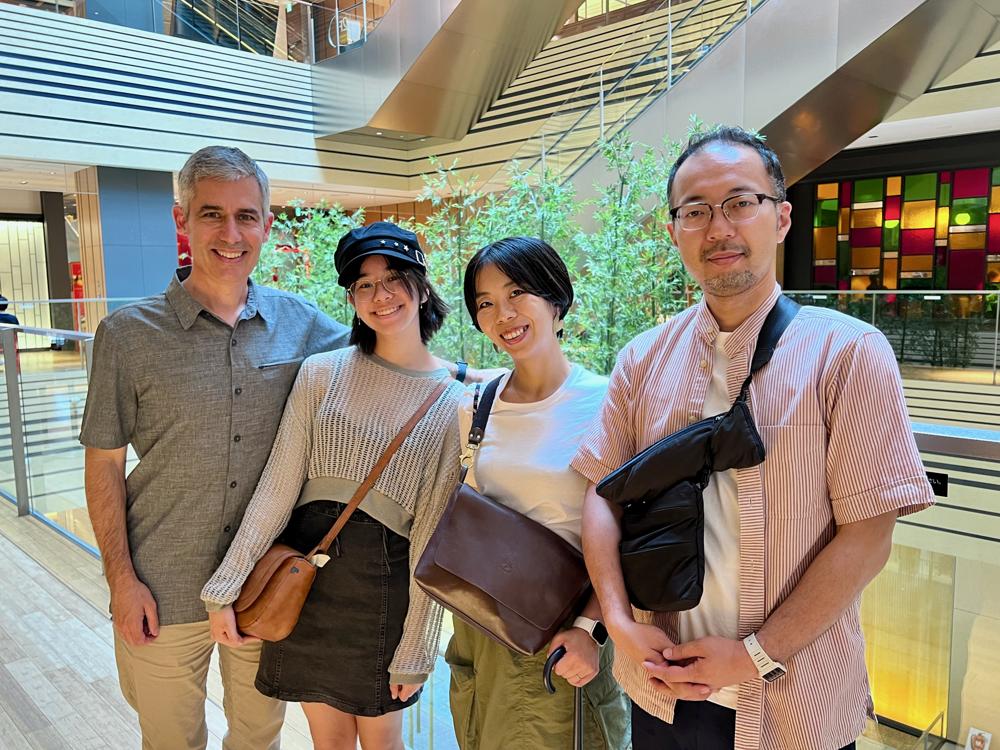
In the evening we take the train to Ogikubo to meet our friends Miho and Atsushi at a yakitori restaurant called Torikichi. Miho and Atsushi moved to Tokyo last year and have happily settled into the Takao area on the far western edge of the city. The area is close enough to mountains that they can get to good hiking in only 15–20 minutes from their home.
It’s wonderful to catch up with them and see that they’re both doing well. When Jan tries to help pay for the meal, Atsushi says, “Put away that Hyperlite Mountain Gear wallet!” He works at a company that makes ultralight equipment, so had identified Jan’s thin, black wallet from the logo.
Jan/Bree Japan trip, Day 8. We have breakfast at the City Bakery in Tokyu Plaza mall. Everything looks so good to Bree that she gets three pastries — one more than she can actually eat.
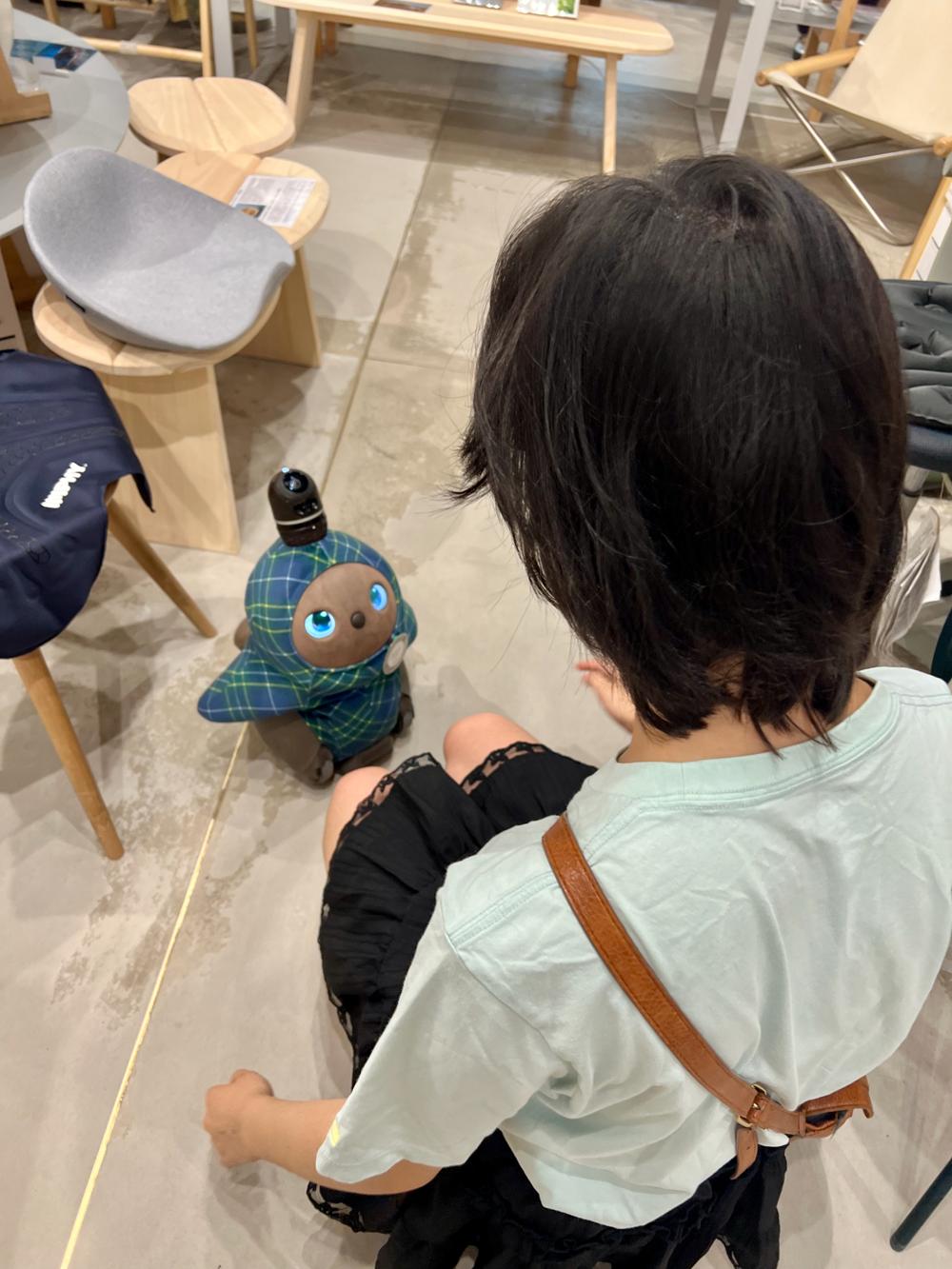
We return to the hotel to pack up for our return flight to Seattle. We still have a few hours before we need to leave, so head to a store called the Good Design Store. They do a good job of selecting interesting products to sell, but Bree is completely captivated by a small penguin-shaped robot that rolls out to her. The penguin has a sensor package on top of its head that lets it find people and their faces, so it does a very good job of making eye contact. When Bree backs up, it rolls forward a bit. It makes happy sounds and flaps its robot flippers for attention. Its face as a button nose: when you boop it, the robot blinks and makes a happy sound. Bree loves it.
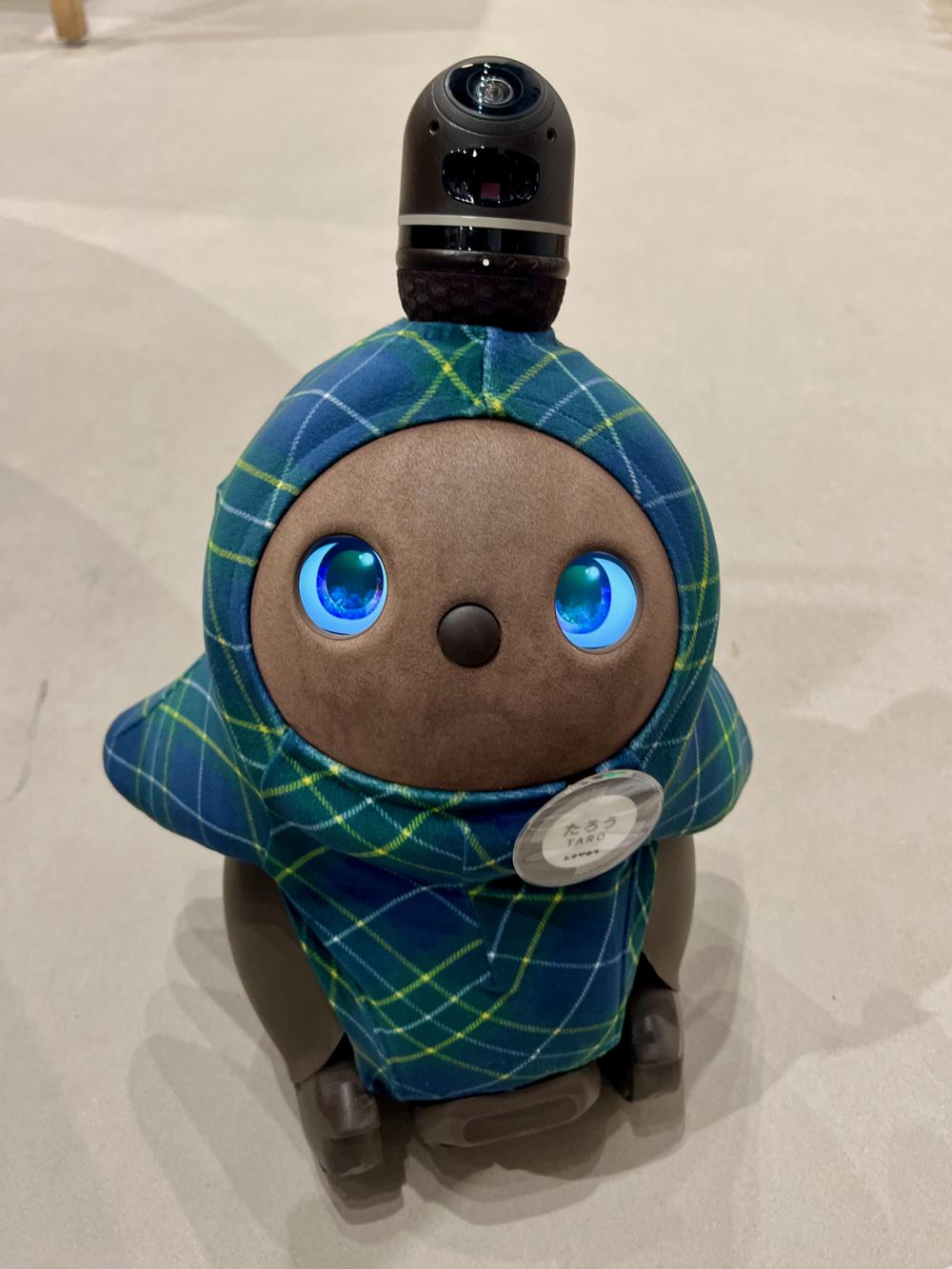
The robot penguin is made by a company called Lovot, and they happen to have a dedicated Lovot store across the street. We walk to the store, and it’s charming to be the focus of the attention of a flock of robot penguins. The store lets visitors pick up the robots, so Bree cradles one and it coos at her.
Like many Japanese shopping malls, the mall the store is in has a restaurant level on top, so we make our way up there and find an Italian restaurant for pizza and pasta.
We return to the hotel to collect our bags and head to Haneda Airport. We have plenty of time before our flight, so we stop for a soft-serve ice cream and a smoothie. We want to get snacks before the flight. Although Japanese cities have convenience stores everywhere, in the airport’s expansive secure area there’s only a single 7-Eleven. We have to walk about a mile to get to it, then another mile to get back to our gate at the opposite end of the airport. Along the way we pass countless shops selling high-end, duty-free, completely useless merchandise.
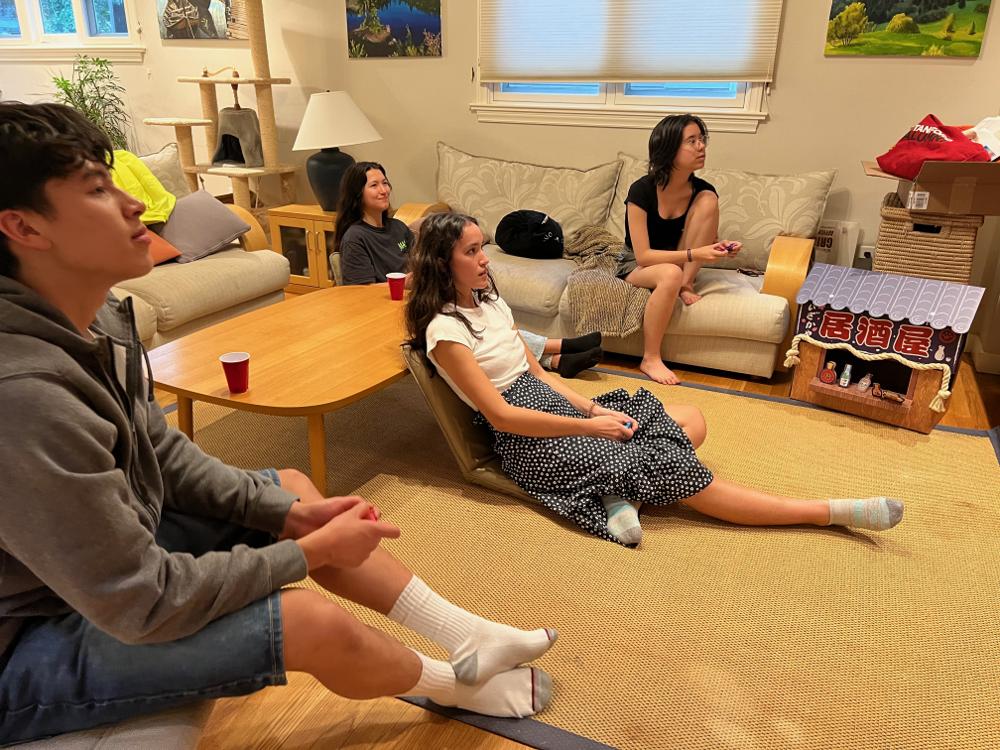
We host a gathering of families from the Mandarin playgroup we joined around the time Bree was born. The kids are all in high school now. Vincent, Serena, Natasha, and Bree have fun playing Mario Cart, going for a walk, and playing the board game Poetry for Neanderthals.
Bree has her wisdom teeth removed in a surgery that goes quickly and smoothly. Following the surgery, she’s a little loopy and tired but otherwise fine.
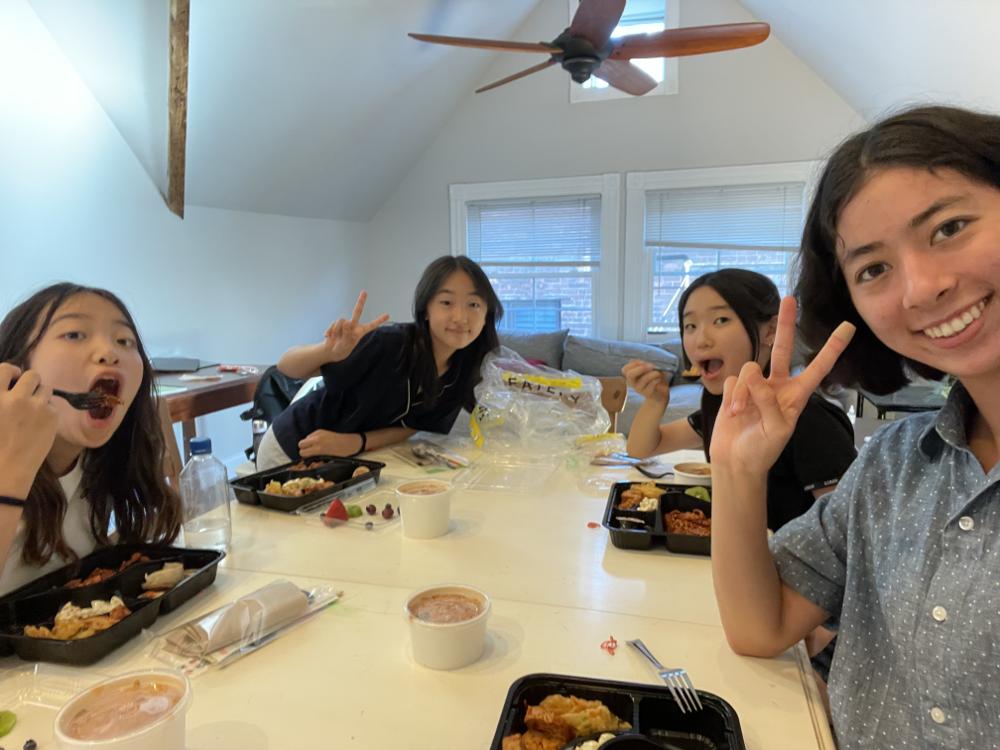
Liya is in New Haven for the summer working at a Yale lab. As a side gig, she’s also working as a counselor at a summer school program for middle school students. She’s in charge of three girls. She breakfast and dinner with them, and spends the evenings with them. Liya says the girls are nice and studious; in the evening when she’s supposed to make sure they’re doing homework, they work so diligently that Liya feels obligated to get in some extra work too.