Our summer’s been so busy that we forgot to mention that on June 27, we began hosting Evrim, an international student at Choate that needed a place to spend the summer.
That makes seven people in our house right now! Anya and Lyn have swapped rooms so that Anya and Evrim can share the large guest room.
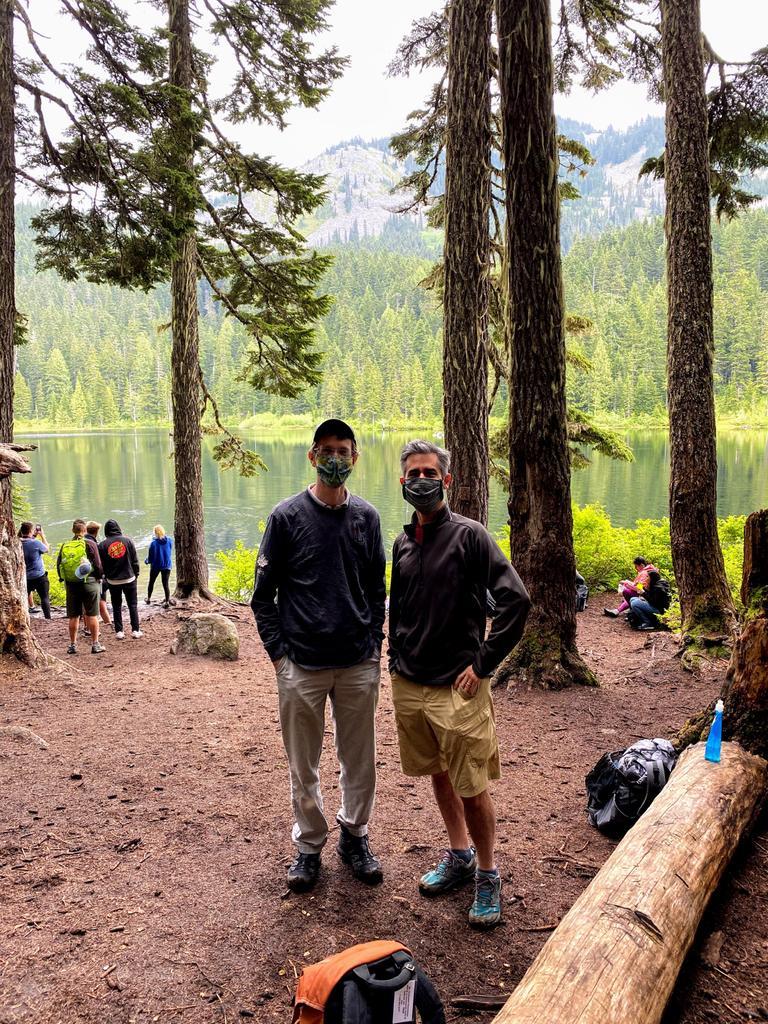
Jan goes for a day hike with his friend Chris to Talapus and Olallie Lakes.

Bree turns 13!
We now have three teens. (And four in the house, counting our summer guest, Evrim.)
Our family celebrates Bree’s birthday with a taco lunch. Months ago, Bree had jokingly added an appointment that read “Tacos!” to her birthdate in Jan’s online calendar. Since that’s what the calendar says, that’s what we have!
In the late afternoon, Bree has a socially distant birthday get-together with her friends Amari, Elsa, Hazel, and Leah. They run around at Madison Park, eat pizza for dinner, then sit in a spaced-out circle on the grass and talk.
Jan and Lyn drive to Colville in Eastern Washington so Lyn can drop Jan off for his long hike for the summer. Last summer, he hiked about 160 miles on the Pacific Northwest Trail (PNT) from Oroville to Ross Lake across the Pasayten Wilderness. This summer, he’s hiking the PNT section east of that: 170 miles (273 km) from the Kettle River to Oroville. The upcoming section is broken up into real trails connected by forest service roads, so it’s going to be more of a mixed bag.
Jan and Lyn stop in the tiny town of Ritzville for lunch at the Cow Creek Mercantile. Northeastern Washington has had comparatively few COVID cases, and has a Fox News audience, so there are few masks to be seen anywhere. Still, the restaurant’s doing it’s best, and has placed signs on the floor that read, “Please stand 1 cow apart”.
Arriving in Colville, Jan and Lyn go for a walk in the city’s small but pleasant Yep Kanum park, followed by dinner at Cafe Italiano. The restaurant is owned by an older Italian immigrant whose clientele mostly wants pepperoni pizzas, but who is capable of cooking amazing specials. Dinner is fantastic, and far too big for the two to finish.
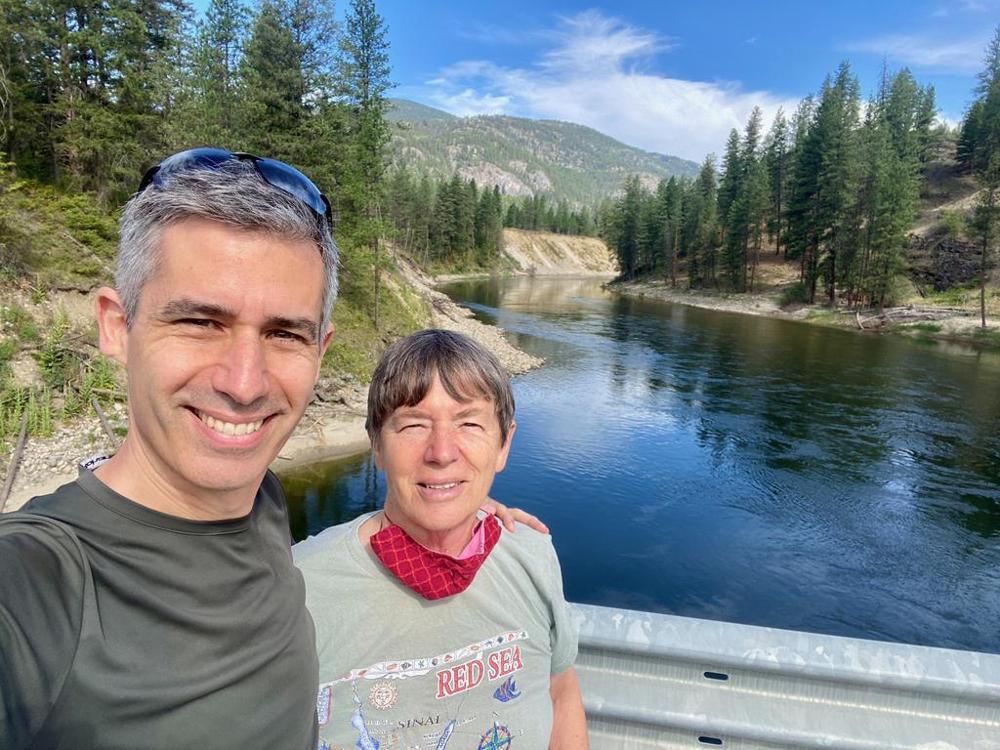
Jan’s PNT hike, Day 1. Mom and I have breakfast at The Coffee Shoppe on Colville’s main street. The cafe’s coffee and food are fine, but the woman who’s just come on shift is chatty and slow. The cafe apparently has only one hot plate to cook on, so our orders come out one at a time.
Mom drops me off around 9:30 am at a bridge over the Kettle River. She walks with me for a minute to a road crossing, then says goodbye. I’ll see her again in 9 days when she meets me near Oroville, WA, 170 miles away by foot.
This first day on the “trail” is almost entirely on forest service roads. The roads at the start are well-maintained and well-used: there are occasional pickups and SUVs by the side of the road (people going fishing, maybe?). At one point an animal runs out of the woods — a dog who’s very interested in saying hello. The dog’s owner calls out from the middle of huckleberry bushes near the road. The owner and her friend are picking early-season berries, but they say there’s not much to pick yet.
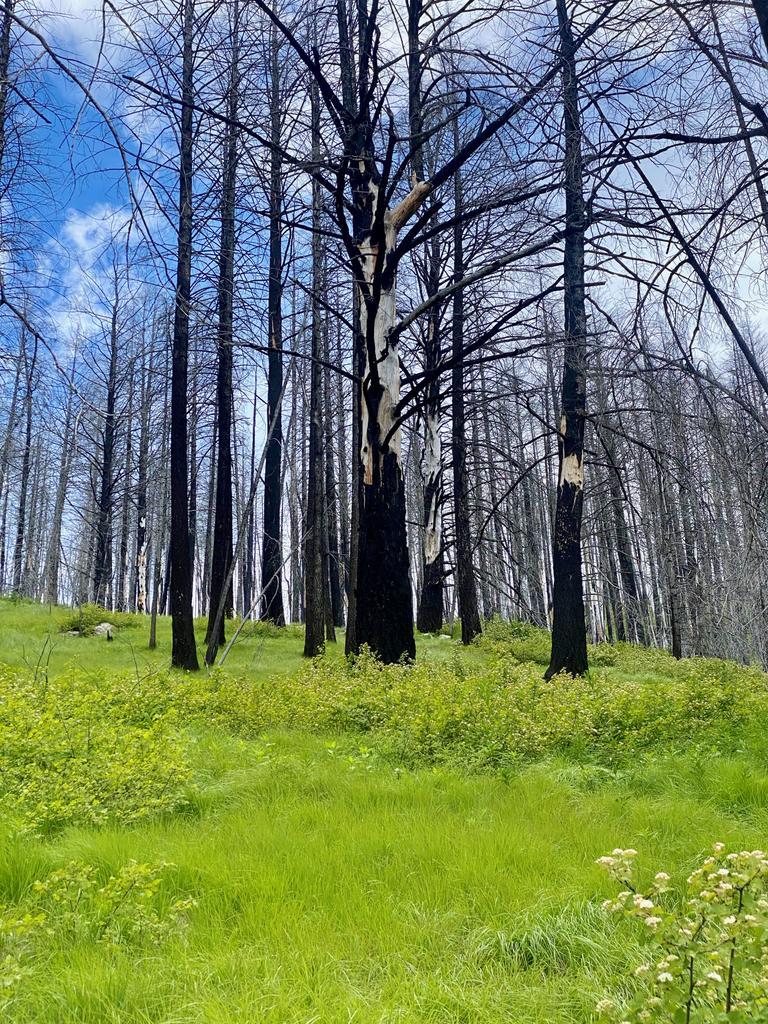
I stop for lunch at a small grassy meadow, then enter a large area of forest that burned a few years ago. The gloom of a forest of dead trees is moderated somewhat by the beautiful weather — it feels like Mordor on a sunny day.
The forest roads become rougher and rougher. At one point I miss a turn-off, but I’ve got a good map app with the route and quickly notice and correct my mistake. A short while later, I miss another turn-off: the PNT cuts through a narrow break in bushes to end up on an ancient, disused road. The road’s essentially gone; it’s covered with trees and bushes, and the only evidence it ever existed is that the steep hillside has a road-width grade cut into it.
The road descends into a surprisingly boggy valley. This area of Washington is very dry, but there’s a spring or creek somewhere in this valley that turns the trail into soft mud. Frustratingly, this area also has many, many blown-down trees. Some blowdowns are just big logs that are easy to scramble over or under, while others retain bushy limbs and, as a result, are nearly impossible to push through. Both sides of the trail are covered with many more blown-down trees and bushes, so going around is often not an option. To top it off, although the skies have been clear all day, a dark cloud moves overhead to drop a light rain.
It takes an hour and a half to cover one mile of this hellish valley, and scrambling through the blowdowns and overgrowth leaves me with countless scratches and a bleeding knee. I’m very happy when the road finally climbs up to drier and clearer terrain.
My camp for the night is at the quasi-abandoned Deer Creek Summit Campground. This campground sits inside the burned forest, so has almost no trees and very little charm. Still, it does have flat spots to pitch a tent. In previous years it’s been closed, but it appears to be open this year — or, at least, the camp’s restroom is open and appears to be serviced.
Given the bleak state of the campground, I’m not expecting anyone else to be camping here, but there are two other groups. There are two fisherman — a father and son? — plus two young women leaving tomorrow to hike south on the Kettle Crest Trail. The PNT follows that trail for the next 40 miles or so, so I’ll be hiking the same route. One of the women’s parents have been hiking the same Kettle Crest Trail northbound for the past two days. Her parents arrive around dinnertime. The parents and the younger women swap car keys — this kind of “key swap” hike lets two groups hike a long trail in one direction and still have a car waiting for them at the other end. One of the young women comes over to my site with an offer of a cold beer, and I hang out with their group of four for a while. The parents provide a useful trip report on the state of the trail south of here.
It’s a clear night, but I’m in bed by 9:00 pm (“hiker midnight”).
Jan’s PNT hike, Day 2. I wake to clear skies and pack up for today’s hike south along the Kettle Crest Trail. Having gotten fairly scratched-up yesterday, I start the day’s walk along an easier and clearer dirt road that parallels the trail for the first few miles before switching over to the trail proper.
The morning’s walk continues through the burned forest, and I’m happy when I finally see live trees come into view in the late morning. I stop for lunch at the first live tree I come to so I can have some shade from the hot sun.
In the mid-afternoon, I meet three day-hikers that have come up from Curlew Lake. One of them is a young man carrying a large, heavy pack; he’s training for hunting season. From where we stop to talk, I can see west across some low hills all the way to Mount Bonaparte, which I’ll come to in about a week’s time.
A short while later I come to Midnight Spring. This section of the Pacific Northwest Trail doesn’t have many lakes or streams. Water sources can be far enough apart that some consideration must be made for how much water to carry between the sources. On these National Forest lands, many water sources are “piped springs”: a pipe that comes from a tapped underground spring somewhere uphill that empties into a large rectangular trough that grazing cattle can drink from. If the piped spring is adequately constructed, the water falls from the pipe into the trough, making it possible to fill up one’s water bottles from the pipe while avoiding the water in the trough. Since Midnight Spring is the last water source before my intended campsite, I also take the opportunity to do a sort of sponge bath next to the spring.
The PNT reaches a saddle between two peaks and crosses an old stagecoach route. From there, the trail makes a ridiculously steep climb to the summit of Copper Butte. In most steep places, the trail has adequate switchbacks, but here the trail pretty much goes straight up.
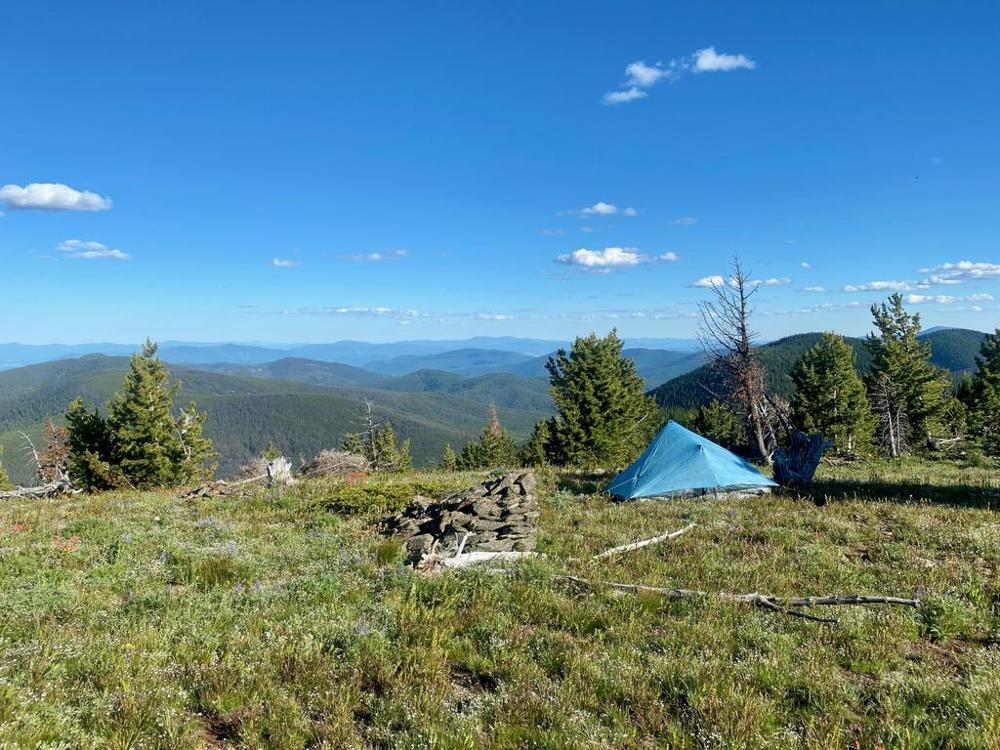
At the summit of Copper Butte, I hunt around for a flat spot large enough for my tent. There’s a great view to the east all the way to Idaho. I’m expecting to be the only person at the summit for the night, but as I’m getting ready for dinner, I hear voices. A pair of hikers and their dog set up a short walk away. I’ve found that I always enjoy camping more if I’m within shouting distance of other people.
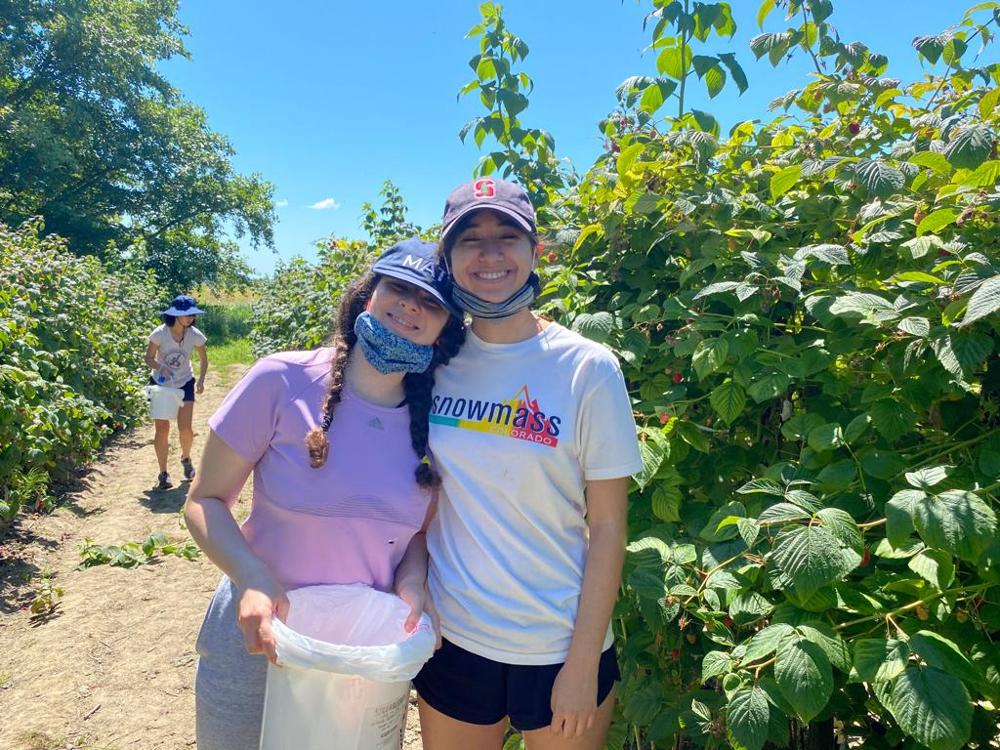
We took our International Student Evrim for a day of raspberry picking in Mt Vernon. We now have raspberry sorbet, raspberry jam, and raspberry syrup for Italian sodas. And still, raspberries.
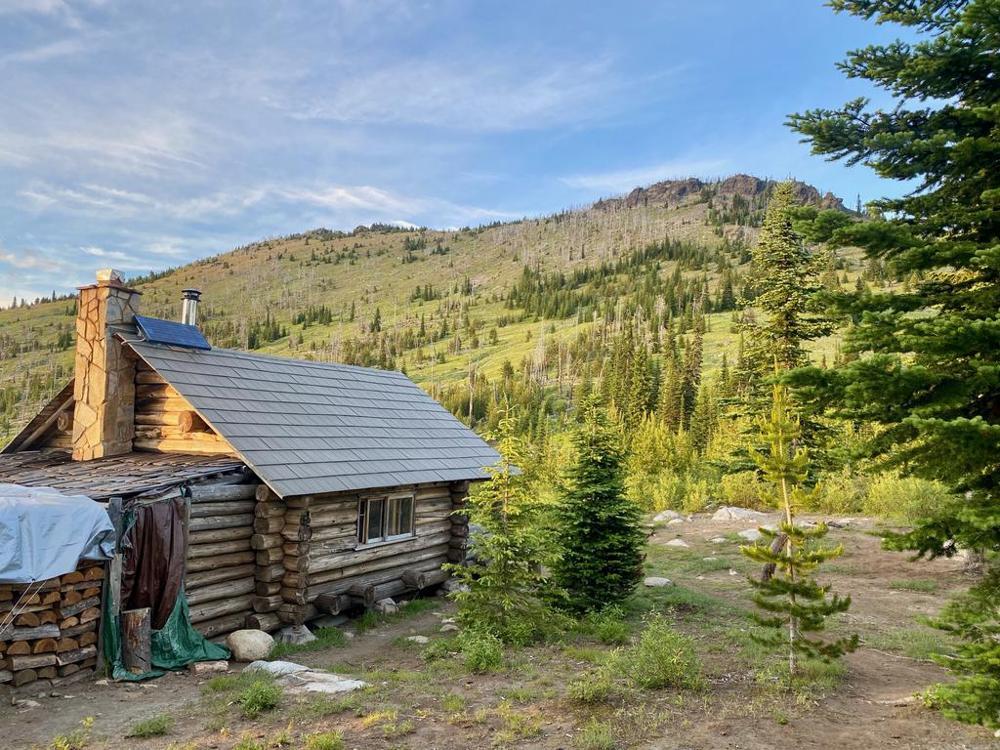
Jan’s PNT hike, Day 3. Since I’m camping on top of a mountain, sunrise is very early — before 5:00 am, I think? When I’m ready to get up, I see that the outside of the tent is covered with bugs waiting for me to emerge. I greet them: “Hello, boys!”
On my way down the mountain, there’s a meadow with a chipmunk in it that shouts “Meep!” as I approach. I say “Meep!” back to it, and it says “Meep!” again. We meep back and forth for a while.
This section of the Kettle Crest Trail has lots of day hikers coming up from a trailhead at Sherman Pass. There are also a handful of mountain bikers. The trail is quite rugged, so the bikers are often pushing their bikes up the inclines. It doesn’t look particularly fun.
I don’t feel especially strong today. I decide to make it a relatively short 14 mile day and stop near a cabin called Snow Peak Cabin. It’s possible to reserve the cabin itself for camping, but when I’d checked online, someone had already reserved it. At the Sherman Pass trailhead, I meet a family getting out of a car and putting on packs. There’s a mom with her two young kids and her own mother. The four of them turn out to be the group that’s reserved the Snow Peak Cabin, so we’re headed to the same place. The grandmother tells me to expect them to arrive a few hours after I get there.
I’d heard there were good tent sites near the cabin, but I can only find one — and it’s already occupied. The next site is too close to the cabin, and the only other site I can find seems to lie directly on top of an anthill. So I end up setting up in the site that’s too close to the cabin. I’m not sure how the family will feel about having me right outside their door. Luckily, when I go to get some water from the nearby spring, I discover that the other tent camper is packing up to leave. As soon as they clear out, I move my tent over, and have a good spot to myself under some tree cover from the sun.
The family finally arrives a few hours later and moves into the cabin. They discover a note left in the cabin that says a bear has recently been visiting the cabin — usually at first light, around 4:30 am. As a precaution, I end up storing my food bag in the same small utility outbuilding that houses the cabin’s bathroom.
As the sun’s going down, I spend time talking with the family as they sit out on the cabin’s porch. While we’re talking, a family of coyotes begin to howl and yip not too far away. We can see the general area on the mountain less than a mile away where the howls are coming from, although we can’t see the coyotes themselves. The family’s daughter is nervous about getting eaten by coyotes, so the mom and I take turns reassuring her that she’s perfectly safe.
I don’t normally worry too much about bears, but somehow knowing that a bear likes to visit the cabin at 4:30 am sharp is worse than knowing a bear will visit later in the day. I wonder if the bear will come by to provide a morning wake-up service.
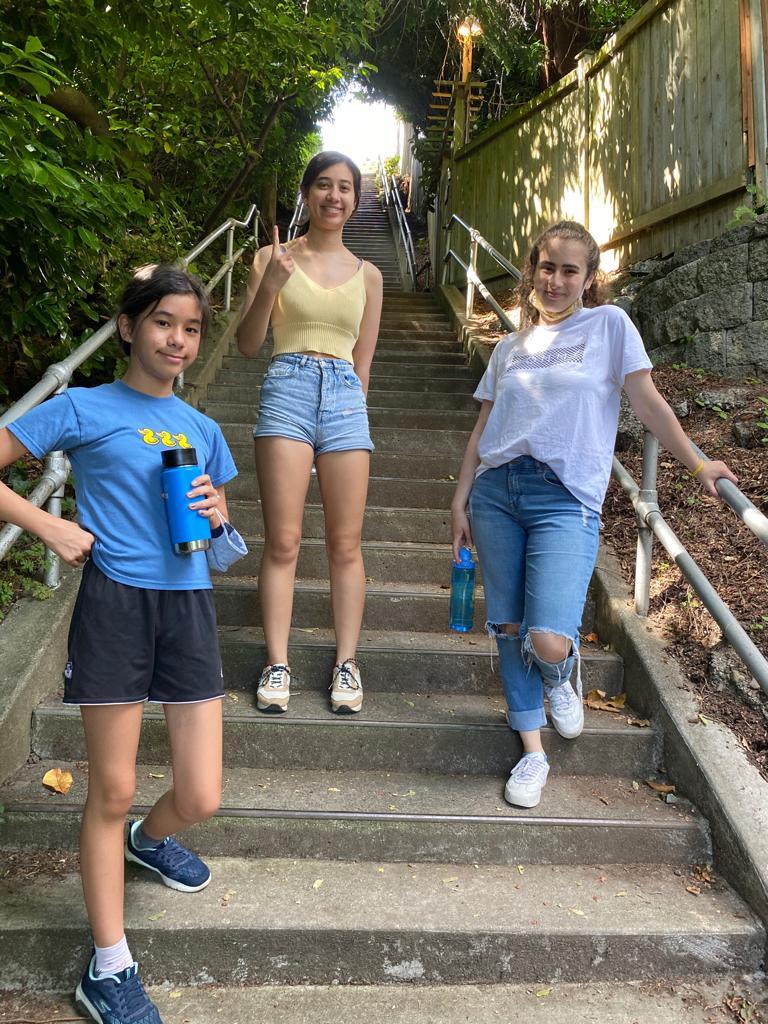
Angela, Anya, Evrim and Bree tried some Seattle stairway walks in Madrona/Leschi. Not a long walk, but they were so quarantine-out-of-shape that they had to stop and rest multiple times.
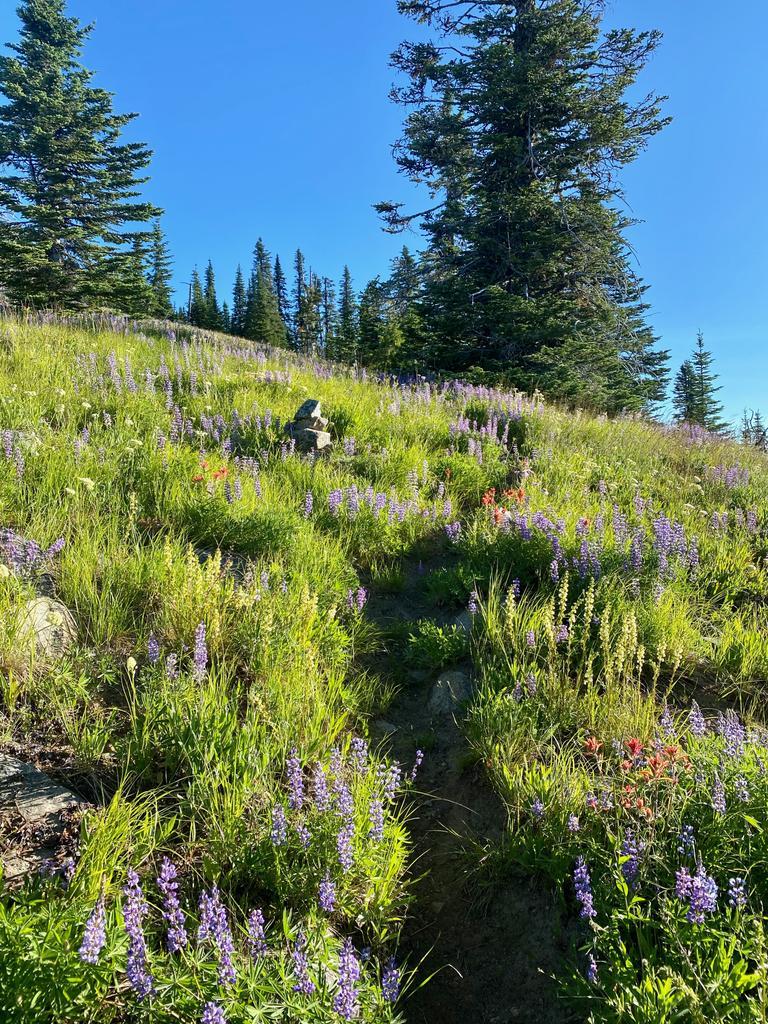
Jan’s PNT hike, day 4. It’s windy all night, and while the trees my tent is under block the wind from buffeting my tent, the sound of the wind is quite loud. I put in ear plugs. If a bear comes by my tent at 4:30 am, I don’t hear it.
Today is going to be a very long day of hiking, so I’m up at the crack of dawn at 5:15 am. It’s a beautiful morning, and I spent the first part of it hiking a bit further south on the Kettle Crest Trail around the top of Bald Mountain. I eventually reach a part where the Kettle Crest Trail continues south, but the Pacific Northwest Trail takes a turn to the west along a much smaller, unmaintained trail.
The trail crosses alpine meadows, and gets fainter and fainter. It becomes necessary to follow rock cairns to stay on the trail. The cairns cross over Edds Mountain, and eventually the trail descends to a large rock cairn that marks the end of that trail. From this point, the PNT requires a hiker to bushwhack down a forested slope to an old forest service road. Because the PNT is a very new trail — it was officially recognized only in 2009 — there are a few spots like this where a hiker is essentially on their own, and must find their own route.
I begin to make my way through the forest. At first it’s not too bad, but the terrain gradually gets steeper and the vegetation thicker. This bushwhack isn’t particularly long — a mile, maybe? — but it’s very slow going. I’m extremely happy to finally reach the old forest service road. The road itself isn’t in great shape, and is crossed by many downed trees, but at least it’s easier than bushwhacking. I finally reach a maintained dirt road at the bottom of the valley, and the walking becomes easier still. (Much later, I’ll meet a National Forest ranger who tells me there’s a pack of wolves that lives in this little valley. On the whole, I’m happy I wasn’t aware of this when hiking through the area.)
The morning’s hiking has been quite hard, so when I stop for lunch at 11:00 pm, I’m a little disappointed to see that I’ve only come 7 miles. I have 16 more miles to go. The hiking should be a little easier from this point on, but it’s still a long distance to walk. I turn off the forest road onto the little-used Thirteenmile Trail. The trail is in okay shape, but it’s boring as trails go: mostly waterless, with very little variety in plant life, and without a single view or pleasant spot where one could camp. It feels like I’m walking past the same 3 trees for hours.
Hours later, the trail finally emerges onto beautiful hills covered with dry meadows. It’s unfortunately very exposed, but the scenery makes up for it. I can see all the way down to the canyon where Thirteenmile Creek joins the Sanpoil River. The canyon looks spectacular from where I stand — but also very far away. The route is also a little tricky. At one point the trail crosses a rocky area and disappears. I have to rely on the route I’d scouted online using satellite photos, and am relieved to pick up the trail where I expect to find it. I lose the trail again at another point, and have to bushwhack across a meadow and through some woods to reach the trail again. By the time I step back on the trail, my socks and shoes are covered with poky, burr-like grass seeds. (It will take several days to find and remove all the seeds from the lining of my shoes.)
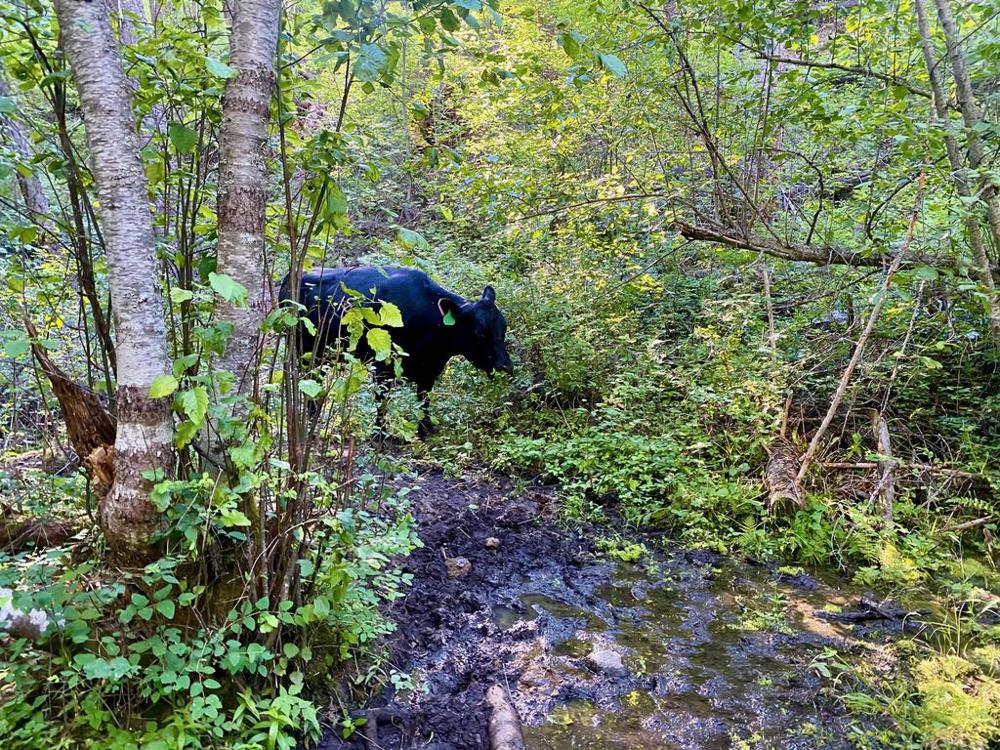
There’s a point where the trail descends into a ravine with a small creek at the bottom. As I approach the creek, I see a large black shape through the trees. It’s a black cow. The cow is standing at the creek, directly in the middle of the trail. Dense vegetation on either side prevents me from walking around the cow.
This leads to a hiker game I call, “Cow in the Way”. (I will end up playing Cow in the Way a few more times on this trip.) The cow looks at me, neither frightened nor aggressive. I make noises and wave my trekking poles to try to get the cow to move out of the way. The cow is completely unperturbed. I make more noise. The cow eventually turns and walks, very slowly, a little further up the trail away from me, still blocking the way. We repeat our interaction: I make noise, the cow shrugs and moves a little further up the trail. At this point, I’m very tired and would very much like to stop playing with the cow, but there’s nothing for it. Finally, the cow moves into the bushes and I can get past it.
The trail finally reaches the canyon of Thirteenmile Creek, and high bluffs rise on either side of the trail. I eventually reach the end of the trail at the Thirteenmile Trailhead. This is described online as a “campground”, but it’s mostly a parking area and restroom. I dunk myself in the freezing cold creek to wash off a day’s worth of sweat and sunblock, have a quick dinner, then collapse. Today I’ve walked about 24 miles.
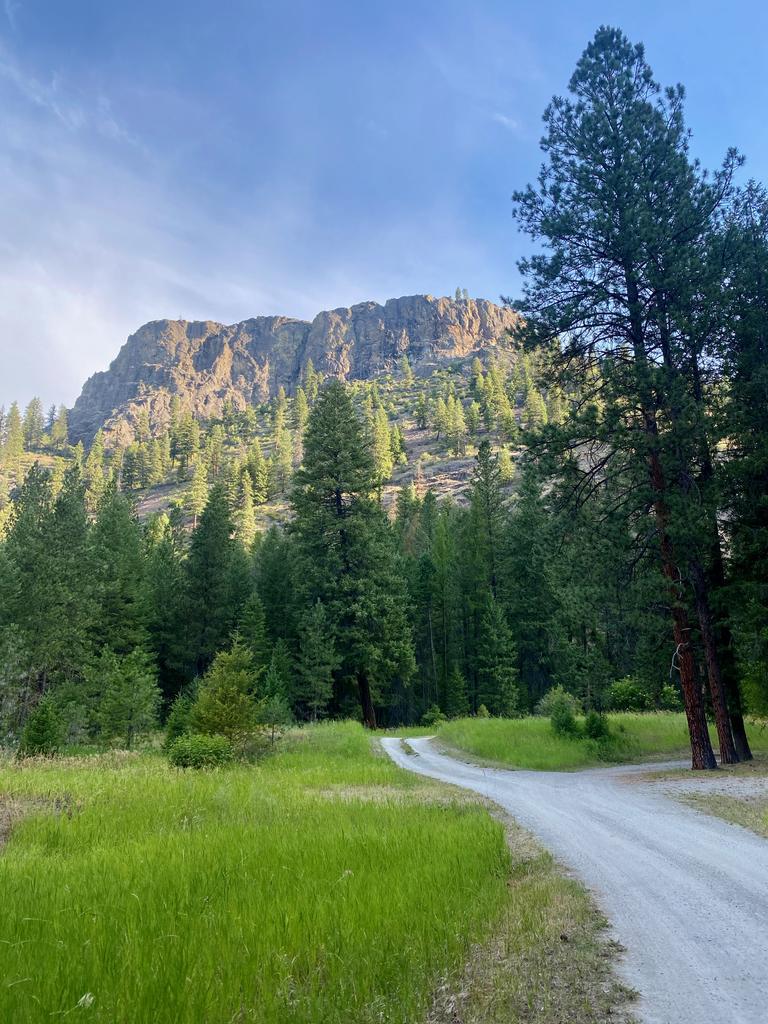
Jan’s PNT hike, day 5. Sometimes even the parts of the PNT that follow a road are gorgeous. This morning I start by walking north up a paved country road that runs along the Sanpoil River canyon for several miles. It’s a perfect morning, and the sun hasn’t hit the bottom of the canyon yet, so it’s still cool. The Sanpoil River burbles along next to the road.
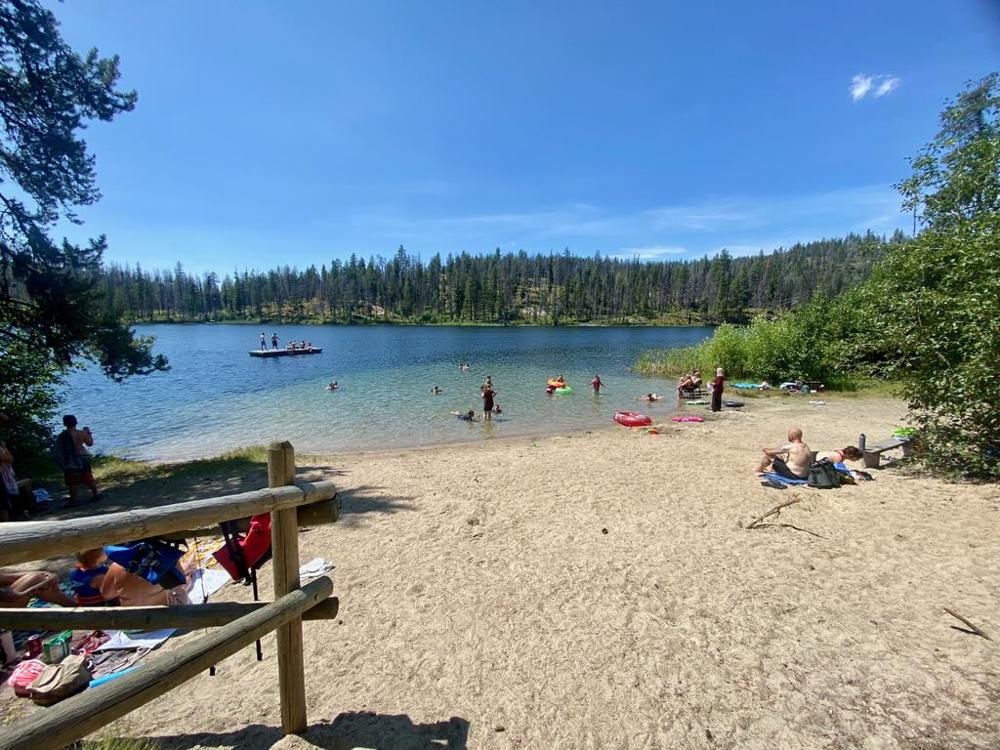
I finally reach the trailhead for the Tenmile Trail and begin climbing out of the canyon. The trail seems to have had few or no visitors so far this year. By the time the trail comes out onto the plateau above, it’s hot. There follows a boring road walk, but I’m motivated by the fact that I’m almost done for the day. Today’s destination is the Swan Lake Campground, and I’ve planned this as a short day so that I can spend most of the day enjoying the lake.
I reach the campground by 11:00 am, and find a great site, one of several which other visitors have passed over because the sites aren’t directly next to a parking spot. My site’s just uphill from the lake’s sandy beach and swimming area. A few people are already there. The lake is cool, but not freezing, and feels great on a hot day. Over the day, more and more people will arrive to swim and hang out on the beach. (There is essentially no social distancing going on here.) There are a number of families, plus a large group of teens.
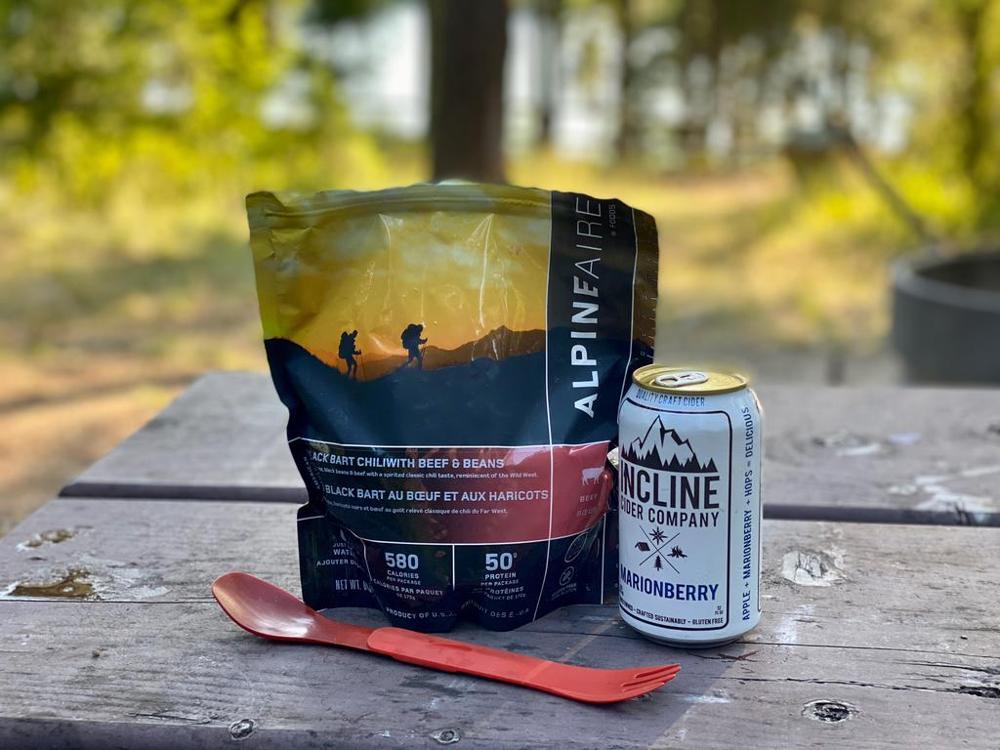
I chat with a retired couple who are building a cabin nearby. They did some work on their cabin this morning, and have come over to the lake for a swim to cool off. They’re interested in hearing about my hike. They have a small cooler with drinks in it, and offer me a cold, hard lemonade. It tastes amazing. Later, when it’s time for them to go, they offer me a hard marionberry cider, which I gratefully accept. I ask them if they need the bag of ice they’ve got in the cooler, and they’re happy to give that to me as well, so now I’ve got a way to keep the drink cold until dinnertime.
I spend the afternoon swimming, reading, napping, doing laundry, and making various repairs to my hiking shoes and other gear. I make a dinner of chili, which goes great with the ice-cold marionberry cider. When the sun goes down, the loons swimming on the lake call to each other.
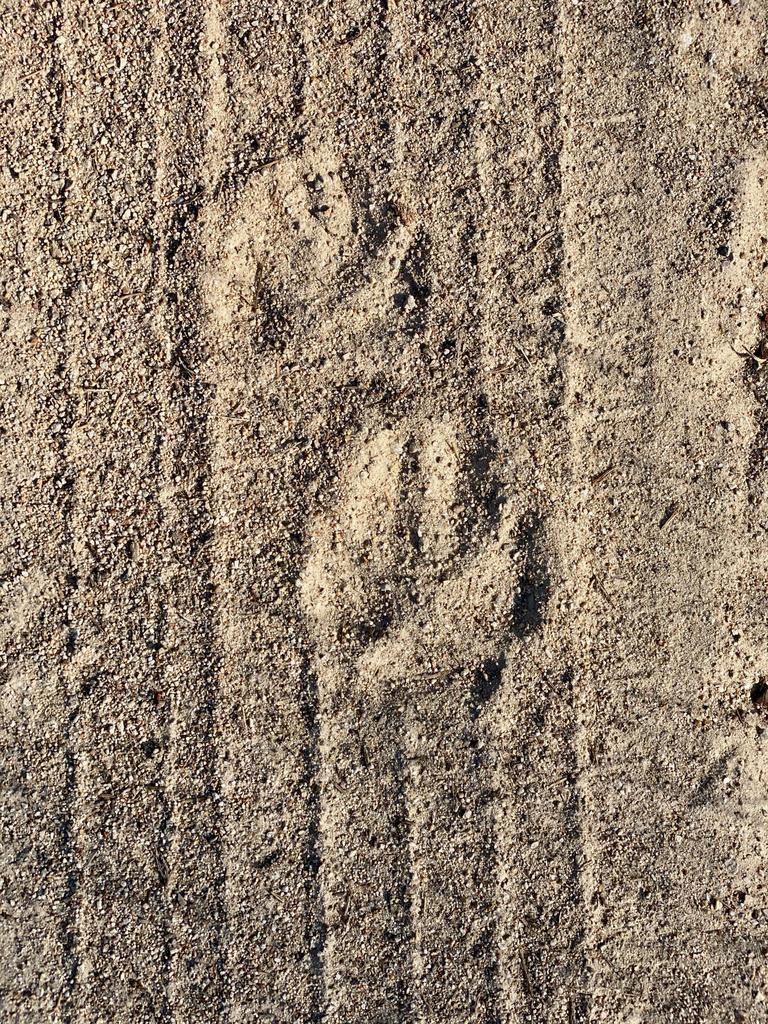
Jan’s PNT hike, day 6. The loons kick off the morning with wake-up calls across the lake. I have a quick breakfast and pack up for what will likely be an incredibly long and boring day of walking on hot, dusty, exposed forest service roads. I walk past the same 3 trees for the entire day. One tiny bit of interest: spotting cougar tracks in the sandy roadbed. Other than, the day is as boring as expected, and devoid of people. No one other than a PNT hiker would care to hike this.
I finally reach my exciting camping destination for the day: the defunct Sweat Creek National Forest Campground, now downgraded to a “Day Use Picnic Area”. This “picnic area” off Highway 20 turns out to consist of a gravel parking area and a restroom — no picnic tables, or any other features, in sight. I try to imagine how someone would use this area for a day.
I set up a short distance away from the parking area. The spot actually does get people driving on Highway 20 who stop to use the restroom. After I get stares from one of the visitors, I decide to move my camp further away. I find a spot a short distance away, which happens to be a much nicer spot along Sweat Creek.
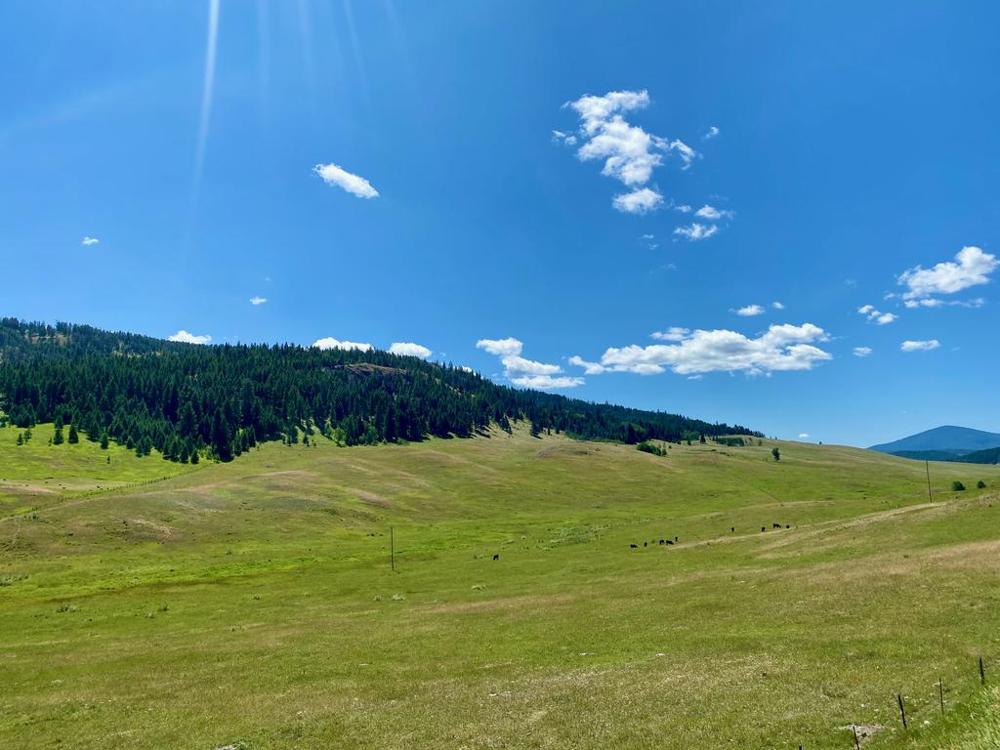
Jan’s PNT hike, day 7. I wake up at sunrise again because today will be another long day. The day’s hike starts with a long climb up a ridge on Clackamas Mountain. Because I’m starting early, it’s still quite cool out, and animals are still active. I see loads of deer, as well as at least one dog-shaped animal bounding away through the grass: a fox, or perhaps a coyote.
I descend the other side of the mountain into a remote valley inhabited by people that really want to be left alone. The trail itself feeds into an old road on National Forest property, but there’s a spot where the road cuts across a corner of what is now private property before returning to public property. Apparently this property owner is grumpy about hikers on their land, so the PNT Association recommends that hikers bushwhack into a ravine, back up, then back down into the ravine further down — all to avoid walking on the bit of road that crosses this person’s property. I have no interest in being yelled at or shot at, so dutifully slog through the difficult terrain to stay on public property.
I finally get back on the road after it leaves National Forest property. The road itself is still public, but now there are private lands on either side owned by people who emphatically do not want people to trespass. PNT hikers online describe this valley as the home of the Unibomber or perhaps a right-wing militia. There are all manner of “POSTED: No Trespassing” signs, some of which document the level of violence or type of gun the property owners will use on transgressors. One owner has emphasized the point by mounting animal skulls to their fence. Many junked cars line the sides of the dirt road.
After I’ve passed one house, I heard a loud WOOF WOOF WOOF start up behind me. A big black dog — maybe one of two? — is barking wildly. The dog comes out onto the road. Thankfully I’m already fairly far down the road, and the dog can’t make up its mind whether to run after me. I hustle along the road away from it.
The dirt road finally reaches a paved road that leads up and out of the valley across farmland. I see a flash of movement into the bushes below the road. When I reach that point, I look into the bushes and see a small bobcat staring back at me. It’s pretty cute. It’s also fearless — when I make noise, it doesn’t budge at all.
The paved road goes past pastures, then takes me to a dirt road leading uphill. The dirt road passes along a meadow where cows are grazing. An adolescent cow has managed to find a way through the barbed wire fence, and is enjoying the shade of a tree on the side of the road. When it sees me coming, the cow gets up and scampers away a bit. Time for another game of Cow in the Way!
The cow tries to find a way to get back to the pasture, but there’s no other break in the fence, so the cow just keeps running up the road away from me. I don’t have all day to wait for it to come back, and I’m not about to cross the barbed wire fences on either side of the road myself. So I keep walking, and the cow keeps running ahead. I feel sorry for it. Eventually it finds bushes to hide in and I get past it.
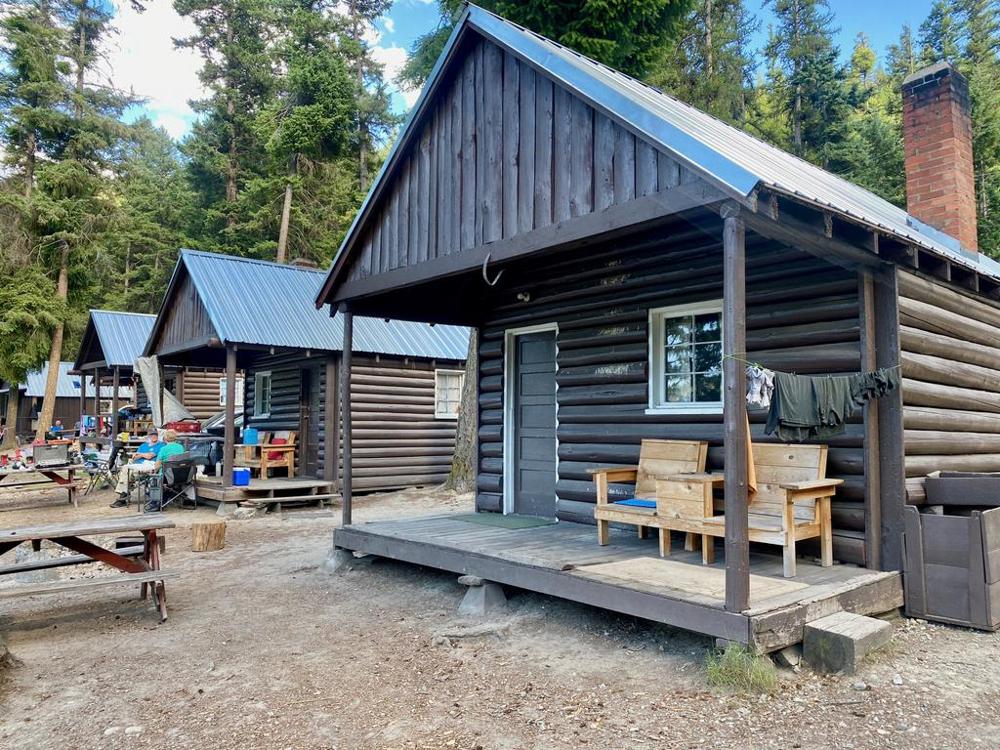
The road gets less and less well-maintained as it enters Okanogan National Forest. I walk on the road for another hour or so until at 3:00 pm I finally arrive at Bonaparte Lake, home of the Bonaparte Lake Resort. Perhaps Bonaparte Lake “Resort” might be more accurate. It’s a small collection of extremely rustic cabins. I’ve booked a cabin for the night as a break from sleeping on the ground in a tent.
I’m also excited for a hot meal at the resort’s well-regarded restaurant. Sadly, the woman checking me in says that the restaurant will be closed tonight. They’ve been shut down for the rest of the day because the staff hasn’t been wearing masks. The woman herself isn’t wearing a mask, nor is anyone else that works there. There’s a sign on the window outside the restaurant declaring the resort’s support of the “freedom” of its patrons to not wear masks. Since the restaurant is just about to close, I ask if they can at least make me a meal that I can keep to eat later — which they agree to do.
I was prepared for a very basic cabin with little more than bed frames and mattresses. What I wasn’t prepared for is that the cabin’s floor is slanted, and the bed frames are askew, so that one end of each bed is noticeably higher than the other. When I set out my sleeping bag on the mattress to take a nap, I find the mattress to be lumpier than the ground. I have to pull out my air mattress and partially inflate it in order to smooth out the lumps.
The resort does at least have hot and cold running water, including a bathhouse where I can have a real shower and do some laundry in a sink.
The residents in the cabin next door, Mike and Sally, are a retired couple from Maple Valley outside Seattle. They’ve come to Bonaparte Lake numerous times, and bring along a small inflatable boat from which they fish. We have a long talk about hiking and camping. Later, when I’m sitting out on my cabin’s porch, Mike comes over. “We’re sorry to hear you won’t get to eat dinner at the restaurant. But maybe you’d like to try some of the fish we caught?” He offers a plate of fresh-caught rainbow trout and kokanee (landlocked salmon). The fish tastes amazing, and surely better than anything on the restaurant menu.
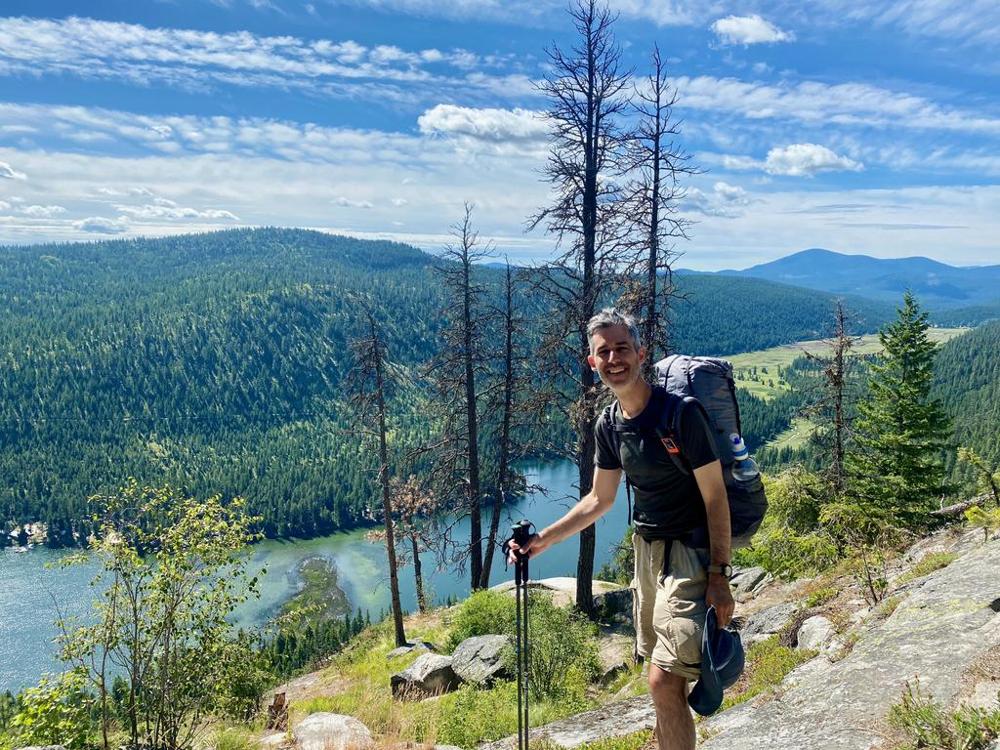
Jan’s PNT hike, Day 8. The Bonaparte Lake Resort’s restaurant is, happily, open this morning for breakfast, so I can get at least one real meal before going back to rehydrated backpacker food. Despite the restaurant having been closed down yesterday due to staff not wearing masks, today none of the staff are wearing masks either. (When I finish my trip, I learn that rural Okanogan County, which includes this area, currently has the highest per capita coronavirus infection rate in Washington State.)
Speaking of backpacker food, there’s a box of backpacker food waiting for me at the resort office — I’d mailed it to myself before I left home. I also need to buy some more sunblock, but the resort’s tiny little store is out of stock. My cabin neighbors, Mike and Sally, help me out again by giving me a small tube of sunblock.
When I walk out of the resort toward the next trail, I find that my phone’s GPS isn’t picking up a signal as fast as it should, nor is my backup GPS. I’ve never had this problem before, and means that I have to rely on paper maps for the time being. That’s fine, but it’s a lot harder to navigate with them. The mapping app I use on my phone normally makes navigation a breeze, and with the paper maps alone I’m left to wonder whether I’m going the right way.
I climb the switchbacks of the Pipsissewa Trail that goes up the side of Mount Bonaparte to a viewpoint which overlooks the lake. At the viewpoint, I retrieve a short message that my mom left for me when she passed through this area and camped at the lake a week ago.
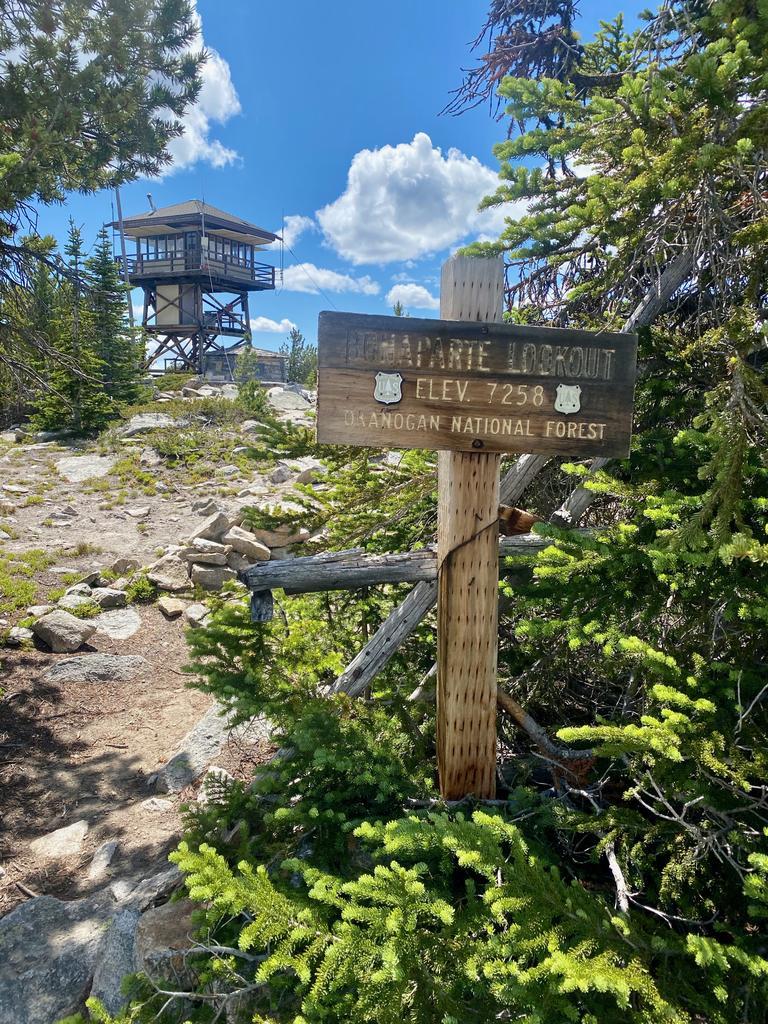
From the viewpoint, I keep climbing and climbing up Mount Bonaparte to the fire lookout tower at the summit. When I finally reach the summit, I meet a small National Forest work crew out for a day hike. The crew leader is interested in hearing feedback from PNT hikers on which trails could use maintenance.
The lookout tower is one of the very few in the country still in active service. Sadly, today there’s no one manning the tower, so the tower’s uppermost level is locked up. It’s still possible to get a great view from the tower’s middle level.
I spend all afternoon descending the north side of Mount Bonaparte back down to farmland. While still on National Forest lands, I come around a bend to see a mixture of cows and calves sitting on the road. One spooks when it sees me, and it begins to run into the trees. This cow’s act spooks the other cows. They also run into the trees. From the forest they’ve run into, I hear a low, thundering noise begin to build. The forest is full of running, freaked-out cows. Many are now mooing — they sound either panicked or angry. The stampede continues for a long minute, with occasional moos continuing for a while thereafter. Sorry about all that, cows.
My original plan for the night had been to camp in the churchyard of Immanuel Lutheran Church in the tiny hamlet of Havillah. The church opens its backyard to PNT hikers, and also lets them use the church’s bathroom and kitchen. Sadly, the pandemic has forced the church to suspend its grounds to hikers, so I need to find a different option.
The topographic map shows a flat area on the outside of the Havillah that’s just inside Okanogan National Forest. This ranching country has many fences with “Keep Out” signs, so it takes a while to find the faint road on the map that leads to the public lands where I can — in theory — camp for the night. I eventually find a good spot to set up in a small meadow near Mill Creek, in which I can rinse off and get water for dinner.
Jan’s PNT hike, day 9. I wake up in a sunny meadow and pack up. Today I’ll be meeting up with my mom at a spot on Mount Hull above the town of Oroville. Mom’s getting a ride to our meeting spot on Mount Hull from an Oroville woman named Karen. The town’s sole taxi driver has closed up shop during the pandemic, so Karen, who runs the town’s Chamber of Commerce, is helping out hikers. She volunteers to drive Mom to the trail.
Karen and Mom are late for our appointed meeting at 1:00. Mom eventually sends a message that Karen’s car has gotten stuck on a badly-maintained forest road. Eventually, they get the car unstuck, and drive around to the meeting spot on a better road. They arrive around 3:30. It’s a bit of a late start for the afternoon hike Mom and I need to make, but we should still arrive with some daylight to spare.
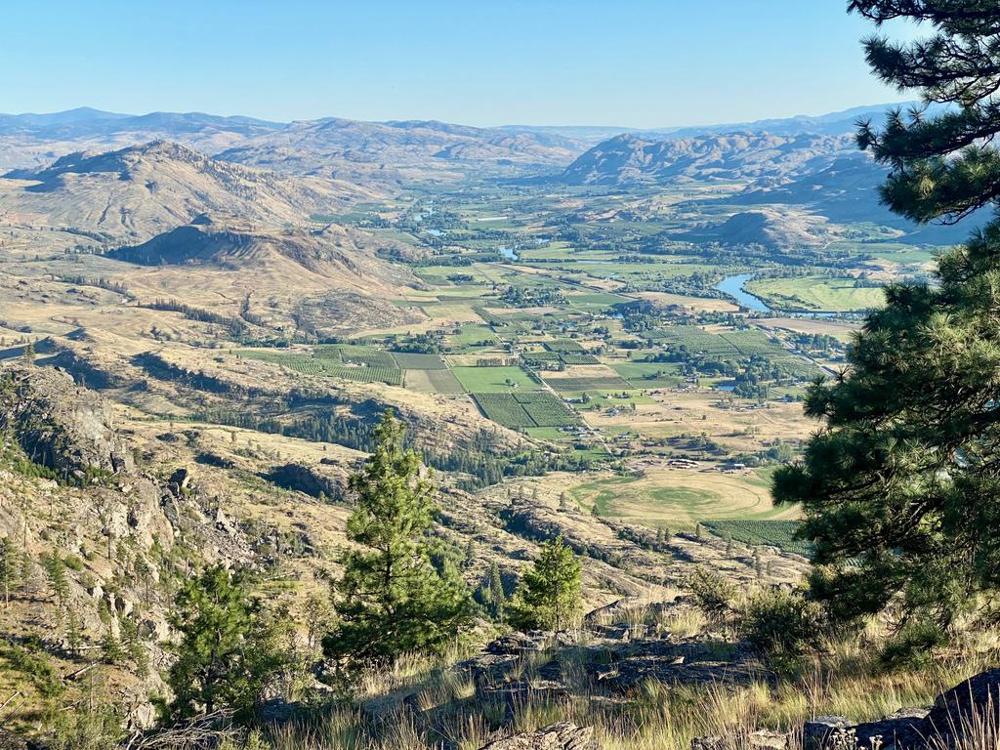
Mom and I make our way down the Whistler Canyon Trail, another old, overgrown forest road. It’s just shy of six miles to the place I’d picked out to camp: a spot on a bluff with sweeping views of the Okanogan River valley. The official PNT guide documents an earlier campsite, but I’d seen a PNT hiker’s YouTube video that showed a much nicer spot, and have used satellite photos to work out where the spot is. When we finally reach the spot, it does indeed have one of the best views I’ve ever had from a campsite. We look out over a beautiful valley with rolling brown hills and buttes on either side, and a lush green valley of farms along the snaking Okanogan River in between. The site has a picnic table to boot.
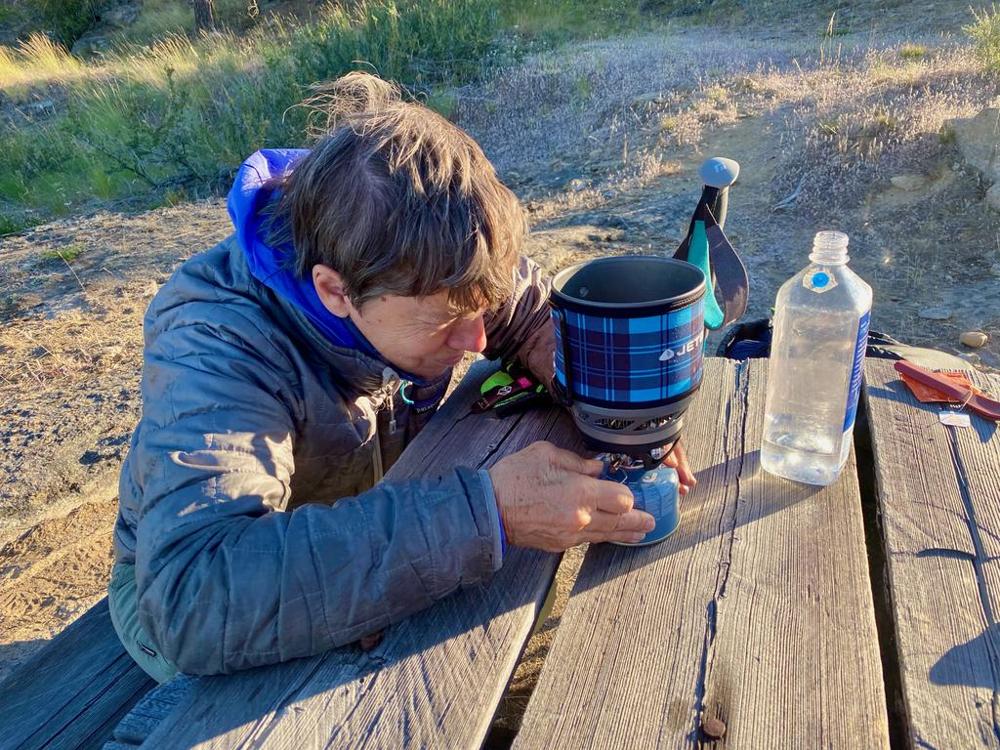
We arrive at the campsite just before 7:00, so we have to set up our tents fairly quickly and get on with dinner. Before we go to bed, we can see lights starting to come on in the valley. At different times during the night, both Mom and I wake up and look outside. It’s a perfectly clear night with a billion stars and a clearly visible Milky Way. The sprinkling of white lights down below in the valley mirror the lights of the stars above.
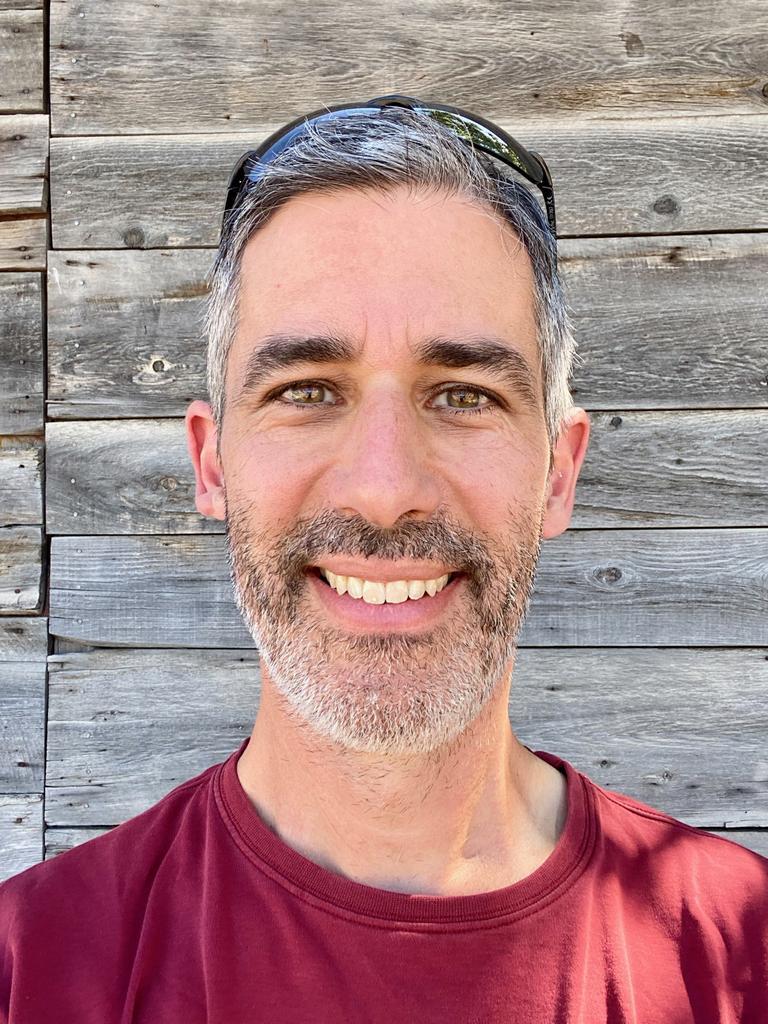
Jan’s PNT hike, day 10. Mom’s up before I am, and she’s already packed up to go by the time I get out of my tent. We have breakfast looking out at the valley before continuing on the Whistler Canyon Trail around 8:00. As we descend, the trail becomes a little overgrown, but still easy to follow. By the late morning, we enter the drier, more open terrain on the lower slopes of Mount Hull, exposing ourselves to the climbing sun. It’s a hot day, 93°F. We finally reach the trailhead on the valley floor around 2:00. At the trailhead, we’re surprised to see a herd of bighorn sheep. They run off when they hear us.
Karen from Oroville has agreed to come pick up Mom and drive her 3 miles into Oroville. Since I’m still walking the PNT, I leave my pack for Mom to take into town, then do a quick walk along the road into town. I finally reach the corner of 12th and Main near the center of town: the spot where I’d started hiking the PNT westward a year ago.
I’ve now connected my footsteps this year to the footsteps I’ve hiked in the past: from the Kettle River through the Kettle Crest and Okanogan highlands to Oroville (this year), further west across the Pasayten Wilderness to the North Cascades (2019), south down the Cascade crest along the PCT to Snoqualmie Pass (2016), and west again along a chain of trails that lead to our home in Seattle (2019). That unbroken trail of footsteps from the Kettle River in Northeastern Washington to my home is some 720 miles long.
I meet up with Mom and Karen at one of Oroville’s only open restaurants, the Rancho Grande. I order a pineapple Jarritos soda on ice, which tastes out of this world. Afterwards Mom and I transfer our backpacks to Mom’s car, say goodbye to Karen, and begin the long drive home.
I’ve seen a fair amount of wildlife on this trip, but we have one final wildlife encounter on our way home. As we’re passing through the town of Wenatchee, an elk crosses the street in front of us.
While Jan’s finishing up his backpacking trip, Anya sets out on her own two-night camping trip to Baker Lake with her Choate friend, Kiki.
After staying with us since early March, Lyn moves back to her retirement home. Things are still far from normal there, but the terror of the spring has faded, and things have calmed down to a state that sound livable.
With Evrim still with us, we’re back to 6 people in the house.